A decade of archaeological work in a quiet Aberdeenshire village has led researchers to conclude that Rhynie was once a major royal centre of Pictish power, challenging long-held assumptions about early medieval Scotland as sparsely populated and politically fragmented.
The findings, brought together in a newly published monograph, suggest that Rhynie and its surrounding landscape formed a significant hub of political authority, craft production and long-distance trade during the fifth and sixth centuries. The research draws on excavations conducted since 2011 in the Upper Strathbogie Valley, including sites at the Craw Stane, Tap o’ Noth and Cairn More.
At stake is not simply the status of a single site, but the broader understanding of how early medieval societies in northern Britain were organised. For decades, historical interpretation has tended to present the Picts as loosely structured, regionally dispersed communities with limited central authority. The evidence emerging from Rhynie points to something more cohesive and materially sophisticated.
Excavations have uncovered a range of artefacts that suggest both elite activity and extensive external connections. Among the most notable finds are imported glass vessels traced to western France, alongside evidence for wine consumption, indicating participation in exchange networks that extended beyond Britain into continental Europe and, by implication, the wider Mediterranean world.
Material evidence of high-status metalworking has also been identified, including moulds for casting jewellery and finely crafted objects such as brooches, rings and figurines. Analysis conducted at National Museums Scotland indicates a level of technical skill that researchers describe as exceptional within the Scottish context of the period.
These discoveries are complemented by the presence of symbol stones, including the so-called Rhynie Man and the Craw Stane, which have long suggested the area held ceremonial or political importance. The convergence of artefactual, landscape and linguistic evidence has led archaeologists to interpret Rhynie as a royal centre, with the place-name itself believed to derive from an early Celtic term associated with kingship.
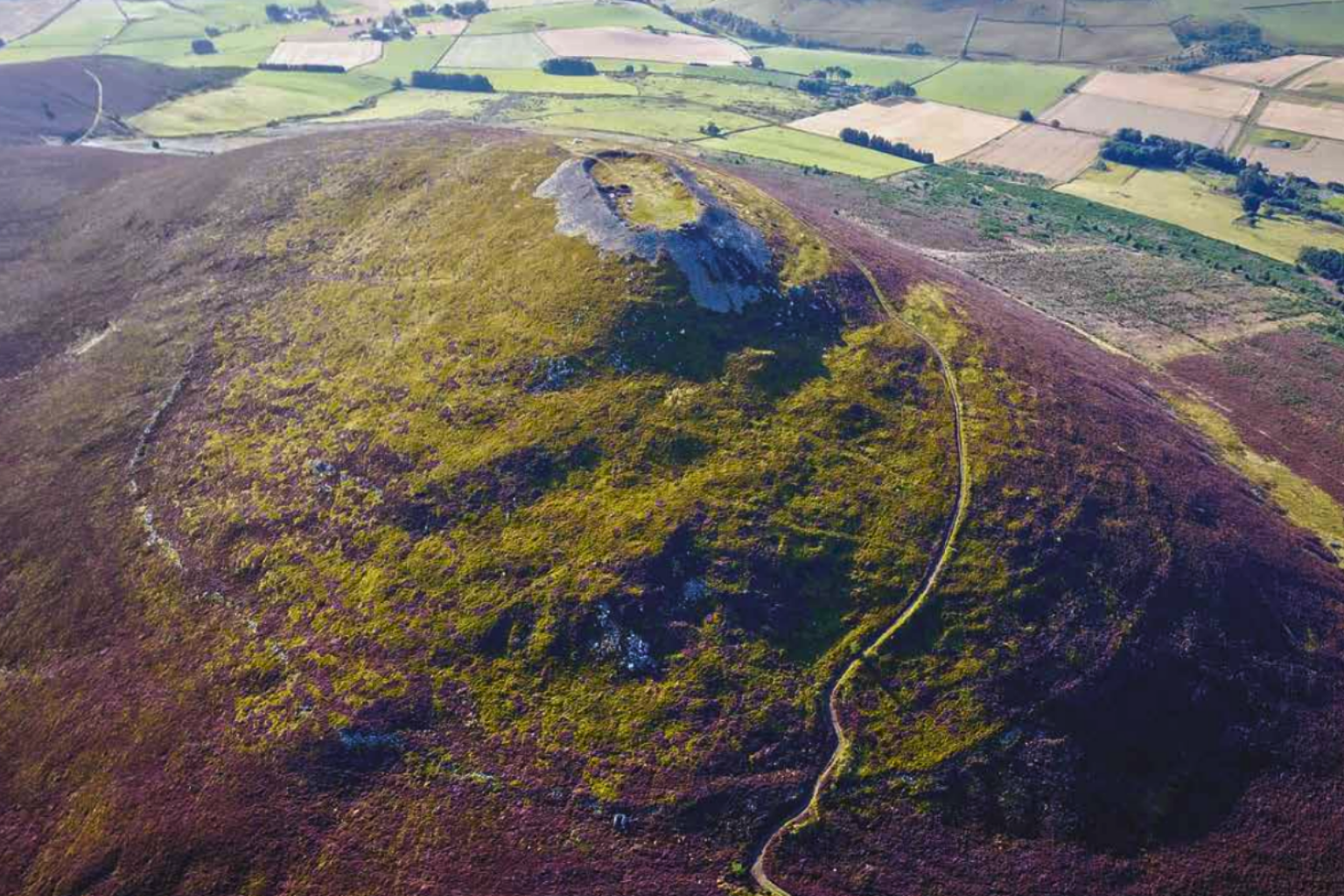
Perhaps the most striking development lies not in the artefacts themselves, but in the scale of settlement revealed in the surrounding landscape. At Tap o’ Noth, a hillfort overlooking the village, survey work using drone imaging and laser mapping has identified up to 800 hut platforms within a large enclosed area. If accurate, this would indicate a population numbering in the thousands during the early medieval period.
Such a concentration would significantly exceed earlier estimates of settlement size in northern Scotland at this time. The historian Bede, writing in the eighth century, offered one of the earliest textual accounts of the Picts, though his descriptions are limited and filtered through ecclesiastical and political concerns of his own era. For centuries, interpretations of Pictish society have relied heavily on such fragmentary sources.
More recent scholarship, including that of Isabel Henderson and Sally Foster, has emphasised the sophistication of Pictish art and symbolism, but the physical scale of settlement has remained harder to establish. The Rhynie findings, if sustained by further research, provide rare archaeological evidence of a large, organised population centre in this period.
That shift in understanding carries wider implications. A settlement of this scale implies not only population density but also systems of governance, resource management and labour organisation capable of sustaining it. It raises the prospect that early medieval northern Britain may have contained more structured political entities than previously recognised.
Yet while the conclusions are presented with confidence, some caution remains warranted. The interpretation of Rhynie as a “royal centre” rests on a combination of artefactual richness, landscape features and inferred social organisation. While each line of evidence is suggestive, the extent to which they collectively demonstrate formal kingship structures remains open to interpretation.
Similarly, the identification of long-distance trade networks is based on the presence of imported goods, but the mechanisms by which these items arrived in northern Scotland are not fully established. Whether they reflect direct exchange, intermediary trade routes or the movement of individuals is not specified in the material available.
The scale of the Tap o’ Noth settlement, while striking, is also derived from survey data rather than complete excavation. Estimates of population based on hut platforms necessarily involve assumptions about occupancy and duration of use. While the figures suggest a large community, the precise nature of that community—whether permanent, seasonal or episodic—remains to be clarified.
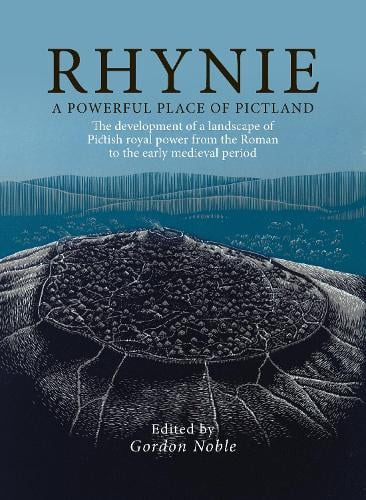
The publication itself, produced by the Society of Antiquaries of Scotland, brings together more than ten years of excavation and analysis. Its release has been supported by a combination of institutional funding and public contributions, including a crowdfunding campaign that raised over £18,000 from more than 400 supporters.
That funding model reflects a broader shift in how archaeological research is disseminated, with greater emphasis on public engagement and open access. The volume is available both as a physical publication and as an online resource, ensuring wider availability of the findings.
For the University of Aberdeen team leading the work, the significance of Rhynie lies in its ability to reshape established narratives. Professor Gordon Noble, who has directed the project, describes the site as evidence of a “powerful, organised place” with connections extending well beyond its immediate region.
Such claims are grounded in a substantial body of fieldwork, though the degree to which Rhynie can be taken as representative of wider Pictish society is less certain. It may instead represent an exceptional site, whose prominence risks being generalised beyond what the available evidence can support.
Even so, the accumulation of data from Rhynie marks a notable development in the study of early medieval Scotland. Where earlier interpretations relied heavily on limited written sources and isolated artefacts, the integration of landscape analysis, excavation and scientific techniques offers a more complex picture.
The challenge now lies in situating these findings within the broader historical framework. Further work will be needed to determine how Rhynie relates to other known Pictish sites, and whether similar centres existed elsewhere but remain undiscovered or insufficiently studied.
For now, the village that once appeared unremarkable has become a focal point for reconsidering the nature of power, settlement and connectivity in early medieval northern Britain. The extent to which it transforms the wider narrative will depend on how its evidence is tested, compared and, ultimately, corroborated by future research.
(Tags: Gordon Noble; Lucy Koster; Daniel MacLean; Ingrid Mainland; Fiona McGibbon; Ellen McManus; Sesilia Niehaus; Marc Oxenham; Shalen Prado; Susan Ramsay; Ermine Roshem; Alison Sheridan; Andreas Rau; Andy Hickie; Hamish Fenton; Samantha Jones; Fraser Hunter; Derek Hamilton; Gemma Cruikshanks; Nicholas Evans; Meggen Gondek; Cathy MacIver; Edouard Masson-MacLean; James O’Driscoll; Simon Taylor; Kate Britton; Ewan Campbell; Orsolya Czére; Mary Davis; Leanne Demay; Jovita Fawcett; James Gerrard; Joana Valdez-Tullet)
#ModernScot