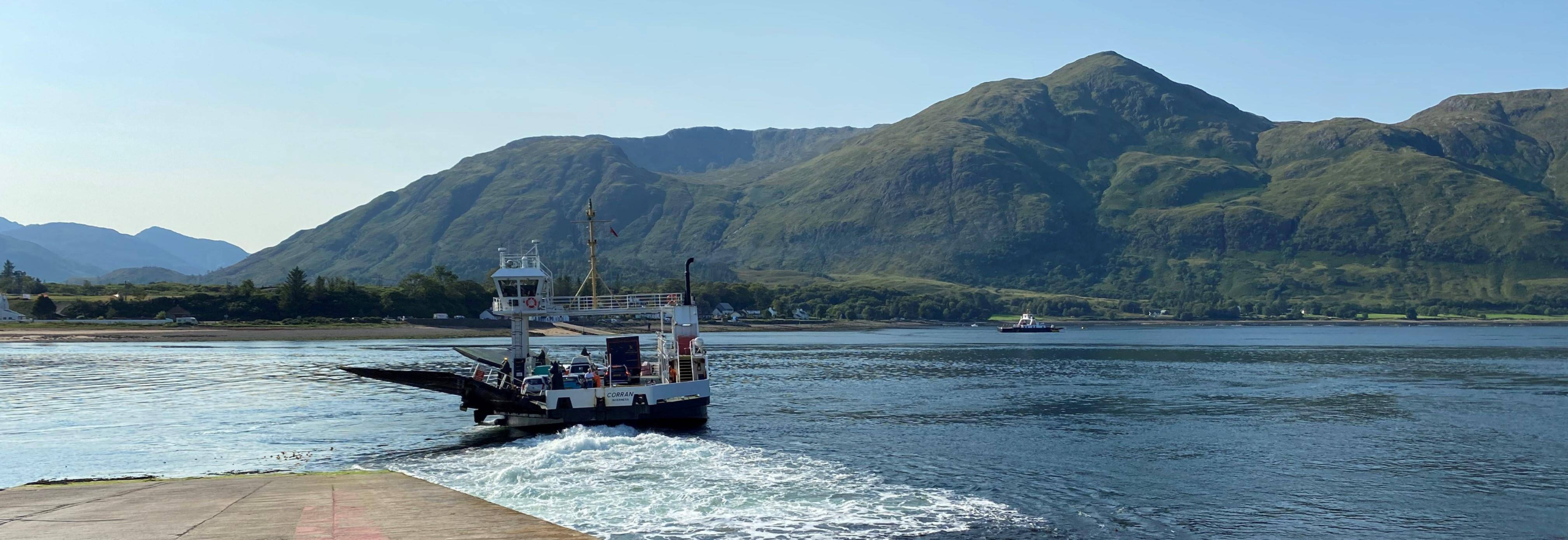
Crossing costs on a key Highland route will increase from 1 May, with higher charges for cars, commercial vehicles and multi-journey users.
Fares on the Corran Ferry will increase from Friday 1 May 2026, following approval by The Highland Council as part of its wider budget and medium term financial planning.
The changes form part of the council’s agreed financial framework for 2026 to 2029, approved at a special meeting in March alongside the annual budget and council tax settlement.
For most users, the adjustment is modest in absolute terms but immediate in effect. The standard drive-up fare for private cars will rise by £1, moving from £12 to £13. Motorcycles increase by 50 pence to £6. Minibuses and caravanettes will see a larger uplift of £1.50, bringing the fare to £18.
Regular users will also see changes. A multi-journey book of 30 crossings will increase by £7.50 to £96. On a per-trip basis, that represents a rise from £2.95 to £3.20. The structure remains intact, but the margin has shifted upward.
Commercial traffic faces the most pronounced increases in cash terms. Articulated vehicles will rise by £5 to £62, while larger buses and coaches will increase by £3 to £35. For operators dependent on the route, the cumulative effect may be more noticeable over time.
The Corran Ferry is not a discretionary service. It is a working connection across Loch Linnhe, relied upon by residents, businesses and services in the area. Changes to its pricing therefore tend to register locally with more weight than equivalent adjustments elsewhere in the transport network.
The council has not set out detailed justification for the specific levels of increase within the summary announcement, beyond their inclusion in the broader financial plan. As with similar adjustments, the underlying pressures are likely to include operating costs, maintenance, and the requirement to balance service provision against constrained public finances.
What remains less clear is how sensitive demand on the route will be to incremental price changes, particularly for regular users and commercial operators. The availability of multi-journey tickets suggests an effort to retain some flexibility, though the direction of travel is unambiguous.
For now, the increases are set. From the start of May, the cost of crossing will rise, modestly for some, more materially for others, on a route where alternatives are limited and timing rarely optional.