
UK and Belgium Deepen Defence Ties with Major Mission Data Partnership
In a move that underscores the increasingly technical nature of modern warfare, the Ministry of Defence has confirmed a new multi-million pound partnership with Belgium aimed at advancing mission data capabilities over the next five years.
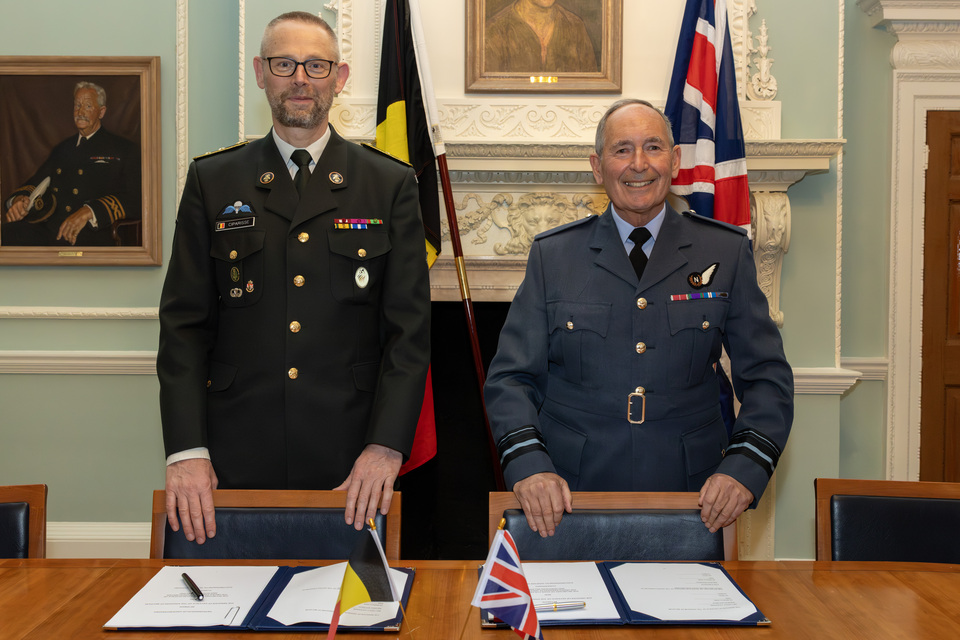
The agreement, formalised through a Memorandum of Understanding signed by Major General Pierre Ciparisse and Air Vice-Marshal Nigel Maddox, will see Belgium invest in British expertise to develop its own sovereign systems for collecting and exploiting mission-critical data.
A Digital Edge in Modern Warfare
At the heart of the agreement lies mission data — the highly specialised intelligence derived from radar signatures, communications frequencies, and threat analysis that allows military platforms to operate effectively in contested environments. As defence systems grow ever more sophisticated, such data has become indispensable in maintaining both operational safety and strategic advantage.
This partnership will see British defence technology firm QinetiQ take a leading role, working alongside small and medium-sized enterprises across the UK, Belgium, and Europe. Their task: to help establish a Belgian Joint Electromagnetic Warfare Support Centre, giving Brussels a fully sovereign capability in this critical domain.
Industry, NATO, and Strategic Alignment
The initiative also aligns closely with broader NATO cooperation. It complements existing joint work on the MQ-9B Protector drone programme and strengthens support infrastructure for allied fleets across Europe, including collaboration facilitated by the NATO Support and Procurement Agency.
For Belgium, the arrangement draws inspiration from Britain’s long-running electronic warfare expertise, particularly its structured approach to integrating industry and defence through programmes such as SOCIETAS. Major General Ciparisse emphasised that the goal is not merely capability acquisition, but the cultivation of a durable domestic ecosystem — one capable of sustaining expertise, innovation, and resilience.
Long-Term Defence Investment
The agreement arrives amid a broader expansion of UK defence spending, with commitments to reach 2.6% of GDP by 2027 and a projected £270 billion defence budget over the current Parliament.
In practical terms, the UK-Belgium partnership signals a shift toward burden-sharing and deeper industrial cooperation within NATO — a recognition, perhaps, that in the electromagnetic battlespace of the 21st century, alliances are measured not just in troops and hardware, but in data, expertise, and technological integration.
Dryly put: the battlefield may still feature boots on the ground, but increasingly, victory will belong to those who best understand the invisible spectrum above it.
#ModernScot