
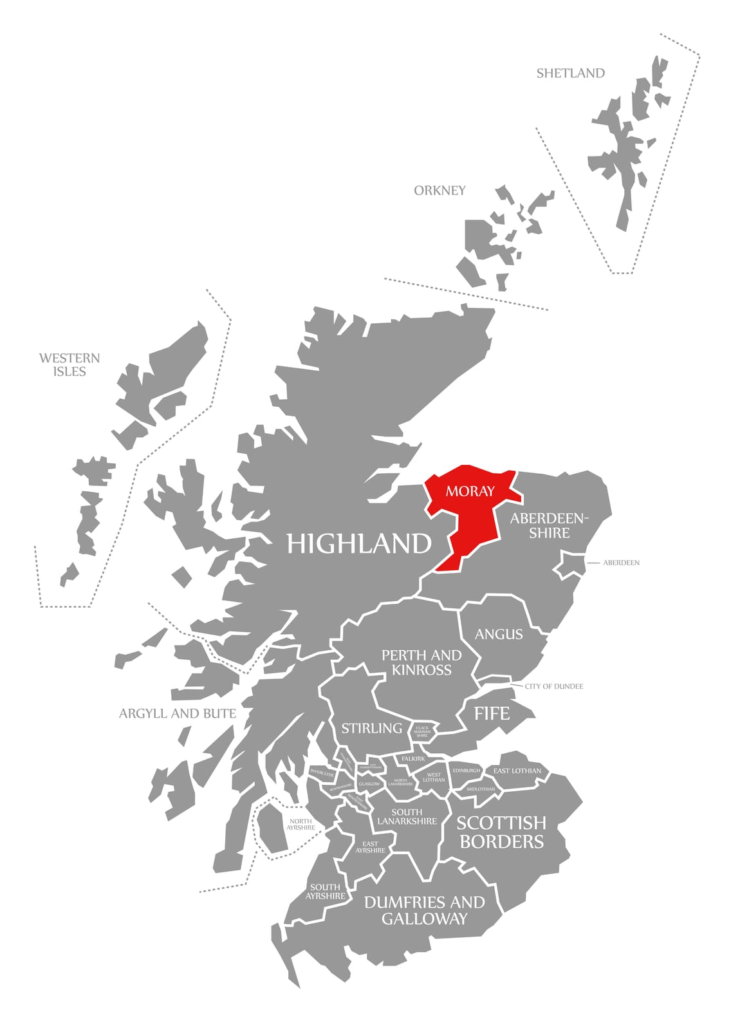
Moray sits on Scotland’s north east coast between Highland and Aberdeenshire, with the Moray Firth to the north and a landscape of towns, farmland, rivers and uplands inland. Elgin is the administrative centre and largest town, but the area’s identity is shared across fishing communities, agricultural land, whisky country and former military sites.
Elgin was historically one of northern Scotland’s most important towns. Elgin Cathedral, founded in the thirteenth century, became one of the great ecclesiastical buildings of medieval Scotland before falling into ruin after the Reformation and later damage. Its remains still carry the scale of the authority once concentrated there.
The River Spey shapes the eastern part of Moray and gives the area one of its strongest international associations. Speyside whisky is one of Scotland’s most recognisable regional industries, and many distilleries associated with that tradition lie within Moray. Whisky here is not a decorative industry. It is tied to water, transport, agriculture, export and identity.
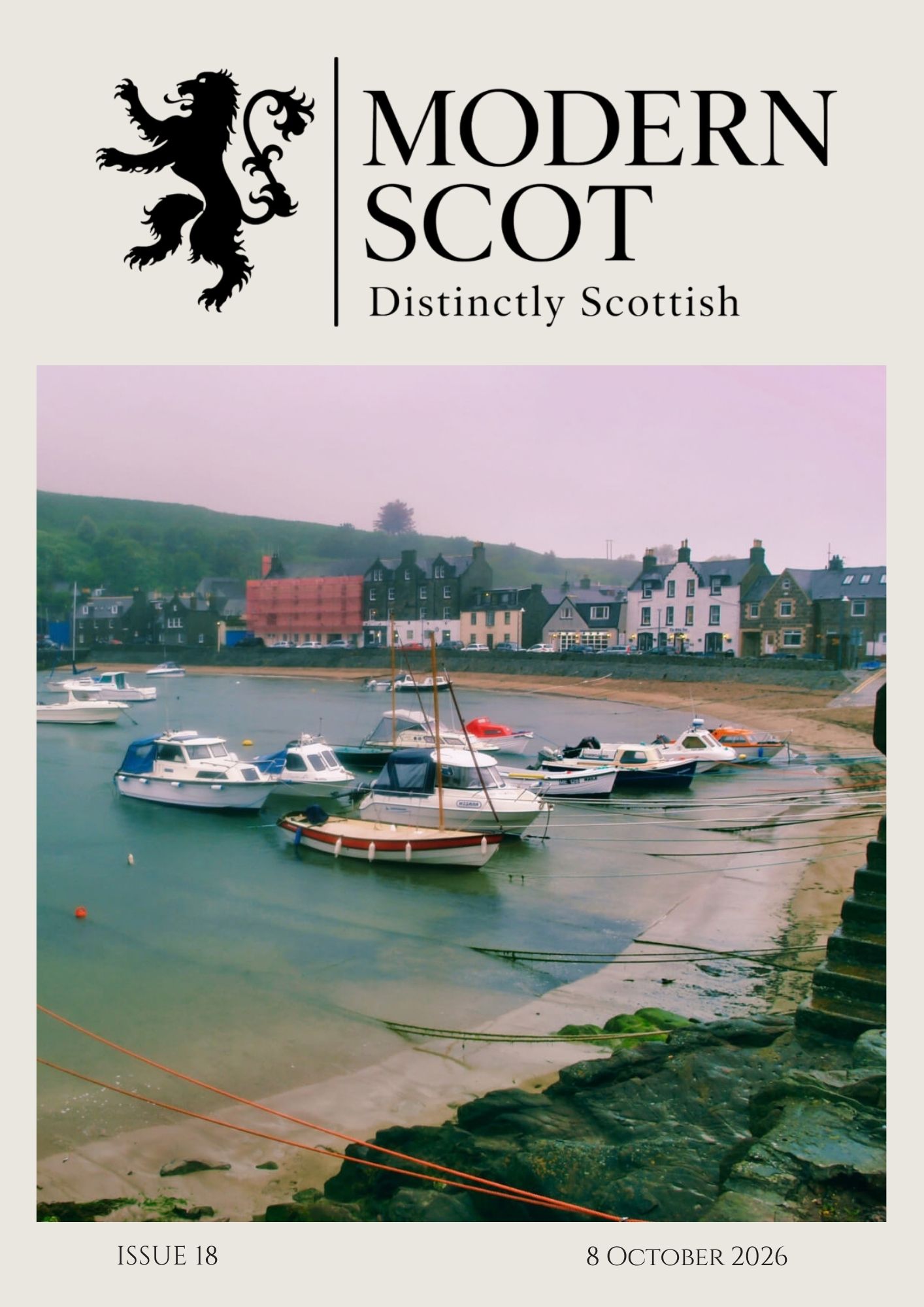
The coast has its own distinct history. Buckie, Lossiemouth, Findochty, Portknockie and other settlements developed through fishing, maritime work and coastal trade. Lossiemouth also has a major military association through RAF Lossiemouth, one of the most important Royal Air Force stations in Scotland.
Moray’s modern economy includes food and drink, agriculture, tourism, public services, defence and manufacturing. It is not as urbanised as the central belt, but neither is it remote in any simple sense. It is a working north east region with strong external connections.
The area’s strength lies in its balance. Cathedral town, whisky country, fishing coast, air base and farmland all sit within a single council boundary. Moray is compact enough to be coherent, but varied enough to resist easy summary.