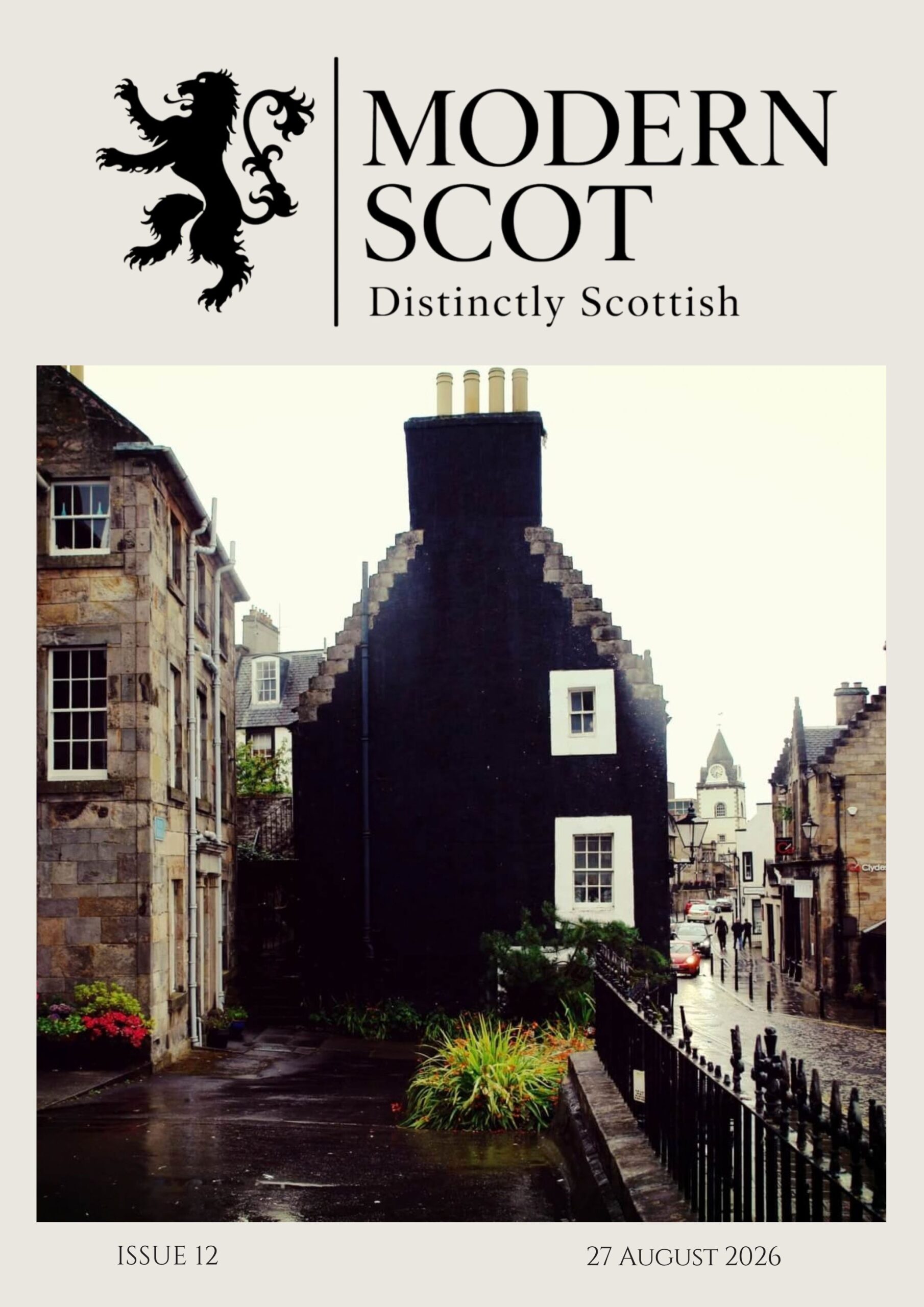

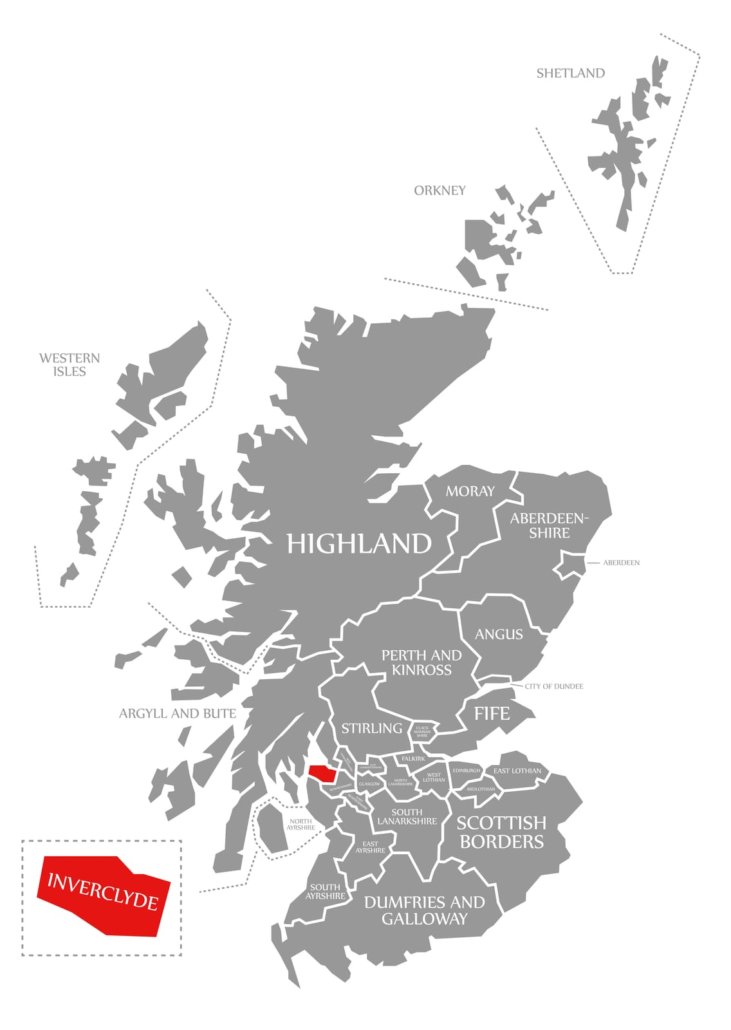
Inverclyde occupies a narrow but historically powerful position on the south bank of the River Clyde. It is one of Scotland’s smaller council areas, but its towns played an outsized role in shipbuilding, trade and maritime movement. Greenock is the administrative centre and largest town, with Port Glasgow and Gourock forming the other principal settlements.
The area’s identity is tied closely to the Clyde. Greenock grew as a port and industrial town, becoming important in sugar refining, shipbuilding, marine engineering and transatlantic trade. Port Glasgow developed earlier as Glasgow’s deep water port before the upper Clyde was improved for shipping. These histories connect Inverclyde directly to Scotland’s industrial and imperial past.
The steep physical geography matters. Settlements are pressed between the river and the rising ground behind them, creating a distinctive linear pattern. The view across the Clyde toward Argyll and the Highlands gives the area a dramatic setting, but the same geography limits expansion and shapes transport routes.
James Watt, whose work became central to the development of steam power, was born in Greenock in 1736. That association is more than local pride. It links the area to the wider story of industrial modernity and Britain’s technological transformation.
Inverclyde suffered badly from the decline of shipbuilding and heavy industry in the twentieth century, and population decline became one of its defining modern issues. More recent regeneration, cruise activity, housing change and public investment have altered parts of the waterfront, but the older industrial settlement pattern remains legible.
Inverclyde is small, compressed and historically dense. It is not merely a place beside the Clyde. It is one of the places through which the Clyde became a global industrial river.