
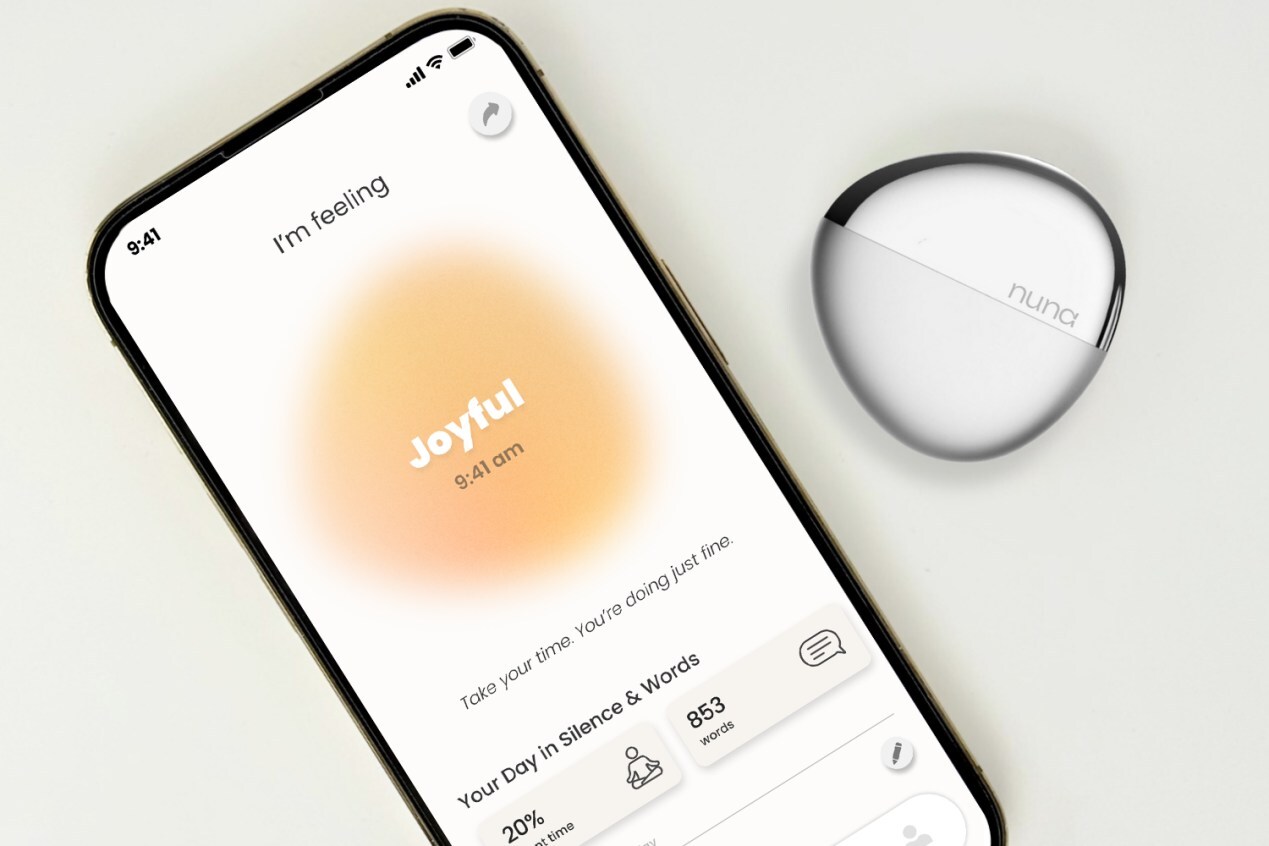
ThingX Technologies has unveiled its latest gadget, the NUNA pendant, which the company claims is the world’s first wearable to track human emotions using artificial intelligence. The necklace-shaped device uses millimeter-wave radar, voice analysis, and biometric sensing to monitor stress, mood, and emotional “patterns.”
ThingX pitches NUNA as a breakthrough in wellbeing technology: a piece of jewelry that not only detects shifts in breath, heartbeat, and speech tone but also translates them into a continuous “emotional diary.” The device vibrates when it senses stress, offers mindfulness prompts, and logs “moments” automatically. Unlike most fitness trackers, the company insists, it never uploads raw audio or data off-device.
The claims are bold. According to ThingX, the pendant can sense micro-movements and voice subtleties to know what a person is feeling — perhaps even before the wearer consciously does. Its founder, Ernest X., described the launch as “the start of a movement for emotional wellbeing.”
Yet, outside the company’s promotional language, serious questions linger. Independent experts have not verified whether the pendant can reliably infer complex emotional states, let alone do so without false positives that could lead to anxiety rather than calm. The technology relies on millimeter-wave radar — the same spectrum used in airport body scanners — raising issues of accuracy, health impacts, and whether consumers are ready to wear such sensors daily.
The device also arrives at a time when trust in AI and data privacy is under scrutiny. ThingX stresses that NUNA processes all information locally and never stores raw audio, but users must take the company at its word. Even if privacy is technically preserved, the idea of a pendant constantly “reading” one’s feelings may strike some as intrusive rather than liberating.
For now, NUNA is positioned less as a proven medical tool and more as a lifestyle accessory. Whether it proves to be a genuine advance in mental health support or simply the latest expensive wellness gadget remains to be seen.
#ModernScot