
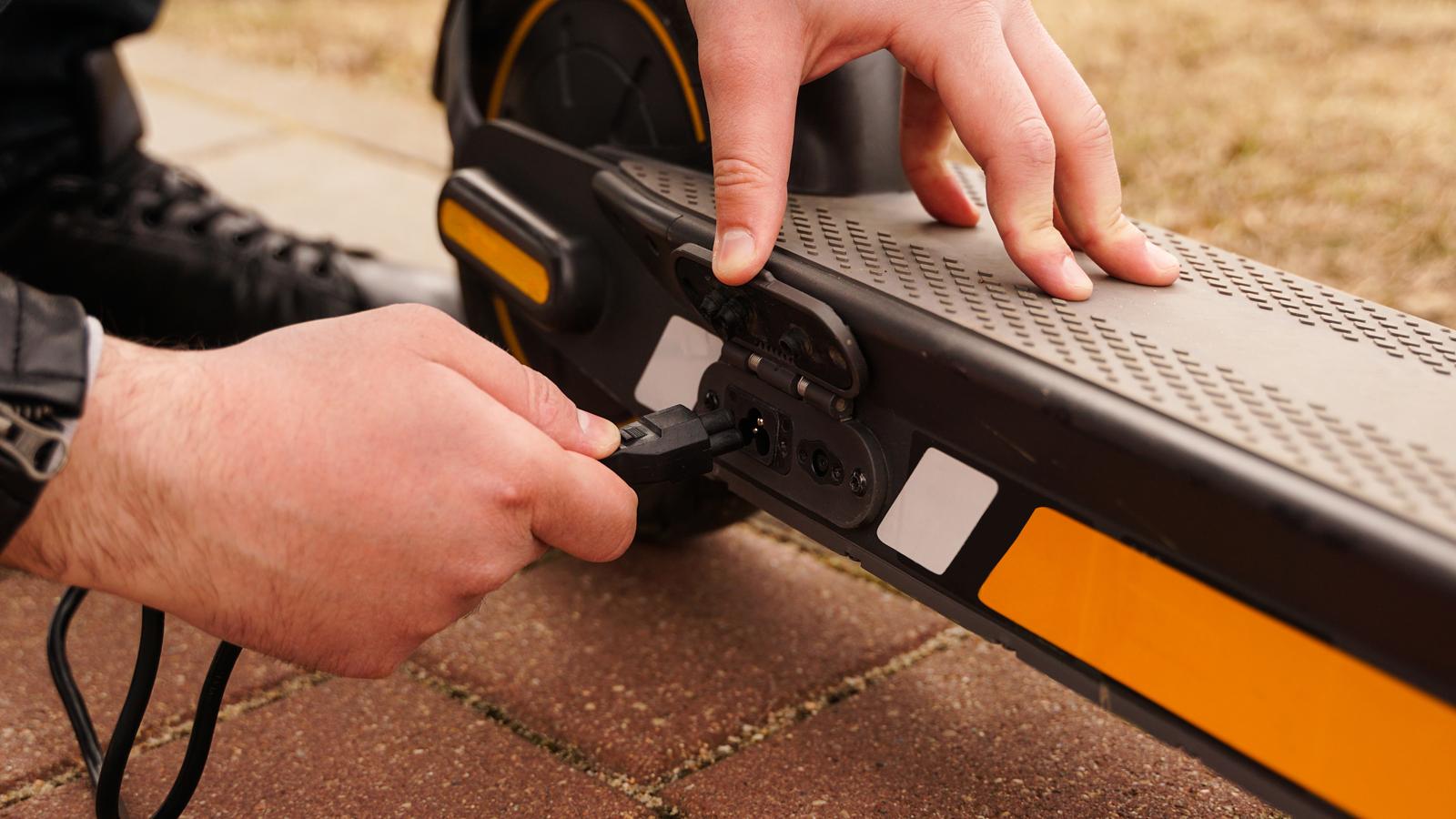
Shetland Islands Council has banned the indoor storage and charging of electrically powered bikes and scooters across all of its premises, citing fire risks associated with lithium-ion batteries.
The precautionary measure applies to buildings owned, managed or occupied by the council, including schools and community facilities. The decision follows what the authority describes as “national concerns” about serious fires linked to lithium-ion batteries used in some e-bikes and e-scooters.
Council officials say the ban is intended to reduce the risk of fast-spreading fires in occupied buildings. Lithium-ion battery fires, once ignited, can escalate quickly and are often difficult to extinguish.
A precautionary response to battery fire risks
Under the new rules, e-bikes and e-scooters may no longer be stored or charged inside council buildings. The restriction applies broadly to all indoor spaces on council premises.
The authority says it currently has no facilities designed to store and charge the devices safely indoors. Where demand exists, it will consider developing external infrastructure that meets appropriate fire-safety standards.
In the meantime, e-bikes can still be left on council property outdoors, but only under specific conditions. They must be kept at least 10 metres away from buildings, waste storage areas, smoking zones, combustible materials and other valuable assets.
The council has not indicated how many people currently store or charge such devices on its premises, nor whether any incidents involving e-bikes or scooters have occurred locally. The press material provided refers instead to wider national concerns about lithium-ion battery fires.
Lithium-ion batteries under scrutiny
Lithium-ion batteries power a wide range of consumer products, from phones and laptops to electric vehicles. In most cases they operate safely, but when damaged, poorly manufactured or improperly charged they can fail in ways that produce intense heat and rapid combustion.
Fires involving these batteries can develop quickly and are difficult to control because the chemical reaction within the battery can continue even after flames appear to be extinguished.
Several fire authorities across the UK have warned in recent years about the potential hazards associated with charging e-bikes and e-scooters indoors, particularly in residential buildings. Concerns have often centred on modified devices, uncertified chargers or low-quality battery packs.
However, the material supplied by the council does not include specific statistics on incidents or evidence linking such fires directly to council buildings or operations.
Safety concerns cited by council officials
Carl Symons, who oversees environment and estate operations for the council, said the move was designed primarily to protect building occupants.
“The safety of our residents, pupils, staff and visitors is our absolute priority,” he said.
“While incidents are relatively rare, lithium-ion battery fires can develop quickly and are difficult to extinguish.”
He added that the council had taken the decision in light of wider fire-safety concerns across the country.
“Considering national fire safety concerns, we have taken the precautionary step of prohibiting indoor storage and charging of e-bikes and e-scooters across our premises.”
The statement does not specify whether the council consulted fire authorities directly or conducted its own risk assessment before implementing the policy, though the reference to national concerns suggests the decision was informed by broader safety guidance.
Implications for staff, students and visitors
The ban potentially affects a wide range of people who use council buildings, including employees, pupils, visitors and community groups using local facilities.
E-bikes have become increasingly popular in recent years, particularly in rural or hilly areas where electric assistance can make cycling more practical. For some commuters, the ability to charge batteries during the working day is an important part of using the technology.
By removing indoor charging options, the council may require riders to adjust their travel arrangements or charging routines. The authority has not outlined interim alternatives beyond the possibility of outdoor storage.
Nor does the announcement specify whether the ban will be reviewed periodically or whether exemptions might be considered in future if suitable facilities become available.
Balancing safety and active travel
Despite the restriction, the council emphasised that it remains supportive of cycling and other forms of active travel.
Local authorities across Scotland and the wider UK have increasingly promoted walking and cycling as healthier and more sustainable alternatives to car use. Electric bikes in particular have been seen as a way to extend cycling to longer distances and more challenging terrain.
The council said it continues to encourage walking and cycling as environmentally friendly ways to travel.
At the same time, the authority appears to be attempting to balance that policy objective with concerns about building safety.
The statement suggests that, if a clear need arises, the council may explore installing purpose-built outdoor facilities designed for the safe storage and charging of e-bikes. Such infrastructure would need to comply with fire-safety requirements.
No timetable or funding commitment for such facilities has yet been announced.
#ModernScot