
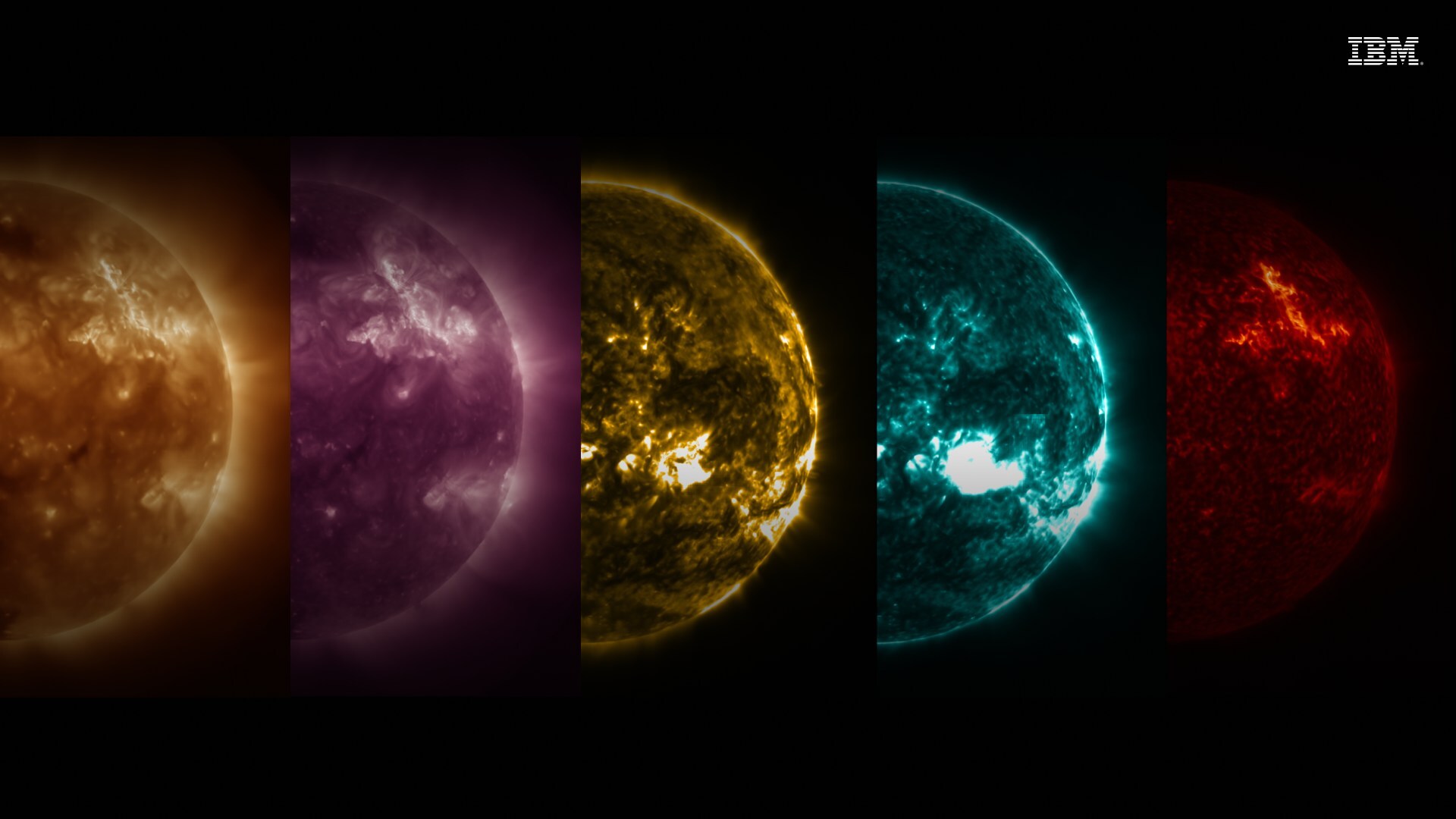
IBM and NASA have launched the first open-source AI foundation model trained on high-resolution solar observation data, aiming to predict solar storms that threaten satellites, power grids, navigation systems and telecommunications.
The model, called Surya, after the Sanskrit word for the Sun, has been released on Hugging Face alongside the largest curated dataset in heliophysics, opening it to researchers worldwide. Early tests show a 16% boost in solar flare classification accuracy compared with earlier methods, a leap scientists say could help protect billions of dollars in infrastructure.
Solar activity is more than a scientific curiosity. Flares and coronal mass ejections can knock out satellites, force flight diversions, trigger blackouts, and expose astronauts to radiation. A 2013 risk scenario by insurer Lloyd’s estimated that a major solar storm could cost the global economy $2.4 trillion over five years, with expected losses of $17 billion in a single severe event.
Unlike traditional forecasting, which relies on partial satellite views of the Sun, Surya draws on nine years of high-resolution data from NASA’s Solar Dynamics Observatory. The dataset is ten times larger than typical AI training material, requiring a custom multi-architecture system to handle the scale while preserving detail.
“This is like a weather forecast for space,” said Juan Bernabe-Moreno, Director of IBM Research Europe, UK and Ireland. “Just as we prepare for storms on Earth, we must prepare for solar storms. Surya gives us unprecedented capability to anticipate what’s coming.”
Researchers say Surya not only classifies solar flares but also produces visual predictions up to two hours before they occur, marking the first time an AI model has generated images of flare locations in advance.
Kevin Murphy, NASA’s chief science data officer, called the release “a critical step in data-driven science,” adding that the model will help accelerate understanding of solar behavior with “unprecedented speed and precision.”
The project is part of a wider IBM–NASA collaboration to harness AI in space and Earth sciences. It follows the release of the Prithvi foundation models, including a geospatial model and a weather model, both made freely available to the global research community.
By putting Surya on Hugging Face, the agencies aim to democratize access to solar forecasting tools, giving scientists worldwide a foundation to build specialized applications for aviation, space exploration, agriculture, and critical infrastructure protection.
#ModernScot