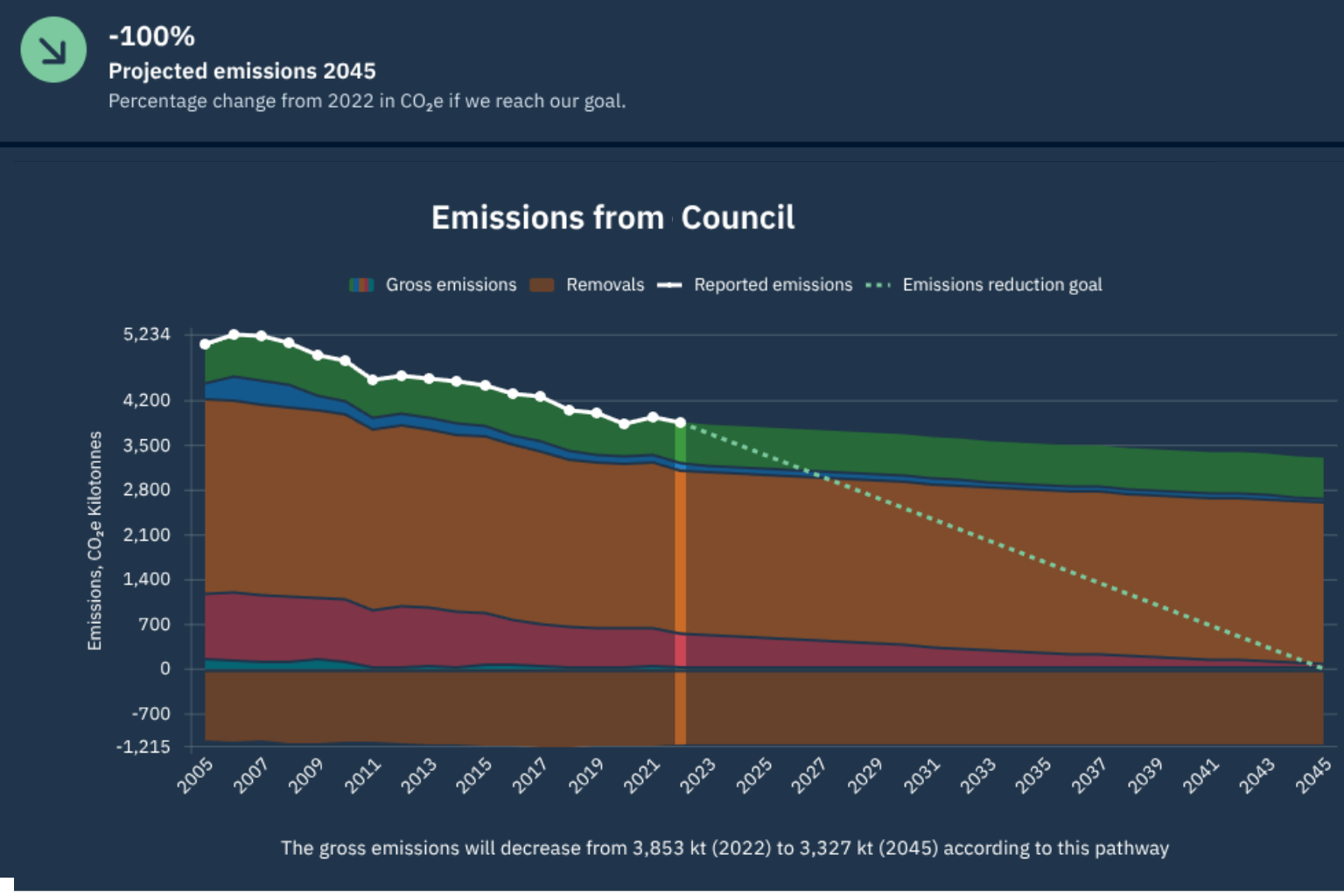
Across Scotland, a new layer of decision making infrastructure is taking hold inside local government. It does not campaign, it does not legislate, and it does not stand for election. Yet its influence is steadily expanding.
It is called the Scottish Climate Intelligence Service, and it now sits at the centre of how councils are expected to understand and plan for climate change.
What appears, at first glance, to be a technical support service is in fact part of a broader transformation in how public policy is formed, justified and delivered.
A National System, Built Quietly
The Scottish Climate Intelligence Service is a publicly funded programme operating across all 32 local authorities. It is delivered through a partnership between the Edinburgh Climate Change Institute and the Improvement Service, with backing from the Scottish Government and coordination through COSLA.
Its stated purpose is straightforward. To provide councils with:
- Standardised emissions data
- Climate projections
- Planning tools and policy frameworks
- A shared digital platform for tracking progress
The platform underpinning the system is supplied by ClimateView AB, a private firm specialising in climate planning software for governments.
Funding is entirely public. The Scottish Government and all 32 councils contribute to the programme.
The Architects Behind the System
Unlike a private enterprise, SCIS does not present a single founder. Its origins lie in academic and policy development work carried out within the University of Edinburgh.
Research and programme development point to several key figures:
- Clare Wharmby
- Jamie Brogan
- Kira Myers
Their work focused on developing tools to help local authorities model emissions and design net zero strategies. That work was subsequently expanded into a national service through collaboration with government and local authority bodies.
The programme is now formally led by Wharmby alongside Judi Kilgallon, with Brogan serving in a strategic role.
What Councils Are Actually Being Given
At the heart of SCIS is a system of climate modelling and scenario analysis.
Councils are provided with:
- Emissions baselines and forecasts
- Modelled pathways to net zero
- Risk assessments for infrastructure and communities
- Digital dashboards presenting future scenarios
These outputs draw on established datasets, including those produced by the Met Office and national climate projection models.
However, a critical distinction remains.
Much of what is presented is not direct measurement of present conditions. It is projection. These projections depend on:
- Assumptions about future emissions
- Scientific modelling of complex systems
- Statistical interpretation of incomplete data
They are, by definition, conditional.
From Analysis to Application
The role of SCIS is not limited to analysis. It is designed to shape how councils act.
Its outputs are used in:
- Housing and land use planning
- Transport and infrastructure strategy
- Climate adaptation policies
- Investment decisions
In practice, this means that modelled future scenarios are increasingly embedded in real world decisions affecting communities today.
The Function of the Dashboard
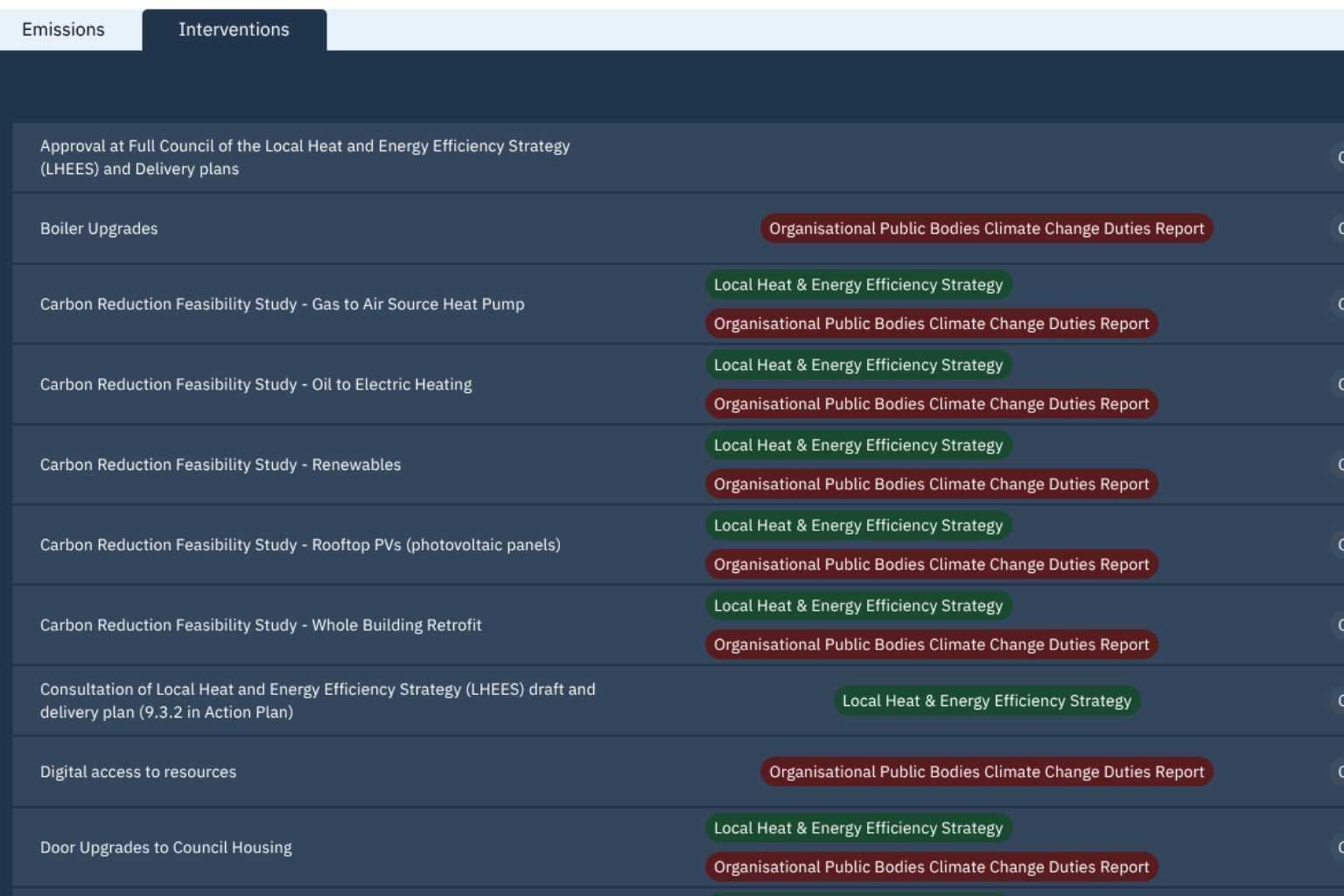
The introduction of digital platforms such as ClimateView alters not only what information is available, but how it is understood.
These systems:
- Translate complex modelling into visual dashboards
- Present risks and projections in simplified formats
- Allow users to track policy choices against modelled outcomes
This standardisation brings clarity. It also narrows interpretation.
When a projection is rendered as a map or a metric, it can take on the appearance of settled fact, even where uncertainty remains.
A Broader Administrative Shift
The emergence of SCIS reflects a wider change in governance.
Public bodies across the UK and beyond are increasingly adopting:
- Predictive modelling
- Data driven planning tools
- Integrated digital systems
This approach is often described as evidence led policy making. It seeks to ground decisions in structured analysis rather than subjective judgement.
Yet the nature of that “evidence” varies.
Climate projections, in particular, involve long term modelling where outcomes depend on assumptions that cannot be verified in the present.
The Question of Interpretation
The use of such systems introduces a new layer into decision making.
Elected representatives remain responsible for final decisions. However, the information they rely upon is increasingly:
- Produced by specialist teams
- Processed through technical models
- Presented via proprietary software systems
This creates a distinction between:
- The generation of knowledge
- The interpretation of knowledge
- The authority to act upon it
In practice, councillors must interpret outputs they did not produce, often without direct visibility of the underlying assumptions.
Public Accountability in a Data Led System
The rise of systems like SCIS does not remove democratic structures. Councils still vote, policies are still debated, and officials remain accountable.
What changes is the context in which those decisions are made.
When policy is justified through data:
- The source and structure of that data becomes significant
- The assumptions behind models influence outcomes
- The presentation of information can shape interpretation
These are technical questions, but they have practical consequences.
A System Still in Formation
The Scottish Climate Intelligence Service is still evolving. Its long term influence will depend on how it is used, scrutinised and understood.
It represents a move toward a more integrated, data centred approach to governance. One in which modelling, analysis and digital tools play an increasingly prominent role.
For the public, the issue is not simply the presence of such systems, but their place within decision making.
Understanding what they are, how they are built, and what they represent is now part of understanding how modern government operates.