
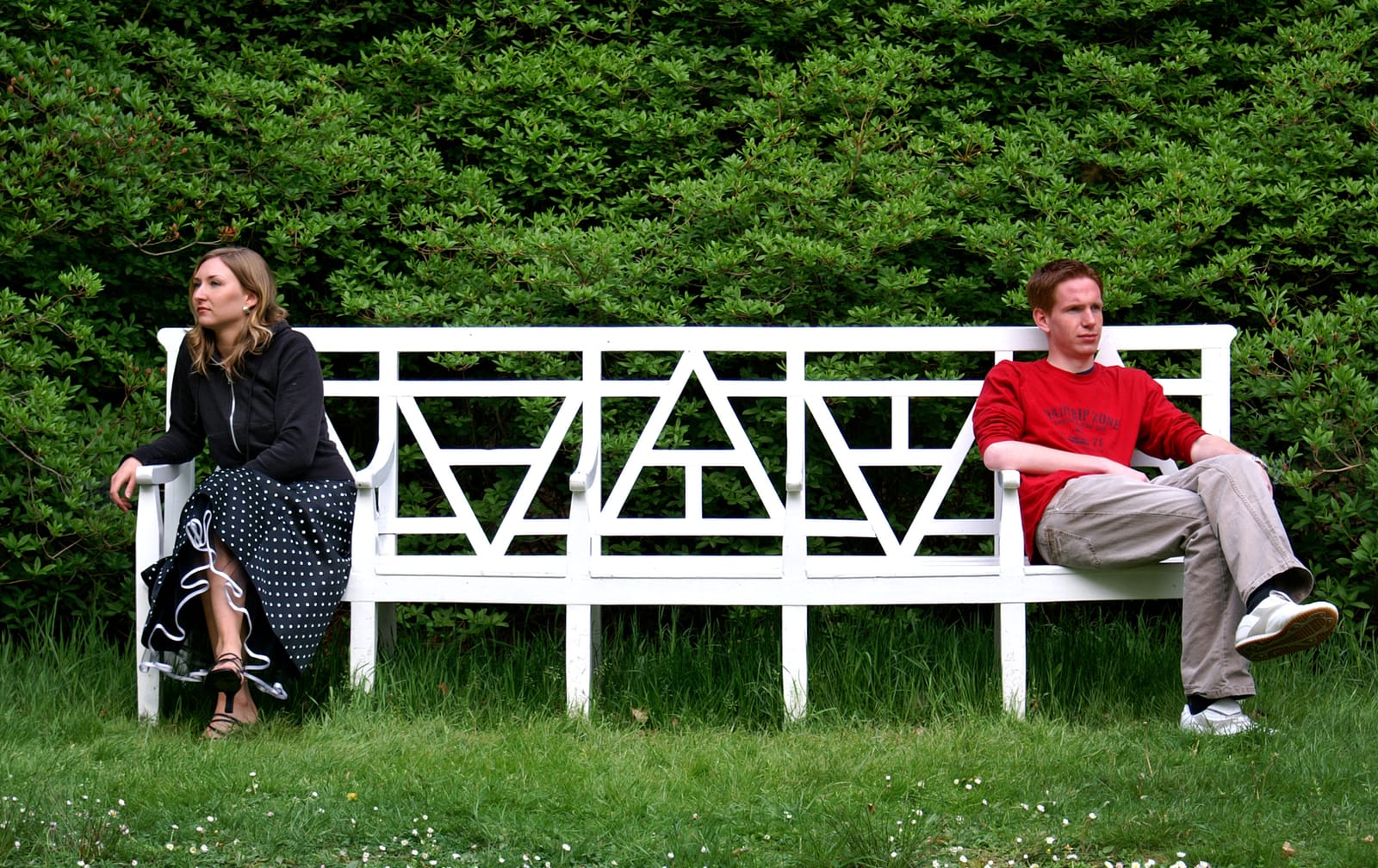
It has finally happened.
We have reached the point in British civilisation where even divorce has been tidied up, folded neatly, and placed back in the cupboard with the good linen.
They are calling it the “quiet divorce,” which sounds less like the end of a marriage and more like something one orders after lunch, alongside a weak tea and a small regret.
In essence, nothing happens.
You remain married.
You share a house.
You occasionally pass one another on the stairs and exchange the kind of smile normally reserved for people you once knew at university but cannot quite place.
No arguments. No accusations. No flying crockery.
Just two people, living side by side, having quietly agreed to stop being married without the administrative inconvenience of saying so.
It is, we are told, very modern.
One might suggest it is very British.
There is a particular genius in the British upper classes for enduring situations long after they have ceased to function, provided everyone continues to behave correctly. Entire marriages have been sustained on the strength of correct behaviour alone, with feeling treated as an optional extra, like pudding.
The quiet divorce simply formalises this instinct.
You do not leave. That would be disruptive.
You do not argue. That would be vulgar.
You simply… withdraw.
Emotionally, spiritually, and in some cases geographically within the house, until you are effectively two well-appointed strangers sharing a postcode.
One develops interests.
These are essential.
One partner becomes intensely committed to gardening, not in the sense of growing anything, but in the sense of standing in the garden for long periods of time, staring at the horizon, and wondering where it all went wrong in 2004.
The other takes up reading. Not reading for pleasure, you understand, but reading as a form of strategic absence.
Dinner becomes a quiet negotiation of timing.
“Will you be eating?”
“I may have already eaten.”
“How efficient.”
And so the marriage continues, perfectly intact, like a museum exhibit labelled Domestic Arrangement, Late Period, Minimal Interaction.
Now.
Let us bring this delicate structure north.
The Scottish marriage does not lend itself to quiet disappearance.
It is not that Scots lack subtlety. It is simply that when something has gone wrong, there is a natural inclination to say so, preferably in complete sentences and, where necessary, with supporting detail.
A Scottish “quiet divorce” would last approximately twelve minutes.
It would begin with a silence.
A meaningful silence.
The kind that suggests something has been noticed.
It would then progress, inevitably, to a conversation.
This conversation would not be hurried. It would be thorough. It would include references to events that both parties had hoped were no longer on the record, including but not limited to a disagreement about a fence, a holiday that was “fine” but not fine, and a remark made in 1997 that has been waiting patiently for its moment.
There would be tea.
The tea would not help.
At some point, a decision would be reached. It might not be tidy. It might not be polite. But it would, at the very least, be clear.
And this is the difference.
The quiet divorce depends upon the ability to maintain a fiction.
It requires a certain amount of space, both physical and social, in which two people can live entirely separate emotional lives without anyone asking inconvenient questions such as “Are you all right?” or, more dangerously, “What is actually going on?”
In much of Scotland, this is difficult.
People notice things.
Neighbours notice things.
Family notice things.
The dog notices things.
You cannot spend six months speaking to your spouse only in the language of logistical updates without someone eventually asking why you are referring to each other as though you are coordinating a small delivery operation.
And when the question is asked, it must be answered.
The Scottish instinct is not to preserve the appearance of harmony at all costs. It is to establish, with reasonable accuracy, whether harmony exists, and if it does not, to proceed accordingly.
Possibly with volume.
The quiet divorce avoids all of this.
It offers a solution in which nothing is broken, because nothing is acknowledged to be broken. The marriage remains, perfectly arranged, like furniture that has not been moved in years and is therefore assumed to be fine.
It is, in its way, admirable.
It is also faintly terrifying.
There is something deeply unsettling about the idea of two people sharing a life in complete silence, not because they have nothing to say, but because they have decided that saying it would be inconvenient.
One imagines entire evenings conducted in the presence of a television that no one is watching, both parties absorbed in their own thoughts, occasionally nodding in agreement with something that was never actually said.
In Scotland, this would not be sustainable.
Someone would speak.
And once someone speaks, the whole arrangement collapses into something recognisable as a conversation, which may then develop, quite naturally, into a disagreement, a resolution, or a separation that has the decency to admit that it is, in fact, a separation.
The quiet divorce is many things.
It is elegant. It is controlled. It is impeccably mannered.
But it is not, one suspects, particularly alive.
And if one must choose between a marriage that ends with a raised voice and one that continues indefinitely in perfect, suffocating silence, there is a certain argument to be made for the voice.
At the very least, it confirms that someone is still there.