

Hundreds of publicly owned electric-vehicle chargers across southern and central Scotland are preparing to leave ChargePlace Scotland and come under the operation of a single private company, as eight councils move towards awarding a concession that could last for 20 years.
The change is considerably larger than replacing the name on an app.
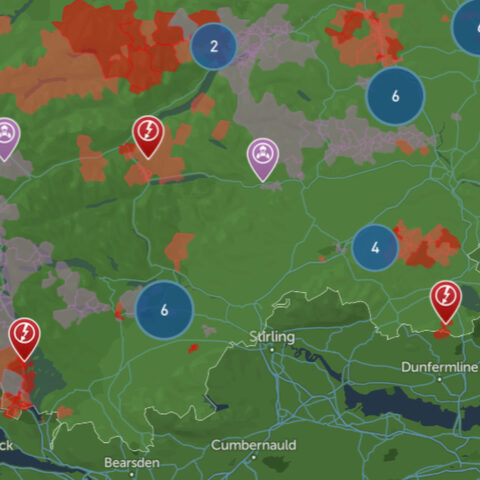
The successful private operator will assume responsibility for operating and maintaining the existing council charging estate across Edinburgh, Clackmannanshire, Dumfries and Galloway, Falkirk, Fife, Midlothian, the Scottish Borders and West Lothian. Existing chargers will be removed from the ChargePlace Scotland back-office system and transferred to a new system supplied by the operator.
The same company will then be expected to expand the network by roughly 1,800 additional charging points by 2030, backed by £6.38 million from Transport Scotland and more than £20 million of anticipated private capital.
The councils will continue to own their existing chargers. What changes is who operates them, who maintains the network, which back-office system drivers use, how expansion is financed and how the commercial relationship with motorists works.
It is part of a much wider change taking place across Scotland. The national ChargePlace Scotland model built with tens of millions of pounds of public investment is being dismantled as the Scottish Government moves towards a charging network increasingly financed and operated by private companies.
The National Network Is Coming to an End
ChargePlace Scotland was created when electric cars were uncommon and commercial charging networks had little reason to build infrastructure across large parts of Scotland.
The Scottish Government stepped into that gap.
Since 2011 it has spent more than £65 million supporting public EV charging infrastructure. Public grants enabled councils and other organisations to install chargers in cities, towns, islands and rural communities where the commercial case was often weak or nonexistent.
The result was a national network that allowed a driver to use the same ChargePlace Scotland system at chargers belonging to hundreds of different organisations.
That model is now being wound down.
Transport Scotland says ChargePlace Scotland achieved its original purpose of stimulating the early market and encouraging people to switch to electric vehicles. Its policy is now to move away from a publicly subsidised network towards one in which the private sector takes increasing responsibility for investment and operation.
The contract supporting the national ChargePlace Scotland back office will therefore not be renewed.
The transition has taken longer than originally planned. Owners were initially expected to migrate chargers by the end of 2025. ChargePlace Scotland now says the process will continue throughout 2026, with the national network finally ending in 2027.
Individual chargers are already disappearing from the old network and moving to operators including Evolt, Connekt, EZO, Fuuse, Monta, ScottishPower, Tap Electric and others.
For drivers, that means ChargePlace Scotland is gradually ceasing to be a single national front door.
The Public Chargers Are Not Being Sold
ChargePlace Scotland does not own the chargers carrying its name.
The hardware belongs to the organisation that acquired it, commonly a council or another public body. ChargePlace Scotland supplied the common back-office platform through which chargers were monitored, accessed and, where applicable, paid for.
That remains true during the transition.
ChargePlace Scotland states explicitly that council chargers remain owned by the councils after migration.
The South of Scotland procurement therefore does not amount to eight councils selling their existing charging infrastructure to a private company.
Instead, they are proposing to give a single operator long-term responsibility for running that infrastructure under a concession agreement.
Ownership and operational control are not the same thing. A council may continue to own the charger standing in a public car park while the private concessionaire operates it, maintains it, provides the software behind it, handles payments and customer services and receives charging revenue under the contractual arrangement.
One Operator Across Eight Council Areas
The scale of the South of Scotland arrangement is unusual.
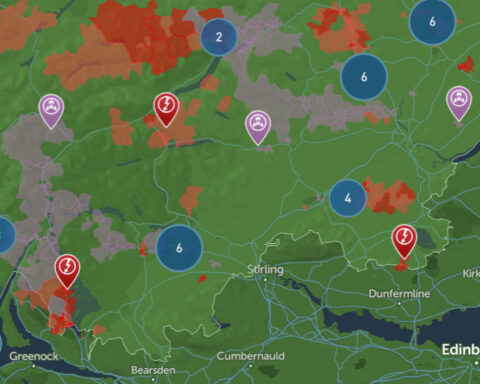
Edinburgh is acting as lead authority for a partnership covering eight council areas extending from densely populated Edinburgh and Fife to the Scottish Borders and the large rural geography of Dumfries and Galloway.
Early procurement documents identified roughly 600 existing charge points that would pass into the new operating arrangement. Subsequent regional material refers to more than 700 chargers already in place.
Nearly 1,800 more are expected to be added by 2030.
Rather than eight councils choosing separate operators, the authorities deliberately combined their networks to create a larger commercial opportunity capable of attracting private investment.
The procurement seeks one charge-point operator capable of providing different types and speeds of charging across the entire region.
Most of the new units are expected to be lower-powered AC chargers intended for longer stays rather than rapid motorway-style charging.
That reflects one of the central problems the scheme is supposed to address: residents who do not have driveways or private parking need somewhere to leave a vehicle charging for several hours, particularly overnight.
The Contract Could Last 20 Years
The published concession notice gives the contract duration as 240 months, which is 20 years.
Other procurement material describes the structure as an initial 15-year period with the possibility of a further five years.
The length is significant because the commercial model depends upon the private operator investing its own money and recovering that investment from the charging network over time.
This is not a conventional maintenance contract in which councils simply pay a company an annual fee to repair public equipment.
Scottish Futures Trust guidance explains that under an EV charging concession the authority enables a private operator to provide a service to motorists from council sites. The project can be financed through a combination of Transport Scotland grants and private-sector capital, with the operator assuming substantial commercial and utilisation risk.
A longer contract gives that company time to recover installation costs and earn a return.
It also means that decisions being taken now could shape public charging across eight council areas well into the 2040s.
More Than £20 Million Is Expected From the Private Operator
The public contribution is substantial but no longer intended to carry the full cost of expansion.
Transport Scotland has allocated £6.38 million from its Electric Vehicle Infrastructure Fund to the South of Scotland partnership, alongside earlier money for strategy and procurement work.
Initial planning anticipated that the selected operator would mobilise more than £20 million of private capital.
Across Scotland, the £30 million EV Infrastructure Fund was explicitly designed to attract at least another £30 million of private investment.
The philosophy is the reverse of the system used to establish ChargePlace Scotland.
Under the earlier Local Authority Investment Programme, councils could receive 100 per cent capital grants to install chargers. Public bodies then owned and were responsible for those assets while the Scottish Government funded the national back-office network.
Under the emerging model, public funding is supposed to make projects commercially investable rather than pay for every charger.
Rural Scotland Is the Difficult Part of the Business Model
The move towards commercial operation creates an obvious geographical problem.
A charger in a busy urban area can serve many vehicles every day. A charger needed to make an electric journey practical through a sparsely populated rural area may be used far less frequently.
The latter can be socially or strategically valuable without being particularly profitable.
Transport Scotland acknowledges this directly.
Its policy is to direct public EV Infrastructure Fund money towards locations where private investment on its own is less likely to work, particularly rural and island communities and urban neighbourhoods where households do not have off-street parking.
The South of Scotland procurement similarly identifies rural areas and locations where standalone private investment is unlikely as priorities.
It is an important test of the new model.
If commercially strong sites subsidise weaker locations within one large regional concession, combining eight council areas could protect rural provision better than asking private operators to invest in isolated chargers individually.
But the outcome depends upon the actual contractual obligations imposed on the successful operator.
A commercial company has an incentive to invest where demand and revenue are strongest. Councils therefore need contractual mechanisms ensuring that less profitable places are not simply left behind.
The Operator Will Have Significant Influence Over Tariffs
The change also matters to the price motorists pay.
ChargePlace Scotland was originally associated with free or heavily subsidised charging because government policy was designed to encourage early EV adoption.
That approach has already changed. Councils began introducing tariffs from 2022 onwards, and charges now vary considerably between charger owners.
Scottish Futures Trust concluded that free and very cheap public charging could actually discourage private investment because commercial operators could not reasonably compete with publicly subsidised electricity.
Its guidance for the new concession model therefore recommends that the service provider should be able to set and vary tariffs, subject to an agreed review protocol intended to keep prices competitive.
That guidance informed the development of the South of Scotland procurement, although the final contract terms have not yet been published.
The regional partnership has repeatedly said it wants fair and consistent tariffs across the eight council areas.
That could remove some of the current differences between neighbouring authorities.
But it also means that the eventual tariff system is a central part of the public interest in the contract. Drivers will need to know how prices may change, what constraints councils retain and whether rural or low-use chargers can carry different rates from heavily used urban sites.
Councils Could Receive Revenue From the Concession
The model does not necessarily mean handing public infrastructure to an operator without a financial return.
Scottish Futures Trust’s commercial guidance recommends considering revenue-sharing arrangements, including a minimum payment to an authority and potentially additional profit sharing later in a contract.
An earlier Dumfries and Galloway proposal for EV charging concessions contemplated private operators financing infrastructure and returning a share of revenue to the council.
The precise revenue provisions in the new regional contract are not yet publicly visible.
That is worth watching when the final award is published.
The value of the concession cannot be understood simply by looking at the £6.38 million Transport Scotland grant. Over a potential 20-year life, electricity sales, charging fees, private investment, maintenance liabilities, asset replacement and any payments returned to councils could be considerably more significant.
Leaving ChargePlace Scotland Also Means Leaving its Back Office
The most visible change for drivers may come before any new charger is installed.
The existing council chargers will have to be migrated from ChargePlace Scotland onto the successful operator’s back-office system.
That means the ChargePlace Scotland RFID card and other CPS-specific methods will no longer work on those chargers once they migrate.
Drivers may instead have to use contactless payment, an operator’s app, a different RFID system or a roaming service, depending upon the equipment and network.
ChargePlace Scotland says roaming arrangements can reduce the disruption. Networks participating in services such as Electroverse or fleet-payment platforms can potentially allow drivers to use different operators through a common account.
But the former national system is nevertheless fragmenting.
Instead of one Scottish Government-backed network with a single map, membership system and support operation, motorists will increasingly encounter numerous commercial networks.
The Scottish Government argues that this will provide greater choice.
The practical test will be whether interoperability becomes good enough that drivers no longer need to care which company operates a charger.
ChargePlace Scotland’s Closure Has Already Been Delayed
The complexity of migration has already altered the timetable.
In 2025, councils were working on the assumption that the ChargePlace Scotland back office would cease operating in early 2026.
Clackmannanshire Council was explicitly told in its South of Scotland EV strategy work that the system was expected to be switched off in April 2026.
That did not happen.
ChargePlace Scotland subsequently extended transition arrangements, acknowledging that moving a large number of chargers belonging to hundreds of different owners was more complicated than initially anticipated.
Owners now have until the end of December 2026 to migrate, with the national system winding down fully in 2027.
The extension is intended to prevent chargers becoming inaccessible during the transition.
It also shows how much hidden infrastructure sits behind something apparently as simple as plugging a car into a council charger.
Billing, communications, remote monitoring, fault reporting, authentication and customer support all have to migrate alongside the hardware.
The Successful Supplier Is Being Approved, But Has Not Yet Been Publicly Named
The South of Scotland procurement has now reached its final stage.
The competitive tender closed in October 2025.
Dumfries and Galloway Council’s Economy and Infrastructure Committee was told on 1 September 2026 that the joint procurement had produced an outcome. Councillors agreed to formalise the inter-authority partnership and approved Edinburgh proceeding with the award of the concession contract to a supplier.
The committee also recorded that the contract could not actually be awarded until all participating councils had completed their own governance approvals.
Edinburgh’s Finance and Resources Committee considered the award on 24 September.
Clackmannanshire Council is also considering an item entitled “Award of South of Scotland Electric Vehicle Charging Infrastructure Delivery Partner Concession Contract”. That item has been designated exempt from public consideration under local-government legislation.
The commercially sensitive reports containing the proposed award details are therefore not publicly available through those committee papers.
As of 7 October, the published Public Contracts Scotland procurement record available to the public still identifies the procurement but does not name the successful operator.
That should change once the procurement reaches formal award and the required award notice is published.
This Is Happening Across Scotland, Not Only in the South
The South of Scotland scheme is one part of a national restructuring.
Transport Scotland has allocated the full £30 million EV Infrastructure Fund across regional projects.
Highland, Moray, Aberdeenshire and Aberdeen City are working together in the north. HITRANS is leading another programme covering Orkney, Shetland, the Western Isles and Argyll and Bute. Glasgow City Region’s eight councils are developing another regional network. Ayrshire, Dundee and other areas have their own arrangements.
The aim is approximately 6,000 additional public charge points through EV Infrastructure Fund projects by 2030.
Private investment outside those projects is growing even faster. Transport Scotland says Scottish Futures Trust estimated private-sector investment in public charging at between £25 million and £35 million in 2023, £40 million to £55 million in 2024 and £50 million to £75 million in 2025.
By March 2026 Scotland was reporting more than 12,000 public chargers, although part of that increase reflects a change in the UK methodology used to count them.
The direction of policy is nevertheless unambiguous.
The Scottish Government no longer intends to be the principal financier and organiser of the country’s public EV charging system.
A Public Network Is Becoming a Regulated Commercial Service
The change does not necessarily mean less public control.
Councils remain the owners of existing council assets. They can specify service standards, accessibility requirements, geographic priorities, maintenance performance and tariff controls through the concession contract.
The South of Scotland strategy also requires attention to disabled users, people without off-street parking and communities that might otherwise struggle to attract investment. Community benefits including employment, apprenticeships and links with schools and colleges have also formed part of the intended procurement.
But the mechanism through which those public objectives are delivered is changing fundamentally.
The previous system relied on public capital creating infrastructure that was joined together through a nationally funded Scottish network.
The replacement increasingly relies on long-term contracts designed to make EV charging commercially attractive to private capital.
That makes the quality of those contracts unusually important.
Over a 20-year concession, today’s decisions about tariff controls, maintenance standards, rural coverage, revenue sharing, replacement of ageing equipment, early termination and ownership of newly installed assets may matter more than the £6.38 million grant that initially attracts attention.
Scotland has already demonstrated that public money can create an EV network in places where the market would not initially build one.
The next experiment is different: whether those publicly created foundations can be transferred into commercially operated regional networks without losing the national accessibility, rural coverage and public leverage that made ChargePlace Scotland valuable in the first place.
Sources
Electric Vehicle Infrastructure Fund
Transport Scotland
https://www.transport.gov.scot/our-approach/environment/electric-vehicle-infrastructure-fund/
Supporting Electric Vehicle Infrastructure
Transport Scotland, 4 September 2025
https://www.transport.gov.scot/news/supporting-electric-vehicle-infrastructure/
South of Scotland Electric Vehicle Charging Delivery Partner — Concession Notice
Public Contracts Scotland, 22 September 2025
https://www.publiccontractsscotland.gov.uk/search/show/search_view.aspx?ID=SEP539666
South of Scotland Electric Vehicle Charging Delivery Partner — Prior Information Notice
Public Contracts Scotland, 14 March 2025
https://www.publiccontractsscotland.gov.uk/search/show/search_view.aspx?ID=MAR526011
South of Scotland EV Charging Strategy
City of Edinburgh Council
https://www.edinburgh.gov.uk/downloads/file/38002/south-of-scotland-ev-charging-strategy
South of Scotland Electric Vehicle Charging Strategy
West Lothian Council
https://www.westlothian.gov.uk/article/86866/South-of-Scotland-Electric-Vehicle-Charging-Strategy
Economy and Infrastructure Committee — South of Scotland Electric Vehicle Charging Infrastructure
Dumfries and Galloway Council, 1 September 2026
https://dumfriesgalloway.moderngov.co.uk/ieListDocuments.aspx?CId=624&MID=6493
Finance and Resources Committee — Award of South of Scotland Electric Vehicle Charging Infrastructure Delivery Partner Concession Contract
City of Edinburgh Council, 24 September 2026
https://edinburgh.public-i.tv/core/portal/webcast_interactive/1128522
Council Agenda — Award of South of Scotland Electric Vehicle Charging Infrastructure Delivery Partner Concession Contract
Clackmannanshire Council, October 2026
https://www.clacks.gov.uk/council/meetings/agenda/1296/
Commercial Considerations for EV Infrastructure Service Contracts
Scottish Futures Trust
https://www.scottishfuturestrust.org.uk/publications/documents/commercial-considerations-for-ev-infrastructure-service-contracts
Net Zero Transport — EV Infrastructure Fund Legal Documents and Guidance
Scottish Futures Trust
https://www.scottishfuturestrust.org.uk/page/net-zero-transport
Transition Resource Hub
ChargePlace Scotland
https://chargeplacescotland.org/transition-resource-hub/
Charger Network Updates Across Scotland
ChargePlace Scotland, updated 5 October 2026
https://chargeplacescotland.org/charger-network-updates-across-scotland/
Energy Saving Trust Webinar — ChargePlace Scotland Transition
ChargePlace Scotland, July 2026
https://chargeplacescotland.org/est-webinar-july-2026/
Report on Public Electric Vehicle Infrastructure in Scotland — Opportunities for Growth
Transport Scotland, 21 July 2021
https://www.transport.gov.scot/publication/report-on-public-electric-vehicle-ev-infrastructure-in-scotland-opportunities-for-growth/
Carbon Reduction on Roads
Transport Scotland
https://www.transport.gov.scot/our-approach/environment/carbon-reduction-on-roads/