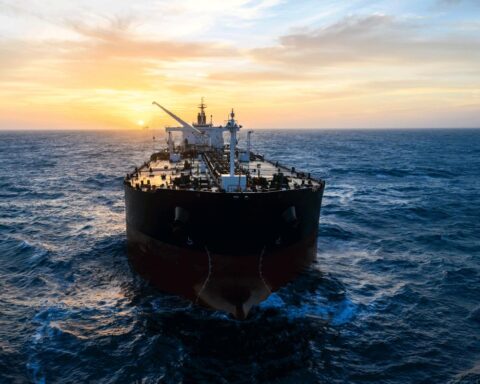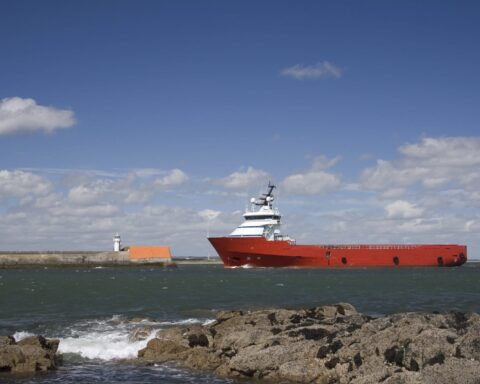

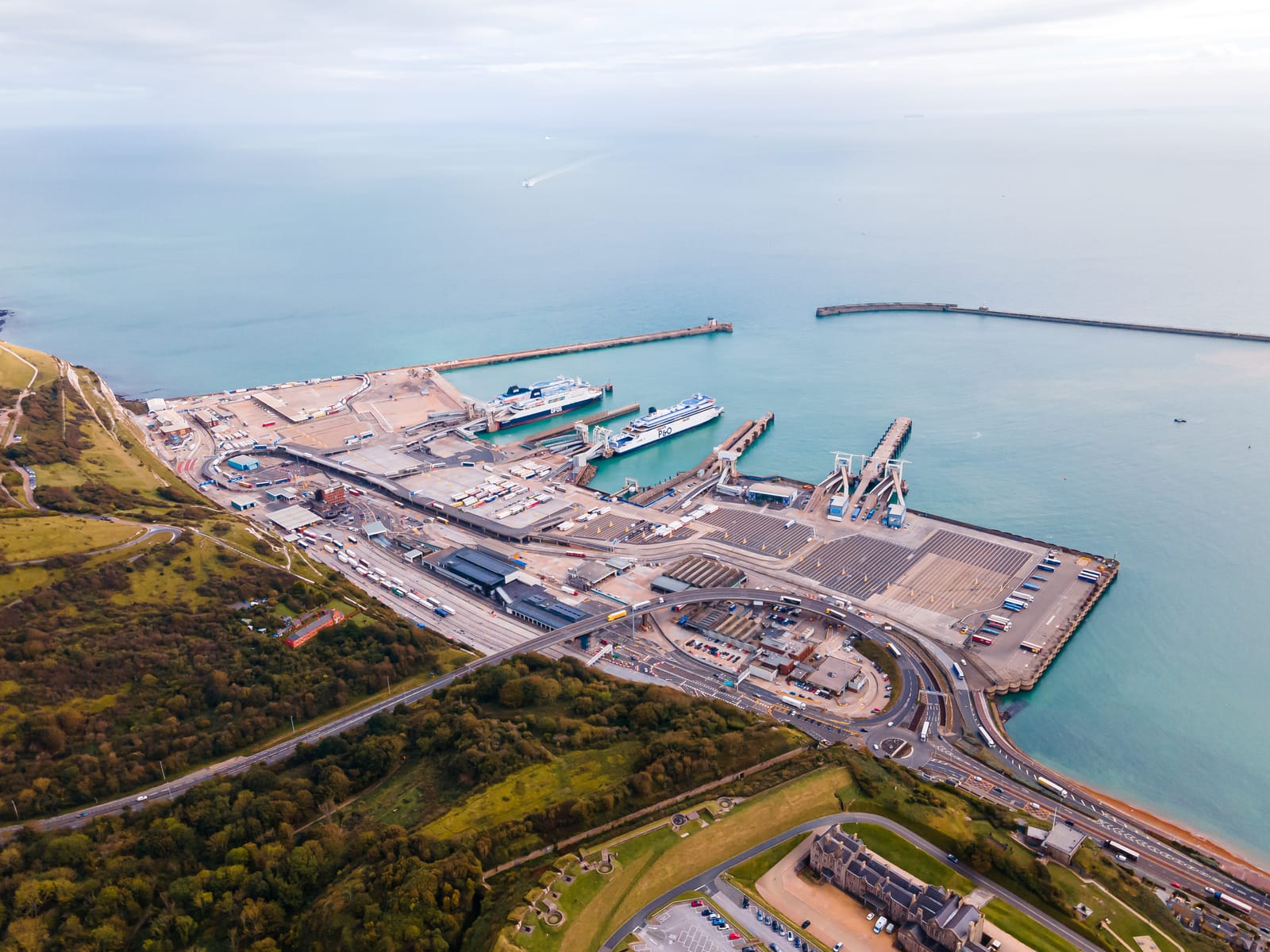
Scotland has avoided a sustained nationwide shortage of fuel, food or essential goods. Yet 21.1 million tonnes entered the country by road from elsewhere in the UK in 2024, with 97 per cent of that measured flow coming from England. Many of those goods began their journeys much farther away, but passed through English ports, warehouses and distribution centres before being carried north. As war raises the cost of diesel, shipping and insurance, Scotland is paying more to keep goods moving, and the burden grows with distance.
An empty shelf is the most obvious sign that a supply chain has failed. It is also one of the last.
Long before a product disappears, the disturbance arrives through a higher wholesale price, a longer shipping route, an insurance surcharge, a delayed container, a dearer tanker delivery or a haulier deciding how much of the latest diesel increase can be passed to the customer.
By that measure, the wars affecting the Middle East and the Black Sea have already reached Scotland.
There is no evidence in the public data examined by Modern Scot of a sustained nationwide interruption to food, fuel or other essential supplies. Ships are still unloading. Tankers are still making deliveries. Supermarkets are still stocked.
The evidence instead points to something quieter and more difficult to see. Scotland’s supply chain has been repriced.
That cost does not travel directly from a distant war zone to a Scottish shop. It passes through ships, ports, refineries, import terminals, warehouses, distribution centres, lorries, ferries and local delivery vehicles. Every stage adds distance, labour, fuel and another place at which delay can occur.
The system has held. That is not the same as saying it is comfortable, transparent or secure.
The War Arrives By The Litre
The scale of the international disruption is not speculative.
Ship movements through the Strait of Hormuz fell from around 130 a day in February to six a day in March, a collapse of approximately 95 per cent. UN Trade and Development said shipping and insurance costs had risen together, sending additional expense through international supply chains and increasing pressure on prices.
The effects reach beyond oil and gas. Significant fertiliser volumes also pass through the Strait, connecting disruption in energy and maritime transport to the future cost of farming and food production. UN Trade and Development has warned that the conflict is already being reflected in fertiliser markets and increasing risks to food supply and trade.
The crisis has not ended. Reuters reported on 5 August that eight vessels had crossed Hormuz on the previous day, compared with a normal pre-war flow of approximately 130 to 140 vessels.
As of 27 July, the International Maritime Organization had recorded 62 confirmed maritime incidents in the Strait and wider Middle East, together with 17 confirmed seafarer deaths. The commercial shipping system has been operating through a live conflict in which vessels, crews, ports and energy infrastructure have become targets.
Pressure is also growing in the Black Sea. Attacks on ships, ports and export terminals have interrupted grain and oil movements, damaged infrastructure, suspended some shipments and raised freight and war-insurance costs. The disturbance is overlapping with continuing pressure in Hormuz and renewed danger in the Red Sea.
Scotland does not need to buy every barrel directly from the Gulf, or every tonne of grain directly from the Black Sea, for those events to arrive here. Refined fuel, crude oil, tanker capacity, fertiliser, marine insurance and freight are traded internationally. A vessel removed from one route, a war premium added to another and a refinery competing for constrained supplies can all alter the price paid in Scotland.
Official figures show how sharply the cost reached the road.
In the week beginning 23 February, average UK petrol cost 131.71p a litre and diesel 141.46p. By the week beginning 3 August, petrol had risen to 159.89p and diesel to 179.19p.
That represents increases of 28.18p for petrol and 37.73p for diesel, 21.4 per cent and 26.7 per cent respectively. For a 55-litre tank, the difference is approximately £15.50 for petrol and £20.75 for diesel. A business purchasing 1,000 litres of diesel faces an additional cost of about £377 compared with February. The figures are UK averages, meaning prices in rural and island Scotland may be higher.
A household encounters the increase once at the pump. A haulage company encounters it across an entire fleet, before a single loaf, prescription, parcel, restaurant delivery or machine component reaches its destination.
Scottish Businesses Are Already Reporting The Damage
The effect is visible in the Scottish Government’s own business surveys.
In March, 9.6 per cent of businesses with at least ten employees and a presence in Scotland said they had experienced global supply-chain disruption, up from three per cent in February and the highest proportion recorded since May 2023. Of the businesses affected, 62.4 per cent identified conflict in the Middle East as the principal cause.
During the same survey period, 39 per cent reported an increase in the prices of goods or services they purchased, while 35.4 per cent expected to increase the prices they charged during May.
By April, 57.9 per cent of Scottish businesses reported some form of concern about their supply chains. International conflict was the leading concern, cited by 47.2 per cent, followed by shipping disruption at 25.1 per cent.
More than half of exporters reported that the cost of exporting had increased during the year to March, while 36.6 per cent of importers reported higher importing costs.
The alarm was especially pronounced among the businesses responsible for keeping goods moving. During the second half of June, 91.1 per cent of transport and storage businesses said they were concerned about rising fuel prices, while 90.3 per cent were concerned about energy costs. International conflict remained the most commonly identified supply-chain risk.
These figures measure concern, disruption and rising commercial costs. They do not prove that every price increase has been caused by war.
They do prove that the businesses moving Scotland’s goods recognise conflict, fuel prices and maritime disruption as immediate risks—and that some have already experienced the consequences.
A distributor can absorb an increase, pass it to the customer or divide it between the two. None of those options makes the cost disappear.
The charge travels until it reaches somebody unable to send it any further.
Scotland Is Paying A Distance Penalty
The clearest evidence that geography magnifies the international shock comes from domestic heating oil.
Between February and March, the average Scottish heating-oil price rose from 69p to 113p a litre, an increase of 44p. The increase in England was 38p, from 65p to 103p.
Across the UK, a typical 500-litre order became approximately £200 more expensive in a month. The Competition and Markets Authority found that 83 per cent of the retail increase was attributable to higher wholesale costs, rather than suppliers materially increasing their profits.
The regulator also identified a distinctly Scottish exposure. Households in remote areas, including parts of Scotland, generally have fewer suppliers and face higher prices because they cost more to serve. Prices increased more sharply in some remote areas after the Middle East conflict because the underlying cost of getting the fuel there had risen further.
This is the principle running through Scotland’s wider supply chain.
A delivery in a densely populated area can serve many customers within a short distance. A tanker or lorry travelling through the Highlands may cover substantial distances between drops. An island delivery may require storage at another terminal, a ferry crossing, suitable weather and a further local journey.
The international price shock begins in the same market. It does not finish at the same cost.
The farther the goods travel, the more fuel, labour and handling they require.
The latest shock has also arrived among households already carrying severe financial pressure.
Consumer Scotland found that 38 per cent of Scottish households could not afford to heat their homes comfortably, while 19 per cent reported energy debt or arrears. Those findings were gathered in January and February, largely before the full effect of the conflict, and therefore describe Scotland’s vulnerable starting position rather than hardship caused entirely by war.
Citizens Advice Scotland recorded average energy debts of more than £2,800 among those seeking help during the first three months of 2026, rising above £3,200 in rural areas.
Scottish Government modelling estimates that 800,000 households — 31 per cent of all Scottish households — will be in fuel poverty between July and September, including approximately 420,000 in extreme fuel poverty.
The projected fuel-poverty rate rises to 42 per cent in remote rural Scotland and 49 per cent in remote small towns. These figures reflect wider household energy costs and cannot be attributed solely to war, but they show how little room many families have left to absorb another externally driven increase.
The Road Is Scotland’s Supply Chain
The journey taken by goods into Scotland is central to understanding how an international fuel shock reaches Scottish households and businesses.
Scottish ports handle substantial volumes of freight, particularly crude oil, refined products and other bulk cargoes. But much of what Scotland consumes does not arrive directly at a Scottish harbour. It enters Britain elsewhere, passes through an English port or distribution centre and continues north by road.
In 2024, UK-registered heavy goods vehicles carried 21.1 million tonnes of goods into Scotland from elsewhere in the UK. Some 97 per cent came from England.
Only 18 million tonnes travelled in the opposite direction, leaving the recorded cross-border road-freight balance substantially northbound.
The North West of England supplied approximately 7.7 million tonnes. Yorkshire and the Humber accounted for 19 per cent of the total and North East England for 17 per cent. Together, those three English regions accounted for nearly three-quarters of the measured goods entering Scotland by UK-registered HGVs.
The detailed freight tables include more than 5.5 million tonnes of food products, including beverages and tobacco, together with more than two million tonnes of agricultural, forestry and raw-material products.
This does not mean that 97 per cent of everything consumed in Scotland comes from England.
The figure applies specifically to goods entering Scotland from elsewhere in the UK on UK-registered HGVs. It excludes direct maritime imports, foreign-registered vehicles, smaller vans and goods produced within Scotland.
It nevertheless records a very large physical flow upon which Scottish shops, manufacturers, farms, construction companies and households depend.
The paperwork may say that the final journey began in England. The contents may have begun their journey in continental Europe, Asia, Africa, the Middle East or the Americas.
A container can arrive at Felixstowe, Liverpool, Southampton, London Gateway, Dover, Hull or another English gateway. It may be unloaded, handled, transferred to a regional distribution centre, divided into separate loads and placed on a lorry travelling north.
England is therefore not necessarily the producer of Scotland’s imported goods. It is frequently the port, warehouse and road system through which Scotland receives them.
The Scottish Government has itself concluded that Scotland is heavily reliant on English ports, particularly the Channel ports and tunnel, because they provide the most effective routes to and from continental Europe for a wide range of industries.
The dependence runs in both directions.
A government-commissioned examination of the Scottish food-and-drink supply chain found that most containerised loads it examined travelled by truck or rail to English ports. Fresh seafood exports to the European Union went almost entirely by road through the Channel Tunnel, while sections of the red-meat industry depended upon processing and other supply-chain operations in England.
The report described parts of the Scottish food-and-drink sector as heavily dependent upon the English supply chain.
Five Hundred Miles Can Be Hidden In One Delivery
Transport Scotland identifies the M74–M6 as Scotland’s principal trunk-road connection with the rest of Great Britain and, through southern ports and the Channel Tunnel, continental Europe.
Other border crossings include the A1 north of Berwick-upon-Tweed, the A697 at Coldstream, the A68 at Carter Bar and the A7 north of Longtown. The A75 connects the main north–south corridor with the ports at Cairnryan and Loch Ryan.
These roads are not simply routes for motorists. They are physical arteries through which food, medicine, household goods and industrial materials reach Scotland.
A product destined for the Highlands may move from an overseas manufacturer to an English port, then to an English warehouse, north through the M6–M74 corridor, into a Scottish distribution centre and finally onto another vehicle travelling towards Inverness, Wick, Thurso or the west coast.
For an island, another depot, lorry, ferry and local delivery may be added.
During 2024, UK-registered HGVs lifted and delivered approximately 121 million tonnes within Scotland. The average freight journey was 107 kilometres, although that average combines short urban deliveries with far longer rural movements.
Each road leg consumes diesel at the higher price. Each transfer requires handling, refrigeration, storage, staff and time. Each stage creates another place where delay, weather, mechanical failure or infrastructure disruption can intervene.
The cost of supplying Scotland does not end when a lorry crosses the border. For goods destined for the Highlands and islands, some of the longest and most expensive stages of the journey may still lie ahead. A delivery may require another distribution centre, hundreds of miles of road travel, a ferry crossing and a final local vehicle before it reaches the customer.
Could More Goods Arrive Directly?
Scotland has had no regular international roll-on, roll-off freight ferry since the Rosyth–Zeebrugge service ended in 2018.
A direct vessel from continental Europe to Scotland could, in principle, remove hundreds of road miles and at least one transfer from some journeys. It could provide an alternative during disruption at Channel ports, the Channel Tunnel or the main English road corridors.
It would not automatically be faster or cheaper.
The previous Rosyth service suffered from limited frequency, a longer sea journey and arrival times poorly suited to highly perishable seafood. Large logistics companies choose routes according to cargo volume, delivery windows, vessel schedules, backhaul opportunities and the location of customers, not simply the shortest line on a map.
A government-commissioned review found that customers often preferred the speed and flexibility provided by longer road journeys followed by shorter and more frequent Channel crossings. A direct Scottish route would require sufficient cargo in both directions to make it commercially viable.
Yet the same study found significant underused container capacity at existing Scottish ports, including Grangemouth and Greenock. Some freight currently travelling south to English ports by road or rail could potentially be carried through Scottish gateways instead.
The question is therefore not whether Scotland should sever itself from the English logistics system. That would be commercially absurd.
The question is whether one principal system should be allowed to become so dominant that Scotland has too few practical alternatives when fuel costs rise, ports are disrupted or roads are blocked.
Resilience does not require isolation. It requires choice.
The Warning Was Given In 1948
It would be historically false to present pre-war or post-war Scotland as self-sufficient.
At the beginning of the Second World War, around 70 per cent of Britain’s requirements for food and livestock feed were imported. Rationing was introduced partly because attacks on merchant shipping threatened access to the overseas supplies upon which the country already depended.
The immediate post-war years brought continued rationing, shortages, damaged shipping and far less consumer choice than Scotland enjoys today.
But Scotland possessed more of the physical capacity required to receive, manufacture, process, repair, refine, store and move goods within the country.
The argument over English ports is not new.
In February 1948, the House of Commons was told that Glasgow had empty berths while ships waited to unload at Liverpool. During the first six weeks of that year, 6,000 tonnes of bacon, meat and butter intended for Scotland had been unloaded at Liverpool and carried north by road or rail.
The annual rate was said to be equivalent to the cargo of 17 large ocean-going vessels. MPs complained that the arrangement required four handling operations instead of two, burdened an overstretched railway system, consumed scarce petrol and sometimes delivered deteriorated meat to Scottish consumers.
One Glasgow MP described the unnecessary use of petrol as a “national wastage”.
The language belongs to 1948. The structural question could have been asked this week.
Why should goods intended for Scotland be unloaded farther south, handled again and carried hundreds of additional miles when Scottish port and distribution capacity might provide an alternative?
The figures from 1948 and 2024 cannot be compared directly. They cover different commodities, markets, vehicle classes and systems of measurement.
What they reveal is a recurring concern: goods intended for Scottish consumers being routed through English ports and then carried north at additional cost while Scottish capacity remains available.
Scotland Has More Goods, And Fewer Alternatives
The Scotland that emerged from the war was poorer and more heavily rationed. It also possessed a much larger productive base.
New historical national accounts show that manufacturing accounted for roughly one-third of Scottish economic output in 1948.
By 2023, manufacturing’s share of Scottish gross value added had fallen to 9.9 per cent, down from 17.4 per cent in 1998. The service industries had increased their share substantially over the same period.
That comparison does not mean every factory closure weakened food or fuel security. Modern services create wealth and employment, while greater productivity means industrial capacity cannot be judged solely by employment numbers or its percentage share of the economy.
But national resilience depends upon more than total economic value. It also depends upon what a country can make, process, repair, store and move when international systems are disturbed.
Scotland once moved substantially more freight by rail and coastal shipping.
Rail freight lifted in Scotland fell from 29.8 million tonnes in 1960 to 5.4 million tonnes by 1994–95, later recovering partially. Coastwise freight lifted in Scotland fell from 25 million tonnes in 2000 to 14 million tonnes in 2015.
Modern logistics produced extraordinary efficiency and consumer choice. Central warehouses, containerisation, national supermarket networks and motorway haulage can move large quantities quickly and reliably.
They also concentrated the system.
Efficiency removed duplication. In a crisis, duplication has another name: spare capacity.
Scotland’s First Fuel Crisis Without A Refinery
The present crisis is also testing Scotland after crude-oil refining ended at Grangemouth.
Scotland’s only oil refinery formally ceased production on 29 April 2025. The site was converted into an import and fuels-distribution terminal.
Petroineos says the terminal continues to serve the Scottish market reliably through road, jetty, rail and pipeline infrastructure. The present evidence does not show that the import-terminal system has failed.
What has changed is the route of dependence.
Scotland previously imported much of the crude oil refined at Grangemouth, so the former arrangement was never wholly domestic. But Scotland retained the industrial capacity to turn crude into petrol, diesel, aviation fuel and other products on site.
That stage has gone.
The Scottish Government’s Climate Change Plan states that, following the closure, Scotland’s residual demand must be met through imports of finished fuel products. The country exports much of the crude oil associated with its waters while importing the finished fuels it consumes.
Scotland remains supplied, but it holds less control over how the finished product is made before it arrives.
What Scotland Is Entitled To Know
Scotland is wealthier than it was in 1948. Its shelves carry an abundance and variety that post-war households could scarcely have imagined.
It is also weaker in one precise and defensible sense.
It has a smaller manufacturing base, no operating crude-oil refinery, reduced rail and coastal freight capacity, no regular direct roll-on, roll-off freight link with continental Europe and a supply chain in which an enormous measured volume passes through English ports, warehouses and roads.
Scotland possesses abundance with fewer alternatives.
This is not an accusation that England is withholding goods. England is exposed to the same wars, energy markets and maritime disruption. The vulnerability is not hostility. It is concentration.
Scotland’s elected governments and representatives should now establish what proportion of the country’s food, medicines, finished fuels and essential industrial inputs enters Britain through ports outside Scotland.
They should identify which English ports, distribution centres and roads, and which Scottish terminals, railway routes and ferry links constitute single points of failure.
They should publish the cumulative effect of higher fuel, freight and insurance costs upon Scottish businesses, and explain how much of that additional burden is being amplified by the long road journey north.
They should measure the distance penalty paid by the Highlands and islands, where international increases are compounded by longer delivery routes, fewer suppliers, additional storage and ferry transport.
They should assess whether commercially viable direct freight services to Scotland could provide greater resilience, and whether Grangemouth, Greenock, Rosyth or other Scottish ports could handle more of the goods currently carried north from English gateways.
They should identify which domestic refining, manufacturing, food-processing, storage, repair and freight capabilities must be treated as strategic infrastructure rather than left entirely to short-term commercial calculation.
And they should explain the contingency if conflict-driven shipping and fuel pressure coincides with a severe storm, a ferry failure, a cyberattack, an English port closure or a prolonged interruption on the M6–M74.
Scotland’s shelves remain full because ships are arriving, English ports and warehouses are operating, the border roads are open and the lorries are moving.
That is resilience of a kind.
It is also a warning.
War has not emptied Scotland’s shelves. It has revealed the long, expensive and increasingly concentrated chain that keeps them full, and the Scottish households and businesses at the farthest end of it are already carrying a disproportionate share of the cost.
Full Source List
- UN Trade And Development — Hormuz Disruption Deepens Global Economic Strain Across Trade, Prices And Finance
https://unctad.org/news/hormuz-disruption-deepens-global-economic-strain-across-trade-prices-and-finance - UN Trade And Development — Hormuz Disruption Shows Why Early-Warning Data Matters
https://unctad.org/news/hormuz-disruption-shows-why-early-warning-data-matters - UN Trade And Development — From Gas To Grain: Fertilizer Disruptions Raise Risks For Food Security And Trade
https://unctad.org/news/gas-grain-fertiliser-disruptions-raise-risks-food-security-and-trade - UN Trade And Development — Hormuz Shipping Disruptions Raise Risks For Energy, Fertilizers And Vulnerable Economies
https://unctad.org/news/hormuz-shipping-disruptions-raise-risks-energy-fertilizers-and-vulnerable-economies - International Maritime Organization — Middle East: Highlighted Confirmed Incidents
https://www.imo.org/en/mediacentre/hottopics/pages/middle-east-highlighted-incidents.aspx - International Maritime Organization — Middle East And Strait Of Hormuz Information Page
https://www.imo.org/en/mediacentre/hottopics/pages/middle-east-strait-of-hormuz.aspx - Reuters — Gulf Shipping Traffic Steady Amid Uncertainty Of Peace Talks
https://www.reuters.com/world/middle-east/gulf-shipping-traffic-steady-amid-uncertainty-peace-talks-2026-08-05/ - Reuters — Surge In Black Sea Attacks Adds To Strain On Global Commodity Flows
https://www.reuters.com/world/surge-black-sea-attacks-adds-strain-global-commodity-flows-2026-08-05/ - UK Department For Energy Security And Net Zero — Weekly Road Fuel Prices
https://www.gov.uk/government/statistics/weekly-road-fuel-prices - UK Department For Energy Security And Net Zero — Road Fuel Prices: 3 August 2026
https://www.gov.uk/government/statistics/announcements/road-fuel-prices-3-august-2026 - Scottish Government — Business Insights And Conditions In Scotland, Wave 154
https://www.gov.scot/publications/bics-weighted-scotland-estimates-data-to-wave-154/ - Scottish Government — Wave 154: Global Supply-Chain Disruption
https://www.gov.scot/publications/bics-weighted-scotland-estimates-data-to-wave-154/pages/global-supply-chain-disruption/ - Scottish Government — Wave 154: Prices
https://www.gov.scot/publications/bics-weighted-scotland-estimates-data-to-wave-154/pages/prices/ - Scottish Government — Business Insights And Conditions In Scotland, Wave 155
https://www.gov.scot/publications/bics-weighted-scotland-estimates-data-to-wave-155/ - Scottish Government — Wave 155: Supply-Chain Concern
https://www.gov.scot/publications/bics-weighted-scotland-estimates-data-to-wave-155/pages/supply-chain-concern/ - Scottish Government — Wave 155: Exporting And Importing
https://www.gov.scot/publications/bics-weighted-scotland-estimates-data-to-wave-155/pages/exporting-and-importing/ - Scottish Government — Business Insights And Conditions In Scotland, Wave 159
https://www.gov.scot/publications/bics-weighted-scotland-estimates-data-to-wave-159/ - Scottish Government — Wave 159: Supply-Chain Concern
https://www.gov.scot/publications/bics-weighted-scotland-estimates-data-to-wave-159/pages/supply-chain-concern/ - Competition And Markets Authority — UK’s Heating-Oil Households Need Stronger Protections
https://www.gov.uk/government/news/uks-heating-oil-households-need-stronger-protections-says-cma - Competition And Markets Authority — Heating Oil Market Study
https://www.gov.uk/cma-cases/heating-oil-market-study - Consumer Scotland — Insights From The 2026 Energy Affordability Tracker
https://consumer.scot/publications/insights-from-the-2026-energy-affordability-tracker-html/ - Citizens Advice Scotland — Energy Cap Rise Will Devastate People Across Scotland
https://www.cas.org.uk/news-and-events/energy-cap-rise-will-devastate-people-across-scotland - Scottish Government — Fuel Poverty Scenario Modelling Based On Ofgem Energy Price Caps, Up To July–September 2026
https://www.gov.scot/publications/fuel-poverty-scenario-modelling-based-on-ofgem-energy-price-caps-up-to-july-to-september-2026/ - Scottish Government — Fuel Poverty Scenario Modelling: Findings
https://www.gov.scot/publications/fuel-poverty-scenario-modelling-based-on-ofgem-energy-price-caps-up-to-july-to-september-2026/pages/findings/ - Scottish Government — Fuel Poverty Scenario Modelling: Rural And Urban Tables
https://www.gov.scot/publications/fuel-poverty-scenario-modelling-based-on-ofgem-energy-price-caps-up-to-july-to-september-2026/pages/annex-a/ - Transport Scotland — Scottish Transport Statistics 2025
https://www.transport.gov.scot/publication/scottish-transport-statistics-2025/ - Transport Scotland — Scottish Transport Statistics 2025: Road Freight
https://www.transport.gov.scot/publication/scottish-transport-statistics-2025/chapter-3-road-freight/ - Transport Scotland — Scottish Transport Statistics 2025: Full Report
https://www.transport.gov.scot/media/ydjpfj3l/scottish-transport-statistics-2025-publication-pdf-version-of-publication.pdf - Scottish Government — National Strategy For Economic Transformation: Evidence Paper
https://www.gov.scot/publications/scotland-national-strategy-economic-transformation-evidence-paper/ - Scottish Government — National Strategy For Economic Transformation: Challenges Facing Scotland’s Economy
https://www.gov.scot/publications/scotland-national-strategy-economic-transformation-evidence-paper/pages/5/ - Scottish Government — Food And Drink Supply Chain And Transport Industry: Executive Summary
https://www.gov.scot/publications/identifying-options-developing-transport-infrastructure-food-drink-supply-chain-strengthen-resilience/pages/1/ - Scottish Government — Scottish Food And Drink Production, Markets And Transport Routes
https://www.gov.scot/publications/identifying-options-developing-transport-infrastructure-food-drink-supply-chain-strengthen-resilience/pages/3/ - Scottish Government — Food And Drink Supply Chain: Current Capacity To Export From Scotland
https://www.gov.scot/publications/identifying-options-developing-transport-infrastructure-food-drink-supply-chain-strengthen-resilience/pages/5/ - Scottish Government — Food And Drink Supply Chain: Options For Direct Freight Services
https://www.gov.scot/publications/identifying-options-developing-transport-infrastructure-food-drink-supply-chain-strengthen-resilience/pages/8/ - Transport Scotland — Transporting Scotland’s Trade: 2018 Edition
https://www.transport.gov.scot/publication/transporting-scotland-s-trade-2018-edition/ - Transport Scotland — Transporting Scotland’s Freight
https://www.transport.gov.scot/publication/transporting-scotland-s-trade-2018-edition/4transporting-scotland-s-freight/ - UK Parliament Hansard — Port Of Glasgow, 17 February 1948
https://hansard.parliament.uk/commons/1948-02-17/debates/ff7ba581-3f63-4470-9689-61035937f2ac/PortOfGlasgow - Imperial War Museums — The Nation At A Standstill: Shutdown In The Second World War
https://www.iwm.org.uk/history/the-nation-at-a-standstill-shutdown-in-the-second-world-war - University Of Glasgow — Seventy Years Of Scotland’s National Accounts
https://eprints.gla.ac.uk/376486/ - Economic History Society — 70 Years Of Scottish National Accounts: 1948–2018
https://ehs.org.uk/article/70-years-of-scottish-national-accounts-1948-2018/ - The Economic History Review — 70 Years Of Scottish National Accounts: 1948–2018
https://onlinelibrary.wiley.com/doi/full/10.1111/ehr.70098 - Scottish Parliament Information Centre — Scotland’s Economy: Subject Profile
https://digitalpublications.parliament.scot/ResearchBriefings/Report/2026/7/1/a5908242-5fec-441d-bd39-991617b3fca1 - Transport Scotland — Historical Rail Freight Statistics
https://www.transport.gov.scot/publication/scottish-transport-statistics-no-30-2011-edition/j205779-03/ - Transport Scotland — Scottish Transport Statistics 2019: Summary Transport Statistics
https://www.transport.gov.scot/publication/scottish-transport-statistics-no-38-2019-edition/summary-transport-statistics/ - Transport Scotland — Scottish Transport Statistics 2020: Summary Transport Statistics
https://www.transport.gov.scot/publication/scottish-transport-statistics-no-39-2020-edition/summary-transport-statistics/ - Scottish Government — Grangemouth Industrial Just Transition Plan: Detailed Baseline
https://www.gov.scot/publications/grangemouth-industrial-transition-plan-supporting-fair-transition-scotlands-core-manufacturing-cluster/pages/8/ - Scottish Government — Scotland’s Climate Change Plan 2026–2040
https://www.gov.scot/publications/scotlands-climate-change-plan-2026-2040-annexes/ - Scottish Government — Scotland’s Climate Change Plan: Monitoring And Analytical Annex
https://www.gov.scot/publications/scotlands-climate-change-plan-2026-2040-annexes/pages/15/ - Petroineos — Grangemouth Import And Fuels Distribution Terminal
https://www.petroineos.com/refining/grangemouth/