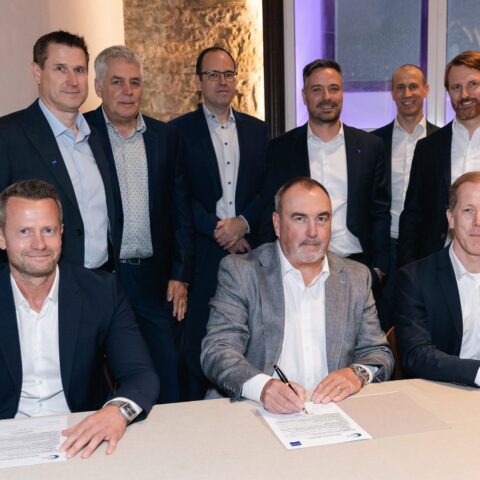

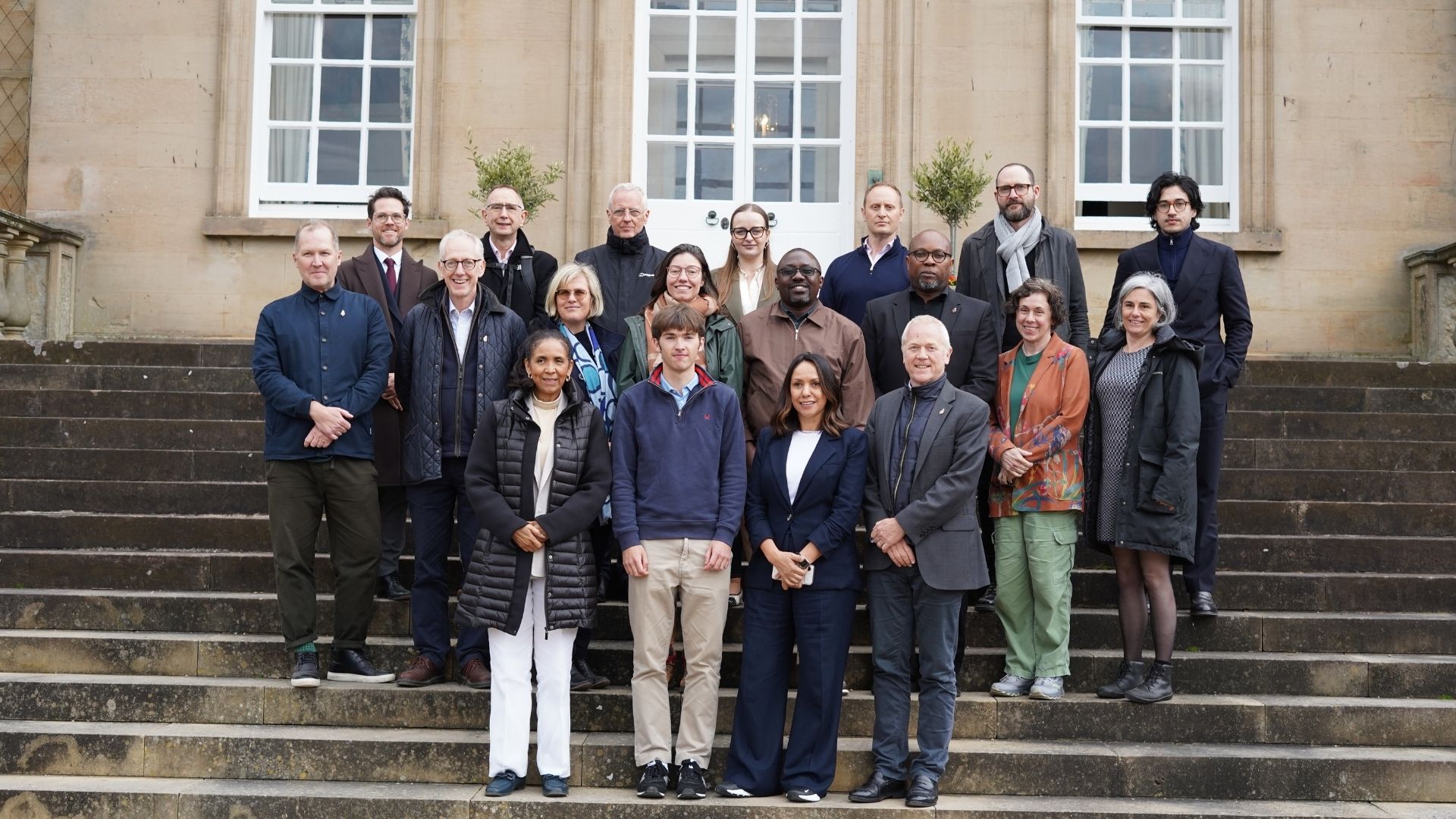
The King’s Foundation has joined FormationQ in a three year programme intended to help fast growing Commonwealth towns plan more sustainably, extending King Charles III’s long interest in architecture, tradition and community design into the language of advanced technology.
The King’s Foundation, headquartered at Dumfries House in East Ayrshire, has entered a new partnership with FormationQ to explore whether quantum optimisation can help towns and cities plan future growth before poor settlement patterns become difficult to undo.
The programme, called Harmonious Urban Growth: A Health Optimised Expansion Framework Using Quantum Methods, is described as a three year initiative that will apply advanced computational modelling to sustainable urban planning. It will build on the Foundation’s existing Rapid Planning Toolkit and use quantum optimisation enabled by trapped ion systems from IonQ, with British urban planning consultants Space Syntax supporting the work.
For Scotland, the announcement matters less because any Scottish town is named as a pilot, and more because a royal charity based in Ayrshire is again placing itself at the centre of a larger argument about how communities should be built. The unanswered questions are plain enough. Which places will take part? Who pays? How will public accountability be handled? And, most practically, does quantum optimisation offer a genuine advantage over existing planning tools, or is it another fashionable word being placed on an older civic problem?
The King’s Foundation is not a late arrival to this subject. It was first formed in 1990 by King Charles III, when he was Prince of Wales, and describes its work as cutting across education, sustainability, farming, traditional arts, health, architecture and urbanism. It is headquartered at Dumfries House in Ayrshire, Scotland, and is registered in Scotland.
That history is important because the new announcement sits inside a much longer public record. Long before quantum computing became a boardroom phrase, Charles had made architecture and the built environment one of the defining causes of his public life. In 1984, speaking at the Royal Institute of British Architects, he argued that a good architect should be concerned with how people live, the environment they inhabit, and the community created by that environment.
That speech became famous for its criticism of modern architecture, but the wider argument was more durable than the controversy around it. Charles was not only complaining about buildings he disliked. He was making a claim about human scale, continuity, street pattern, local character and the social consequences of design. Those ideas later appeared in his book A Vision of Britain and in practical projects associated with the Duchy of Cornwall and his charitable foundations.
The best known example remains Poundbury, the urban extension to Dorchester in Dorset. In 1987, West Dorset District Council selected Duchy of Cornwall land west of Dorchester for future expansion. Charles, then Duke of Cornwall and Prince of Wales, worked with the council to create a model urban extension, appointing architect and planner Leon Krier in 1988 to develop the overall concept. Local residents and interested parties were invited to contribute during a 1989 Planning Weekend before consent was sought. Construction began in 1993, and completion is anticipated in late 2028, with an eventual community of about 5,800 people.
Poundbury has never been universally loved. Some architects objected to its traditional style. Others saw it as a serious test of mixed use, walkability and human scale at a time when much British development was still dominated by car dependency and placeless volume building. But whatever one thinks of its architecture, it gives the King’s present work a lineage. The Foundation’s new quantum partnership is not a sudden royal flirtation with technology. It is the latest chapter in a decades long attempt to influence how places are planned.
That makes the Scottish base of the Foundation more than a footnote. Dumfries House itself became one of the clearest demonstrations of Charles’s approach to heritage as active regeneration rather than static preservation. The house was designed by the Adam brothers and built in the 1750s for the 5th Earl of Dumfries. Its interiors included important 18th century Scottish furniture, including pieces associated with Thomas Chippendale. When the house, grounds and contents were put up for sale in 2007, a consortium led by the then Prince of Wales bought the estate and contents, saving them from dispersal.
The estate was then repurposed into a cultural and educational centre. The King’s Foundation later restored interiors and furniture, converted buildings for craft workshops, hospitality training, horticulture education and community use, and expanded its work into the surrounding area, including the refurbishment of New Cumnock Town Hall.
This is why the new programme should be read with more seriousness than an ordinary corporate technology announcement. The Foundation has an institutional memory in architecture, community planning and heritage led regeneration. It also has royal convening power, which is no small thing. The difficulty is that prestige is not proof.
The central claim of Harmonious Urban Growth is that advanced modelling, including quantum optimisation, may help planners explore many possible configurations for complex urban systems. These can include water networks, ecological corridors, transport infrastructure, neighbourhood centres, block structures and walkable areas. The promise is that technology could help planners compare competing spatial choices before communities are locked into damaging patterns of growth.
That is plausible in principle. Urban planning is full of hard trade offs. A road in one place affects walking distance somewhere else. A drainage decision can shape housing, flood risk, open space and public health. Poor early planning can leave settlements with costly problems for generations. If better modelling helps decision makers see those trade offs earlier, it could be useful.
But the announcement does not yet prove the case. It does not name the first cities in the new three year programme. It does not give a budget. It does not explain who will own the data, who will audit the assumptions, or how local residents will be able to challenge the outputs. It does not show whether quantum methods will outperform conventional computational modelling in this setting. These are not hostile questions. They are the ordinary questions any public interest project should be able to answer.
The Foundation’s earlier planning work has often emphasised participation. In a 2006 speech in Edinburgh, Charles, then Duke of Rothesay, said those who will live in a community should have the opportunity to participate in the planning process, citing Patrick Geddes’s idea that town planning must be “folk planning”. He also referred to the Foundation’s use of Enquiry by Design as a way of involving parties in shaping a shared vision for new communities and regeneration.
That may be the most important test for the new programme. Technology can support judgement, but it should not replace civic consent. If the quantum element becomes a tool for planners, local authorities and communities to see choices more clearly, it may have value. If it becomes a black box with royal branding and technical language, it will deserve much harder scrutiny.
The programme is also being presented in the context of rapid urbanisation across the Commonwealth. The Rapid Planning Toolkit was developed with Commonwealth partners after the Declaration on Sustainable Urbanisation at CHOGM 2022. It has already been piloted in Bo, Sierra Leone, where the stated aim was to avoid development in flood prone wetlands while identifying walkable areas and infrastructure corridors for future expansion.
For readers in Scotland, the immediate question is not whether Ayrshire streets will soon be redesigned by a quantum computer. The announcement does not say that. The question is whether a Scotland based royal foundation can use its history, networks and practical planning experience to support better civic decisions elsewhere, while remaining transparent about the limits of what the technology can do.
It is a legitimate heritage story. It touches architecture, conservation, planning, royal philanthropy and the export of an idea about community shaped development from an institution based in Scotland. It also raises a modern concern: when old institutions adopt new technologies, the public must be able to tell the difference between real innovation and impressive language.
King Charles III has spent much of his public life arguing that buildings and settlements are not merely technical matters. They shape memory, health, belonging and daily conduct. One does not have to agree with every architectural preference he has expressed to recognise the seriousness of that commitment. Respecting the work, however, does not require abandoning scepticism.
The promise of Harmonious Urban Growth is that better modelling may help growing towns avoid some of the mistakes that come when people arrive faster than infrastructure, services and planning capacity. The risk is that the language of quantum computing may outrun the evidence of public benefit.