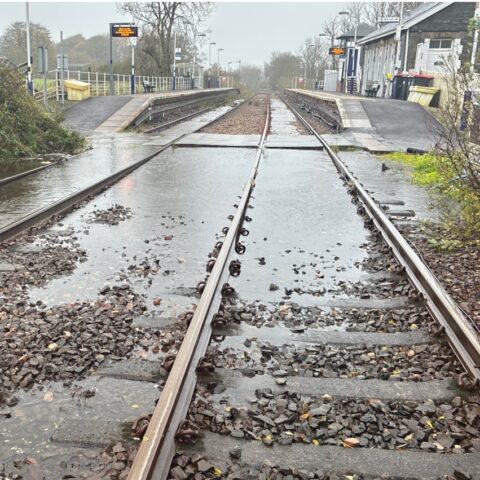

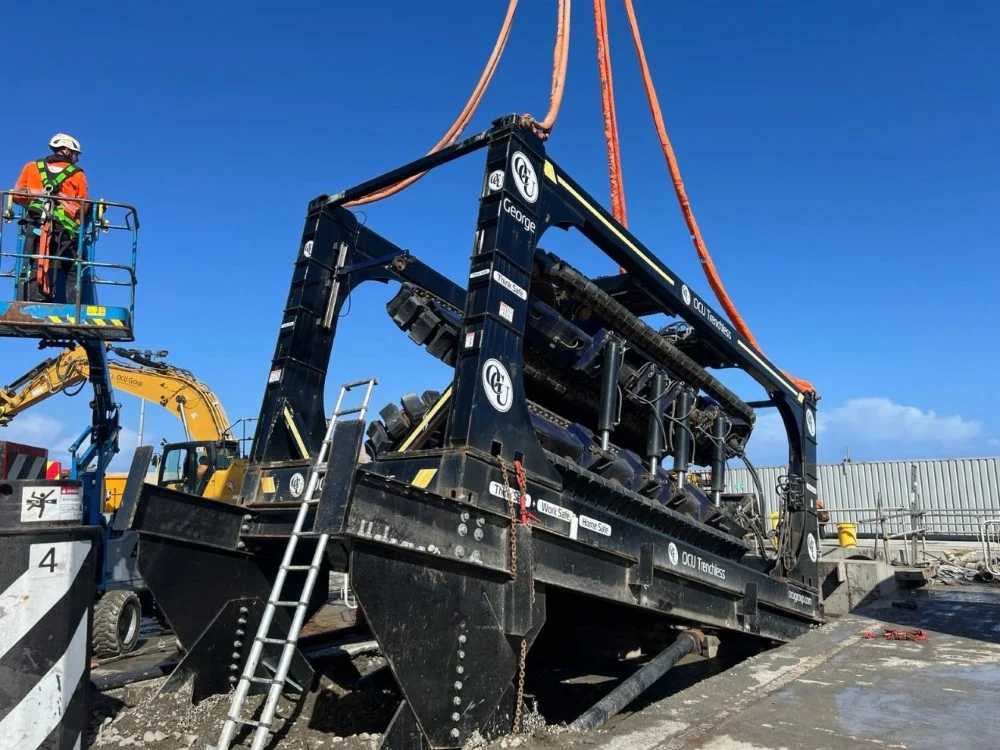
Horizontal drilling beneath the Caithness coast has been completed at Dounreay, preparing the mainland landing point for a 53-kilometre subsea electricity cable linking Orkney to Britain’s high-voltage transmission network.
A long-delayed connection between Orkney and the mainland electricity grid has passed one of its more difficult engineering stages, after crews completed horizontal directional drilling beneath the coastline at Dounreay.
The work created two underground ducts running from the construction site to an offshore exit point. The ducts will eventually carry the subsea transmission cable ashore without requiring an open trench to be cut across the beach and nearshore area.
SSEN Transmission said the drilling was completed as part of the Orkney Link project, which is intended to connect the islands directly to Britain’s electricity transmission system for the first time.
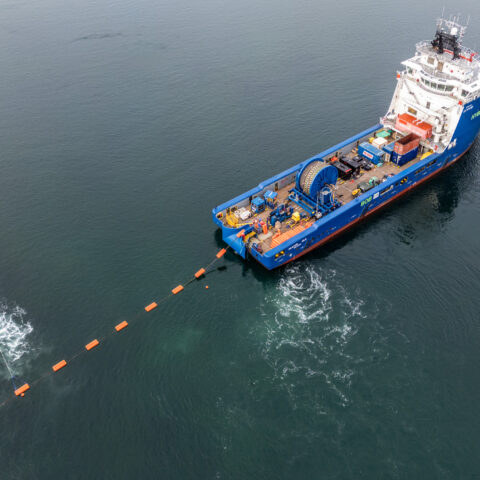
The wider scheme will run between a new substation at Finstown on the Orkney Mainland and a new facility at Dounreay West in Caithness. It includes about 14 kilometres of underground cable across Orkney, a 53-kilometre high-voltage alternating-current subsea cable through the Pentland Firth and a short underground connection into the mainland substation.
At Dounreay, drilling began early in 2026 and moved to continuous 24-hour operation in March. SSEN Transmission said round-the-clock working was required by the technical nature of the operation, with acoustic barriers, noise controls and monitoring used to limit disturbance.
The company has not described the drilling as the completion of the connection itself. Substation construction, underground cable works, the marine installation and testing remain to be finished before electricity can pass between Orkney and the mainland.
The link is designed to carry at least 220 megawatts. Its immediate purpose is to give renewable generators in Orkney access to the national market, overcoming a network constraint which has shaped energy development on the islands for years.
Orkney has been an important testing ground for wind, tidal, wave and hydrogen technologies, but its electricity system has remained connected to the mainland by lower-capacity distribution cables. That has limited the amount of new generation able to secure firm grid connections, even as the islands have frequently produced more electricity than they consume locally.
SSEN Transmission says the new infrastructure will allow up to 220MW of additional renewable generation to connect. Electricity collected at Finstown will be transmitted to Dounreay and then into the wider northern transmission network.
The link creates commercial opportunity for wind and marine-energy developers, while offering Orkney the possibility of new investment, construction work, community benefit payments and a stronger local energy economy. The extent to which those gains remain in the islands will depend on the ownership of the generating projects that secure connections, the terms agreed with communities and whether local firms gain lasting work beyond the construction period.