
After nearly a decade of planning, construction and delayed launch dates, SaxaVord Spaceport is preparing for a possible test flight from Unst. The project has brought jobs, investment and strategic importance to the island. It has also introduced road controls, maritime exclusion areas, public expenditure and unresolved questions for fishing, tourism and the wider community.
SaxaVord Spaceport is preparing for a possible test flight from Unst during a five-week launch window beginning on 10 August. If an attempt is confirmed, temporary controls will apply to roads, surrounding waters and airspace, with some residents using vehicle passes to move through the traffic-management area.
The controls will apply only if a rocket launch attempt is confirmed. They are intended to distinguish local vehicles from visitors, rather than prevent residents from making ordinary journeys. They will operate for a four-hour period, with at least 24 hours’ notice, on specified Mondays, Wednesdays or Fridays during a five-week window beginning on 10 August.
The first launch will begin to show whether the economic benefits forecast for Unst can be delivered alongside the practical restrictions, environmental controls and demands on existing industries that accompany commercial spaceflight.
Why the spaceport is on Unst
Lamba Ness lies at the north-eastern end of Unst, close to the settlement of Skaw. Its position provides a relatively clear route north over the sea, allowing rockets to reach polar and sun-synchronous orbits without flying over large centres of population.
The geography had strategic value long before the arrival of commercial spaceflight. Lamba Ness contains the remains of RAF Skaw, a Second World War Chain Home radar station. Historic Environment Scotland describes it as the northernmost station in the Chain Home network and an important part of the wartime defence of the United Kingdom.
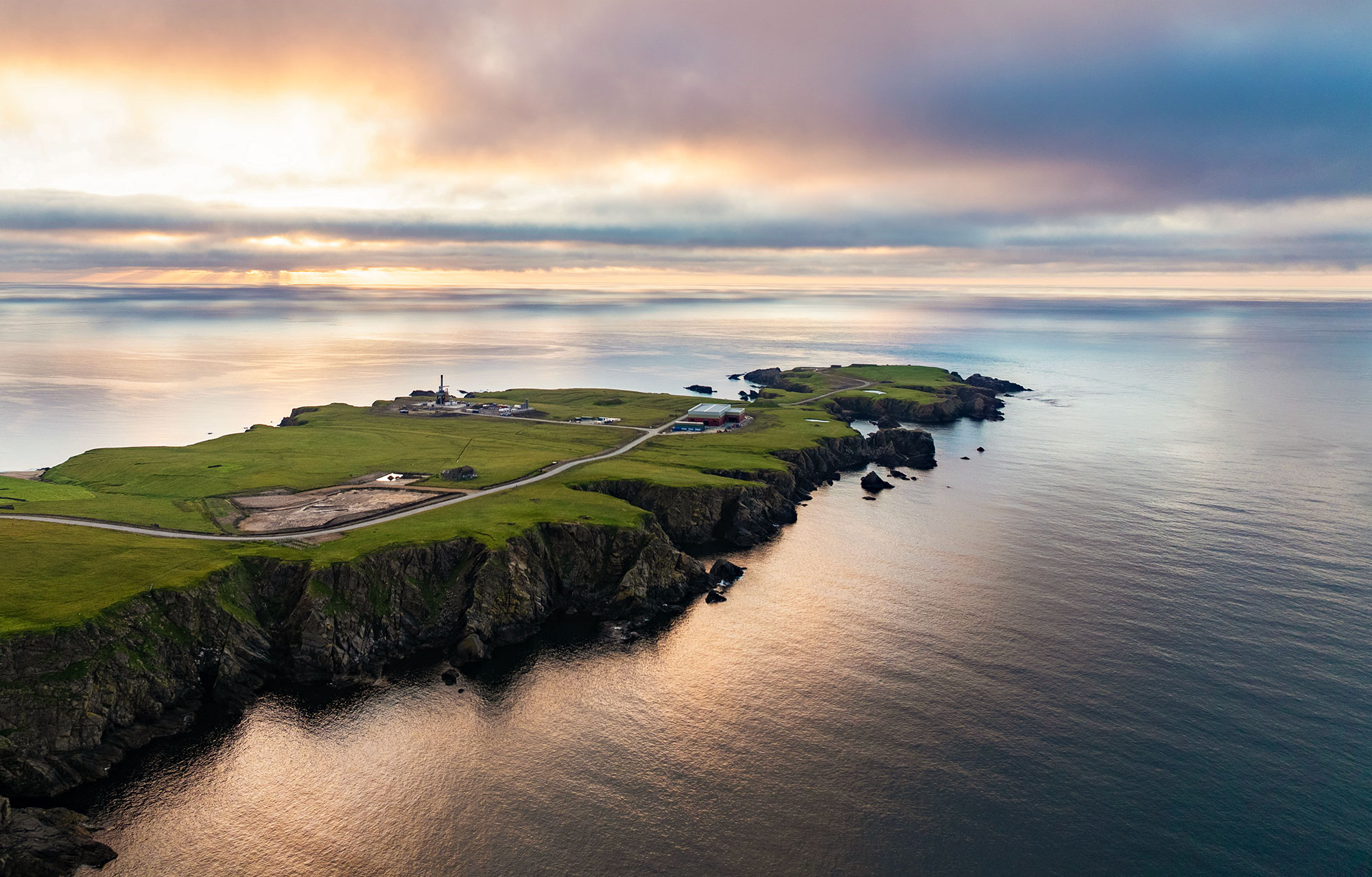
The later RAF Saxa Vord radar station remained a major presence on Unst during the Cold War. Its closure in 2006 removed employment and families from an island with a population now estimated at roughly 600. The Ministry of Defence subsequently restored a remote radar capability, but the economic activity associated with the original staffed station did not return on the same scale.
Entrepreneur and former RAF officer Frank Strang acquired the former RAF domestic site after the closure. His original plans centred on accommodation, tourism and other commercial uses.
The direction changed after studies identified Shetland as a strong location for small-satellite launches. In 2017, Strang, former RAF Tornado pilot Scott Hammond and Debbie Strang began assembling what became Shetland Space Centre Limited.
Frank Strang led the effort to secure investment, government engagement and regulatory approval. Hammond concentrated on trajectories, rocket assessment, operating procedures and the physical development of the site. Debbie Strang brought experience in RAF logistics, tourism and economic development.
Strang died from cancer in August 2025 at the age of 67. Hammond succeeded him as chief executive, while Debbie Strang remains chief operating officer and co-founder.
What has been built
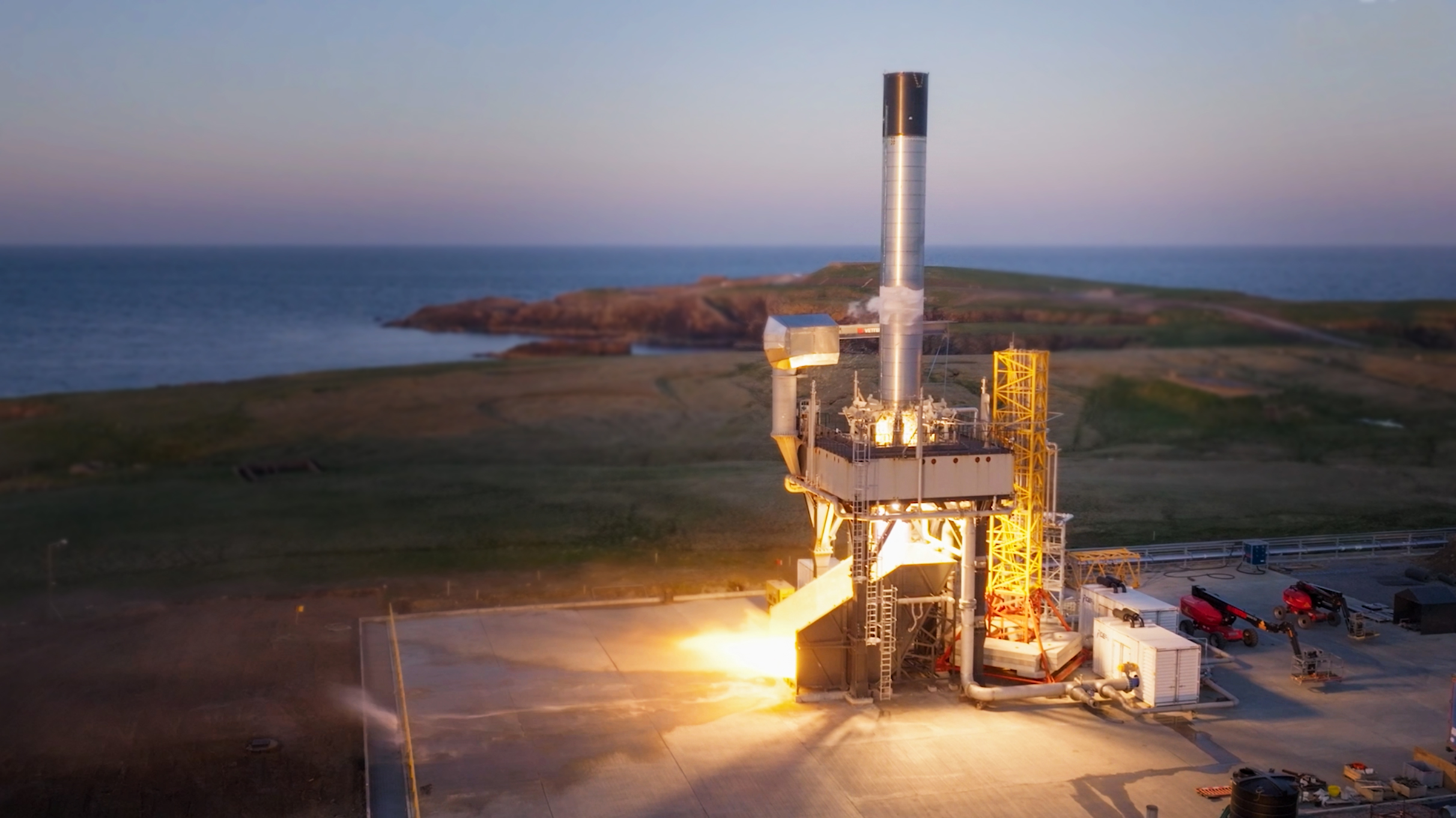
SaxaVord currently has one operational launch complex, occupied exclusively by the German company Rocket Factory Augsburg, known as RFA. The complex includes a launch pad, integration hangar, tracking equipment, telemetry systems and a flight-termination capability.
Two further launch complexes remain under development. SaxaVord says the completed spaceport will be capable of supporting as many as 30 orbital and suborbital launches each year. That is its intended maximum capacity, rather than a confirmed annual launch programme.
The UK Space Agency reported on 14 July 2026 that mission control, telemetry, tracking systems and site security had been completed. RFA delivered the first and second stages of its replacement RFA One vehicle to SaxaVord earlier this year, following further testing and redesign work after a serious accident in 2024.
SaxaVord became the first British spaceport licensed for vertical orbital launches in December 2023. It later received a range-control licence, allowing it to clear and supervise safety zones and monitor rockets during flight.
RFA received its launch-operator licence in January 2025. Skyrora received a separate licence in July 2025. These licences establish the legal and regulatory framework for launches but do not guarantee that a flight will take place or succeed. Operators must continue to meet conditions concerning safety, insurance, international agreements, communications and marine licensing.
Ownership has changed since the project began
Shetland Space Centre Limited remains the legal operator of SaxaVord.
Companies House records Wild Ventures Limited as its only active person with significant control. Wild Ventures owns more than 50 per cent but less than 75 per cent of the shares.
Wild Ventures is part of the investment interests associated with Danish businessman Anders Holch Povlsen, whose wider Scottish businesses include land, tourism, property and conservation interests.
The available register does not show every smaller shareholding because Companies House reporting rules identify only those meeting the relevant control thresholds. It does establish that majority control rests with an investment company based outside Shetland.
SaxaVord therefore remains a project conceived and developed by its founding team, employing people and contractors in Shetland, while majority corporate control lies outside the islands.
There is no publicly disclosed Unst community shareholding, guaranteed local percentage of launch revenue or formal community right to participate in company decisions. That does not rule out private agreements or future arrangements, but none is identified in the principal ownership, planning and licensing records examined for this article.
The planning decision changed Lamba Ness
The main planning application was submitted to Shetland Islands Council in January 2021. It covered three launch complexes, satellite tracking equipment, assembly and integration buildings, roads, fencing and supporting infrastructure.
The proposal affected the nationally protected remains of RAF Skaw. Historic Environment Scotland initially refused scheduled monument consent because of the damage the original design would cause. Contemporary records indicated that several surviving structures would have been removed.
After revisions and further discussion, Historic Environment Scotland concluded that the public benefits were sufficient to outweigh the remaining effect on the monument. Revised scheduled monument consent was granted with conditions in February 2022. Shetland Islands Council subsequently granted planning permission.
The planning permission contained 29 conditions covering noise, lighting, peat, drainage, pollution, otters, birds, traffic, visitors, restoration and eventual decommissioning.
Launches and static-fire tests are restricted during part of the seabird breeding season. Monitoring is required before, during and after operations, with further mitigation possible if adverse effects are identified.
The conditions also anticipated a reduction in public access. One required an Access Management Plan addressing the “loss of unrestricted access to parts of the development site”.
The restriction was therefore recognised when the development was approved. Parts of Lamba Ness that were formerly crossed or visited without industrial controls are now occupied by fencing, launch equipment and safety systems.
This has not abolished Scotland’s general right of responsible access across Unst, nor is there evidence that community-owned land was confiscated. It has changed the practical use of part of the peninsula and placed access close to the launch site under industrial and public-safety controls.
What Unst has gained
The economic case for SaxaVord is substantial for an island of Unst’s size.
Promote Shetland reports that SaxaVord employs more than 80 people across its Unst site and other Shetland bases. Local construction, transport, engineering, plant-hire and supply companies have also received work.
Forecasts suggest that a fully operating space sector could support approximately 139 jobs in Unst and 209 across Shetland, including direct, indirect and induced employment. Those projections include work beyond the spaceport itself, such as hospitality, logistics and supporting services.
Forecast employment should not be confused with permanent jobs already in place. Its eventual scale will depend upon how frequently rockets launch, how many operators remain commercially viable and how much expenditure is retained within Shetland.
The development has also created technical and educational opportunities that did not previously exist on the island. SaxaVord has supported school activities, space-related training and local recruitment into engineering and operational roles.
For Unst, the attraction is not merely the total number of jobs. A functioning spaceport could provide skilled employment capable of retaining younger residents, bringing families to the island and broadening an economy otherwise dependent on a small number of sectors.
The same growth could increase pressure on housing, ferries and local services. Rotational workers housed temporarily on the island would produce a different economic effect from permanent employees settling with families. These outcomes cannot yet be measured because regular launch operations have not begun.
Public money and private risk
SaxaVord has been developed through substantial private investment. Its investors have carried considerable financial and commercial risk.
It has also received direct public support.
The UK Government announced £10 million for SaxaVord in the March 2024 Budget, initially subject to due diligence. The UK Space Agency later described the money as an investment towards the further development of spaceport infrastructure.
Separate awards have supported RFA and equipment used at the site. The UK Space Agency provided £3 million to construct the RFA launch mount and a further £1 million towards rebuilding it after the 2024 accident. RFA UK also received £3.5 million through the European Space Agency’s Boost! programme for launch technology, equipment and preparations.
These sums should not all be described as unrestricted payments to SaxaVord. Some were awarded to launch companies or for specified infrastructure and programmes. Together, they show that SaxaVord’s progress forms part of a publicly supported UK strategy to establish domestic access to space.
The spaceport remains commercially unproven.
Accounts for 2024 reported revenue of approximately £2.5 million and a pre-tax loss of £5.4 million, compared with a £5.1 million loss during 2023. The directors described the company as remaining in the build phase and seeking further capital to complete infrastructure and support operating costs.
Delays and changes to launch plans
No orbital rocket has launched from SaxaVord as of 17 July 2026.
Several earlier dates and launch arrangements did not proceed. HyImpulse moved its first SR75 suborbital test to Australia, although it has since agreed that a later SR75 flight will use SaxaVord.
ABL Space Systems had been selected by Lockheed Martin to provide the RS1 rocket for the UK Pathfinder mission from SaxaVord. The company withdrew from the commercial launch market in November 2024 after two major failures at the Pacific Spaceport Complex–Alaska on Kodiak Island.
Its first RS1 rocket fell back onto the launch pad shortly after lift-off in January 2023. Alaska’s environmental regulator recorded the release of at least 5,200 gallons of aviation fuel to land, while subsequent local reporting put the quantity above 6,000 gallons. Contaminated soil was excavated and transported from Kodiak to the Lower 48 for disposal. The environmental case remained open until April 2024.
A second flight vehicle was destroyed during a static-fire test at Kodiak in July 2024. State records list a further release of 1,800 gallons of aviation fuel and two gallons of hydraulic oil to land. The final cleanup report was submitted in February 2025 and the case was closed in May.
Four months after the second accident, ABL announced that it would leave the commercial satellite-launch market and concentrate on missile-defence technology. The company cited reduced opportunities in commercial launch and growing national-security demand rather than identifying the accidents as the sole reason for its decision. The loss of ABL nevertheless ended the original plan for its RS1 vehicle to conduct the UK Pathfinder launch from Unst.
Orbex moved its intended first launches from Sutherland to SaxaVord before entering administration in February 2026.
The UK Space Agency’s latest annual report acknowledges Orbex’s collapse while recording that the first and second RFA stages are now in the United Kingdom and that preparations continue for a 2026 flight.
RFA’s previous launch vehicle was destroyed during a static-fire test at SaxaVord on 19 August 2024. The test area had been cleared and nobody was injured, but the fire damaged the launch mount and delayed the programme.
RFA says the causes have been understood and addressed. A new first stage was built and tested in Germany, while engines and other systems have undergone further work in Germany and Sweden.
The proposed August flight is a test mission. Failure remains a recognised possibility in the development of a new launch vehicle. The CAA’s own guidance states that spaceflight can never be made completely safe and that launch failures remain sufficiently likely for extensive exclusion and emergency arrangements to be required.
Roads, visitors and ordinary movement
The five-week launch window beginning on 10 August does not mean five weeks of continuous closures.
A launch may be attempted only on a Monday, Wednesday or Friday between 4pm and 8pm. SaxaVord says residents and visitors will receive at least 24 hours’ notice, although technical or weather conditions may cause postponement at shorter notice.
During a confirmed attempt, a launch exclusion zone will operate around the spaceport. Temporary traffic orders will support a visitor-management plan in northern Unst. Some residents have been invited to apply for vehicle passes so that they can move through those controls without being treated as launch visitors.
Separate viewing passes will allow a maximum of 600 people into an authorised viewing area, with Unst residents given first access. The launch will also be livestreamed. SaxaVord has discouraged people from travelling to Unst solely to see the test flight because a launch may be cancelled.
The traffic arrangements are safety and visitor-control measures rather than a transfer of public roads to the spaceport. Their operation will nevertheless affect ordinary movement during an attempt.
Unst’s single-track road system, limited accommodation and reliance on ferries leave little spare capacity for a sudden influx of spectators. The first attempt will show whether the agreed management plan can prevent launch tourism from disrupting residents and other visitors.
The unresolved dispute at sea
The most substantial outstanding disagreement concerns fishing and the marine environment.
RFA’s marine-licence documents state that the rocket’s first stage and payload fairing are expected to fall into the sea north of Shetland. The hazard and warning areas extend towards waters east of Iceland and Jan Mayen.
The components are expected to sink. No recovery operation is planned. RFA argues that retrieval would be costly and hazardous and that maritime activity is low relative to the size of the warning area.
Its assessment also acknowledges that the fairing could fragment during descent and that fishing activity increases during seasonal mackerel and herring fisheries.
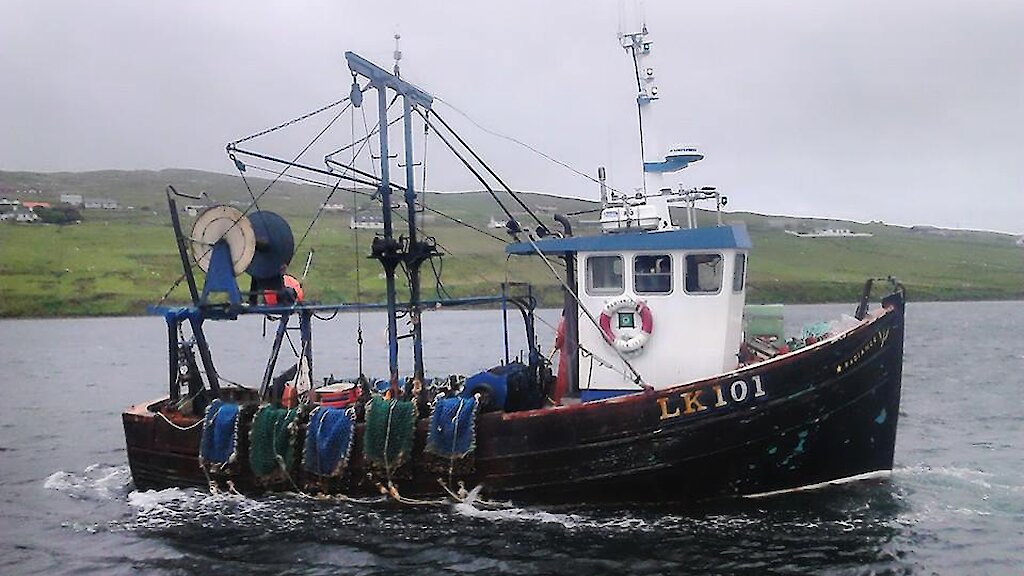
The fishing industry’s concern is broader than the statistical probability of a falling component striking a vessel. Material on the seabed could snag trawled gear, while exclusion areas may prevent vessels from working during launch periods.
The Shetland Fishermen’s Association said in October 2025 that no compensation arrangement had been agreed for fishing days lost through launch restrictions. It also raised concerns about debris damaging equipment.
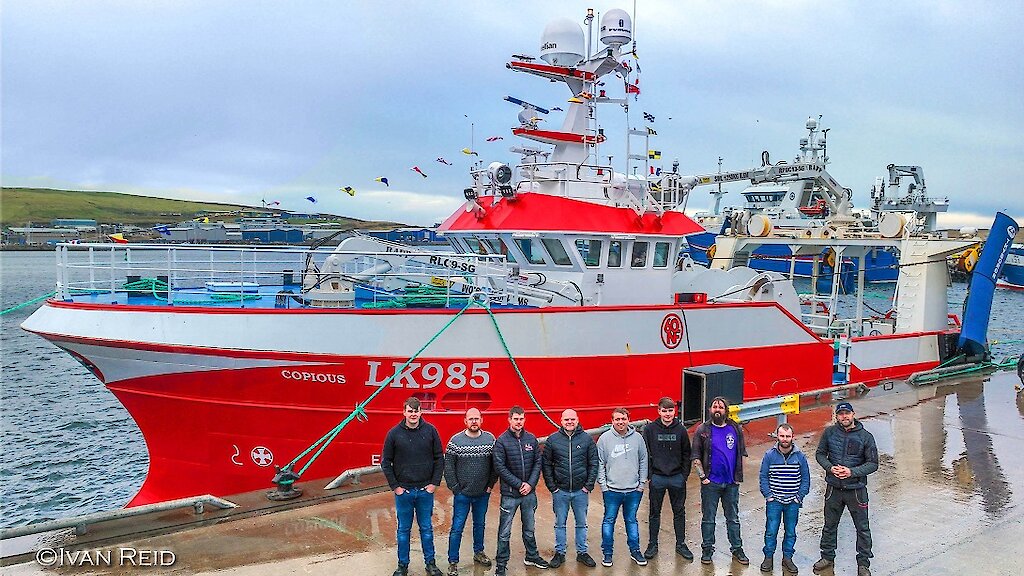
In July 2026, SaxaVord chief executive Scott Hammond said damage caused by launch debris would be covered through the launching state and the operator’s insurance. The handling of such a claim has not been tested by an actual launch from Unst.
The operator and fishing industry are therefore measuring different forms of risk. RFA assesses probability across a warning area of more than 100,000 square nautical miles. Fishermen are concerned with the practical effect of a submerged object entering a particular working ground or net.
The marine licence, launch notices, debris tracking and any compensation claims will determine how those risks are managed in practice.
Tourism may gain and lose
The Shetland Tourist Association has said it was not adequately consulted during the licensing process and has raised concerns about public safety and disruption to tourism.
SaxaVord rejects the suggestion that visitors will face an unacceptable danger. Hammond says exclusion zones are designed to keep third parties outside hazardous areas and argues that launches could attract additional visitors to Shetland.
Both effects may occur. Spaceflight could generate publicity, specialist tourism and accommodation bookings. A broad launch window could also bring congestion and disappointed visitors where a flight is cancelled.
The first launch season will provide evidence of whether interest in SaxaVord adds to Shetland’s visitor economy or places pressure on an already constrained summer transport and accommodation system.
What the first launch will establish
SaxaVord has achieved something no other British site has yet completed. It has created jobs, brought construction and supply work to Shetland and attracted private and public investment to Unst.
It has also altered access at Lamba Ness, introduced temporary controls over roads, sea and airspace, and created new questions for fisheries, tourism and public accountability.
None of these facts alone determines whether the development is good or bad for Unst.
The first flight will begin replacing forecasts with measurable evidence. The years that follow will provide the larger answer. The spaceport has already changed Lamba Ness. What remains unknown is whether the industry built there can operate reliably while retaining the confidence of the community.
Sources
Launch arrangements, company history and operations
SaxaVord Spaceport — August and September 2026 launch-window arrangements, exclusion zones, traffic controls and resident vehicle passes
https://saxavord.com/saxavord-spaceport-outlines-how-launch-window-will-operate/
SaxaVord Spaceport — company history, current facilities, launch complexes and planned capacity
https://saxavord.com/about-us/
SaxaVord Spaceport — Frank Strang’s death and the origins of the project
https://saxavord.com/great-sadness-as-our-pioneering-ceo-and-founder-dies-after-short-battle-with-cancer/
Rocket Factory Augsburg — delivery of the replacement RFA One stages to SaxaVord
https://www.rfa.space/rfa-ships-stages-to-saxavord-spaceport/
Licensing, planning, heritage and environmental assessment
Civil Aviation Authority — register of spaceport, launch-operator and range-control licences
https://www.caa.co.uk/space/about-the-space-team/licences-granted-and-registers-of-space-objects/
Civil Aviation Authority — SaxaVord range-control licence, public-safety requirements and launch-risk explanation
https://www.caa.co.uk/newsroom/news/saxavord-spaceport-granted-range-licence-by-civil-aviation-authority/
Civil Aviation Authority — SaxaVord Assessment of Environmental Effects and consultation record
https://consultations.caa.co.uk/corporate-communications/public-consultation-aee-saxavord/
Civil Aviation Authority — SaxaVord technical appendices, including the planning decision and conditions
https://www.caa.co.uk/data-and-publications/publications/documents/content/cap2965-part-10/
Historic Environment Scotland — RAF Skaw scheduled monument designation
https://portal.historicenvironment.scot/apex/f?p=1505:300:::::VIEWTYPE,VIEWREF:designation,SM13097
Historic Environment Scotland — revised scheduled monument consent for the Lamba Ness launch site
https://portal.historicenvironment.scot/apex/f?p=1505:300:::::VIEWTYPE,VIEWREF:decision,900038749
Ownership, accounts and public funding
Companies House — Shetland Space Centre Limited persons with significant control
https://find-and-update.company-information.service.gov.uk/company/SC575537/persons-with-significant-control
Companies House — Wild Ventures Limited officers, including Anders Holch Povlsen
https://find-and-update.company-information.service.gov.uk/company/SC498376/officers
Companies House — Shetland Space Centre Limited filing history and 2024 group accounts
See the group accounts filed on 1 April 2026.
https://find-and-update.company-information.service.gov.uk/company/SC575537/filing-history
UK Government — announcement of £10 million for SaxaVord infrastructure
https://www.gov.uk/government/news/new-funding-to-boost-space-sector-growth-across-the-uk
UK Space Agency — Annual Report and Accounts 2024–2025, including RFA launch-mount funding and rebuilding costs
https://www.gov.uk/government/publications/uk-space-agency-annual-report-and-accounts-2024-2025/uk-space-agency-annual-report-2024-2025
UK Space Agency — Annual Report and Accounts 2025–2026, including current SaxaVord infrastructure, RFA preparations and the collapse of Orbex
https://www.gov.uk/government/publications/uk-space-agency-annual-report-and-accounts-2025-2026/uk-space-agency-annual-report-2025-2026
UK Space Agency — £3.5 million RFA UK award through the European Space Agency Boost! programme
https://www.gov.uk/government/news/uk-and-european-space-agency-funding-boost-for-satellite-launch-from-shetland
Employment and the Shetland economy
Promote Shetland — current employment and wider space-sector job projections
https://www.shetland.org/invest/sectors/space
Marine licence, debris and navigation
Scottish Government Marine Directorate — RFA Assessment of Environmental Effects for launches from SaxaVord
https://marine.gov.scot/sites/default/files/00010684_-_assessment_of_environmental_effects_redacted.pdf
Scottish Government Marine Directorate — RFA Navigation Risk Assessment
https://marine.gov.scot/sites/default/files/00010684_-_navigation_risk_assessment_redacted.pdf
Fishing, tourism and community concerns
Shetland News — fishermen seeking compensation for working days lost to launch restrictions
https://www.shetnews.co.uk/2025/10/10/fishermen-seeking-compensation-days-lost/
Shetland News — SaxaVord’s response to fishing, tourism, access and insurance concerns
https://www.shetnews.co.uk/2026/07/09/saxavord-spaceport-confident-ready-first/
Lockheed Martin — selection of ABL Space Systems for the UK Pathfinder launch from Unst
https://news.lockheedmartin.com/news-releases?item=129013
KMXT — environmental testing and contaminated-soil removal following the January 2023 RS1 failure on Kodiak Island
https://www.kmxt.org/news/2023-03-10/environmental-testing-details-rocket-crash-impacts-at-kodiaks-pacific-spaceport-complex
SpaceNews — leaking engines and firefighting-system failure in the July 2024 ABL static-fire accident
https://spacenews.com/fire-fed-by-leaking-engines-destroyed-abl-space-systems-rocket/
Alaska Department of Environmental Conservation — January 2023 ABL rocket failure fuel-release record
https://dec.alaska.gov/Applications/SPAR/PublicMVC/PERP/SpillDetails?SpillID=70837
KMXT — July 2024 ABL static-fire accident and destruction of the second RS1 vehicle
https://www.kmxt.org/news/2024-07-25/rocket-test-triggers-fire-at-spaceport-on-kodiak-island-damages-spacecraft
Alaska Department of Environmental Conservation — July 2024 rocket-test fuel-release and cleanup record
https://dec.alaska.gov/Applications/SPAR/PublicMVC/PERP/SpillDetails?SpillID=75454
SpaceNews — ABL’s November 2024 withdrawal from commercial launch and move into missile defence
https://spacenews.com/abl-space-exits-commercial-launch-market-shifts-focus-to-missile-defense/