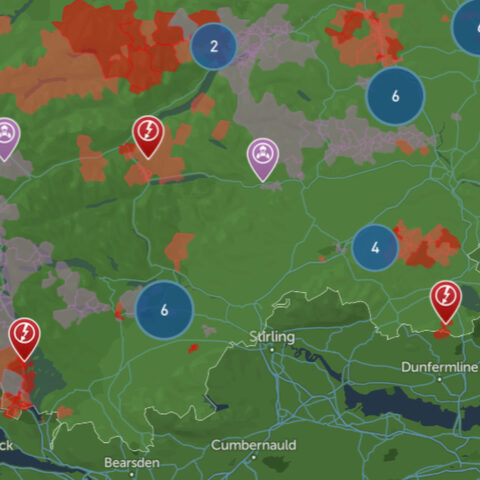

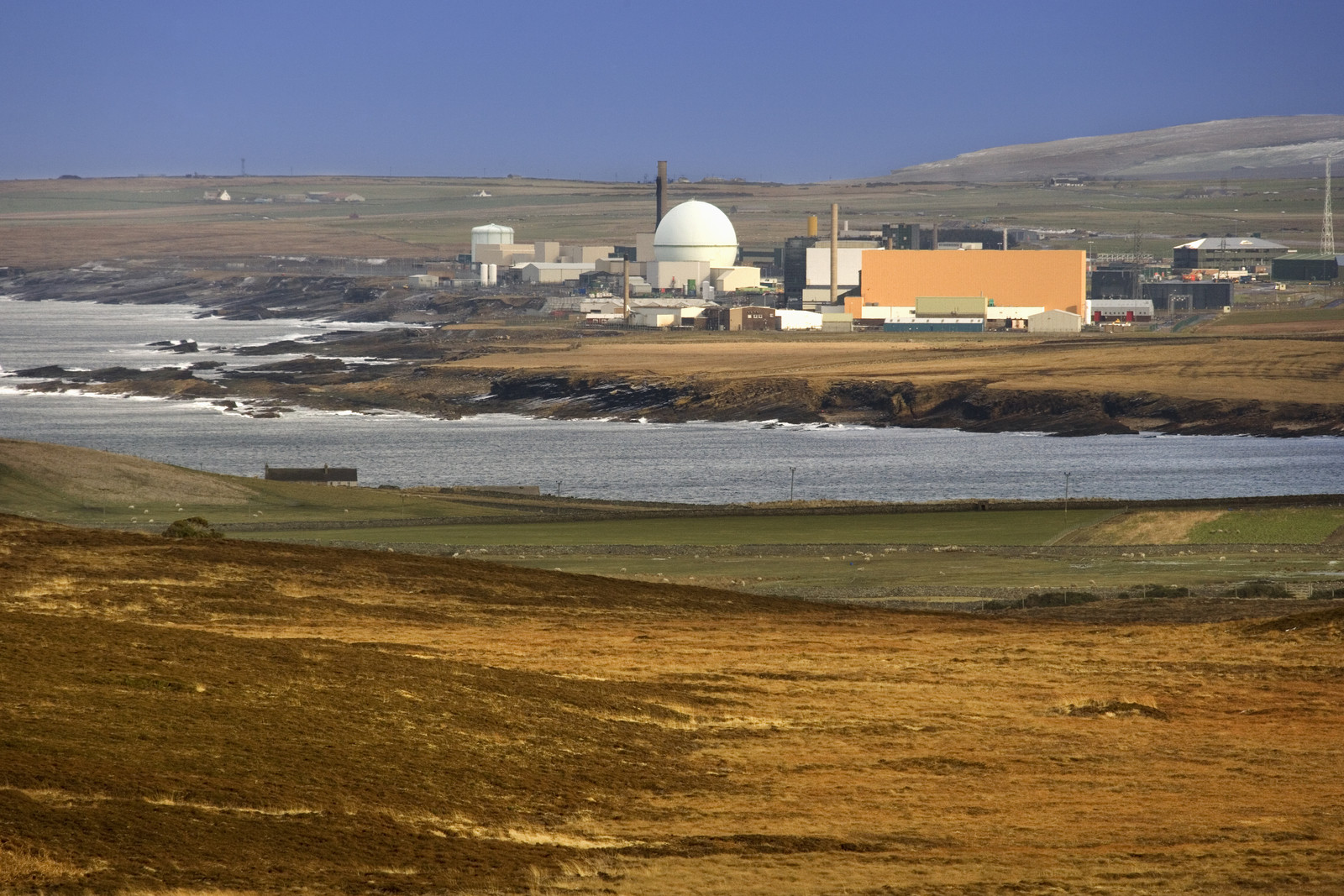
Torness, Dounreay and Hunterston have been placed back on Britain’s prospective nuclear map after a UK Government study found that several parts of Scotland could technically accommodate new reactors.
The assessment also identified broad areas around the Firth of Forth and along the Angus and Aberdeenshire coast. It stops well short of recommending construction. No detailed grid study was completed, no reactor technology was selected, no commercial case was prepared and no communities, landowners or local authorities were consulted.
The report establishes that Scotland has land that survives an initial desktop screening exercise. It does not establish that a reactor is needed, affordable, environmentally acceptable or likely to receive planning consent.
That distinction has been blurred by the political presentation surrounding its publication.
The UK Government said Scotland had “high potential” for nuclear development and argued that its communities were missing investment and employment opportunities being pursued in England and Wales. Energy minister Michael Shanks called for a new dialogue over Scotland’s energy policy.
The technical report itself is more guarded. Great British Energy–Nuclear examined geography, cooling-water access, population density, transport, terrain, environmental constraints and proximity to energy infrastructure. Its purpose was to identify areas that might justify further investigation, rather than determine that any site was ready for development.
Torness in East Lothian is among the clearest possibilities. It already has a nuclear workforce, coastal cooling water, grid infrastructure and transport connections. Its present reactors are due to stop generating in March 2030, leaving Scotland without an operating civil nuclear station unless their life is extended again or a replacement is eventually built.
The surrounding coast also contains environmentally protected areas, heritage interests and land exposed to flooding. A new station would require a full examination of those constraints rather than merely inheriting the acceptability of the existing plant.
Dounreay offers a different case. Caithness has decades of nuclear experience and a workforce already facing the long decline of decommissioning employment. The site is remote, however, and its distance from major centres of electricity demand, weaker transport connections and uncertain future grid role would all need to be addressed.
Hunterston in North Ayrshire also retains nuclear infrastructure and skills, but the study identifies limited flat land, coastal-flood concerns and competition from surrounding settlements, environmental interests and other grid development.
The remaining areas are even less precise. Parts of the Firth of Forth were retained because of industrial land, transport links and proximity to major energy users. The same land is already being sought for ports, hydrogen, offshore-wind manufacturing, electricity infrastructure, housing and data centres. Industrial hazards, pipelines and flood risk further restrict what might be possible.
Along the Angus and Aberdeenshire coast, the report identifies cooling-water access, electricity infrastructure and workers with transferable oil, gas and offshore engineering skills. It does not name a town or a specific development site. Reporting that a nuclear station has been proposed for either council area would therefore go beyond the evidence.
The study arrives during a renewed political argument over nuclear power. The Scottish Parliament debated the subject on 24 June, less than a week before the report was published. Supporters argued that Scotland was abandoning dependable low-carbon generation, skilled work and industrial investment. Opponents pointed to construction delays, cost overruns, radioactive waste and the rapid growth of renewable electricity.
The Scottish Government continues to oppose new stations using current nuclear technologies. It permits Scotland’s existing reactors to operate while regulators consider them safe, but maintains that new nuclear is expensive and would leave further waste and decommissioning liabilities. Scotland now has one operating station, one civil site in defuelling and three civil sites at advanced stages of decommissioning. Nuclear supplied around 17% of Scotland’s electricity generation in 2024.
That leaves an unusual division of authority. Nuclear safety, reactor regulation and much of energy policy are reserved to Westminster, while consent for major generating stations in Scotland remains within the Scottish planning and electricity system.
A project could not proceed under current policy without the Scottish Government reversing its position or Westminster attempting to change the legal arrangements. Either course would be a major political decision, not the routine consequence of a technical report.
Cost remains the most difficult part of the case for new nuclear.
The National Audit Office reported in May that Sizewell C had a baseline construction estimate of £38.2bn and was expected to be completed in summer 2039. Consumers began contributing to the project before construction produced electricity, with the estimated household charge expected to rise as development proceeds. The same report recorded that Hinkley Point C’s latest scenarios involved a delay of between five and seven years and costs around twice the original projection.
Small modular reactors are intended to reduce those difficulties through standardised designs and repeated factory production. Britain has not yet completed one, so their eventual cost and construction performance remain projections rather than domestic operating evidence. Great British Energy–Nuclear is beginning work on an initial Rolls-Royce SMR project at Wylfa in North Wales, where three units are planned and the wider site may eventually accommodate more.
Even an immediate Scottish policy reversal would not replace Torness when it closes. Site selection, design approval, finance, planning, construction and commissioning would place any large reactor well into the 2030s or beyond. The nuclear question is therefore about Scotland’s longer-term electricity system, not an available answer to a 2030 deadline.
Scotland must still decide how it will replace the firm output and system role of Torness. Wind, storage, interconnection, flexible demand and other generation may collectively provide the answer, but installed renewable capacity cannot by itself show that sufficient electricity will be available during prolonged periods of low wind.
The UK Government study does not settle that issue. It did not conduct a detailed assessment with the National Energy System Operator and does not demonstrate that the grid needs, or could efficiently accommodate, a reactor at any of the locations identified.
Nor does it answer who would own a Scottish station, where its major components would be manufactured, how profits would flow or who would carry the financial consequences of delay. Scotland could supply land, water, workers and grid infrastructure while strategic ownership and much of the industrial value remained elsewhere.
Radioactive waste is similarly unresolved. Scotland already hosts decades of decommissioning work at Dounreay, Chapelcross and Hunterston. No UK geological disposal facility for the most hazardous waste is operating, while the Scottish and UK governments continue to differ over long-term management policy.
The report is still significant. It marks the first formal move by the present UK Government to return Scotland to the nuclear-development discussion, and it identifies the broad places where that argument could become local and physical.
What it proves is limited but clear: Scotland possesses coastal land, industrial experience and skilled workers that could support further nuclear investigation.
It does not prove that a station should be built.
Before that conclusion could responsibly be reached, Scotland would need a full comparison of nuclear power with storage, renewable generation, interconnection and other firm capacity; transparent estimates of cost and consumer exposure; a credible waste route; evidence of grid need; and direct consultation with the communities being placed on the map.
The UK Government has reopened the nuclear question. It has not yet answered it.
Sources
https://www.gov.uk/government/news/scotland-has-high-potential-for-new-nuclear-development
https://www.gov.uk/government/publications/potential-future-nuclear-power-plant-siting-in-scotland
https://www.gov.scot/policies/nuclear-energy/
https://www.gov.scot/policies/nuclear-energy/nuclear-stations/
https://www.parliament.scot/chamber-and-committees/votes-and-motions/S7M-00258
https://www.nao.org.uk/reports/sizewell-c/
https://www.gov.uk/government/news/north-wales-to-pioneer-uks-first-small-modular-reactors