
A £1.25 million public investment will help convert part of Montrose Port’s restored Customs House into a specialist training centre, bringing offshore-wind education closer to the turbines, vessels and maintenance teams already operating from the harbour.
A new Offshore Skills Academy at Montrose Port is moving towards delivery after receiving approval for £1.25 million from the Tay Cities Industrial Investment Programme.
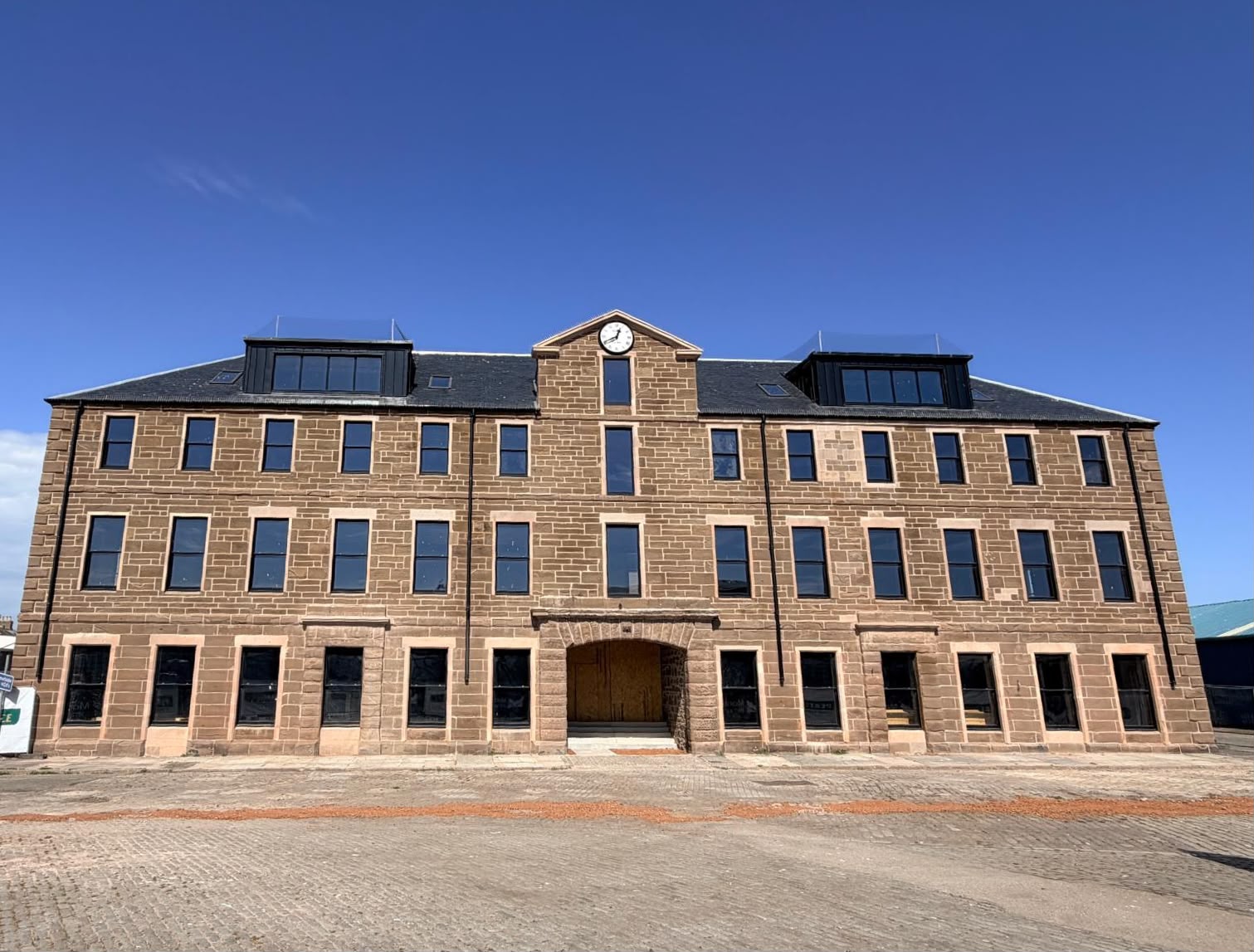
The Montrose Port Skills Academy will occupy the ground floor of the B-listed Customs House at North Quay, where Dundee and Angus College plans to provide technical training for people entering the renewable-energy industry and workers moving from other sectors.
The funding will pay for the academy’s internal fit-out and training equipment. Montrose Port Authority will remain responsible for the wider cost of the project, construction procurement and management of the site. Angus Council is not making a direct capital contribution.
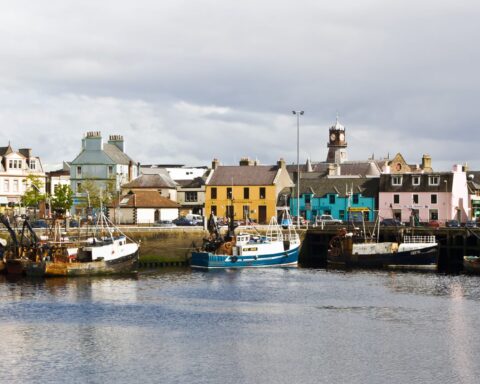
The decision places the training centre inside a working harbour that is already becoming closely associated with offshore wind.
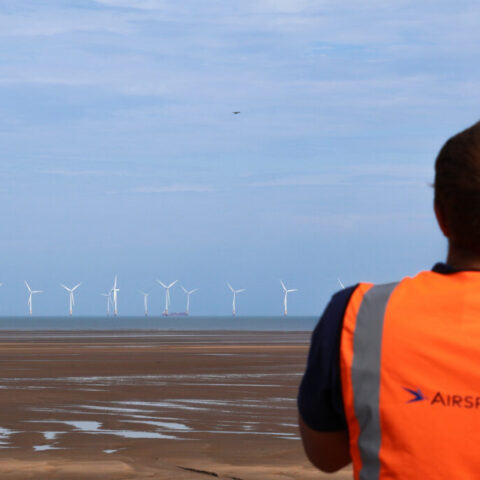
Seagreen, Scotland’s largest operating offshore wind farm, has its operations and maintenance base at Montrose. The purpose-built facility supports the day-to-day running of the 114-turbine project and is expected to remain in use throughout the wind farm’s 25-year operational phase.
Inch Cape, which is under construction in the North Sea, is also expected to be operated and maintained from Montrose. The presence of both developments has strengthened the case for providing specialist training within the port rather than requiring learners and employers to rely entirely on facilities elsewhere.
The academy is intended to connect those developments more directly with the workforce in Angus and the wider Tay Cities region.
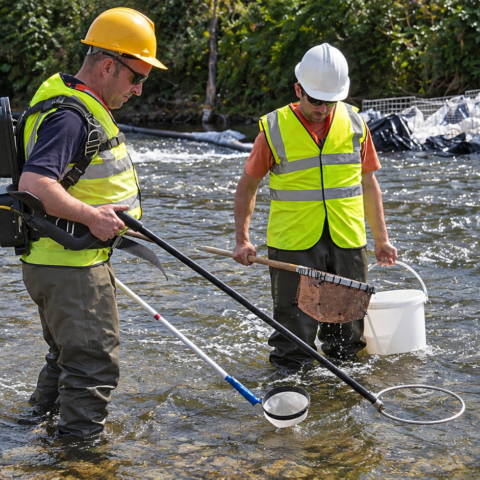
Dundee and Angus College has worked with employers to identify the equipment, qualifications and practical disciplines needed. Proposed facilities include a teaching area and workshop capable of supporting mechanical, electrical and hydraulic training, as well as flexible space for companies to deliver courses tailored to their own maintenance teams.
The college has already developed a wind-turbine technician curriculum with Vestas, supported by Scottish Government funding. Inch Cape Offshore has agreed to provide equipment for skills development and a renewable-energy education kit for work with schools.
Vestas has also selected the academy as the base for an apprenticeship programme due to begin through Dundee and Angus College in August 2026. The turbine manufacturer supplies the machines used at Seagreen and will be closely involved in maintaining them during the project’s operational life.
The first learners are already undertaking specialised Vestas-accredited courses, meaning the training partnership has begun before the permanent facility is fully fitted out.
For Montrose, the development is about more than providing another college classroom.
The port has spent several years positioning itself as a long-term operations and maintenance centre for offshore wind. These activities can offer greater continuity than the more temporary work associated with constructing a wind farm, because turbines require technicians, marine crews, coordinators, engineers and support services throughout their operating lives.
Seagreen’s operations base includes offices, marine-control facilities, vessel access and communications infrastructure. A service operations vessel contracted for 15 years carries technicians between the port and the offshore turbines, while maintenance activity is coordinated from Montrose.
Placing the academy alongside that activity should allow learners to train closer to the working environment they hope to enter. It could also make it easier for employers to shape courses around real equipment, safety requirements and changing technical needs.
Tom Hutchison, chief executive of Montrose Port Authority, said the port wanted local people to benefit from energy projects operating from the harbour.
“With major wind farm operations based at our port, we want to make sure local people are benefitting from the jobs and opportunities that are right on our doorstep,” he said.
“The Skills Academy is central to that ambition, creating pathways for local school leavers and career changers into sustainable, long-term jobs in offshore wind while helping to develop the skilled workforce that Scotland’s rapidly growing renewables sector needs.”
The project also gives a new purpose to one of the port’s historic buildings.
Montrose Port Authority acquired the 19th-century Customs House and neighbouring Granary Store in 2023. Restoration work began the following year as part of a self-funded, multi-million-pound programme intended to preserve the building while creating modern commercial and community space.
Montrose-based Pert Bruce Construction and Adam & Gordon Architects were appointed to the project, with local subcontractors involved in making the building wind and watertight. The upper floors are intended for offshore-wind businesses, while the publicly supported academy will occupy the ground floor.
The location brings together three strands of local development: the reuse of a listed maritime building, the expansion of renewable-energy activity at the harbour and the creation of routes into technical employment.
Councillor George Meechan, chairman of the Tay Cities Region Deal Joint Committee, said the investment would help meet the cost of the ground-floor fit-out and support local employment connected with renewable energy.
Dundee and Angus College vice-principal Julie Grace said the academy would provide technical and safety qualifications alongside more specialised training for offshore operations and maintenance.
She said the college had worked with employers and industry partners to align the training with actual demand, creating routes for school leavers, people seeking to develop their existing skills and workers moving from other parts of the energy industry.
That last group is likely to become increasingly relevant as Scotland’s offshore economy changes.
Many skills developed in oil and gas — including electrical maintenance, hydraulics, mechanical engineering, marine operations and working safely offshore — can transfer into renewable energy. The transition is not automatic, however. Workers may need different qualifications, turbine-specific instruction or evidence that their previous experience meets the requirements of offshore-wind employers.
A locally based academy could reduce some of those barriers, particularly for people who cannot easily travel to training centres farther away.
The public funding originated in a £50 million Scottish Government industrial investment package associated with the Tay Cities Region Deal. The £1.25 million allocated to Angus was originally intended to support low-carbon industrial units at the Zero Four site in Montrose, but the project was delayed and the money was reassigned to the skills academy.
Council documents identify the academy’s intended benefits as higher-value employment, improved local earnings and a larger share of offshore-wind economic activity remaining within Angus. They also recognise the normal risks attached to the project, including construction delays, higher costs, weaker-than-expected demand for courses and changing conditions in the offshore-wind market.
Those risks do not weaken the case for training. They show why the relationship with employers will be central to the academy’s success.
A specialist facility cannot create offshore jobs by itself. Its value will depend on whether the courses remain connected to real vacancies, whether employers recruit locally and whether learners can move from training into paid work.
The involvement of Vestas, Seagreen and Inch Cape gives the project a stronger starting point than a training programme developed without committed industry partners.
Montrose already hosts the infrastructure used to manage one major wind farm and is preparing for another. The academy is an attempt to ensure that the workforce serving those projects can increasingly be trained in the same town.
For Angus, that is the practical opportunity behind the investment: turning renewable-energy activity visible from the harbour into careers that can be entered and sustained by people living nearby.
Sources
Angus Council — Green Light For Multi-Million-Pound Offshore Skills Academy In Montrose
https://www.angus.gov.uk/news/green_light_for_multi_million_pound_offshore_skills_academy_in_montrose
Angus Council — Tay Cities Region Deal Industrial Investment Fund: Offshore Wind Skills Academy Update, Report 177/26
https://www.angus.gov.uk/sites/default/files/2026-06/Report%20177_26%20TCRD%20Industrial%20Investment%20Fund%20Update.pdf
Montrose Port Authority — Green Light For Multi-Million-Pound Offshore Skills Academy At Montrose Port
https://montroseport.co.uk/2026/06/23/offshore-skills-academy-montrose-port/
Montrose Port Authority — MPA Commences Multi-Million Pound Restoration Of Historic Customs House
https://montroseport.co.uk/2024/06/04/customs-house-work-begins/
Seagreen Wind Energy — Seagreen Base Plans At Montrose Finalised
https://www.seagreenwindenergy.com/post/seagreen-base-plans-at-montrose-finalised
Seagreen Wind Energy — Operations And Maintenance Base
https://www.seagreenwindenergy.com/onshore
Seagreen Wind Energy — Shipshape: Service Operations Vessel Arrives At Montrose Port
https://www.seagreenwindenergy.com/post/shipshape
Seagreen Wind Energy — Montrose Port To Be Home To Seagreen
https://www.seagreenwindenergy.com/post/montrose-port-to-be-home-to-seagreen