
When Scotland’s largest sewage-processing facility at Daldowie returned to public control on 1 April 2026, it marked the end of a 25-year private finance contract, leaving taxpayers to inherit an aging, high-emission asset requiring a £460 million modernization. This transition exposes the long-term financial burden of private-finance initiatives, where deferred infrastructure costs eventually return to create significant public debt and drive up household water bills.
One of Scotland’s most important sewage-sludge treatment facilities has returned to public control after 25 years of private operation, just as Scottish Water prepares for an investment programme around the site expected to cost approximately £460m.
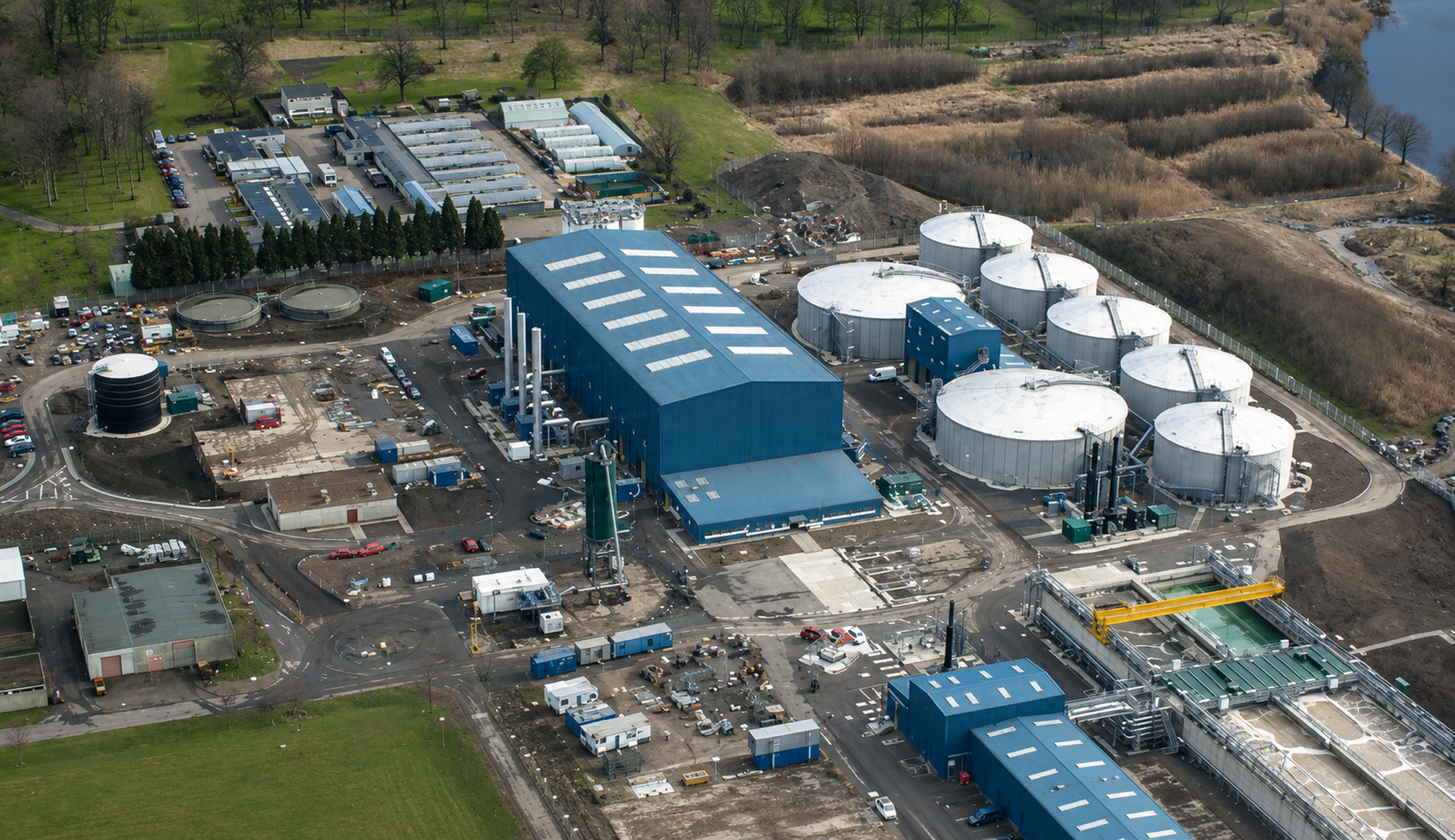
The Daldowie facility near Glasgow processes the solids removed from wastewater across Greater Glasgow and other parts of west-central Scotland. Its private-finance contract ended on 1 April 2026, transferring responsibility for the ageing plant to Scottish Water. The public corporation now proposes to replace its gas-fired drying system with an advanced anaerobic-digestion facility capable of recovering energy from sewage sludge.
The development presents a rare opportunity to examine the complete life of privately financed public infrastructure: the reason it was created, the payments made during its operation, the condition in which it was returned and the public investment required once the contract ended.
The existing plant was developed around the turn of the century, when Scotland needed an alternative to disposing of sewage sludge at sea. Under the private-finance model, a private company financed, built, operated and maintained the facility while the public water authority paid for the service over the contractual period.
The contractual operator was SMW Limited, originally associated with ScottishPower. Drax later acquired Daldowie as part of a wider purchase of ScottishPower generation assets. In its acquisition documents, Drax described the site as a 50,000-tonne biomass-from-waste facility supported by a firm agreement with Scottish Water until 2026.
For most households, Daldowie remained almost invisible. Wastewater arrived at treatment works, solids were removed, and the resulting sludge was transported or pumped for further processing. At Daldowie, much of that material was dried using natural gas and converted into pellets capable of being used as waste-derived fuel.
The plant performed an essential public function, but the technology chosen in the late 1990s now carries a heavy operating and environmental burden. Scottish Water describes the existing process as dated, energy-intensive and expensive to maintain. It estimates that the operation produces about 40,000 tonnes of carbon dioxide emissions each year, largely because of the gas required to dry the sludge.
An old plant reaching the end of its working life does not, by itself, prove that the private operator failed to maintain it. A facility can comply with its contract and still return to public ownership requiring major renewal after 25 years.
The more important question lies in whether the full cost of that lifecycle is visible.
There is no single, readily accessible public account setting out the total paid under the Daldowie agreement, the proportion attributable to finance, operation and maintenance, the value of the asset at transfer or any final compensation paid to the operator. Nor has a public handback report been identified showing the condition of the principal equipment, its remaining life and whether deductions were made before the contract expired.
Those omissions matter because the facility has not returned as a modern asset capable of serving Scotland for another generation without substantial expenditure.
The Water Industry Commission for Scotland says Scottish Water proposes to build an advanced anaerobic-digestion plant as part of a wider west-central Scotland system for treating, recovering and disposing of biosolids. The combined programme is expected to cost around £460m across Daldowie and the other sites that would depend upon it. The regulator’s documentation attributes approximately £325m of investment during the 2027–33 period directly to the west-central bioresources project at Daldowie, with further expenditure required for supporting works elsewhere.
It would be inaccurate to describe the entire £460m as the price of replacing one building. The figure covers a broader regional strategy centred on the new Daldowie facility.
The proposed process would treat sludge with heat and pressure before feeding it into sealed digesters. Microorganisms would break down the material and produce biogas, which could supply heat and electricity to the plant. Surplus gas could potentially be upgraded to biomethane and exported to the gas network. The remaining treated biosolids could be used on agricultural land, subject to environmental and quality controls.
This would replace an energy-hungry disposal process with one intended to recover usable energy and nutrients. It would also turn Daldowie into an even more important national asset, concentrating a large part of west-central Scotland’s sludge treatment at one location.
That concentration creates its own risk. A serious breakdown, delayed commissioning, permit restriction or construction problem at Daldowie could affect wastewater treatment across a much wider area than Glasgow. The cost estimate therefore concerns both the construction of a new plant and the resilience of an essential service that cannot simply stop while infrastructure is replaced.
The financial consequences are already beginning to appear. Scottish Water forecast an additional £25.179m of operating expenditure in 2026–27 following the end of the Daldowie PFI contract. Across all returning PFI facilities, its draft plans anticipate around £80m in additional annual operating costs as assets move back under direct public control, while payments to private operators gradually decline.
That does not mean the end of PFI automatically makes the service more expensive. Payments previously recorded as private-finance fees are replaced by direct staffing, energy, maintenance and operating costs. The public accounts change shape as responsibility changes hands.
The regulator has nevertheless asked for stronger evidence behind Scottish Water’s spending plans. It has identified the Daldowie programme as one of the investment cases requiring further examination and has warned that the wider investment programme will place substantial pressure on future charges. Scottish Water’s draft business plan proposed annual increases of inflation plus 4% between 2027 and 2033, although the final settlement remains a regulatory decision rather than an agreed bill increase.
Daldowie cannot fairly be blamed for the entire rise. Scotland’s water system also requires expenditure on ageing pipes, treatment works, sewer overflows, drinking-water quality and resilience. The scale of the proposed programme does mean that the return of privately operated assets is becoming part of the financial burden carried by the public water system.
There are further questions around what value the new plant will create. Biomethane, electricity and recovered materials could produce useful income. Whether those revenues remain wholly within Scottish Water will depend upon the construction, financing and operating agreements ultimately selected. Public ownership of the site does not automatically guarantee public control of every future contract or commercial return.
The same scrutiny should apply to the treated material intended for farmland. Sewage sludge contains valuable nutrients, but it can also carry contaminants entering the sewer network from homes, hospitals, roads and industry. A regional plant processing material on this scale will require transparent testing, traceability and clear responsibility for any later environmental damage. Nothing presently identified establishes that Daldowie biosolids are unsafe; the scale of the proposed operation makes long-term monitoring essential.
Daldowie is therefore more than a Glasgow infrastructure project. It is a test of what Scotland receives when a long private-finance agreement reaches its end, but at a massive cost.
Sources
https://www.scottishwater.co.uk/In-Your-Area/Investments-in-Your-Area/211124-Daldowie-Bioresources
https://wics.scot/system/files/2025-10/SRC27-WICS-feedback-on-Draft-Business-Plan.pdf
https://wics.scot/system/files/2024-12/SRC27-Final-Methodology.pdf