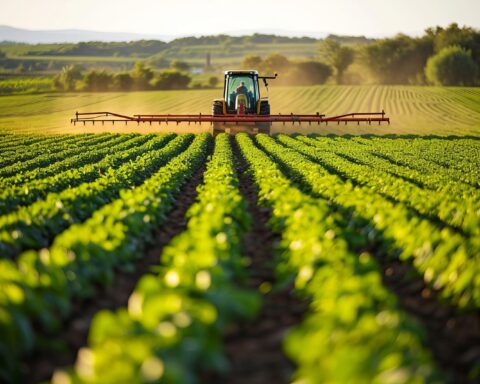

Scottish Borders Council is to consider a pilot comparing chemical free weed control with its current glyphosate based approach in Galashiels and District. The decision will test a question facing councils across Scotland: how to reduce herbicide use while still keeping pavements, streets and public spaces safe, accessible and affordable to maintain.
Scottish Borders Council is to consider a weed management pilot that would compare chemical free methods with its current glyphosate based approach during the 2026 growing season.
The proposal, due before councillors on 21 May, would run from April to October 2026 and compare two similar sites in the Galashiels and District area. Melrose Road would be managed using chemical free methods such as hand removal and mechanical strimming, while Abbotsford Road to Ladhope Vale would continue under the current glyphosate based system.
The council says the pilot is intended to provide local evidence on the practical, environmental and financial effects of reducing glyphosate use further, after it has already cut litres used by 43 per cent and reduced operational coverage by 79 per cent.
The issue is not simply whether weeds should be tolerated or removed. It is about how councils manage public spaces when environmental concern, public access, worker safety, biodiversity, cost and appearance all pull in different directions. Glyphosate remains approved for use in Great Britain while regulators complete a renewal assessment, but the public and political pressure on councils to find alternatives is unlikely to disappear.
A weed on a pavement may be untidy. For a wheelchair user, a parent with a pram, an older person with poor balance or a council responsible for footway condition, it can become part of a larger question about access, maintenance and risk. For those concerned about biodiversity, water quality, chemical exposure or the condition of public land, the same weed may represent something else: a sign that the long standing habit of treating hard surfaces with herbicide needs to change.
That is the issue now before Scottish Borders Council. The proposed pilot is modest in scale, but it sits inside a wider debate about how Scotland’s councils should manage the ordinary spaces of public life.
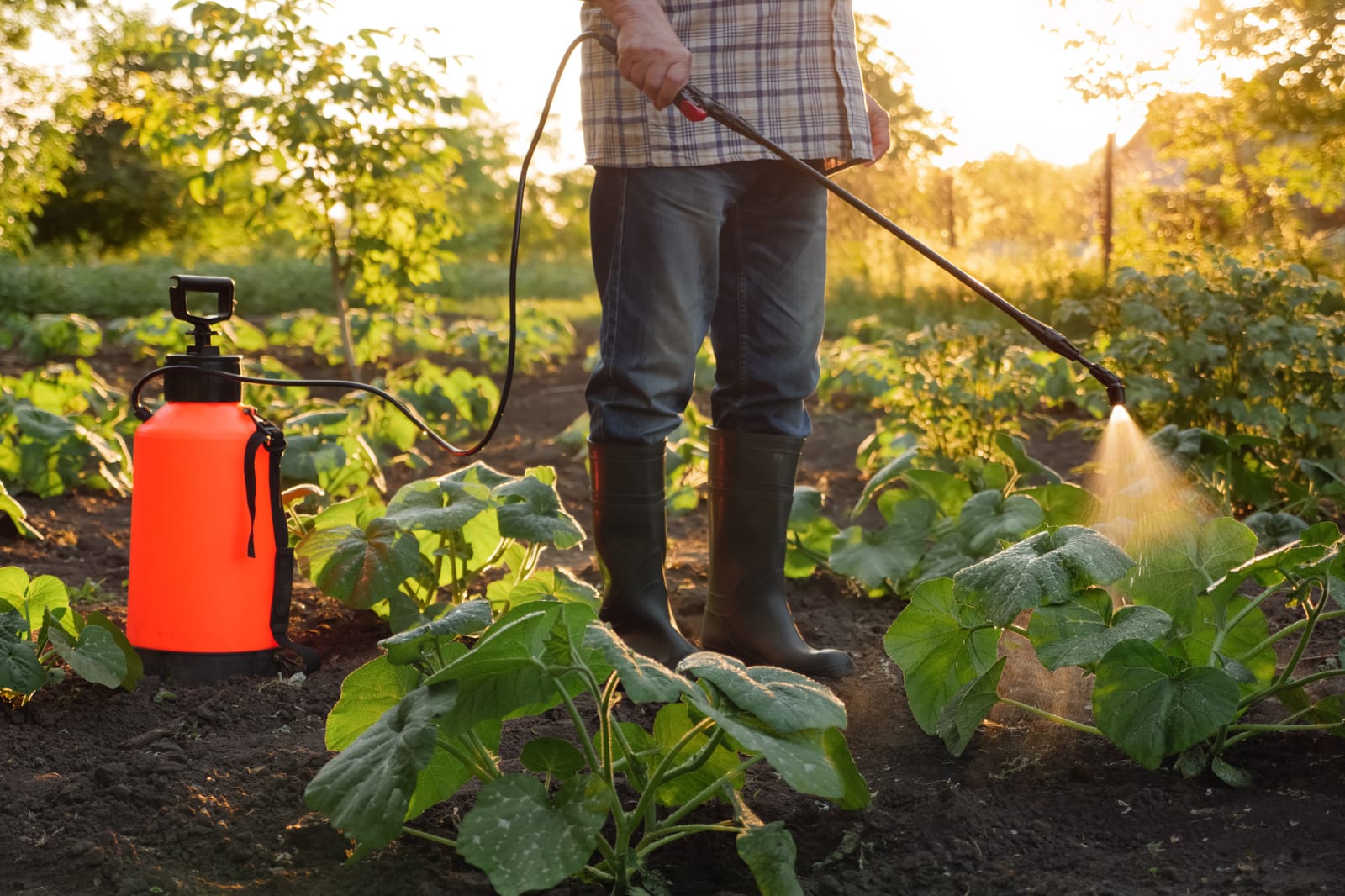
Glyphosate is the most familiar herbicide in that debate. It has been used for decades in agriculture, horticulture, amenity weed control and infrastructure maintenance. In council work, it is commonly used on hard surfaces, paths, kerbs, cemeteries, parks infrastructure and other areas where vegetation can damage surfaces, trap litter, create trip hazards or make places look neglected.
Scottish Borders Council currently uses glyphosate as part of an integrated weed management programme covering public footways, hard surfaces and other spaces. The council says weed control supports duties around public access, infrastructure maintenance, cleanliness, invasive species management and biodiversity. Its own weed management information states that it uses a combined approach of mechanical methods, manual methods and chemical application using glyphosate.
That combined approach is important. This is not a simple case of a council choosing between nature and chemicals. Weed management is already a mixture of methods. The question is whether the chemical element can be reduced further, and what the practical consequences would be.
The council has already made significant reductions. Since 2019, routine treatment has been reduced from two applications each year to one. Further changes since 2022 have reduced use within the Parks and Environment Service. The new report says litres of glyphosate used have fallen by 43 per cent, while operational coverage has been reduced by 79 per cent, with work now focused mainly on primary access routes and town centres.
That gives the pilot a clearer purpose. Scottish Borders Council is not starting from a position of doing nothing. It has already reduced use. The question now is how far reductions can go before the costs, labour demands and maintenance consequences become difficult to manage across a large rural authority.
The geography matters. The Borders is not a compact city council area. It covers towns, villages, rural roads, settlements spread across a wide landscape and public spaces that differ sharply in use and condition. A method that works on one street in Galashiels may not be easy to scale across the region. Hand removal and mechanical strimming can work, but they require time, staff, equipment and repeat visits. They can also be less durable than chemical treatment on hard surfaces.
That is why the proposed comparison between Melrose Road and Abbotsford Road to Ladhope Vale is useful. It gives councillors and officers local evidence rather than relying only on national argument. The council intends to monitor the condition of both sites, resource requirements, customer enquiries and the overall effectiveness of each method before reporting findings back.
The wider regulatory picture is unsettled. Glyphosate remains approved for use in Great Britain, but the Health and Safety Executive has extended the approval period until 15 December 2026 to allow a renewal assessment to be completed. The HSE has also said it expects a statutory public consultation on the renewal assessment in summer 2026.
That regulatory fact should be stated plainly. Glyphosate is not banned in Great Britain. It is not an illegal substance. Councils using it within the rules are operating inside the current regulatory framework. But approval does not end public debate, and the debate around glyphosate has been unusually durable.
One reason is that scientific and regulatory assessments have not always sounded the same to the public. In 2015, the International Agency for Research on Cancer classified glyphosate as “probably carcinogenic to humans”, a Group 2A classification based on limited evidence in humans and sufficient evidence in experimental animals.
Other regulators have reached different conclusions for their own purposes. The European Food Safety Authority said in 2023 that its assessment of glyphosate’s impact on humans, animals and the environment did not identify critical areas of concern, though it did identify data gaps and outstanding issues for consideration.
Those differences are one reason public confidence is hard to settle. A council officer may point to current approval and controlled use. A resident may point to the IARC classification and ask why any public authority is using the substance at all. Both are drawing from real public records, but they are asking different questions. One is regulatory. The other is precautionary.
For councils, the difficult question is not theoretical. It is operational. If a council stops or sharply reduces glyphosate, it must still decide who removes weeds, how often, by what method, at what cost and with what result. Chemical free methods may be preferable where they are effective and affordable. But they are not automatically simple. Manual removal is labour intensive. Mechanical strimming may need repeated use. Thermal methods can use energy and may have their own risks. Leaving weeds alone may support some wildlife in some places, but may also create complaints or access problems in others.
This is where the Borders pilot could be more useful than a symbolic vote. Symbolic decisions can satisfy public pressure but leave maintenance staff to manage the consequences. A controlled pilot can show what actually happens on the ground.
There is also a democratic element. Residents do not all want the same thing. Some want chemical use reduced as far as possible. Others want pavements and town centres kept clear and tidy. Some are concerned about pollinators and biodiversity. Others are concerned about trip hazards, blocked drainage, broken surfaces or public spaces that appear neglected. The council’s report acknowledges that views vary, with some residents calling for less chemical use and others concerned about visible weed growth.
The proposed pilot should therefore be judged not only by whether weeds appear. It should be judged by a broader set of questions. How much staff time is required. How quickly weeds return. Whether complaints rise or fall. Whether access is affected. Whether costs increase. Whether biodiversity benefits are measurable. Whether the method can be used across a wide council area rather than on a single showcase street.
Councillor John Greenwood, Executive Member for Roads and Public Space, said the pilot was intended to make sure the council takes an evidence led approach. He said the council knew there was strong public interest in reducing chemical use where possible and had already made significant reductions. The next step, he said, was to test how alternative methods perform in practice and what that means for safety, accessibility, biodiversity, resources and long term sustainability.
Here, the test is practical: two roads, two methods, one growing season and measured results.
The pilot will not settle the national argument over glyphosate. It will not answer every question about environmental exposure or public risk. It will not produce a single method that can be applied neatly across every pavement, cemetery, verge and town centre in the Borders.
But it could give the council a better basis for future decisions. If chemical free methods perform well at a manageable cost, the case for further reduction becomes stronger. If they prove too labour intensive, short lived or difficult to scale, councillors will have to decide whether the environmental benefit justifies the additional cost and service pressure.
The timing also matters. The HSE renewal process means glyphosate’s future in Great Britain is under formal review. Public concern is unlikely to fade during that process. Councils that wait for the national position before testing alternatives may find themselves behind the debate. Councils that experiment carefully now will be better placed to adapt later.