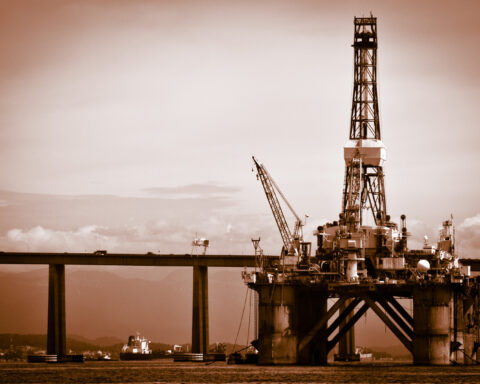

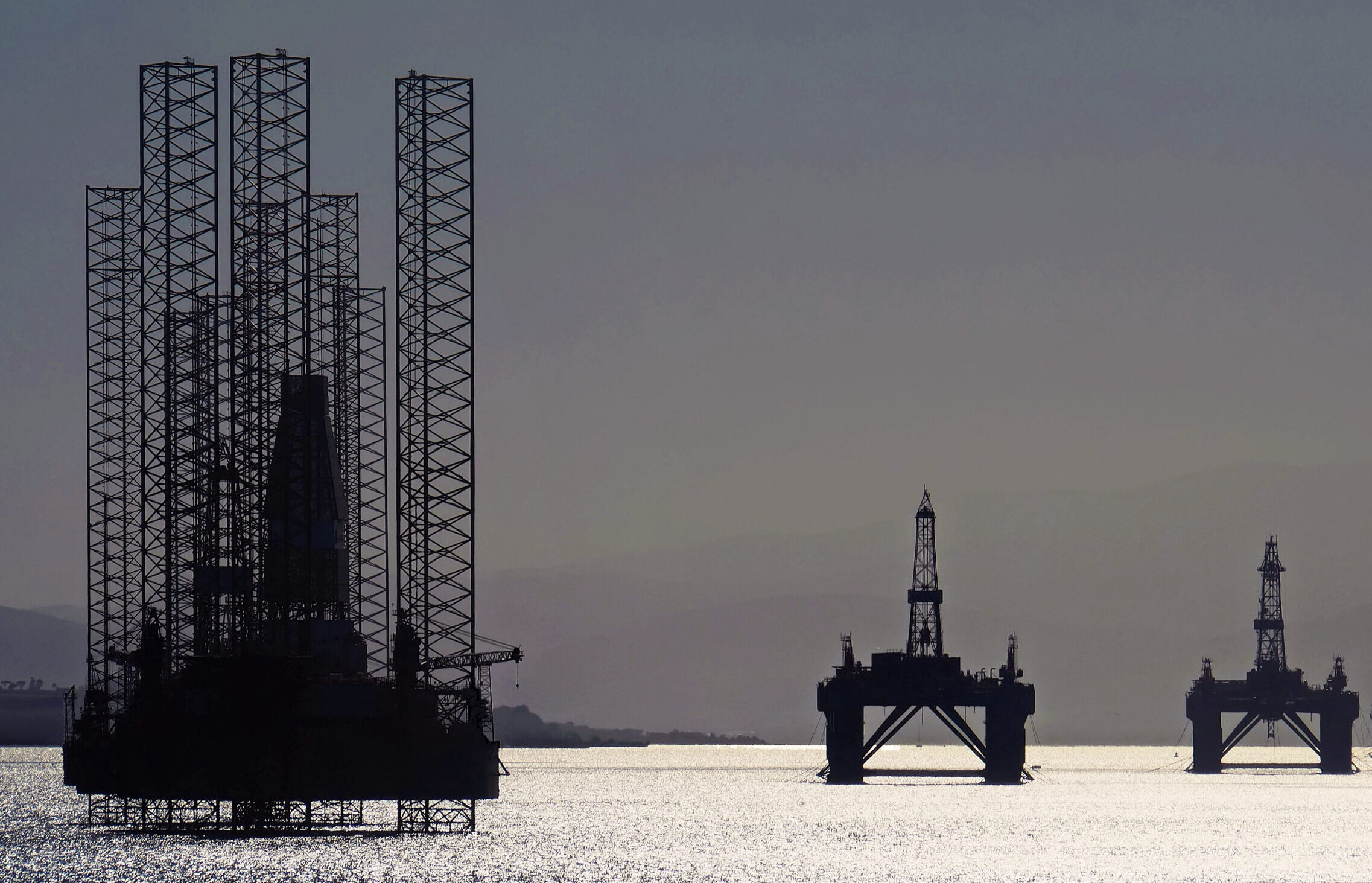
The offshore industry says 111 oil and gas projects representing £50 billion of potential private investment could move forward under a different tax and regulatory regime. The projects are not committed investment, and the figure comes from the industry pressing for earlier tax reform. What sits behind it is a much larger argument over how quickly North Sea production, jobs and capital spending will decline.
A figure of £50 billion has entered the argument over the future of the North Sea weeks before the UK Budget, attached to 111 oil and gas projects which the offshore industry says could proceed if the government changes the tax and regulatory conditions surrounding the basin.
The number is large enough to suggest an investment boom.
It requires more careful reading.
The £50 billion is not money already committed to Scotland or the wider UK Continental Shelf. It is an estimate produced from project information supplied by companies represented by Offshore Energies UK, the industry body whose members span oil and gas, offshore wind, carbon capture, hydrogen and the supply chain.
OEUK says the 111 projects could become economically viable under a more favourable fiscal and regulatory framework.
Together they contain an estimated 3.5 billion barrels of oil-equivalent reserves and resources, according to the organisation’s 2026 Business Outlook.
Around £25 billion of the identified investment and approximately 1.3 billion barrels of oil equivalent are associated with gas projects.
The industry wants the government to alter the timetable governing the Energy Profits Levy, the additional tax introduced in 2022 after oil and gas prices rose sharply following Russia’s invasion of Ukraine.
The levy now stands at 38 per cent.
Combined with the existing 30 per cent ring-fence corporation tax and 10 per cent supplementary charge, it produces a headline tax rate of 78 per cent on upstream profits, although actual tax liabilities depend on company circumstances, expenditure, allowances and taxable profit.
Under current policy, the Energy Profits Levy is scheduled to end no later than 31 March 2030.
It can end earlier if the Energy Security Investment Mechanism is triggered by sustained lower oil and gas prices.
The government has already designed the system intended to replace it.
Draft legislation published in July establishes a permanent Oil and Gas Revenue Levy which would operate only when commodity prices exceed specified thresholds. The proposed starting points are $90 a barrel for oil and 90 pence a therm for gas, with the thresholds subsequently adjusted for inflation.
Where realised prices exceed those levels, the new levy would tax the revenue above the threshold at 35 per cent.
Under the government’s present timetable, that regime will begin only when the Energy Profits Levy ends.
OEUK wants the change brought forward.
Its argument is that maintaining the existing levy until 2030 will discourage investment during the years in which operators are deciding whether ageing North Sea infrastructure and undeveloped discoveries still justify further capital.
The organisation says earlier reform could unlock the £50 billion project pipeline, sustain tens of thousands of jobs and produce more tax revenue over time than would be collected if investment continues to fall.
Those are industry projections rather than government forecasts.
That distinction is particularly important because the tax debate is being conducted inside a basin that is already declining for geological reasons irrespective of tax policy.
The North Sea is mature.
Fields discovered decades ago have depleted, production has fallen and infrastructure built around much larger volumes is becoming more expensive to maintain as throughput declines.
No tax regime can restore the basin to the scale of its peak years.
Fiscal policy can, however, affect decisions at the margin: whether a smaller discovery is developed, whether an existing field receives further investment, whether ageing infrastructure remains open long enough to serve surrounding projects and whether capital is allocated to the UK Continental Shelf or to assets elsewhere.
OEUK argues those decisions are now accumulating.
Its Business Outlook says domestic oil and gas production has fallen substantially in recent years and that, without further investment, the decline will accelerate towards the end of the decade.
The consequences extend beyond the companies that hold production licences.
Scotland contains much of the industrial system surrounding the UK Continental Shelf.
Aberdeen and Aberdeenshire remain the centre of a supply chain built around subsea engineering, drilling, inspection, maintenance, vessels, aviation, logistics, fabrication, professional services and offshore operations.
The industry’s geographical reach extends through ports and businesses elsewhere in Scotland, including the Highlands, Moray, Fife and the central belt.
OEUK says the broader UK offshore energy sector contributed £36.2 billion in gross value added in 2024 and supported about 241,000 jobs when oil and gas and offshore wind are considered together.
Its Scottish election material put 128,400 of those jobs in Scotland and attributed around £24 billion of economic value to the Scottish part of the offshore energy economy.
Those figures cover more than oil and gas and should not be read as the employment or economic value of North Sea petroleum production alone.
They do show how deeply the offshore economy is embedded in Scotland.
The central economic risk is not simply the disappearance of jobs on production platforms.
A declining project pipeline affects engineering companies deciding how many apprentices to recruit, vessel operators deciding whether to retain capacity, fabrication yards bidding for work, ports investing in infrastructure and specialist businesses deciding whether their next contract is likely to come from Scotland or another offshore market.
The same supply chain is expected to participate in offshore wind, carbon capture and storage, hydrogen and decommissioning.
That creates an unusual transition problem.
A rapid loss of oil and gas work can remove companies and skilled workers that government and industry expect to redeploy into the industries intended to replace it.
Continued oil and gas investment, meanwhile, carries its own consequences for emissions and the pace of the energy transition.
The government has chosen a tax structure intended to balance those pressures.
Its proposed Oil and Gas Revenue Levy is designed to collect additional tax when prices are unusually high while remaining inactive at lower prices, replacing the temporary profit-based levy with a more predictable mechanism.
HM Revenue and Customs says the objective is to ensure the UK receives a return from unusually high commodity prices while providing greater certainty for investment.
OEUK accepts the principle of the replacement mechanism. Its disagreement is increasingly about when it should begin.
The organisation argues that waiting until 2030 leaves four more years in which projects can be postponed, reduced or abandoned.
Its latest calculations say earlier reform could raise more tax rather than less.
One OEUK analysis estimates that reforming the present system earlier could increase receipts by around £15.7 billion over ten years compared with its projection under the existing path. That estimate combines corporation tax, payroll taxes, receipts from the future price mechanism and wider economic effects.
Another current submission to government puts the potential investment at £50 billion and the associated additional economic value at around £70 billion.
These figures should not be treated as guaranteed returns.
They depend on assumptions about oil and gas prices, production, company investment decisions, project costs, employment, tax liabilities and the response of operators to changes in policy.
The companies providing the underlying project information also have a direct commercial interest in a lower and more predictable tax burden.
The alternative position is that the windfall levy was imposed because exceptional commodity prices generated exceptional profits and that removing it earlier would reduce taxation of a highly profitable industry while extending fossil-fuel development during a period in which the UK has committed to reducing emissions.
The present government position does not abolish additional taxation.
It replaces the Energy Profits Levy with a mechanism that activates when prices rise above defined levels.
That means the approaching decision is less binary than an argument between taxing and not taxing North Sea producers.
It concerns the timing and structure of the additional tax, the investment response to it, and how much continuing production the government expects from a basin whose output is already falling.
There is also a trade dimension.
As domestic production declines, the UK becomes more dependent on imported energy unless demand falls at the same pace.
OEUK says the UK imported more than 40 per cent of its energy in 2025.
Its modelling argues that declining domestic gas production could substantially increase reliance on liquefied natural gas during the 2030s.
The organisation says investment in the 111 identified projects could reduce that dependency.
The economic effect of imports is straightforward even where the wider energy-security argument is contested: money used to purchase imported oil and gas leaves the domestic economy rather than supporting production, wages, profits and tax receipts within the UK.
That does not mean additional North Sea production would make household energy cheap.
Oil and gas are traded in international markets, and domestic production does not isolate British consumers from global prices.
The direct Scottish economic case therefore rests more heavily on investment, employment, supply-chain activity, tax revenues and the rate at which an existing industrial base contracts.
That contraction has already begun.
Operators have reduced spending, companies have announced redundancies and businesses throughout the north-east are attempting to position themselves for an energy system in which oil and gas production declines while offshore wind and other low-carbon industries expand.
The speed at which the new work arrives remains critical.
Modern Scot has previously reported warnings that clean-energy employment has not yet expanded quickly enough to replace every job being lost from oil and gas. The new £50 billion project estimate adds another dimension to that transition.
It identifies capital that the existing industry says could still be spent before the basin declines further.
The government now has to decide whether the economic activity forecast by the industry justifies changing a tax timetable that was itself designed to capture revenue from exceptional fossil-fuel profits.
The next formal point in that argument is 28 October, when the UK Budget will be delivered.
The £50 billion figure will inevitably sit near the centre of the industry’s case.
It should not be mistaken for a cheque waiting to be collected.
It is a calculation of what companies say they might invest if the conditions change — attached to 111 projects in a basin where the window for making those decisions is becoming shorter.
Sources
Offshore Energies UK — Business Outlook Report 2026.
https://oeuk.org.uk/product/business-outlook-report-2026/
Offshore Energies UK — Business Outlook Report 2026, full report.
https://oeuk.org.uk/wp-content/uploads/2026/03/Business-Outlook-2026-UNDER-EMBARGO-00.01am-on-Tuesday-24-March-2026.pdf
Offshore Energies UK — Chancellor must use next month’s Budget to unlock economic boost, 9 September 2026.
https://oeuk.org.uk/chancellor-must-use-next-months-budget-to-unlock-a-70-million-economic-boost/
Offshore Energies UK — UK domestic energy production faces critical challenge, 14 September 2026.
https://oeuk.org.uk/uk-domestic-energy-production-faces-critical-challenge/
Offshore Energies UK — Future of the North Sea.
https://oeuk.org.uk/who-we-are/industry-campaigns/future-of-the-north-sea/
Offshore Energies UK — Scotland Manifesto 2026: offshore energy employment and economic contribution.
https://oeuk.org.uk/oeuk-urges-cross%E2%80%91party-backing-for-a-modern-industrial-scotland-secured-by-homegrown-energy/
HM Revenue & Customs — Oil and Gas Revenue Levy, published 13 July 2026.
https://www.gov.uk/government/publications/oil-and-gas-taxation-oil-and-gas-revenue-levy
HM Revenue & Customs — Oil and Gas Revenue Levy: detailed proposal.
https://www.gov.uk/government/publications/oil-and-gas-taxation-oil-and-gas-revenue-levy/oil-and-gas-revenue-levy-ogrl
HM Treasury — Oil and gas price mechanism consultation: outcome.
https://www.gov.uk/government/consultations/oil-and-gas-price-mechanism-consultation
HM Treasury — Budget 2026 date, 31 July 2026.
https://www.gov.uk/government/publications/chancellor-letter-to-the-treasury-select-committee-tsc-budget-2026-date