
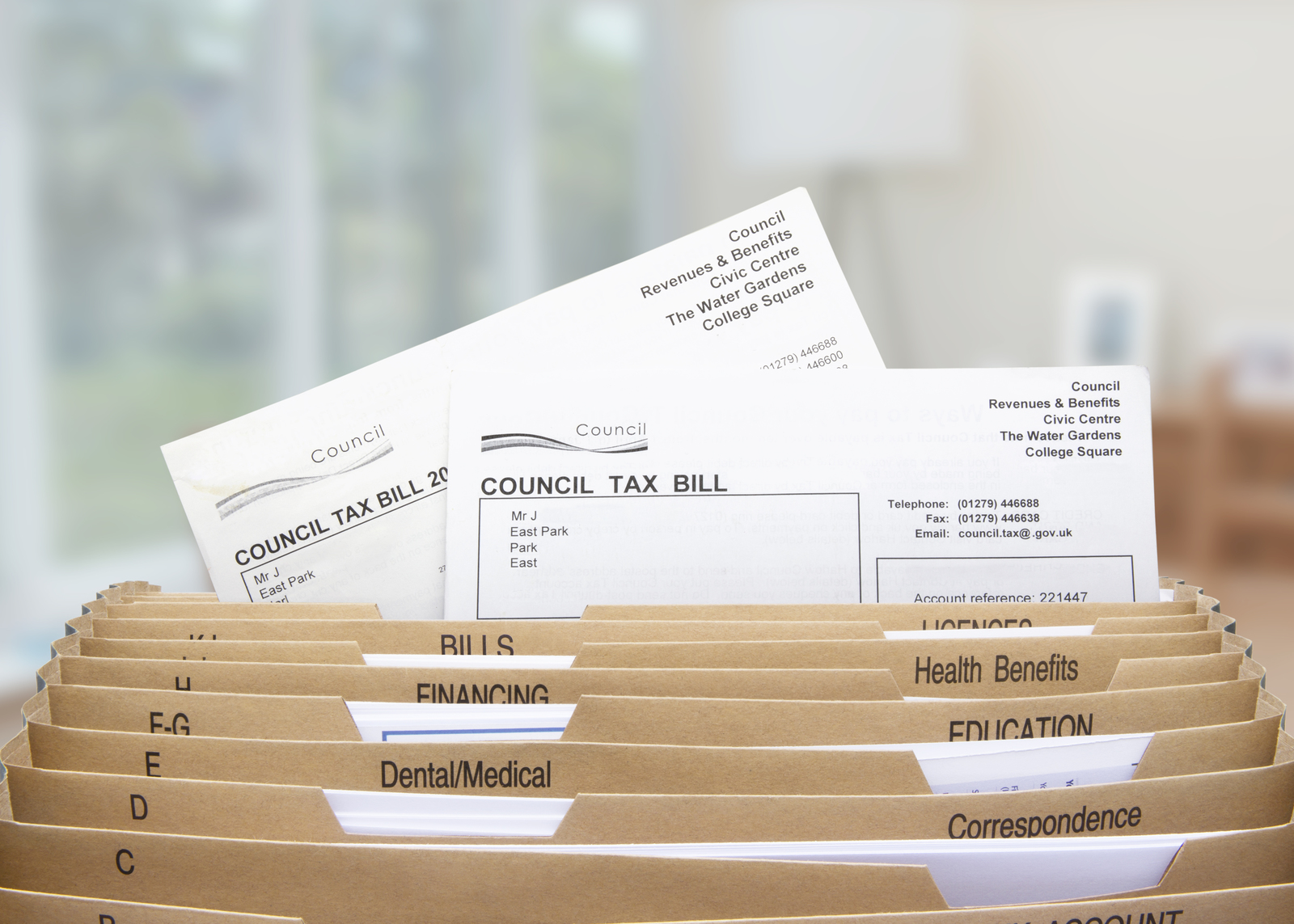
The Scottish Government has confirmed that a Council Tax Bill will be introduced during the first year of the new Parliament. Two new bands for homes worth more than £1 million will arrive first. Behind them sits a larger question that successive governments have left unresolved: whether a property tax based almost entirely on values from 1991 can continue to finance Scottish local government.
Scotland’s Council Tax system begins with a date.
1 April 1991.
Every ordinary home currently placed in Council Tax Bands A to H is classified according to an estimate of what that property would have sold for on that date.
A home built subsequently is also assigned a band by estimating what its value would have been in 1991.
The tax itself did not begin until 1 April 1993, when Council Tax replaced the Community Charge. Yet the property market against which most Scottish homes are still measured belongs to the beginning of the previous decade.
The Scottish Government has now confirmed legislation that will begin changing the system.
Its Programme for Government, published on 1 September, includes a Council Tax (Scotland) Bill among the nine Bills planned for the first year of the new Parliament.
The Bill will create two additional Council Tax bands for high-value homes from 1 April 2028 and provide an opportunity to modernise other parts of the Council Tax framework. The Government also intends to give councils additional discretionary powers.
The new bands are already being developed through a consultation launched in August.
Band I would apply to properties with current values between £1 million and £2 million.
Band J would apply to properties worth more than £2 million.
Unlike the existing eight bands, these two would be based on contemporary property values.
That produces a Council Tax system in which the highest-value homes will eventually be measured using one valuation period while almost every other home continues to be measured against another.
The house next door is not being taxed on what it is worth today
The current bands show how deeply 1991 remains embedded in Scottish local taxation.
Band A covers properties estimated to have been worth less than £27,000 in April 1991.
Band B runs from £27,001 to £35,000.
Band C runs from £35,001 to £45,000.
Band D runs from £45,001 to £58,000.
Band E covers £58,001 to £80,000.
Band F covers £80,001 to £106,000.
Band G covers £106,001 to £212,000.
Band H contains every property valued above £212,000 on the 1991 basis.
There is no further valuation band above it.
A property that would have been worth £220,000 in 1991 and one that would have been worth several times that amount therefore occupy the same existing Council Tax band.
The Scottish Government describes this as a weakness at the upper end of the system.
The problem extends beyond very expensive homes because property values have not moved uniformly across Scotland during the intervening 35 years.
Edinburgh has experienced one pattern of property growth. Glasgow has experienced another. Aberdeen’s housing market has been affected by successive cycles in the North Sea economy. Island communities, commuter settlements, former industrial areas, rural towns and parts of the Highlands have followed different trajectories.
A house that stood in one relationship to another house in 1991 may occupy a very different relationship to it in 2026.
The Scottish Government acknowledged this directly in its consultation on high-value bands. It states that property markets across Scotland have changed substantially and unevenly since 1991.
A home can therefore remain in a relatively low Council Tax band based on its historic value while having a substantially higher current market value than another home occupying Band G or H.
The reverse can also occur. A property historically placed in a high band may have experienced much slower subsequent appreciation.
Most Scottish homes sit below Band E
The distribution of homes across the bands shows the structure on which the tax operates.
Scottish Government local-government finance statistics recorded 2,602,545 chargeable dwellings in September 2024.
Of those, 497,867 were in Band A.
Another 581,576 were in Band B.
Band C contained 423,304 homes.
Band D contained 365,001.
Together, Bands A to D accounted for almost 72 per cent of chargeable dwellings.
Band E contained 362,354 properties, Band F 217,954 and Band G 140,162.
Only 14,327 properties were in Band H.
That was 0.6 per cent of the total.
The existing system is therefore heavily concentrated in its lower and middle bands, while the upper band covers a very small share of the housing stock.
The Government estimates that the proposed new Bands I and J will affect fewer than one per cent of Scottish properties.
The overwhelming majority of homes will continue to be classified using 1991 values.
Scotland has already changed the tax without changing the valuations
The absence of a general revaluation does not mean Council Tax has remained completely unchanged since 1993.
Councils set their own Band D charge each year, and the charges for the other bands are calculated from it using statutory ratios.
The Scottish Government changed those ratios for Bands E to H from 2017-18, increasing the amount charged to homes in the upper existing bands relative to Band D.
The valuation date itself remained untouched.
Governments have also used discounts, exemptions, Council Tax Reduction and other mechanisms to alter what individual households pay.
Councils can apply increased charges to some second homes and long-term empty properties.
The underlying property map has remained based on 1991.
That has allowed governments to change the distribution of liability without undertaking the much larger administrative and political exercise of valuing Scotland’s domestic property stock again.
A national revaluation would produce winners as well as losers
Revaluation is sometimes described as though it automatically means higher Council Tax.
A revaluation determines relative property values. It does not by itself determine how much revenue government chooses to collect.
If every Scottish home were revalued, some properties would move upwards relative to others. Some would move downwards. Others could remain in broadly similar positions.
The outcome would depend on the new band structure, the valuation date, the ratios between bands and the Band D rates subsequently set by councils.
The difficulty comes from 35 years of unequal property-price movement.
Any revaluation would reveal where homes have appreciated faster than the national pattern and where they have appreciated more slowly.
That creates a geographical redistribution inside a tax that funds local services.
It also creates household-level consequences that do not always correspond neatly with income.
A household can occupy a valuable property while receiving a relatively modest income. Older homeowners who bought decades ago are one example. A substantial increase in the assessed value of their home does not necessarily produce additional cash with which to pay an annual tax bill.
Council Tax Reduction and other protections can address some circumstances, but property value and household income remain different measures of ability to pay.
The new £1 million threshold requires Scotland to value properties again
The two new bands cannot be created simply by looking at the existing Council Tax register.
The Government needs to establish which properties are currently worth more than £1 million.
That means undertaking a targeted contemporary valuation exercise.
The Scottish Budget allocated £5 million towards preparing for the change.
Band I is intended to cover homes worth between £1 million and £2 million.
Band J will cover homes worth more than £2 million.
Properties below £1 million will remain within Bands A to H according to the existing framework.
The Government’s consultation proposes that existing protections, discounts, exemptions and Council Tax Reduction arrangements should continue to operate for properties entering the new bands.
The approach therefore does not replace Council Tax with a new property tax. It adds two contemporary-value bands to the top of the existing system.
The boundary creates its own valuation problem
A property assessed at £995,000 and one assessed at £1.005 million may be extremely similar.
Under a banded system, one could remain in Band H while the other enters Band I.
The same issue occurs around the £2 million threshold between Bands I and J.
Valuation therefore becomes particularly consequential around each boundary.
Scotland already has a system for Council Tax valuation and appeals, administered through assessors and the Scottish Courts and Tribunals Service framework.
The addition of bands based on current rather than historic values creates a new class of valuation decisions in which relatively small differences in estimated market value can alter annual tax liability.
The Chartered Institute of Taxation and Low Incomes Tax Reform Group raised this issue in their response published this week. They said councils could expect valuation challenges from households whose properties sit close to the proposed £1 million and £2 million boundaries.
The proposed bills are around £4,770 and £7,650 at current average rates
The final rates for Bands I and J have not been decided.
The Government consultation provides illustrative figures.
For Band I, it is examining a multiplier of approximately 2.886 times the Band D charge.
Using the average Scottish Band D charge for 2026-27, that would produce an annual Council Tax bill of around £4,770.
For Band J, the illustrative multiplier is approximately 4.628.
That would produce an annual charge of around £7,650.
Compared with the average Band H charge, the Government estimates that a Band I property would pay approximately £720 more each year.
A Band J property would pay around £3,600 more.
Because individual councils set their own Band D rates, the actual cash charge would vary geographically.
The final multipliers will be determined following consultation and require parliamentary approval.
The expected revenue is £12 million to £16 million a year
The Government estimates that the two bands could raise between £12 million and £16 million annually at the illustrative rates.
The money would be retained by local government.
Scotland’s councils billed £3.389 billion in Council Tax in 2025-26 after Council Tax Reduction.
They collected £3.227 billion by the end of the financial year, producing an in-year collection rate of 95.2 per cent.
Against a system raising more than £3 billion annually, £12 million to £16 million represents a relatively small addition to total Council Tax income.
The policy consequently changes the tax structure at the top more than it changes the overall financing of Scottish local government.
Councils remain heavily dependent on funding from the Scottish Government alongside Council Tax, non-domestic rates income, fees, charges and other sources.
Council Tax was never designed to carry local government by itself
Council Tax is sometimes discussed as though it were the principal source of council finance.
It is one component.
Scottish councils deliver schools, social work, roads, waste collection, housing functions, planning, environmental health, libraries, leisure services and many other statutory and discretionary functions.
The majority of their funding comes through the wider local-government finance settlement rather than directly from Council Tax.
That relationship gives the Scottish Government substantial influence over local-government finances even though councils determine their annual Council Tax rates.
The balance between national funding and locally raised taxation has been a recurring part of the Council Tax debate.
A local tax gives councils a revenue source connected to their own decisions. Heavy dependence on central grants limits that fiscal autonomy. Greater reliance on property taxation would increase local revenue-raising responsibility but would also expose councils more directly to differences in their local tax bases.
A council containing large numbers of high-value homes does not have the same property base as a council dominated by lower-value housing.
Any wider redesign therefore has consequences for equalisation between Scotland’s 32 local authorities.
The system replaced another local tax that had become politically unsustainable
The history of Council Tax cannot be separated from the Community Charge.
Domestic rates had previously taxed households according to the rental value of property.
The Community Charge replaced domestic rates in Scotland in 1989, one year before its introduction in England and Wales.
Commonly known as the poll tax, it charged adults rather than properties and generated widespread political opposition.
Council Tax replaced it in 1993.
The new system deliberately combined property value with household circumstances. It created valuation bands rather than taxing every property at an individually calculated percentage of its market value.
It also retained a personal element through measures such as the 25 per cent single-person discount.
The banding system reduced the need for continuous precise valuations because properties only had to be placed within ranges.
That administrative simplicity contributed to the longevity of the system.
The same longevity created the present valuation problem.
Scotland has been discussing reform for years
Council Tax reform has appeared repeatedly in Scottish political programmes.
A Commission on Local Tax Reform established by the Scottish Government and COSLA reported in 2015.
Its work concluded that the existing system required substantial reform and examined alternatives including a more progressive property tax, a land-value tax and local income tax.
No wholesale replacement followed.
The subsequent change to Bands E to H altered liabilities within Council Tax instead.
The previous Scottish Parliament returned to the issue through the Future of Council Tax in Scotland consultation and wider engagement with local government and political parties.
The present Government says the new Bands I and J do not predetermine the outcome of that wider process.
The Council Tax Bill announced this week is consequently both a specific measure and part of a longer reform programme.
Wales has already revalued its Council Tax base once
Scotland is not the only part of Britain to have inherited Council Tax from the early 1990s.
England continues to use property values from 1991.
Wales carried out a revaluation using 2003 property values, which took effect in 2005. Its band structure was changed at the same time.
Wales has since undertaken further work on Council Tax reform and revaluation.
Scotland has not carried out an equivalent general revaluation.
The different approaches demonstrate that the use of 1991 values is not an unavoidable characteristic of Council Tax. It is a policy choice maintained through successive governments.
Property wealth has become more geographically uneven since the valuation date
The Scotland of April 1991 had a different housing market.
The Edinburgh property boom associated with the city’s expansion as a financial, professional and governmental centre had decades still to run.
The Scottish Parliament did not exist.
The regeneration of parts of Glasgow had not reached its present stage.
The oil economy continued to shape Aberdeen and Aberdeenshire differently from later periods of expansion and contraction.
Short-term letting platforms had not been created.
Large parts of the modern commuter housing market around Edinburgh, Glasgow, Aberdeen, Inverness, Stirling and Perth had yet to be built.
Many contemporary developments did not exist.
The Highlands and islands were operating under different demographic and housing pressures.
Property values have subsequently incorporated changes in employment, transport, university expansion, tourism, second-home demand, migration, regeneration, school catchments and access to services.
Council Tax largely preserves the relative values that existed before those changes occurred.
A £1 million home is not distributed evenly across Scotland
The new bands will therefore have a geographical pattern.
Properties above £1 million are concentrated disproportionately in particular markets, including parts of Edinburgh and its surrounding area and selected locations elsewhere in Scotland.
Some council areas will have substantially more Band I and J properties than others.
Because the additional revenue will remain with local government, the distribution of high-value property becomes part of the distribution of the new revenue.
The wider Scottish local-government funding system already contains mechanisms intended to account for different needs and tax bases.
The operation of the new revenue alongside those mechanisms will determine how much of the fiscal effect remains concentrated in the authorities containing the highest-value homes.
The tax is charged to occupants, not simply to property owners
The term “mansion tax” can obscure the legal structure being proposed.
Council Tax is generally a charge associated with occupation of a dwelling. Liability follows statutory rules identifying who is responsible for payment.
The new Bands I and J will operate within that framework.
They are not proposed as an annual wealth tax collected from the beneficial owner of every high-value residential asset regardless of occupation.
SOURCES
Programme for Government 2026 to 2031: Year One Legislative Programme — Scottish Government — 1 September 2026 — https://www.gov.scot/publications/programme-government-2026-2031/pages/6/
Council Tax High-Value Property Bands (Mansion Tax): consultation — Scottish Government — 6 July 2026 — https://www.gov.scot/publications/consultation-council-tax-high-value-property-bands-mansion-tax/
Council Tax High-Value Property Bands (Mansion Tax): supporting documents — Scottish Government — 6 July 2026 — https://www.gov.scot/publications/consultation-council-tax-high-value-property-bands-mansion-tax/documents/
Scottish Budget 2026 to 2027: Chapter 2 Tax Policy — Scottish Government — 13 January 2026 — https://www.gov.scot/publications/scottish-budget-2026-2027/pages/4/
Scottish Budget 2026-2027: Finance Secretary’s statement — Scottish Government — 13 January 2026 — https://www.gov.scot/publications/scottish-budget-2026-2027-finance-secretarys-statement-13-january-2026-2/
Future of council tax in Scotland: consultation — Scottish Government — 27 October 2025 — https://www.gov.scot/publications/consultation-future-council-tax-scotland/
Council Tax and Property Changes Over Time — Scottish Government — 27 October 2025 — https://www.gov.scot/publications/consultation-future-council-tax-scotland/pages/2/
Options for Council Tax Reform — Scottish Government — 27 October 2025 — https://www.gov.scot/publications/consultation-future-council-tax-scotland/pages/3/
Transition and Mitigation — Scottish Government — 27 October 2025 — https://www.gov.scot/publications/consultation-future-council-tax-scotland/pages/4/
Future of council tax in Scotland: consultation — Scottish Government and COSLA — 27 October 2025 — https://consult.gov.scot/local-government-and-communities/the-future-of-council-tax-in-scotland/consult_view/