
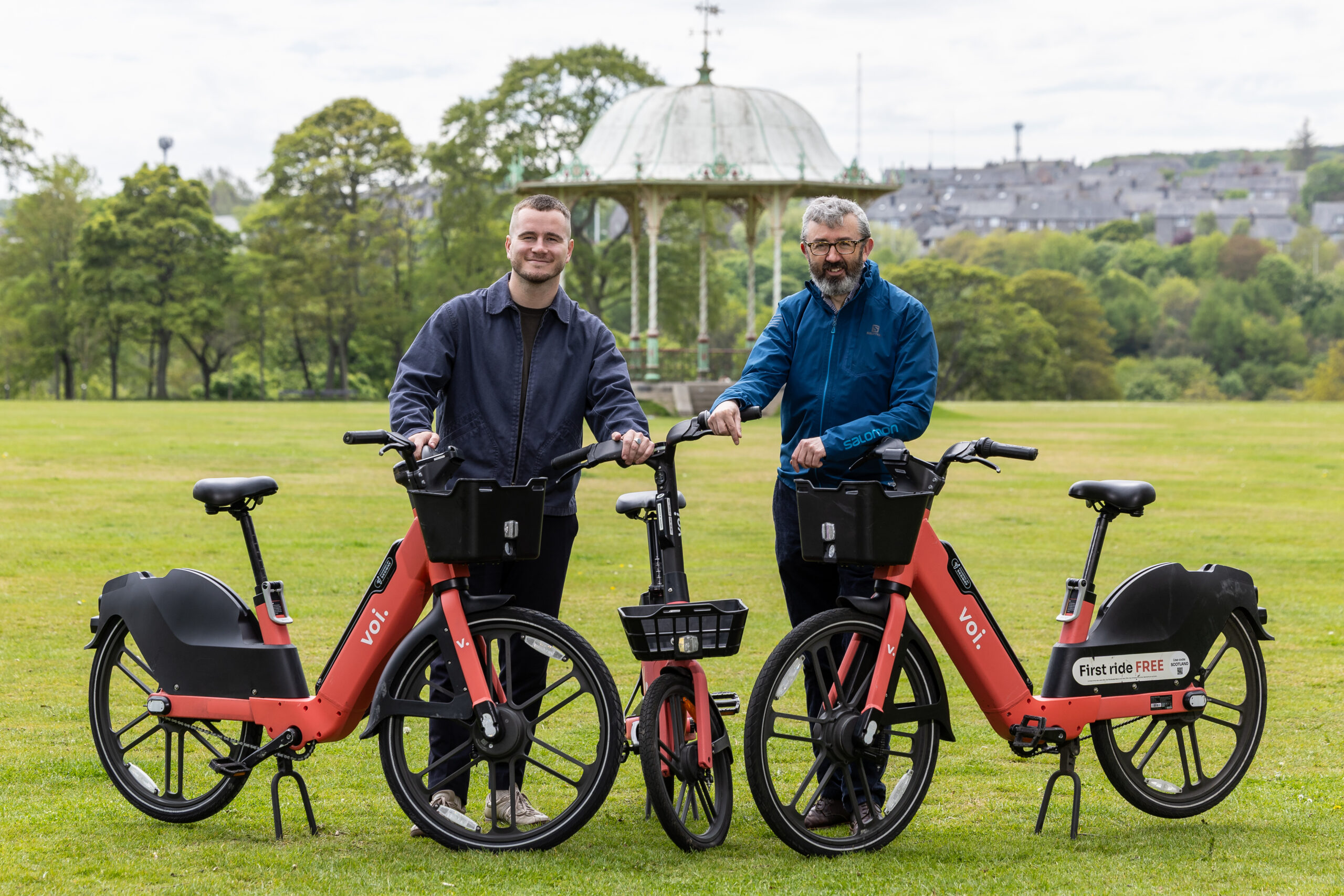
Aberdeen’s new Voi e-bike scheme has recorded more than 5,000 journeys since launching in the city, with early use averaging 7.4 trips per bike per day. The figures show a quick start for the hire scheme, which brings shared electric cycle hire back to the city at a time when Aberdeen is still working through how short journeys should fit into a changing urban economy.
Aberdeen’s new Voi e-bike scheme has passed 5,000 rides since the bikes began operating in the city on 21 May.
The scheme was formally launched at Duthie Park, with Aberdeen City Council presenting the bikes as another travel option for residents and visitors. The fleet is expected to grow to 350, using two models: the Explorer 4, a larger full-size e-bike aimed at commuter journeys, and the Explorer Light 1, a lighter step-through model intended to be easier for smaller or less confident riders.
The pricing is built around short trips. Unlocking is free for the first three months, with pay-as-you-go use charged at 18p per minute. Aberdeen residents can hire a bike for 20 minutes for £1.75, and first-time users have been offered a free 15-minute journey through a launch code.
For many riders, the appeal will be simple enough. Aberdeen is a working city with challenging weather, hills, traffic, commuting patterns and a centre still adjusting to changing habits. A conventional bicycle suits confident riders, but not everyone wants to arrive at work or an appointment feeling as if they have competed in a minor Highland endurance event. Electric assistance lowers the barrier. A hill becomes less of a struggle. A short journey becomes more pleasant.
The idea behind the e-bike is older than the app that now unlocks it. In 1895, Ogden Bolton Jr of Canton, Ohio, patented an “electrical bicycle” with a motor carried in the wheel and designed so its operating parts would be protected from weather and dirt. The modern shared e-bike is a very different machine, but the central promise remains recognisable: keep the bicycle, reduce the strain, and make short travel easier for more people.
British rules make a clear distinction between an electrically assisted pedal cycle and a motor vehicle. A legal e-bike must have pedals, a motor with a continuous rated power output of no more than 250 watts, and assistance that cuts out above 15.5mph. When those conditions are met, it can be used on roads and cycle paths where ordinary bicycles are allowed, but not on pavements.
That legal line is worth spelling out because public confidence around e-bikes has been uneven. Hire schemes can help reduce car use for short journeys, but cities have also had to deal with pavement parking, careless riding, battery concerns and illegal high-powered machines that are not the same as regulated pedal-assist bikes. Aberdeen’s scheme will need to be strict as well as popular.
The city has been here before. A previous e-bike hire scheme operated from November 2022 to 2024, with bikes supplied through a different arrangement and maintenance work linked to local recruitment. Aberdeen City Council’s Finance and Resources Committee later agreed to seek a new operator, with Voi appointed for the new scheme. Regional transport papers before the launch said around 200 bikes were expected initially, with the city scheme now moving toward a larger fleet.
The return of shared e-bikes also sits alongside wider transport debates in the north-east, including Aberdeen Rapid Transit, city centre footfall, bus reliability, active travel routes and the future shape of travel between the city and surrounding communities. E-bikes cannot carry that whole agenda. They can, however, make some short journeys easier where the distance is awkward, the hill is discouraging or the bus connection is not quite right.
Riders will decide quickly whether the scheme fits ordinary life. Availability, parking, maintenance, safety, pricing and road confidence will count for more than launch enthusiasm. A bike that is there when needed, works properly, parks neatly and feels safe enough to use will earn repeat journeys. One that becomes hard to find, awkward to park or uncomfortable to ride through traffic will not.
Aberdeen’s early numbers suggest curiosity has turned into use, at least in the first days. The more interesting figure will be the quieter one that follows later: how often residents use the bikes once the launch period has passed.