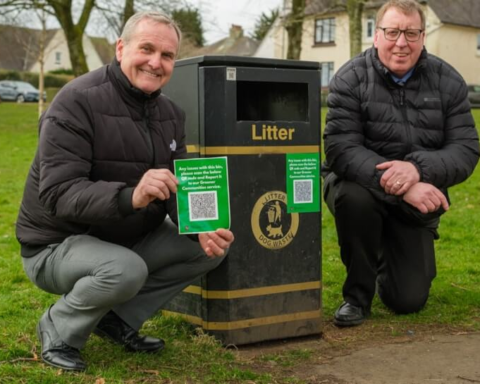





The family bakery founded in Kilmarnock in 1945 expanded its Asda range from early May 2026, but the larger story is one of Ayrshire craft, family continuity and the survival of local food identity at scale. Scotland has many food products that travel further
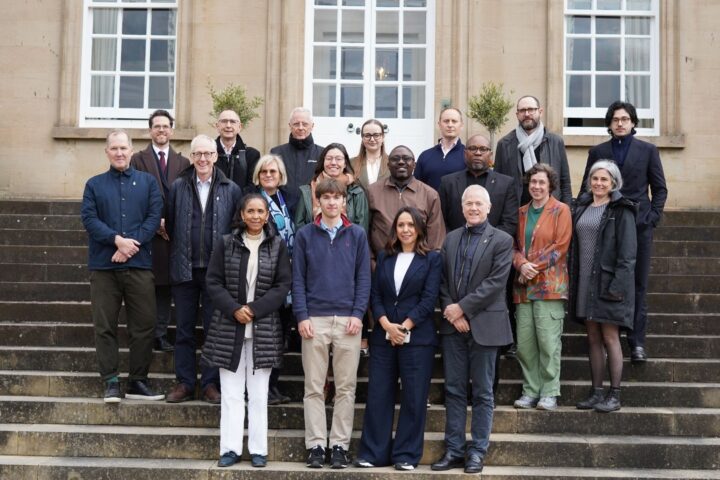
The King’s Foundation has joined FormationQ in a three year programme intended to help fast growing Commonwealth towns plan more sustainably, extending King Charles III’s long interest in architecture, tradition and community design into the language of advanced technology. The King’s Foundation, headquartered at
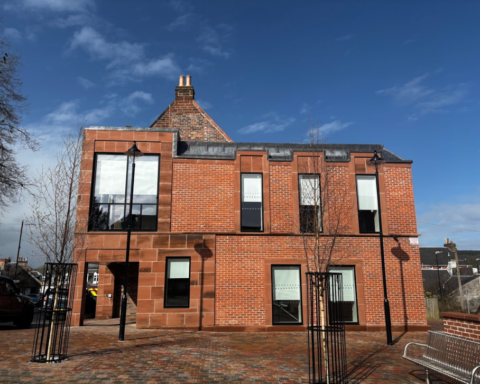
A prominent Galston landmark has been brought back into public use after a £3.45 million restoration
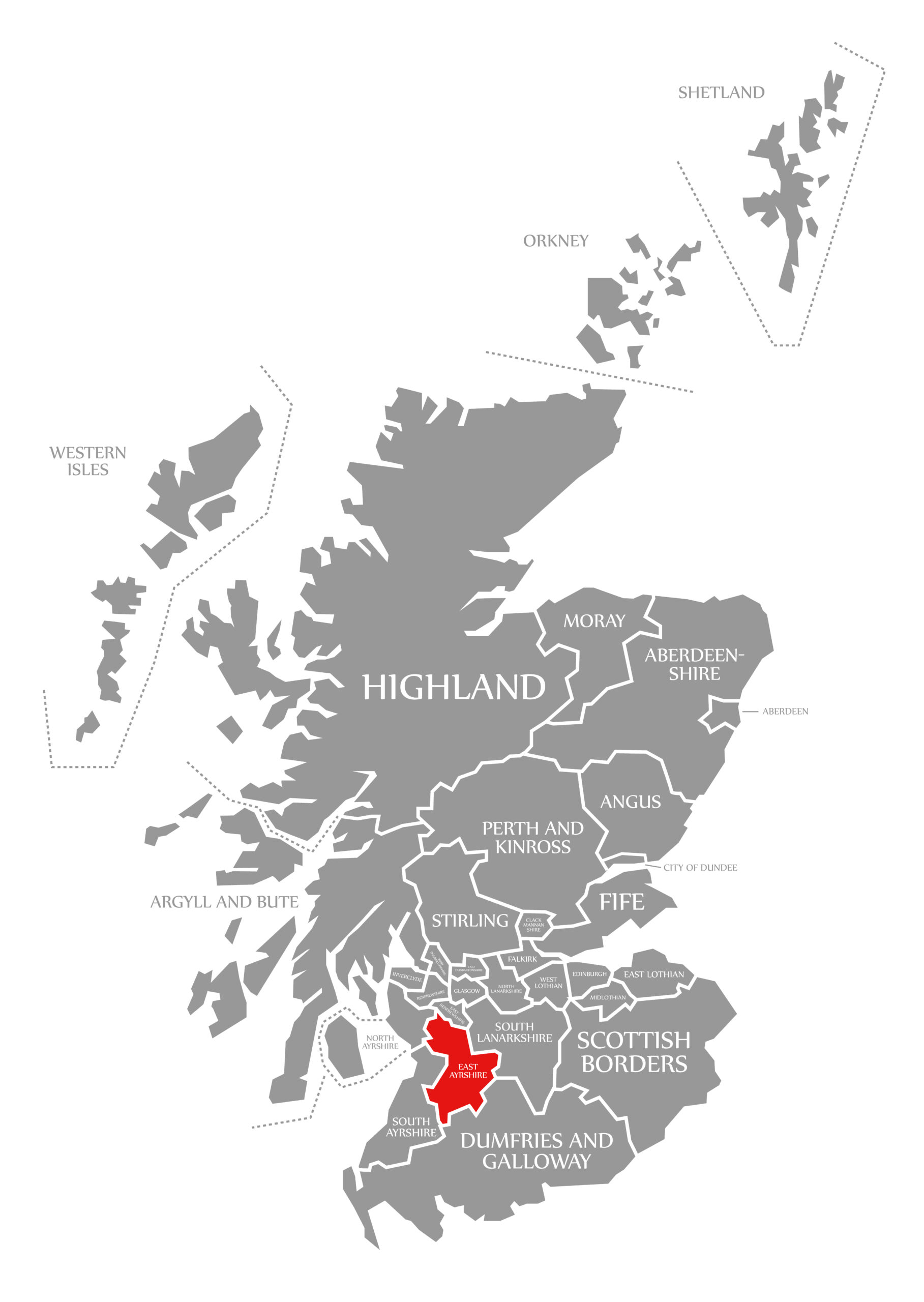
Select the map to enlarge it.
East Ayrshire
East Ayrshire lies inland from the Ayrshire coast, with Kilmarnock as its administrative centre and largest town. It is a council area shaped by industry, rural land, former mining communities and a strong relationship with the wider history of Ayrshire. Its landscape moves from town and lowland settlement into upland areas associated with farming, forestry and energy.
Kilmarnock developed as an industrial town, with textiles, carpets, engineering and whisky connected to its history. It is also associated with one of Scotland’s most significant literary events. The first edition of Robert Burns’s poems, commonly known as the Kilmarnock Edition, was printed there in 1786. That fact gives the town a place in Scottish cultural history that is more precise than many larger settlements can claim.
The wider council area includes Cumnock, Auchinleck, Stewarton, Newmilns, Darvel and a number of smaller communities. Many of these places were shaped by coal mining, textiles, agriculture or estate economies. The decline of heavy industry left a long social and economic aftermath, and East Ayrshire’s modern condition cannot be understood without that background.
Agriculture remains visible, while manufacturing, public services, retail and local enterprise form part of the contemporary economy. The area has also become part of Scotland’s renewable energy landscape, with wind farms and related infrastructure contributing to a changing upland economy.
East Ayrshire carries a tension common to many former industrial areas. Its history is not remote enough to be heritage alone, but not recent enough to support the old economy. The result is a place still negotiating the relationship between cultural memory, rural land and the practical demands of regeneration.
Advertise in East Ayrshire
Limited advertising spaces for Scottish businesses, Scottish products and Scottish services. Each advert is reviewed before publication.