
On Islay, farm resilience is a daily concern.
It is the feed that has to be secured before weather or ferry disruption closes a window. It is the fertiliser that has to arrive when grass needs it. It is the lambs and cattle that must move when the market, the ferry and animal welfare all allow. A mainland farm can be delayed. An island farm can be reshaped by delay.
That is the wider issue behind the upcoming Argyllshire Monitor Farm summer meeting at Craigens Farm, Gruinart, on Thursday 16 July. The afternoon will focus on feed resources, reseeding plans and the lessons learned by the Archibald family over four years as Monitor Farmers. It is an ongoing conversation about how much control an island livestock business can build into its own system when so much beyond the gate depends on ferries, public infrastructure, input costs and government delivery.
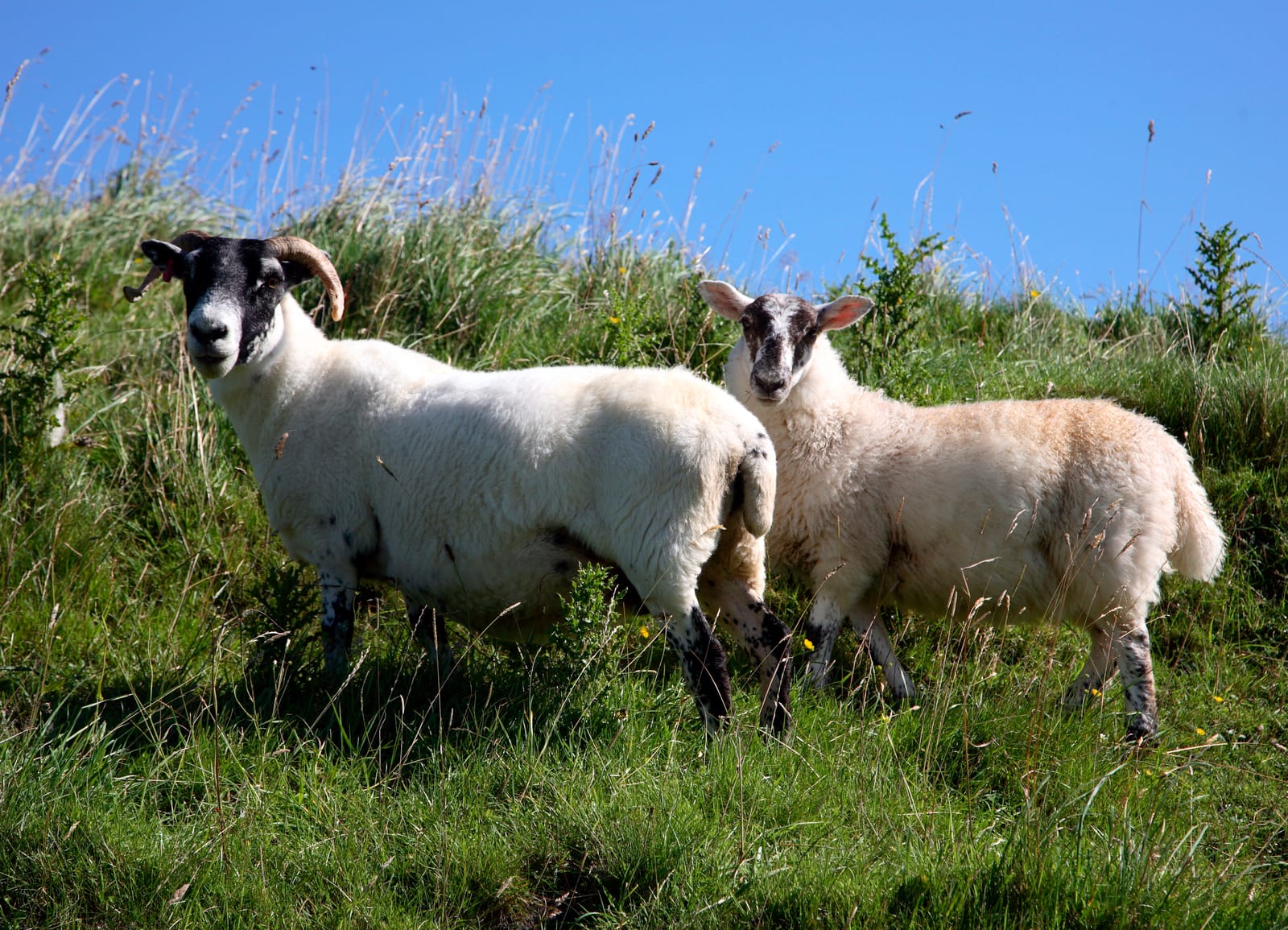 Craigens Farm is not a demonstration plot on the edge of the mainland. It is a 2,000-hectare tenanted farm on the west coast of Islay, run by Craig and Petra Archibald, Craig’s father and the family. Monitor Farm Scotland says the farm carries 220 suckler cows, 200 stores, 1,000 ewes and between 1,000 and 1,200 lambs, producing Angus and Charolais yearling calves for the store market and fat lambs.
SAC Consulting ruminant nutritionist Lorna Shaw will lead a discussion on feed resources and requirements through the farming calendar, including pinch points, likely challenges and opportunities within the system. Pat Lambert and Mhairi Dawson of Watson Seeds will discuss reseeding and grass varieties suited to different farms, before the Archibald family reflects on what has changed at Craigens over four years as Monitor Farmers.
For an island livestock farm, grass is a form of insurance. Good grass can reduce dependence on bought-in feed. Better reseeding can strengthen forage supply. Better feed planning can help carry animals through difficult points in the year. Those are practical farm tools, but they also show the limit of what farms can do alone.
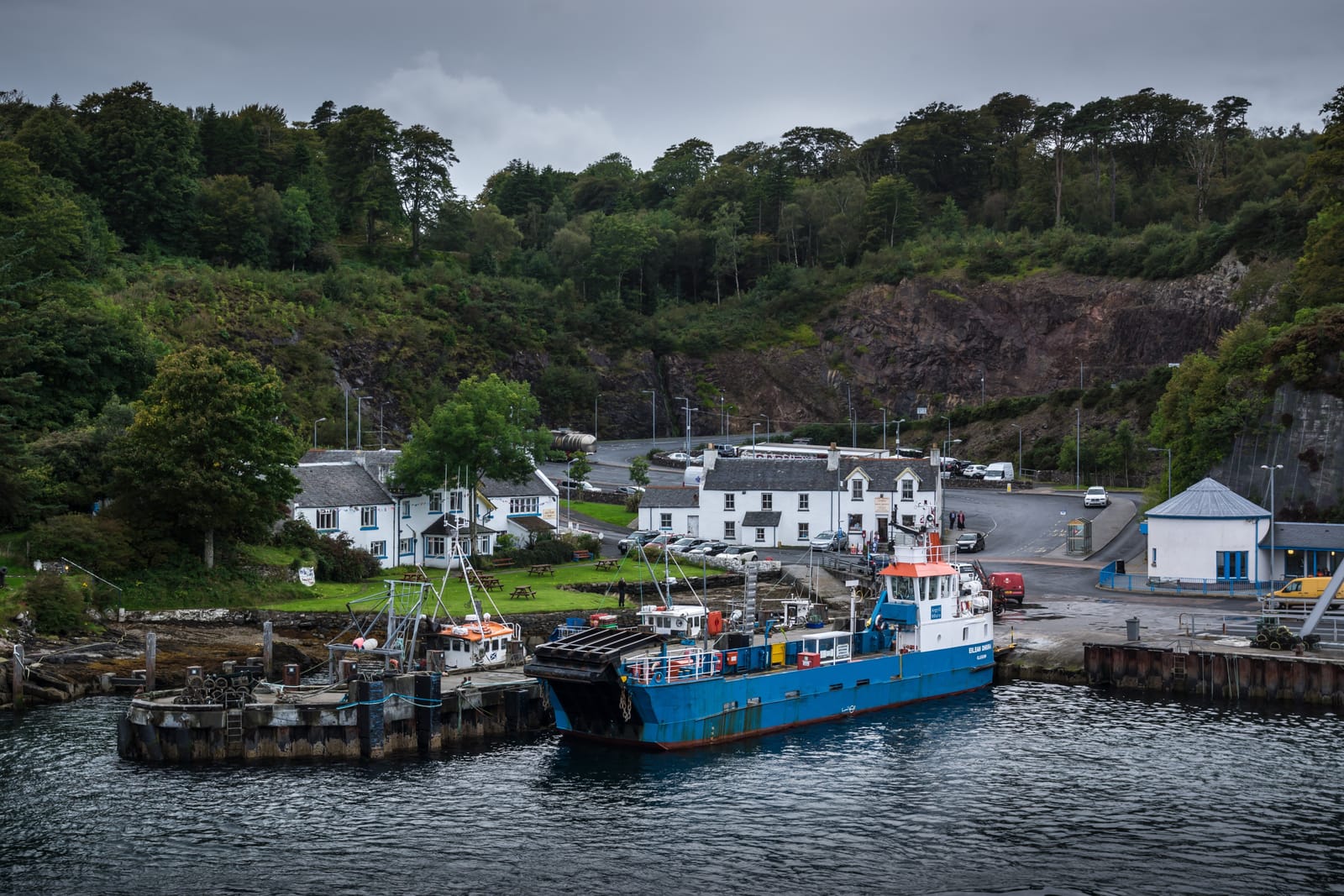
Scotland’s island farmers have long lived with distance. The modern problem is that distance now sits inside longer supply chains and tighter timing. Feed, fertiliser, fuel, veterinary access, livestock haulage, abattoir routes, auction dates and market weights all depend on transport working when it is needed. On an island, the ferry is part of the farm business.
NFU Scotland warned in March 2026 that ferry disruption was placing immediate pressure on island farmers and crofters, with livestock movements delayed and vital supplies such as feed and fertiliser at risk of not arriving when needed. NFU Scotland Vice-President Duncan Macalister said reliable ferry services were “not a luxury” but essential infrastructure underpinning day-to-day business, adding that disruption raised serious animal welfare concerns.
Farmers can be told to become more resilient, and many are doing exactly that. They can plan feed more carefully, reseed fields, measure performance, use data better, alter stocking decisions and strengthen the farm system. But they cannot make a ferry arrive. They cannot repair an ageing vessel. They cannot move livestock through a cancelled sailing by force of good management.
The Scottish Government has recognised island connectivity as a central issue. The National Islands Plan says ferry services, aviation and fixed links are lifelines for islanders and island economies, supporting access to public services, supplies, jobs and markets. Transport Scotland’s Islands Connectivity Plan is intended to set out how ferry services, supported by other transport modes, will be delivered and strengthened over the long term.
There has also been continuing public investment and planning around vessels and ports. But island communities have lived for years with the difference between policy commitment and practical reliability. Audit Scotland reported in 2022 that the project to deliver two new dual-fuel ferries for the Clyde and Hebrides had been “fraught with problems and delays” for more than six years. That report became part of a wider public argument about ferry procurement, ageing vessels, cost overruns and the consequences felt most directly by island communities.
For island agriculture, those consequences can delay animals moving off island at the right time, interrupt essential deliveries and increase costs. When that happens during lambing, spring growth, store sales or winter-feed planning, the pressure lands on farms that already operate with limited room for error.
The Scottish Government has also set out a Rural Support Plan for 2026 to 2031, describing it as a five-year framework for certainty, investment and preparation, with continued support for active farmers and crofters. The Future Farming Investment Scheme offers upfront capital funding for eligible on-farm and croft investments aimed at business efficiency, environmental improvement, emissions reduction and climate-change mitigation.
Capital investment, advisory support and longer-term payment certainty can help farms adapt. But they do not remove the basic island question: how much resilience can a farm build for itself when public infrastructure remains uncertain?
Farm-level planning should not be used as a substitute for public responsibility. When government says island communities must be resilient, does it mean shared resilience, or does it mean island businesses carrying more of the burden themselves?
At Craigens, the answer is likely to be practical rather than political. The Argyllshire Monitor Farm summer meeting, “Forward planning for future resilience in island livestock systems,” takes place at Craigens Farm, Gruinart, Isle of Islay, on Thursday 16 July, from 1pm to 5pm.
SOURCES:
Argyllshire Monitor Farm / Craigens Farm
https://www.monitorfarms.co.uk/farm/argyll-monitor-farm/
SRUC / SAC Consulting — Monitor Farm Scotland case study
https://www.sruc.ac.uk/business-services/sac-consulting/our-work/case-studies/monitor-farm-scotland/
NFU Scotland — Ferry disruption impacting island agriculture
https://www.nfus.org.uk/news/news/nfu-scotland-responds-to-ferry-disruption-impacting-island-agriculture
Audit Scotland — New vessels for the Clyde and Hebrides
https://audit.scot/uploads/docs/report/2022/nr_220323_vessels.pdf
Scottish Government — National Islands Plan: Connectivity
https://www.gov.scot/publications/national-islands-plan-2/pages/4/
Transport Scotland — Islands Connectivity Plan
https://www.transport.gov.scot/public-transport/ferries/islands-connectivity-plan/
Scottish Government / Rural Payments — Rural Support Plan 2026–2031
https://www.ruralpayments.org/topics/agricultural-reform-programme/rural-support-plan/
Rural Payments — Future Farming Investment Scheme
https://www.ruralpayments.org/topics/all-schemes/ffis/