
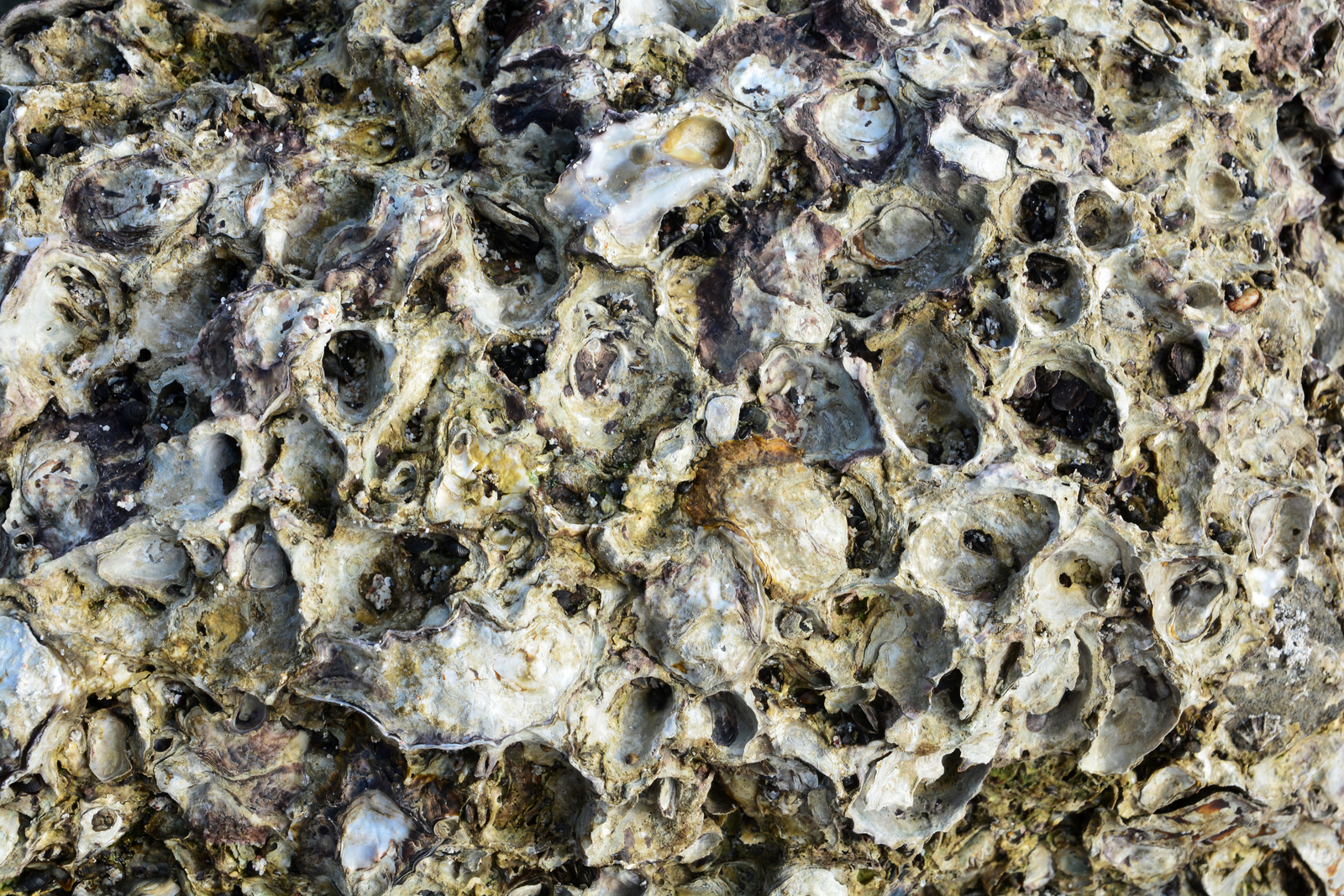
The Firth of Forth once held one of Scotland’s great natural food systems. Long before modern conservation language, before “blue carbon” and biodiversity targets, the estuary supported extensive native oyster beds. Oysters from the Forth were eaten locally, traded widely and embedded in the working life of the water. A 2023 historical account by Maorach Beag describes the Firth of Forth’s oyster beds as stretching along more than 25 kilometres of the southern shoreline and covering more than 166 square kilometres, making them among the most commercially important in Scotland from the medieval period onward.
That world did not survive. Overfishing, dredging, pollution and industrial pressure stripped oyster beds from much of Britain’s coast. In the Forth, the loss was not only commercial. It removed a living habitat from the estuary.
Now, more than a century after European flat oysters disappeared from the area, they are being returned.
Restoration Forth, a partnership led by the Marine Conservation Society, WWF, Heriot-Watt University and Balanced Horizon, has been working with local communities. The project began in 2022 and aims to reintroduce 60,000 European flat oysters and restore seagrass meadows to the estuary.
By 2026, the project had passed that original oyster target. Heriot-Watt University reported in March that the restoration effort had doubled its target, with hundreds of volunteers helping to clean and deploy oysters and monitoring showing that the animals are thriving in their new home.
This is big achievement. Native oyster restoration is slow, practical work. Behind it are volunteers, scientists, permissions, monitoring, disease checks, cleaning sessions, deployment days, site selection and the patience required to rebuild something that was lost over generations.
A native oyster reef is not just a collection of shellfish, it is a habitat. Oysters filter water. Their shells create structure on the seabed. That structure can shelter other marine life. In sufficient numbers, oysters help build the conditions for a more complex estuary. Seagrass does related work in another form: creating nursery habitat, stabilising sediment, supporting biodiversity and storing carbon.
Reintroducing oysters is not the same as restoring the full ecological function of a lost reef. A functioning habitat needs survival, reproduction, suitable seabed conditions and protection from the pressures that removed it in the first place. The early signs are encouraging.
The same is true of seagrass. Across Britain, seagrass meadows have been damaged by pollution, coastal development, disease and disturbance. They are now increasingly recognised as important coastal habitats, but planting them is only part of the task. Water quality, sediment conditions and long-term protection will decide whether restored meadows persist..
The project deserves attention because it shows nature recovery being attempted in a practical, accountable way: organisations working together, communities taking part, and scientists monitoring whether the work is actually succeeding.
Scotland needs more of that.
SOURCES:
Restoration Forth — WWF
https://www.wwf.org.uk/what-we-do/projects/restoration-forth
Heriot-Watt University — Restoration project doubles target of oysters in Forth
https://www.hw.ac.uk/news/2026/restoration-project-over-the-moon-to-double-target-of-oysters-in-forth
NatureScot / Scotland’s Nature — More than 60,000 oysters return to the Firth of Forth
https://scotlandsnature.wordpress.com/2026/06/29/more-than-60000-oysters-return-to-the-firth-of-forth/
Scottish Seabird Centre — Restoration Forth
https://www.seabird.org/conservation/restoration-forth
Project Seagrass — Restoration Forth
https://www.projectseagrass.org/restoration-forth/
Native Oyster Network — Restoration Forth
https://nativeoysternetwork.org/portfolio/restoration-forth/
Maorach Beag — Oysters and the Firth of Forth, Part 1
https://maorachbeag.scot/blogs/journal/oysters-and-the-firth-of-forth-part-1-pre-industrial-revolution
The Guardian — Europe’s exhausted oyster reefs once covered area size of Northern Ireland
https://www.theguardian.com/environment/2024/oct/03/europe-oyster-reefs-study