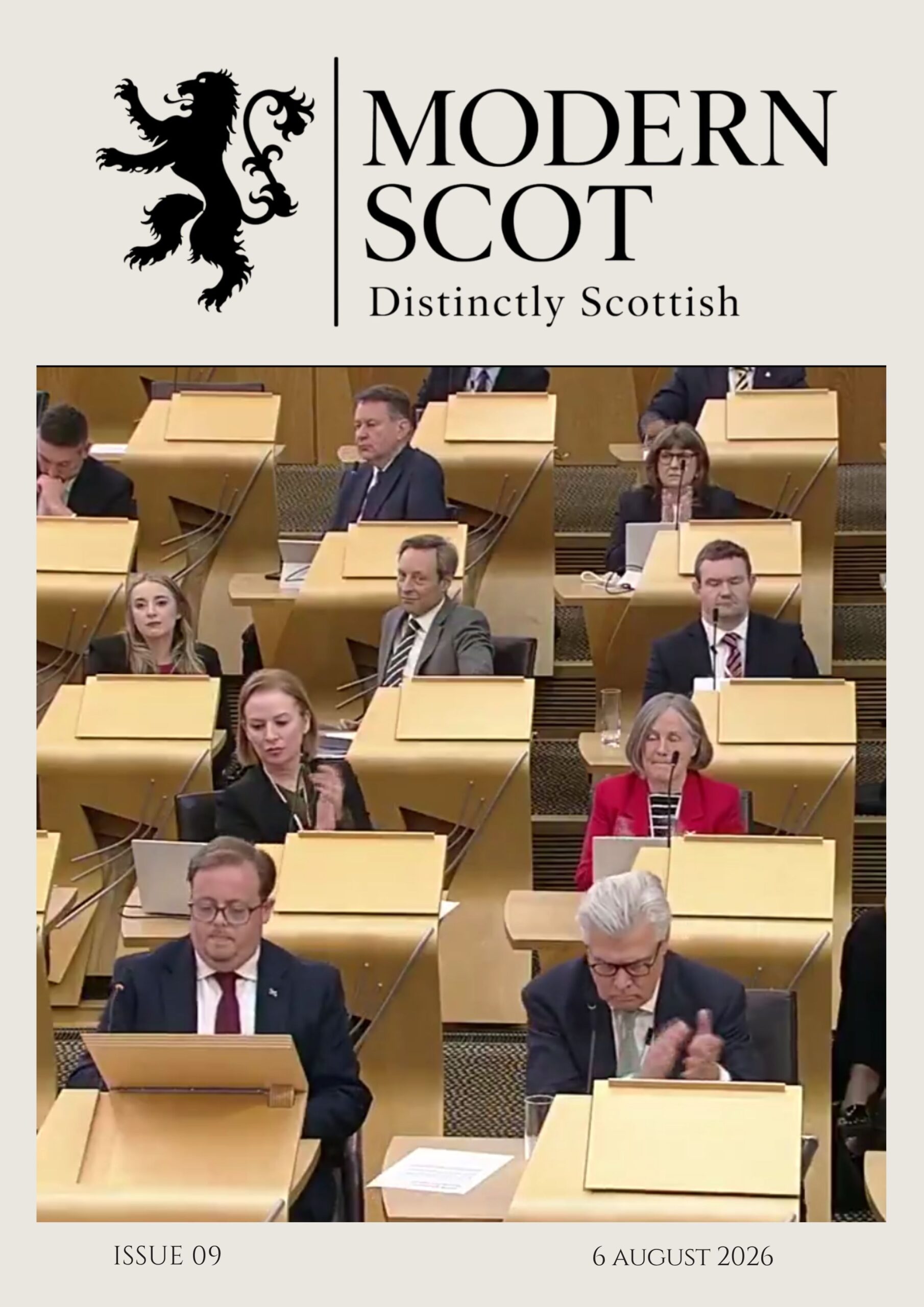

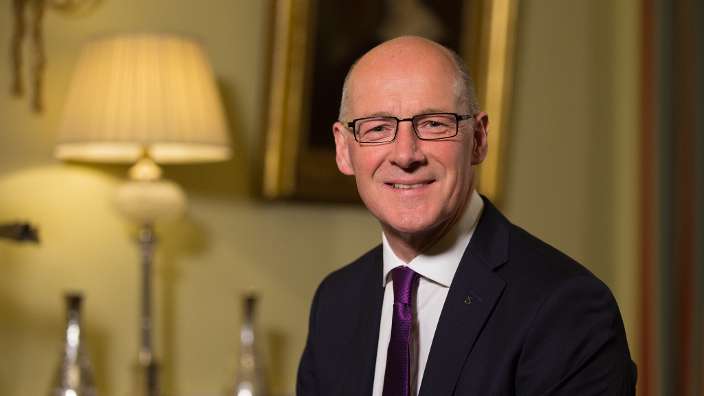
John Swinney accepted the Scottish Parliament’s nomination as First Minister today with a speech that sought to combine personal humility, post election confidence and a clear statement of constitutional intent. His challenge now is to turn the language of cooperation into government in a Parliament where minorities, new members and competing mandates will test every promise.
John Swinney has been nominated by the Scottish Parliament as First Minister of Scotland, following the 2026 election, and is expected to be formally appointed by Royal Warrant from King Charles III before being sworn in at the Court of Session on Wednesday.
In a speech to MSPs, Swinney presented himself as both an experienced steward of government and the leader of a new parliamentary term. He promised to ease the cost of living crisis, protect the NHS, grow the economy, strengthen communities, protect the environment and pursue Scotland’s constitutional future.
Swinney’s central message was that Scotland had returned him with authority, but not with permission to govern alone. He acknowledged that his party did not command a majority by itself, while arguing that he could build majorities for his programme across the chamber. That is the political hinge on which the new Parliament may turn.
The First Minister framed the result as a mandate for competence, public service and independence. Yet he also sought to soften the sharper edge of constitutional politics by promising to be “a First Minister for all of Scotland”, language that will now be tested against the practical arithmetic of Holyrood.
There are acceptance speeches that merely thank Parliament, nod to public service and move on. Swinney’s was more revealing than that. It began in conventional humility, with thanks to opposition leaders, MSPs, his supporters and his family, but quickly moved into a claim of political durability.
He reminded the chamber that he had served in the Scottish Parliament for 27 years, placing himself among the institutional memory of devolution. At the start of the seventh session, he described himself as one of only four members from the original class of 1999, a detail that carried more than nostalgia. It was a claim to steadiness at a time when the chamber has changed sharply. According to Swinney, one in two MSPs are new.
That contrast formed one of the speech’s quiet themes. The new Parliament is altered, but the First Minister is not.
Swinney said he felt “many of the same emotions” as when he first became First Minister two years ago, including humility and an awareness of the responsibility of office. But he also insisted that this was a different moment, because he now stood at the beginning of a new Parliament and with what he called a “resounding personal mandate” from the people of Scotland.
There was a calculated balance in the address. Swinney spoke of listening, national purpose and healing division. He also made clear that independence would remain part of his government’s agenda.
The Scottish Government’s own summary of the event said Swinney had outlined ambitions for the parliamentary term including action on the cost of living, the NHS and economic opportunity. It also noted his pledge to work together to deliver progress for Scotland.
But the most politically significant passage concerned the constitution. Swinney said the people had elected “the largest pro independence majority in the history of devolution” and argued that they wanted decisions made in Scotland rather than Westminster. He accepted that opinion differs profoundly on the question, but made no attempt to disguise his government’s direction.
It was a speech of two messages. To supporters of independence, Swinney offered continuity and purpose. To those who oppose it, he offered reassurance that he would govern for the whole country.
Whether those two messages can sit together peacefully may define his term.
The First Minister also used the speech to speak directly to new MSPs. His advice was practical rather than poetic. He told them that when a five year term ends, it is those who can look their constituents in the eye and say they achieved something for them who win re election. That line carried the experience of a politician who has survived long enough to see many tides come in and rather more go out.
There was also a warning to opposition parties. Swinney criticised the celebration of blocked proposals, saying that bold ideas are too often defeated for political expediency rather than substantial reasons. He framed cooperation not as a courtesy owed to him, but as an instruction from voters.
“By electing a Parliament of minorities,” he said, “the people have given us a specific instruction to work together.”
That sentence may prove one of the most important in the speech. It is also one of the most difficult to honour.
A minority Parliament can produce better scrutiny, better compromise and more serious legislation. It can also produce paralysis, theatre and hostage taking with committee rooms. Holyrood has known both varieties. The new session will test whether Swinney’s appeal to cooperation can survive budgets, public service pressure, constitutional division and the daily appetite of parties to be seen winning.
The personal passages of the speech were more intimate than strategic. Swinney paid tribute to his wife Elizabeth, describing her strength in adversity as “awe inspiring” and saying he could not offer himself as First Minister without the sacrifices she was prepared to make. In a chamber often given to procedural hardness, the moment gave the speech its human centre.
Yet the political offer remained clear. Swinney intends to lead a government that defines itself around economic growth, public services, cost of living support, environmental protection and independence.
The task ahead is formidable. Scotland’s public finances, NHS pressures, energy transition, demographic challenges, housing need and public sector reform will not be softened by the elegance of parliamentary language. Nor will the constitutional question become easier because it is wrapped in a promise of unity.
Still, speeches matter. They reveal not what government has done, but how it wishes to be judged.
Swinney asked to be judged as a serious public servant, an experienced hand in turbulent times and a First Minister willing to work across party lines. He also asked to be judged as the leader of a government committed to Scotland’s independence.
The work begins where the speech ends.
Full Text of John Swinney’s Acceptance Speech
Presiding Officer,
It is a profound honour to accept Parliament’s nomination for the office of First Minister, and I thank Parliament for its support and I thank the leaders of the opposition parties for the generous comments they have made.
I realise they will have their criticisms to make. I am sure there will be many of them in the years to come.
But I look forward also, and I will cover more of this in what I say today, to working collaboratively to advance the interests of the people of Scotland with others.
I commit myself today to upholding the standards and ideals of this Parliament as I have done throughout the 27 years in which I have had the privilege to serve as a Member of this Parliament.
I commit myself also to lead a government which meets the aspirations of the people that sent us here.
Public service demands so much of all of us and, as we begin this parliamentary session, I pay tribute to the commitment of all Members in being prepared to serve the people of Scotland.
Although we volunteer for this task, we do so knowing that our public service has an implication for those close to us.
I am immensely grateful to all those who have helped me reach this point today – of whom there are too many to mention – but a large number of them are here in the gallery today.
A particular burden is carried by my family, who might reasonably have expected me to be slightly more available for them than I am these days.
To each of them I express my thanks for their love and their support.
Every day I am supported in what I do by my wife Elizabeth, who demonstrates a strength, a tenacity, a determination in the face of increasing adversity and challenge that is awe inspiring.
Elizabeth’s approach to life is, of itself, a very valuable example of how to act, to any First Minister, especially her First Minister. I literally cannot offer myself to be First Minister without the sacrifices that Elizabeth is prepared to make, and I acknowledge and thank her for that this afternoon.
Today, I feel many of the same emotions as when I first became First Minister two years ago.
The same sense of humility, the same profound awareness of the weight of responsibility and also the remarkable privilege of holding this office.
But today is a very different moment than when I stood here 2 years ago.
I stand here today at the start of a new Parliament, with a resounding personal mandate from the people of Scotland.
I offered the people of Scotland, reliable, trusted and experienced leadership in turbulent times, and today I pledge to provide that to my country.
The people have chosen a government that is firmly on their side.
A government that listens to them and turns their personal priorities into national ones.
And a government that acts decisively, on the breadth and scale needed to meet those challenges.
That is the kind of government I intend to lead.
I have ambitious goals for this parliamentary session.
To ease the cost of living crisis by expanding on what is already the best package of support in the United Kingdom.
To ensure the NHS is protected and easy to access, always there for people when and where they need it.
To ensure cohesion in our communities and to protect our environment.
To grow our economy and create opportunity across the country.
And to make concrete, tangible differences that people can see and feel in their homes, in their communities, and in their day to day lives.
I look forward to working with the members of this Chamber to achieve all of these goals.
I am aware we will be working in a much different Parliament than the ones that have preceded it. One in two of my fellow members are new. And I recognise that – while my party is far and away the largest in this Chamber – we do not have a majority on our own.
But I remain firmly of the view that when we engage in constructive dialogue, we are capable of tremendous progress.
I believe I can achieve a majority for every ambition I have for this Parliament. I look forward to working with many here to do so.
That, of course, includes the question of Scotland’s constitutional future, on which I recognise there are profound differences of opinion. But the people have now elected the largest pro-independence majority in the history of devolution.
The Scottish people have yet again made their wishes known, loud and clear. They want a more secure and more prosperous, independent nation. One where decisions are made not in Westminster, but here in Scotland.
My government will continue to seek to abide by those wishes. And, again, I look forward to working with many in this Chamber to do so.
But independent or not, I want to make one thing clear to Parliament and the public today.
I will be a First Minister for all of Scotland, a First Minister that works to bring people together with a strong sense of national purpose.
The country I seek to build is a country where everyone feels accepted and able to contribute to our national story.
A country where we seek to bring communities together.
A country where we act to heal division.
A country where we seek to find common ground.
The election result proves that the people of Scotland believe theirs is a country of boundless potential: a country that can be more prosperous, more equal, and more confident in her future.
A country of fair, well-paid work and of vibrant, multicultural, safe communities.
A country that cares for its natural resources and sees the transition to clean energy as both an environmental necessity and an economic opportunity.
And a country that puts our collective prosperity back into the communities that worked for it.
They want Scotland to realise that potential.
And they have tasked us with working together to make that case.
Presiding Officer,
That idea of working together is where I would like to conclude my remarks today.
At the dawn of this seventh session of the Scottish Parliament, I am now one of only four members from the original class of ‘99.
And of course you also Presiding Officer are one of that class.
From that vantage point, let me offer this reflection to the many new Members.
This is a very exciting time in any Parliament.
All of us rightly feel the privilege of having been chosen by the people of Scotland to represent them. And we are full of anticipation for the exciting journey that lies ahead.
But it will not be too long before we have to return to the people to explain to them what we have done for them.
And if there is one thing I have learned in my years in public service, it is this:
When the five-year term ends, it is those who can look their constituents in the eye and say they have achieved things for them who win re-election.
All too often in parliaments, I have watched Members celebrate when bold proposals are blocked, seemingly for political expediency rather than for any substantial concerns.
There was a time when I thought negative politics worked into the bargain.
But I am standing here today – having won a resounding mandate from the people of Scotland – because in this election my party offered a vision of hope, ambition and optimism.
And I now offer to work across party lines to deliver our agenda.
By electing a Parliament of minorities, the people have given us a specific instruction to work together.
Voters value cooperation among their politicians. They want to see more of it.
And in this Parliament, I will work to see more of it too.
Presiding Officer,
I gratefully accept the opportunity to serve as First Minister. It is the greatest privilege of my life.
And I promise to work every day to repay the trust that the people of Scotland have placed in me.