
The question is no longer whether the North Sea can return to the past. The question is whether Scotland enters the next stage of offshore energy as a decision maker.
The North Sea has never been only a question of oil. For Scotland, it has always been a question of power.
The latest argument over new oil and gas licences is often presented as a dispute between climate policy and fossil fuel production. That is part of the story, but not the whole of it. The deeper question is constitutional. Scotland carries much of the workforce, infrastructure, coastline, local exposure and offshore skill base of the North Sea. Westminster retains the decisive powers over offshore licensing, taxation, revenues and strategic direction.
Under the present constitutional settlement, offshore oil and gas licensing, taxation and strategic regulation are reserved to the UK Government. Scotland has influence, but not sovereign control. That imbalance is no longer theoretical. It is now an industrial risk.
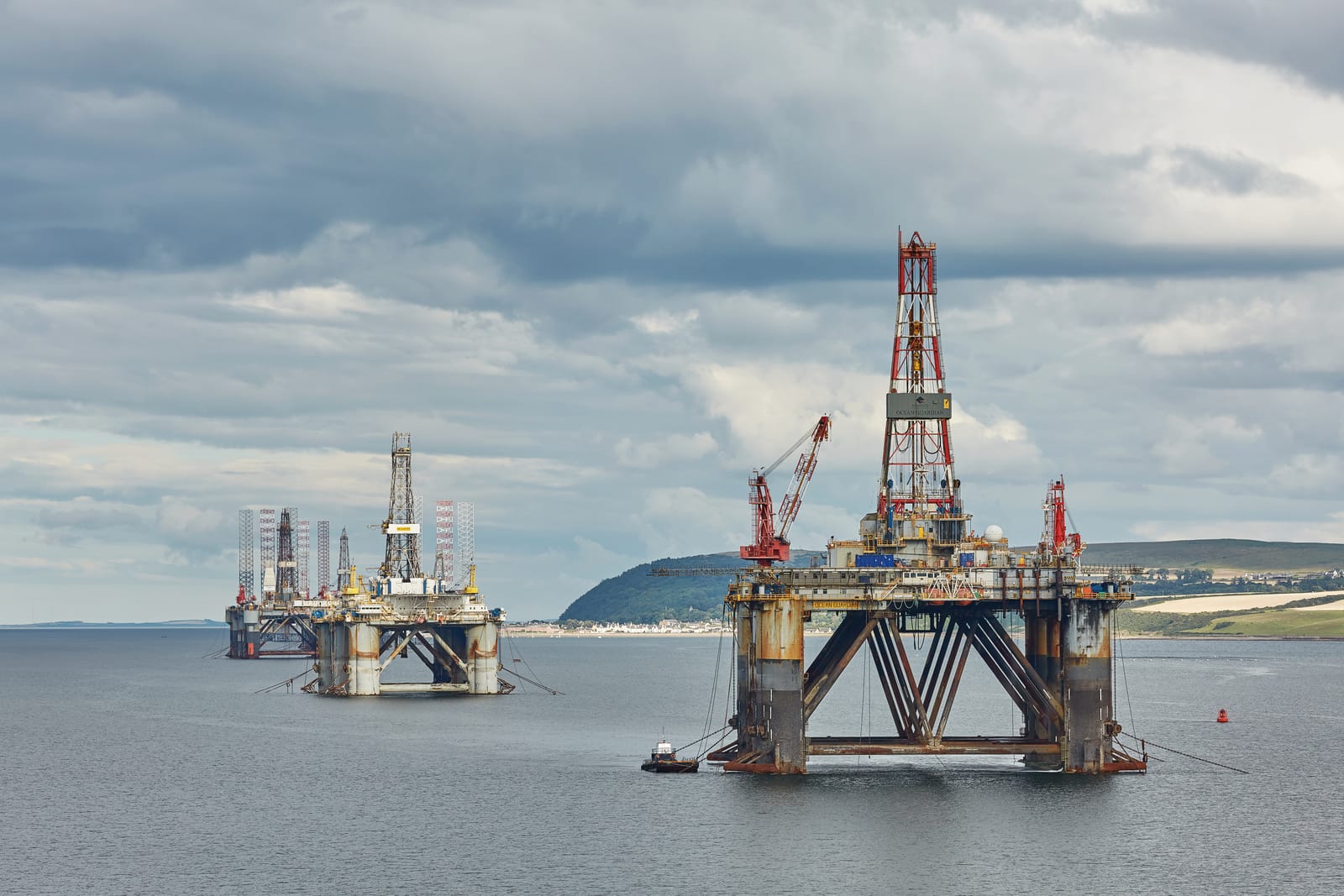
The UK Government’s North Sea Future Plan says existing oil and gas fields will be managed for their full lifespan, but that no new licences will be issued to explore new fields. This is not an order to close every platform tomorrow. It is a decision about the future pipeline of production, investment and work. The Government’s policy is managed decline, not immediate shutdown. But managed decline still requires a manager, a timetable and an honest account of what replaces what is being lost.
The North Sea is a mature basin. By the end of 2024, the UK Continental Shelf had produced 47.7 billion barrels of oil equivalent. The North Sea Transition Authority’s central estimate of remaining proved and probable reserves was 2.9 billion barrels of oil equivalent, with reserves and contingent resources together estimated at 9.2 billion. There is still resource there. There is not a second 1970s waiting beneath the seabed.
That fact matters because it strips away one illusion immediately. More drilling cannot restore the old North Sea. But ending new licences is not cost free either. A declining basin still supports workers, supply chains, ports, engineering firms, public revenue and the skills needed for decommissioning, offshore wind, subsea work and carbon storage.
But the climate argument has limits if it is badly executed. If domestic production falls faster than demand, the UK can import more oil and gas instead. That may reduce emissions counted at home, while shifting production and transport emissions elsewhere. Liquefied natural gas, depending on where it comes from and how it is produced and transported, can carry higher associated emissions than domestic gas. That is why a serious climate policy must reduce demand as well as supply. Ending new exploration helps the climate only if it is matched by lower fossil fuel use, faster clean energy deployment, warmer homes, better public transport, industrial planning and a credible workforce transition.
That is the central Scottish problem. The language of transition is easy. The mechanics are hard.
The jobs question is the human centre of the argument. The Scottish Affairs Committee warned in 2025 that clean energy jobs were not being created at the pace or scale needed to match the decline of North Sea oil and gas. It warned that job losses from the declining oil and gas industry were outpacing jobs created by the scale up of clean energy.
That should be read carefully in Scotland. A just transition is not asking too much. It is a payroll, a mortgage, a training place, a contract, a port investment and a job at the end of the course. Tens of thousands of jobs remain connected to oil and gas, many concentrated in Aberdeen, Aberdeenshire and the wider north east. These are not only jobs on platforms. They are jobs in inspection, subsea engineering, fabrication, logistics, ports, environmental services, finance, safety, marine operations and professional support.
The revenue picture also needs honesty. North Sea revenues are still real, but they are no longer what they were in the boom years. The Office for Budget Responsibility forecasts oil and gas revenues of £2.7 billion in 2025 to 2026. That is meaningful public money. It is not a magic treasury. Any serious case for Scotland’s future must recognise both facts at once.
This is where the constitutional question becomes practical. Scotland hosts much of the consequence, but not the principal lever. The current settlement leaves key decisions about future licences, fiscal regime and strategic direction at Westminster, while Aberdeen, Aberdeenshire, the islands and the wider Scottish supply chain live with the results.
An independent Scotland would not make the North Sea young again. It would not remove climate obligations. It would not erase decommissioning costs. It would not guarantee high oil prices, easy revenue or painless transition. It would, however, change the central question from one of influence to one of authority.
That authority would come with responsibility. Independence would not automatically settle every field or pipeline overnight. It would require a negotiated maritime boundary with the continuing UK, along with agreements on existing licences, tax, infrastructure and decommissioning. Scotland would have to regulate offshore production, manage tax stability, fund transition, protect workers and decide how quickly to move from oil and gas into renewables and other offshore industries.
Independence would not remove the hard choices. It would make them Scotland’s choices.
Supporters of continued North Sea production make one point that should not be dismissed. The UK will continue to use oil and gas for years. Domestic production can reduce reliance on some imports and maintain the offshore skills base needed for the next phase of energy. But that argument also has limits. New North Sea drilling is unlikely to deliver a dramatic fall in household bills, because oil and gas prices are set in wider markets. The stronger case for domestic production is not cheap bills by slogan. It is jobs, balance of supply, industrial continuity, lower import dependence and a managed bridge to a different energy system.
Norway is not a simple model to copy. Its geology, politics and fiscal history differ from Scotland’s. But it shows what sovereign management of offshore resources can mean: long term taxation, state strategy, public ownership tools and a national wealth fund built from petroleum revenues. The UK made different choices. Scotland now faces the decline of a resource from which it carried a major industrial burden, without having held equivalent sovereign power over the proceeds.
That is the historical wound beneath the present argument. The issue is not simply whether more licences should be granted. It is whether Scotland should again watch decisions about its offshore future made elsewhere, while being asked to trust that replacement industries will arrive in time.
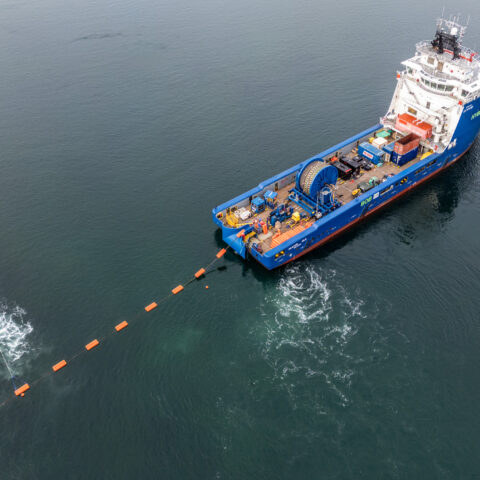
Offshore wind needs ports, grid connections, vessels, fabrication, maintenance, skilled workers and long term contracts. Decommissioning needs planning and expertise. Carbon capture needs infrastructure and commercial certainty. Hydrogen needs markets. None of these is created by announcing the end of something else.
Scotland’s north east cannot be expected to move from oil and gas to clean energy on faith. It needs evidence. Which jobs will replace the lost jobs? Where will they be located? What will they pay? Will the work remain in Scotland, or will Scottish waters generate contracts captured elsewhere? Will ports be upgraded in time? Will fabrication return at scale? Will former oil and gas workers actually move into secure new posts, or merely appear in transition documents as if paper itself were employment?
The North Sea is Scotland’s constitutional test.
The case for independence made by the North Sea is not romantic. It is administrative, industrial and constitutional. It says that the country most exposed to the consequences of offshore energy policy should have the powers required to shape that policy. It says Scotland should be able to decide how remaining oil and gas production is managed, how revenues are used, how workers are protected, how ports are developed, and how renewables are made to serve the places that host them.
There is a harder truth as well. If Scotland wants the powers of a state, it must accept the burdens of a state. That means no mythology about easy oil wealth. It means transparent forecasts, cautious revenue assumptions, a serious decommissioning plan, climate credibility and a stable fiscal regime that does not destroy investment before replacement industries are ready.
But the alternative is not safety. The alternative is dependency. It is a Scotland that carries the workforce risk, the regional shock, the infrastructure burden and the political argument, while the main decisions remain reserved elsewhere.
The North Sea will not make Scotland rich in the old way. That must be faced. But it still contains work, assets, expertise, revenue, liabilities and the platform for Scotland’s offshore renewable future.
SOURCES
UK Government, North Sea Future Plan and Energy Independence Bill statements
North Sea Transition Authority, UK Oil and Gas Reserves and Resources Report
UK Parliament POST, North Sea oil and gas briefing
Scottish Affairs Committee, future of Scotland’s oil and gas industry
Office for Budget Responsibility, oil and gas revenues
Robert Gordon University Energy Transition Institute, offshore energy workforce analysis
Offshore Energies UK, North Sea fiscal and workforce analysis
Norway petroleum policy and sovereign wealth fund reporting