

The King’s Speech set out a large Westminster programme on energy, Europe, immigration, housing, digital identity, public services and national security. Modern Scot has also reviewed the full official briefing pack published alongside the speech, including bills not named aloud by the King. For Scotland, the question is not only what the UK Government wants to do, but whether each measure is reserved, devolved, shared, or capable of shifting power by other means.
For Scotland, the list is not straightforward. Some measures will apply directly across the United Kingdom. Others may apply mainly to England, or to England and Wales. Some may affect Scotland only through funding, regulation, comparison, infrastructure, or political pressure. That is the central difficulty in reading any King’s Speech from Scotland. Westminster speaks in the language of the United Kingdom, but Scotland is governed through a divided constitutional settlement.
The most important Scottish reading of the speech is therefore not simply what the UK Government wants to do. It is where power actually lies.
Scotland’s Parliament has responsibility for areas such as health, education, justice, policing, housing, local government and many parts of the environment. Westminster retains control over reserved matters including immigration, defence, foreign affairs, national security, much of macroeconomic policy and many aspects of trade and regulation. Where a UK bill touches devolved powers, Holyrood may be asked to consider legislative consent. SPICe, the Scottish Parliament’s information centre, has noted that the King’s Speech includes bills with potential implications for Scotland, including carried over bills and measures that may require scrutiny over devolved competence.
The danger for Scotland is not always obvious. It is not always a bill that says Scotland must do something. More often, it is a UK wide system that becomes unavoidable, a funding decision that changes the room for manoeuvre, a reserved power that overrides Scottish preference, or a regulator whose decisions shape Scottish life without being accountable to Scottish voters. The risks therefore lie not only in the text of each bill, but in the machinery around it: delegated powers, data systems, funding formulas, consent motions, procurement rules and infrastructure decisions. That is the Scottish test for this King’s Speech.
Europe, Trade & Small Business
The European Partnership Bill creates powers to implement new UK agreements with the European Union. The UK Government says the bill will support closer cooperation in areas including food and drink, emissions trading and electricity. Its background notes say a food and drink agreement could add up to £5.1 billion a year to the economy, rising to up to £9 billion when combined with an emissions trading agreement.
For Scotland, this could matter substantially. Food and drink exports, farming, seafood, whisky supply chains, ports, universities, energy and environmental regulation all sit close to the European question. Scotland voted differently from England and Wales in the Brexit referendum, but the immediate issue now is not constitutional symbolism. It is whether any new UK EU arrangements reduce friction for Scottish businesses and institutions.
The risk is that Scotland may gain easier trade with Europe while losing control over how alignment is managed. If UK ministers are given broad powers to implement agreements in areas that touch food standards, animal health, plant health, environmental regulation or energy, Holyrood will need to examine whether Scotland is being consulted early or merely asked to consent late. SPICe has already noted that dynamic alignment with EU rules may raise questions around devolved powers.
The bill may be useful. It may reduce some of the damage caused by post Brexit friction. But Scotland should ask who shapes the rules, who implements them, and whether Scottish sectors benefit commercially while losing democratic room to influence the detail.
The Small Business Protections Bill is intended to tackle late payment. The UK Government says the Small Business Commissioner recovered more than £1.55 million in late payments in 2025 to 2026, and that the new bill is part of wider work to improve payment culture.
If the bill applies across the UK, it could matter to Scottish small firms, rural contractors, trades, creative businesses, care providers, food producers and local suppliers. Late payment is not a minor nuisance for small businesses. For many firms, cash flow is the difference between stability and failure.
The risk is weak enforcement. If the bill sounds strong but does not give smaller firms a fast, practical way to recover money from larger customers, it may become another gesture in a familiar pattern: the powerful delay payment, the small absorb the cost, and everyone agrees it is unfortunate.
Regulation & Growth
The Regulating for Growth Bill is designed to make the regulatory system more growth focused. The Government says it will strengthen the Growth Duty so regulators consider economic growth while still maintaining core objectives such as safety and environmental protection.
The difficulty is the word “burden”. A better regulatory system is not a bad thing. Scotland has businesses that need proportionate, clear and timely decisions. But regulation also protects the public, the worker, the consumer, the landscape and the citizen who cannot afford to litigate after harm has already been done.
The risk is that growth becomes the language used to weaken protections Scotland relies on. Holyrood and Scottish public bodies should watch which regulators are covered, whether devolved areas are touched, and whether environmental and safety duties remain strong enough. Some regulation is unnecessary. Some is the only thing standing between the public and a very expensive mistake.
Infrastructure & Industry
The Civil Aviation Bill aims to support airport expansion and civil aviation as an economic sector. Aviation is largely reserved, which means Scottish airports and routes may be affected depending on the detail. For Scotland, the issue is not only airport expansion. It is regional connectivity, island routes, lifeline services and whether the aviation system recognises geography beyond the largest English markets.
The risk is that aviation policy is shaped around expansion and growth while Scotland’s remote and island connectivity remains secondary. A route from an island to a mainland hospital, college, family or workplace is not the same kind of public good as another leisure route through a congested airport. The bill should be read with that distinction in mind.
The Highways Financing Bill introduces a new financing model for major road schemes, including a regulated asset base model intended to attract private capital. The Government’s notes refer particularly to National Highways in England. Its direct effect in Scotland is likely to be limited, because roads are devolved.
The risk is not that a road in England directly changes a road in Scotland. The risk is that UK wide language about national infrastructure masks uneven benefit. Scotland should ask whether major financing models and public guarantees elsewhere are matched by fair funding, transport investment or infrastructure priority here.
The Northern Powerhouse Rail Bill, formally linked to high speed rail between Crewe and Manchester and capacity into Manchester Piccadilly, is primarily a northern England measure. Scotland may care about cross border rail, freight, spending and wider connectivity, but this is not chiefly a Scottish rail bill.
The risk is indirect. Scotland may hear a UK wide growth story while the practical benefits stop before the border. If northern England rail is strengthened, Scotland should ask whether cross border services, freight and links to Glasgow, Edinburgh, Aberdeen, Inverness and the central belt are being thought through, or left for another day.
The Steel Industry Bill gives the UK Government powers to bring steel undertakings into public ownership where a public interest test is met. The background notes present this as a measure to safeguard domestic steel capability, with British Steel specifically in view. They also state that the UK steel industry supports around 37,000 direct jobs and more than 60,000 supply chain jobs.
Scotland may not be the centre of UK steel production, but steel matters to Scottish construction, ports, energy infrastructure, fabrication, shipbuilding and defence supply chains. The risk is that UK industrial intervention protects capacity elsewhere without ensuring that Scottish projects, ports and manufacturers benefit from the contracts and supply chain work that follow.
Public Services & Devolved Limits
Public services are where the constitutional divide becomes sharpest. The King’s Speech refers to reform of policing, the NHS and the courts. In Scotland, policing, health and justice are largely devolved. Scotland has NHS Scotland, Police Scotland and its own legal system. That means these bills may have limited direct effect if they are principally aimed at England or England and Wales.
The NHS Modernisation Bill includes plans around a single patient record and the abolition of NHS England. This is highly significant in England. It does not automatically change Scottish hospitals. Health is devolved. But UK wide data systems, professional regulation, medicines, funding and comparisons may still affect Scotland.
The risk is quiet data integration. If health reform creates UK wide data systems or common digital infrastructure, Scotland must ask who controls the data, who can access it, and whether devolved services become dependent on systems designed elsewhere. A single patient record may be convenient. It may also raise serious questions about consent, error correction, cybersecurity and the ability of Scottish institutions to control Scottish health data.
The Police Reform Bill may be mainly directed at policing in England and Wales. Policing is devolved in Scotland, but counter terrorism, serious organised crime, borders, data and national agencies can create overlap. The risk is that UK wide policing or security measures affect Scotland through shared systems or reserved agencies without being described as changes to Scottish policing.
The Courts Modernisation Bill, described in the Government notes as the Courts and Tribunals Bill, includes reforms to reduce backlogs, limit a defendant’s ability to elect Crown Court trial in some cases, and extend magistrates’ sentencing powers. Scotland has its own criminal justice system, so those changes may be mainly for England and Wales.
The Scottish danger is confusion and comparison. If English courts are reformed, Scotland will be asked why its own justice delays persist. That is a fair political question. It is not the same as saying the Westminster bill changes Scottish courts. Serious reporting must keep direct legal impact and political pressure apart.
Immigration & Labour
The Immigration and Asylum Bill is different. Immigration is reserved. It will affect Scotland directly because Scotland cannot set its own immigration system. This matters to universities, farming, hospitality, seafood processing, social care, research, tourism and rural communities facing depopulation.
This is one of the clearest risks for Scotland. A policy designed around UK wide political pressure can directly affect Scotland’s workforce, population and public services. A stricter immigration system can create labour shortages in Scotland even if the political argument is shaped by concerns elsewhere. A more flexible system can help Scottish sectors that struggle to recruit.
The question Scotland should ask is simple. Does the bill recognise Scotland’s demographic and labour needs, or does it assume one migration policy fits all parts of the UK? If Scotland’s rural economy, universities and care providers are treated as afterthoughts, the consequences will be practical, not theoretical.
Water, Data Centres & Natural Resources
The Clean Water Bill is intended to strengthen regulation, improve rivers, lakes and seas, update pollution rules and support investment in water infrastructure. Its direct effect in Scotland may be limited because Scotland has publicly owned Scottish Water and a different regulatory structure from England’s privatised water industry. SPICe has noted that some measures in the wider programme are expected to extend to Scotland, so the territorial detail still matters.
The risk is not that the Clean Water Bill obviously turns Scotland’s water into a resource for England. There is no evidence from the King’s Speech that it does that. The real concern is broader. Water, electricity, land and cooler northern geography are becoming strategically important as artificial intelligence, data centres and energy intensive industries expand. Scotland has renewable generation, water resources, grid routes, ports and a climate that may attract infrastructure designed to serve UK wide demand.
The danger is that Scotland becomes a resource base without full control over the value extracted from those resources. Data centres require electricity, land, grid capacity and cooling. Scotland should watch whether such infrastructure is treated as nationally significant, who approves it, who controls water abstraction, who pays for grid upgrades, and whether local communities receive real benefit.
Rail & Passenger Benefits
The Railways and Passenger Benefits Bill establishes Great British Railways and reforms rail services and passenger benefits. Scotland already has devolved control over ScotRail services, but railway infrastructure, cross border services, timetabling, fares, passenger rights and UK wide rail structures can still affect Scottish passengers. SPICe lists rail among carried over bills affecting Scotland.
The risk is split accountability. If Great British Railways controls infrastructure priorities or cross border coordination in ways that affect Scotland, Scottish ministers may still be blamed for outcomes they cannot fully control. Scotland should ask whether its rail needs are represented in governance, whether rural and Highland rail priorities are taken seriously, and whether cross border freight and passenger services are improved rather than tidied administratively.
Education
The Education for All Bill is framed around school standards, special educational needs and vocational education. Education is devolved, so this may be mainly an England bill. Scotland has its own school system and its own debates around additional support needs, attainment, apprenticeships and vocational pathways.
The risk is false comparison. Scottish parents may hear Westminster promise reform and ask why Scotland is not changing in the same way. That may be a reasonable political question, but it must be asked honestly. If the law does not apply to Scotland, it does not directly alter Scottish schools. The Scottish issue is whether Holyrood’s own system is meeting the same pressures, not whether an English bill has crossed the border.
Digital ID & Devolved Services
The Digital Access to Services Bill introduces Digital ID to modernise how citizens interact with public services. This may become one of the most sensitive measures in Scotland. The question is not only whether Digital ID is legally mandatory, but whether life becomes difficult without it.
If Digital ID is used for UK services such as immigration, tax, benefits, passports, driving licences or employment checks, Scotland will be directly affected. If it touches devolved services such as NHS Scotland, Scottish social security, councils or education, the constitutional question becomes sharper.
The risk is administrative dependency. A UK Digital ID system may begin as a modern access tool and become the default gateway to essential services. Scotland must ask whether devolved services will be expected to integrate, whether non digital alternatives will be protected in law, who owns the identity data, whether access can be suspended, and how errors can be appealed quickly.
A system can be voluntary in theory and unavoidable in practice. That is the danger. Scotland should not wake up to find that the front door to devolved public services is controlled by a UK identity system designed elsewhere.
Public Accountability
The Public Office Accountability Bill, known as the Hillsborough Law, is intended to create a duty of candour for public servants. Its principle is simple: when the state fails, the public should not have to fight the state to learn the truth. The application will be harder. SPICe lists it among carried over bills affecting Scotland and involving legislative consent issues.
The risk is uneven protection. If the duty does not fully cover UK public bodies operating in Scotland, reserved agencies whose failures affect Scottish citizens, or devolved institutions through proper consent or parallel legislation, the headline may be stronger than the reality.
Scotland should ask whether families, victims and communities receive enforceable rights, or only better language. A duty of candour that does not bind the right bodies will not be enough.
Housing & Cladding
The Remediation Bill aims to speed up remediation for people living in homes with unsafe cladding. Housing and building standards are devolved, but cladding problems, product regulation, developer responsibility, finance and UK wide liability mechanisms can cross borders.
The risk is unequal treatment. Scotland has had its own cladding remediation programme and its own pace of delivery. If Westminster creates stronger mechanisms to compel developers or fund remediation, Scottish flat owners will want to know whether they receive equivalent protection. If developers operate across Britain, Scottish owners should not be left behind because powers and funding sit in different places.
The Social Housing Renewal Bill aims to increase long term investment in social housing, protect existing stock, change Right to Buy rules in England and improve protections for domestic abuse victims in social housing. The Government’s notes say it extends to England and Wales but applies to England only. Housing is devolved, so its direct Scottish effect is likely to be limited.
The risk here is not direct control. It is comparison and funding. If England moves on social housing investment, Scotland will need to explain its own approach and follow the money.
The Commonhold and Leasehold Reform Bill aims to reform leasehold, including capping ground rents. Scotland has a different property law system, so this is mainly an England and Wales housing law story. The danger for Scotland is simple confusion. Not every housing reform announced at Westminster is a Scottish housing reform.
Conversion Practices
The Draft Conversion Practices Bill is not law. It is a draft bill, published for scrutiny before formal introduction, and it is intended to ban abusive attempts to change or suppress a person’s sexual orientation or gender identity. The subject is sensitive, and its legal boundaries will matter.
The risk is that debate begins before people understand the bill. Equality law is partly reserved, while criminal law, health, education, family services and many public services are devolved. Scotland should watch whether the bill applies here, whether Holyrood consent is needed, and whether the drafting clearly distinguishes abuse from legitimate pastoral, medical, parental or therapeutic conversations.
The issue will require precision. A badly drafted law can fail both vulnerable people and civil liberties. Scotland should insist on clarity.
Security, Cyber & State Threats
The Tackling State Threats Bill, National Security Bill and Cyber Security and Resilience Bill are likely to matter directly because national security is reserved. Scotland has universities, ports, energy systems, undersea cables, defence sites, public bodies, ferries, airports and water infrastructure that could all be relevant to national resilience.
The Cyber Security and Resilience Bill is particularly important because cyber attacks now affect ordinary public services, not only defence or intelligence bodies. Councils, NHS systems, energy companies, ferry operators and universities all depend on digital resilience.
The risk for Scotland is that national security becomes the phrase under which scrutiny weakens. Powers introduced to protect the public can also expand surveillance, data sharing, speech controls, institutional secrecy and central direction.
Scotland should ask whether councils, universities, ports and energy operators are being given new duties without funding. It should ask whether online powers are tightly limited. It should ask whether Scottish ministers are consulted in meaningful time, or merely informed after decisions have been shaped.
Armed Forces
The Armed Forces Bill is UK wide and concerns the service justice system and the Armed Forces Covenant. Scotland has armed forces personnel, veterans, bases and families. Local authorities and devolved services often deal with housing, schools, health and social care for forces communities. SPICe lists the Armed Forces Bill as affecting Scotland.
The risk is delivery without resources. Westminster may strengthen covenant duties, but Scottish councils, health services and schools may be part of the delivery. If UK promises create expectations for devolved services, the funding must follow. Veterans in rural Scotland, forces families and service personnel should not be left navigating gaps between Westminster responsibility and Scottish delivery.
Energy & Renewables
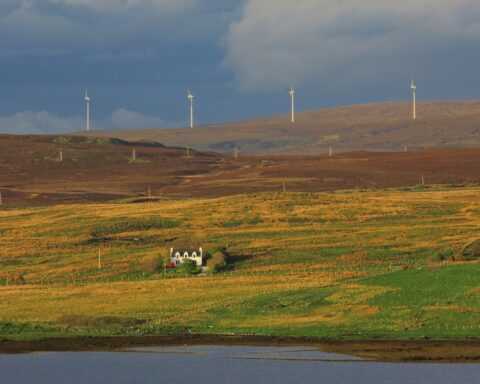
The Energy Independence Bill is probably the biggest Scottish subject in the speech. It is intended to scale up homegrown renewable energy, protect living standards and reduce dependence on fossil fuels. Scotland is central to that promise through offshore wind, onshore wind, hydro, ports, island potential, grid routes and transmission infrastructure.
The risk is extraction in the name of national strategy. Scotland may generate the power while others control the price, the grid, the capital and the profit. Clean energy is not automatically just because it is clean. Offshore wind, pylons, substations, cables, seabed leases and port infrastructure all raise questions about ownership, consent, community benefit and who pays for transmission.
The Scottish question is who benefits from its renewable resources. Do Scottish households see lower bills, or just more infrastructure? Are Highland and island communities asked to host lines, cables and substations for a UK system without adequate compensation? Does the bill speed up consent by weakening local voice? Are community benefits meaningful?
Scotland has seen resource extraction before. The resource may now be wind, grid capacity and seabed access rather than coal or oil, but the public question remains the same. Who owns the value?
Nuclear Regulation
The Nuclear Regulation Bill will support changes to nuclear regulation and a new era of British nuclear generation. Nuclear energy policy is largely reserved, but Scotland’s planning position and the Scottish Government’s opposition to new nuclear power stations using current technologies shape what can practically happen north of the border.
The risk is constitutional collision. Westminster may see nuclear as central to energy security, while Holyrood may continue to reject new nuclear generation. The bill may be about regulation, not siting, but regulation can prepare the ground for policy pressure.
Scotland should ask whether the bill simply improves regulatory process, or whether it creates future pressure for small modular reactors, grid decisions or financing arrangements that conflict with Scottish political consent. If UK energy strategy depends on nuclear, and Scotland’s elected government rejects new nuclear, the union’s energy policy will face a real fault line.
Other Bills In The Official Pack
Competition Reform Bill
The Competition Reform Bill would change how the Competition and Markets Authority makes decisions, including giving the CMA Board a role in merger and market investigation decisions, speeding up market reviews, and providing more clarity around merger review rules. The briefing notes say the bill would extend and apply across the UK.
For Scotland, this matters because competition law affects prices, mergers, supermarkets, energy suppliers, digital platforms, banking, telecoms, ferry related markets, food supply chains and rural consumers. The possible benefit is quicker action when markets fail. The danger is that “clarity and flexibility” for mergers could weaken scrutiny if not handled properly. Scotland should watch whether the CMA remains willing to intervene in markets where Scottish consumers face limited choice, high transport costs, island premiums or rural disadvantage. A UK competition system that sees only average national conditions can miss the harder edges of Scottish geography.
Enhancing Financial Services Bill
The Enhancing Financial Services Bill would deliver parts of the Chancellor’s Leeds Reforms. The briefing notes say it would modernise financial services regulation, support growth and lending, update consumer protection for the digital age, consolidate the Payment Systems Regulator into the Financial Conduct Authority, and allow credit unions to expand by improving membership rules. The Government says the majority of measures will extend and apply to the whole of the UK.
For Scotland, this is important because Edinburgh and Glasgow are major financial centres, while credit unions matter in communities where affordable credit is limited. The possible benefit is better access to finance and stronger credit unions. The danger is that a competitiveness agenda may soften safeguards for consumers, especially around digital finance, payment systems and dispute resolution. Scotland should watch whether rural, low income and older consumers are protected, and whether financial reform mainly strengthens London’s global position while presenting smaller Scottish gains as national benefit.
Overnight Visitor Levy Bill
The Overnight Visitor Levy Bill would allow mayors and potentially other local leaders in England to introduce a levy on overnight stays and reinvest the money locally. The briefing notes explicitly say the bill would bring England into line with Scotland and Wales, which already have visitor levy powers. It extends to England and Wales but applies to England only.
For Scotland, this is not a direct legal threat because Scotland already has its own visitor levy legislation. The issue is comparison. English cities and tourism areas may gain similar revenue raising powers, which could change competitive dynamics for places such as Edinburgh, Highland, Skye, Orkney and other visitor pressured areas. Scotland should watch whether English schemes are designed with more flexibility, lower administrative burdens or clearer local reinvestment than Scotland’s own system. If they are, Scottish councils may ask why their model is harder to use. If they are weaker, Scotland may have moved first and better. Either way, tourism taxation is becoming normal across Britain, not exceptional.
Representation of the People Bill
The Representation of the People Bill is one of the most important missing items. The briefing notes say it would renew and protect democracy, including extending the right to vote to 16 and 17 year olds, described as the most significant expansion of the franchise in more than half a century. It also refers to modernising registration and strengthening electoral rules.
Scotland must watch this closely because elections are constitutionally split. Scotland already allows 16 and 17 year olds to vote in Scottish Parliament and local government elections, but Westminster elections are reserved. If this bill extends the UK parliamentary franchise to 16 and 17 year olds, it may align Westminster elections more closely with Scottish practice. That could be positive. The danger lies in the machinery: voter registration, postal voting, campaign finance, intimidation rules, electoral data and enforcement. Any UK wide electoral reform can affect Scottish democratic life. Scotland should ask whether electoral administration is being made simpler and more inclusive, or whether new controls could centralise oversight in ways that affect devolved elections by pressure or precedent.
Draft Ticket Tout Ban Bill
The Draft Ticket Tout Ban Bill would make it illegal for tickets to live events to be resold above their original cost. The briefing notes say it aims to stop industrial scale ticket touting and impose strict obligations on resale platforms. They also say the CMA would be able to impose fines of up to 10 per cent of global turnover for breaches.
For Scotland, the possible benefit is obvious: fairer access to concerts, festivals, theatre, football and major events. The danger is weak enforcement or loopholes that allow platforms to continue extracting money while ordinary fans are told reform has happened. Scotland should watch whether the law covers resale platforms used by Scottish consumers, whether it protects smaller venues as well as major events, and whether enforcement is quick enough to matter before events sell out.
Sporting Events Bill
The Sporting Events Bill would create a common legislative framework for major sporting events in the UK. It is intended to support events such as EURO 2028, deter ticket touting through a UK wide offence for major sporting events, protect commercial rights, restrict unauthorised advertising and trading around event locations, and coordinate transport planning. The briefing notes say the bill will extend and apply to the whole of the UK.
For Scotland, this matters because Glasgow and other Scottish venues can be part of major UK hosted sporting events. The possible benefit is smoother delivery and better fan protection. The danger is centralised event control. Restrictions on trading, advertising, transport and commercial association can affect local businesses, councils, supporters, street traders and community activity near venues. Scotland should watch whether local authorities retain meaningful control, whether small Scottish businesses are squeezed out by event owner requirements, and whether public costs are covered when UK wide sporting prestige lands in Scottish streets.
Northern Ireland Troubles Bill
The Northern Ireland Troubles Bill would reform the legacy framework for victims, bereaved families and veterans connected to the Troubles. The briefing notes say it is intended to replace flaws in the previous Legacy Act, reform the Legacy Commission, provide protections for veterans and ensure families can seek information and accountability.
This is primarily a Northern Ireland measure, but it is not irrelevant to Scotland. Scotland has veterans, military families, Irish community connections, sectarian history and political links to Northern Ireland. The danger is not direct devolved impact, but moral and legal precedent. Scotland should watch whether the bill balances veterans’ protections with victims’ rights, whether disclosure is real, and whether the UK state is willing to subject its own actions to adequate scrutiny. The way Westminster handles past state conflict matters beyond Northern Ireland.
Draft Taxi and Private Hire Vehicle Bill
The Draft Taxi and Private Hire Vehicle Bill would modernise taxi and private hire vehicle law, improve public safety, remove barriers for disabled passengers, address app based booking, improve information sharing, and create a national database of licensed vehicles, drivers and operators. The briefing notes say the draft bill would extend to England and Wales but apply to England only.
For Scotland, direct legal effect appears limited, but the issue is still worth watching. Taxi and private hire licensing in Scotland is local and governed separately. The danger is precedent and platform pressure. App based operators do not respect old administrative boundaries. If England moves toward stronger national data systems and cross boundary enforcement, Scotland may face pressure to align, especially on safeguarding, disabled access and passenger safety. Scotland should watch whether its own licensing framework remains robust enough, and whether any UK database or platform system later seeks Scottish integration.
Sovereign Grant Bill
The Sovereign Grant Bill would reset the funding mechanism for the monarchy after the Buckingham Palace reservicing programme ends. The briefing notes say the Sovereign Grant funds official duties, official visits, investitures and maintenance of occupied royal palaces, but does not provide income to the King or other members of the royal family. The bill would allow the grant to be reduced from one year to the next and set the 2027 to 2028 amount lower than the £137.9 million grant for 2026 to 2027.
For Scotland, this has little direct effect on devolved services, but it is constitutionally relevant. The danger is not practical harm to Scotland so much as public mistrust if royal funding is not transparent. Scotland should watch whether the grant reflects public restraint, whether costs connected to official activity in Scotland are clearly accounted for, and whether the Crown Estate relationship remains properly understood. In a country where constitutional sentiment is divided, vague royal finance is never wise. It gives everyone a stick and then acts surprised when they pick it up.
Electricity Generator Levy Bill
The Electricity Generator Levy Bill is the missing item Scotland most needs to notice. The briefing notes say the bill will increase the Electricity Generator Levy rate from 45 per cent to 55 per cent from 1 July 2026, encourage eligible generators onto fixed price contracts, and make exceptional revenue available to support households and businesses with the cost of living. They also say the levy will be extended beyond its scheduled 2028 conclusion, with further plans to be legislated for later. The bill will extend and apply to the whole of the UK.
For Scotland, this is highly important because Scotland is a major electricity generating country, especially in renewables. The possible benefit is that windfall returns can help fund bill support. The danger is that Scotland’s renewable generators are taxed in a UK wide system while the benefits are not clearly returned to Scottish communities hosting the infrastructure. Scotland should watch whether the levy affects investment in Scottish renewable projects, whether it discourages generators outside Contracts for Difference, whether community energy or smaller operators are protected, and whether Highland and island areas hosting generation see any direct benefit. This is the old Scottish resource question in modern clothing: who captures the value, and who lives beside the infrastructure?
The Union Test
At the end of the speech, the Government says it is committed to the strength and integrity of the Union and to working closely with devolved governments. The real test will be process. Are Scottish ministers involved before bills are written? Are legislative consent memorandums given proper time? Are devolved powers altered by regulation rather than primary legislation? Are broad powers given to UK ministers to act later with limited scrutiny? Does Westminster treat consent as meaningful, or as a constitutional courtesy to be noted and then overridden?
Scotland needs to meet the King’s Speech with full attention. Some measures may help Scottish households and businesses. Some may barely touch Scotland at all. Others may shape immigration, energy, data, security, trade and public accountability in ways that reach deeply into Scottish life and may quietly claw back devolved power.
SOURCES
UK Government, The King’s Speech 2026
UK Government, The King’s Speech 2026 background briefing notes
Scottish Parliament Information Centre, The King’s Speech 2026
Scottish Parliament Information Centre, Legislative consent at the Scottish Parliament
Scottish Parliament, Devolved and reserved powers