
A woman of a certain age must look honestly at the transport options available to her and ask whether civilisation has advanced entirely in the wrong direction.
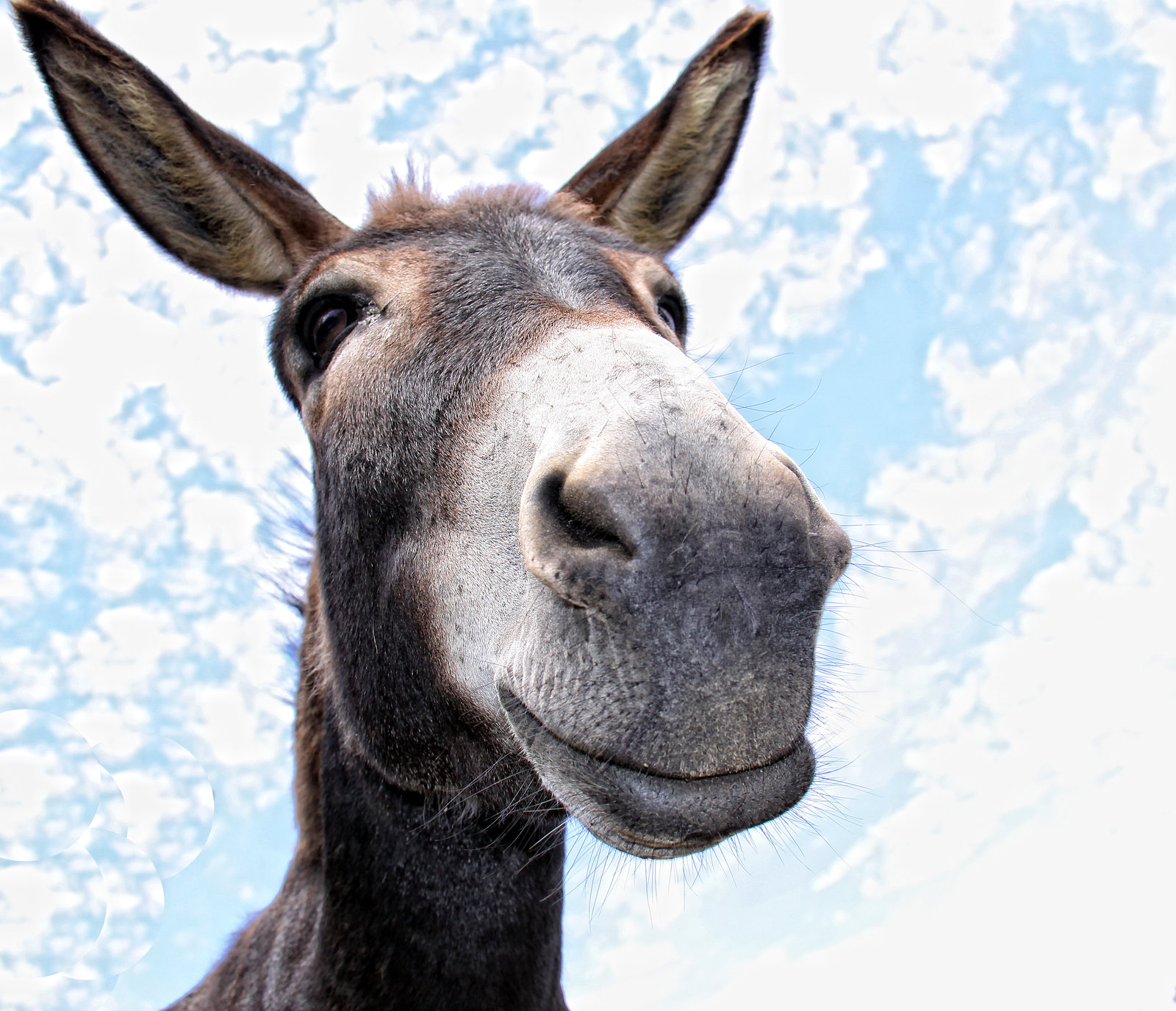
I have been considering a donkey.
This is not because I have suffered a sudden pastoral awakening, nor because I wish to appear in a calendar wearing linen and gazing over a gate with a basket of lavender. I am considering a donkey because everything else has become too complicated, too expensive, too dependent on software, or too likely to ask me to download an app.
A horse, of course, would have been the romantic option. Had I been younger, taller, lighter, and composed of fewer opinions, I might have ridden one across the moor with my hair flying behind me, everything firm and upright, daydreaming about being rescued by a prince.
Not that prince. Never mind.
At my present stage of life, mounting a horse would require a stepladder, a sympathetic neighbour, and possibly a small committee. One does not wish to begin a journey by having to explain to the ambulance service that the horse was innocent and the real culprit was optimism.
A donkey, by contrast, seems practical. Sensible. Close to the ground. Built on a scale that respects the mature female body. It has the expression of a creature that has already heard every promise made by mankind and believed none of them. I admire that in an animal.
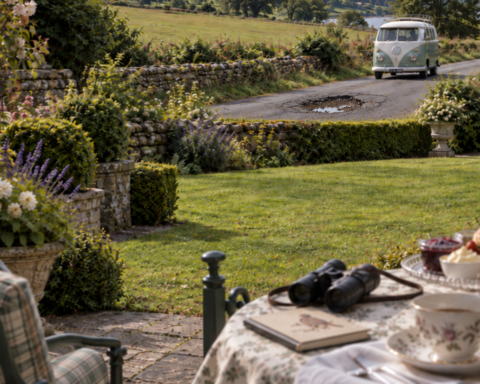
The need for a donkey first came to me while watching two young women in an electric car become lodged on the higher part of the road between two potholes. Not stuck in the normal sense. Suspended. The little car was perched, its wheels still spinning.
They were not Highland girls. One could tell this because they were looking at their phones for help, rather than getting out and swearing at the road.
The driver kept pressing something. I am reluctant to say she revved the engine, because electric cars do not rev so much as whine with disappointment. The vehicle made a sound like a sewing machine that had been asked to climb a hill while carrying a fridge.
I stood at the kitchen window for a moment, watching them tap at their mobiles. There is no signal in that particular patch, which is one of the reasons we still have thoughts here. The girls looked increasingly alarmed, as though they had stumbled into the first scene of a horror film in which the locals know something but refuse to say it until the second act.
I put some biscuits in my apron pocket and went out.
“Are you all right?” I asked.
The passenger looked at me with the pale, unfocused expression of someone whose social media feed had stopped updating.
“We’re trying to contact recovery,” she said.
“That is very modern of you,” I replied.
“We have no signal.”
“No.”
“Do you know when a tow truck could come?”
I considered this.
“If it comes from Inverness, five to seven days.”
The driver made a small sound.
“Business days,” I added, because accuracy matters.
I gave them each a biscuit. One should never deliver bad news on an empty stomach.
They explained that the car had become confused by the potholes. I said this made it no different from the rest of us. The driver asked whether she should keep trying to move it. I suggested that if the car had already used part of its battery to express anxiety, further conversation with it might not improve the situation.
Eventually, the solution was found by a passing man with a rope, a Land Rover, and the attitude of someone who had been waiting all his life for electric motoring to require him personally. He pulled them back on firm ground with such quiet satisfaction that I expect he slept unusually well that night.
The girls waved as they left. I did not.
This, naturally, brought me back to the donkey.
A donkey would not require a charging point. It would not become stranded between potholes unless it had made a moral decision. It would not need software updates, though I accept it might occasionally refuse to move, which is at least honest. When a donkey stops, it does not pretend the issue is connectivity.
The same cannot be said of fuel companies.
A month ago, I had difficulty getting oil delivered. This is a delicate topic, as I had agreed to the telemetry gadget some time ago. It was sold to me as a convenience. That should have been warning enough. Convenience is the word used just before a human task is handed to a machine, and then returned to the human in a worse condition with a password.
The device was meant to tell the company when the tank fell below a certain level. It had one job, and yet there I was, calling them myself like a woman in the nineteenth century.
“The tank is below twenty per cent,” I said.
“Yes,” said the young man.
“But your device did not trigger a delivery.”
“No,” he said.
“Why not?”
There was tapping. Whenever there is tapping during a phone call, one knows a computer is being asked to explain human suffering.
“It seems the system registered the drop.”
“Good.”
“But it did not create the delivery instruction.”
“Why?”
“It may not have crossed the threshold.”
“It is below twenty per cent.”
“Yes.”
“What is the threshold?”
“Thirty per cent.”
We sat together in the silence of a nation in decline.
“So,” I said, “the tank went below thirty per cent.”
“Yes.”
“The gadget noticed.”
“Yes.”
“And then did nothing.”
“It recorded the level.”
“How thoughtful. Perhaps it is writing a diary.”
He was a pleasant boy. It was not his fault. I told him I would have to reduce my cooking.
He asked whether I had alternative heat.
I said I had blankets, indignation, and a memory of Britain before everything needed a sensor.
This is what I mean about the donkey. The donkey is not merely transport. The donkey is a philosophy. It is a small, hairy argument for resilience. It says that perhaps not every problem should be solved by a networked device that works perfectly until weather, distance, cost, policy, supply, staffing, software or reality becomes involved.
I began researching donkeys properly. A donkey needs shelter, land, company, hoof care, hay, minerals, veterinary attention and sensible handling. In other words, it has requirements. This is not unreasonable. I have requirements myself, though mine are mostly tea, peace, and for nobody to begin a sentence with “Have you tried going online?” The more I read, the more the donkey appealed to me. Predictable. Reliable. Cautious. Handsome in a compact and thoughtful way. A donkey looks at the world as though it suspects management has changed and standards have slipped. I understand this deeply.
I can already picture it. Me and my ass, proceeding along the road at a pace suitable for reflection. Cars may pass, if they can find a stretch without holes. Electric vehicles may hum. Delivery apps may fail. Telemetry may record disaster without acting upon it. But the donkey and I will continue, neither of us impressed.
If the road floods, we shall wait.
If the wind rises, we shall turn.
And if a handsome prince rides by, I shall keep both feet on the ground and ask whether he knows anything about hoof trimming.
There is a great deal to be said for progress, but I am still thinking about getting a donkey.
Not as a retreat from modern life, you understand.
As a backup system.