
Scotland is putting more public money into community-owned wind, solar and hydro, with £15 million now available annually through the Community and Renewable Energy Scheme. But for many grid-connected projects, generating electricity locally remains considerably easier than selling that electricity directly to nearby households. The obstacle lies in a UK electricity market built around licensed suppliers, national settlement systems and network charging rather than local generators selling across the public wires to their neighbours.
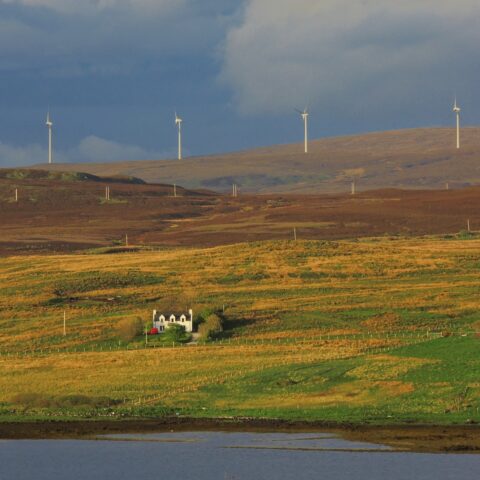
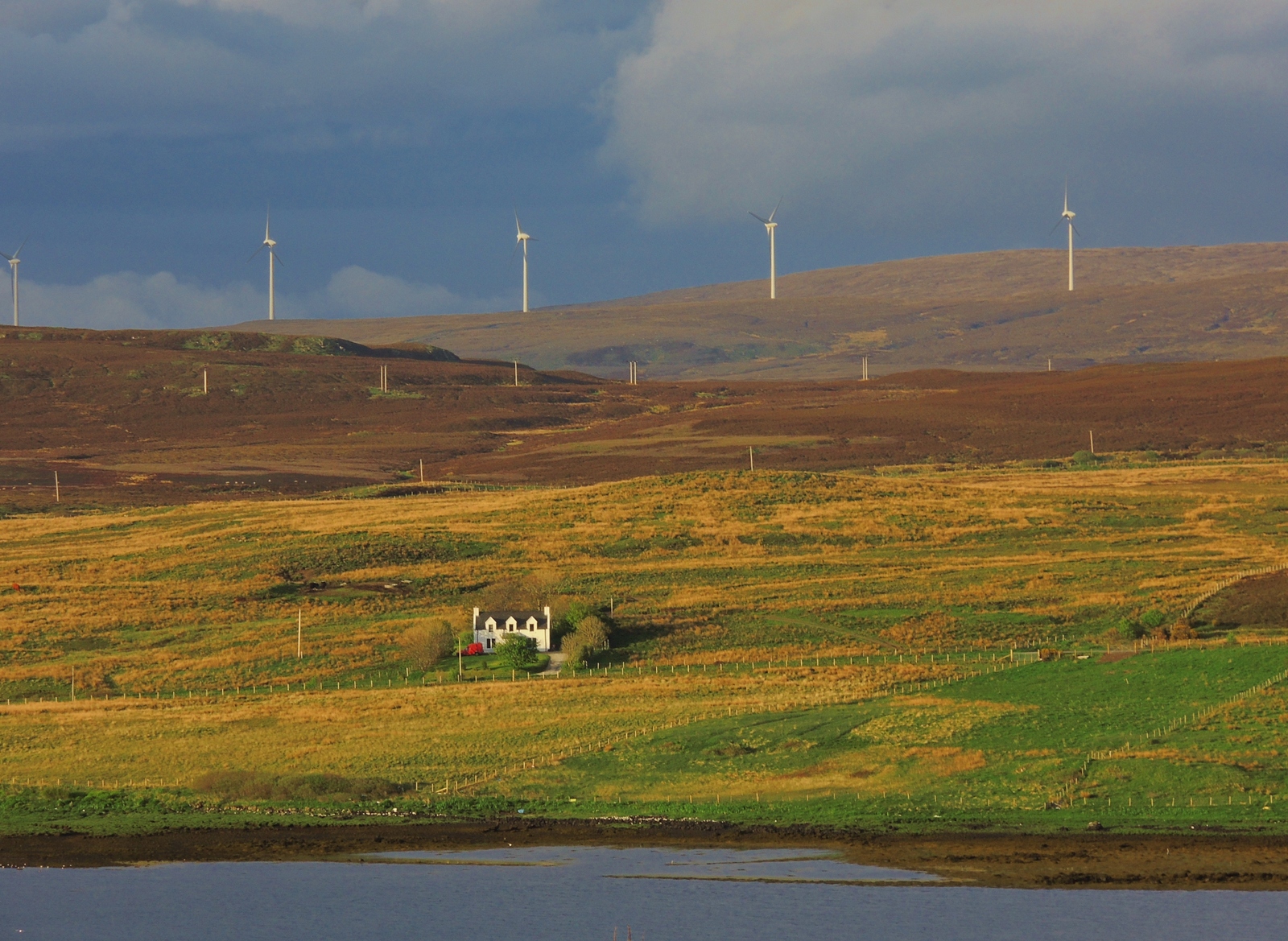
Scottish communities can own wind turbines, hydro schemes and solar farms. They can generate electricity within sight of the houses around them. They can sell that electricity into the wider market and use the income for community projects.
What they generally cannot do simply is take electricity produced by a community-owned generator, send it through the existing local electricity network and sell it directly to the households living beside it under their own local tariff.
The Scottish Government is simultaneously spending increasing sums encouraging communities to own generation. In August it increased annual funding through its Community and Renewable Energy Scheme, or CARES, to £15 million. Since CARES began, more than £83 million has been provided to more than 1,200 projects representing around 75MW of renewable-energy capacity.
The UK Government is moving in the same direction. Great British Energy’s Local Power Plan, published in February, commits up to £1 billion to local and community energy and promises support for more than 1,000 projects by 2030.
Yet the Local Power Plan itself acknowledges that regulatory and market barriers still have to be changed if communities are to realise the full value of the electricity they generate.
Scotland therefore has two energy policies operating at once. Public money is being used to create more local ownership of generation, while the market through which electricity is supplied to households remains largely structured around licensed energy companies operating across Great Britain.
Owning the Turbine Does Not Make a Community an Electricity Supplier
The legal starting point is the Electricity Act 1989.
Generating electricity and supplying electricity are separate regulated activities. Owning a wind turbine or hydro scheme does not automatically give its owner the right to operate as a retail electricity supplier.
A licensed electricity supplier takes on responsibilities extending well beyond buying power and sending out bills. Suppliers participate in industry settlement, arrange metering, pay network and policy charges, manage customer switching and billing and comply with extensive consumer-protection rules.
For a small community organisation, becoming a fully licensed supplier is therefore a very different undertaking from operating a renewable generator.
Local Energy Scotland, which administers CARES on behalf of the Scottish Government, describes the present position directly. Its current guidance says selling community-generated electricity to local households is challenging under existing regulatory and market arrangements and that becoming a fully licensed supplier is expensive, complex and legally difficult.
Most community generators wanting to reach household customers would therefore need an existing licensed supplier to stand between them and those customers.
The community can own the generating equipment. The licensed company still performs the retail supply function.
There Is an Exemption — But It Does Not Create a Simple Village Electricity Company
British electricity law does contain exemptions intended to prevent very small suppliers from having to obtain the same licence as a national electricity company.
The Electricity (Class Exemptions from the Requirement for a Licence) Order 2001 allows a qualifying small supplier to supply electricity it generates itself without a full supply licence provided it does not supply more than 5MW at any time, of which no more than 2.5MW is supplied to domestic consumers.
Separate exemptions apply to some forms of electricity distribution.
Those limits mean it is wrong to say that British law absolutely prohibits community electricity from being sold locally.
What the exemptions do not create is a simple plug-and-play route by which a Scottish community with a turbine can begin billing hundreds of nearby households through the existing public network.
Using that network brings in metering, settlement, supplier registration, network access, balancing and other industry processes. The UK Government’s own guidance warns organisations relying on licence exemptions to take legal advice because the regulatory conditions can be complex and depend upon the precise arrangement.
Local Energy Scotland reaches much the same conclusion from the perspective of community generators: exemption from the requirement to hold a full retail licence does not remove the practical need for a licensed supplier in many local-supply models using the public system.
The Electricity May Be Local, but the Transaction Is National
A conventional community generator usually sells its output through a Power Purchase Agreement, or PPA.
Under a merchant PPA, a licensed supplier buys the electricity from the generator. Payment may be fixed or linked to wholesale market prices. The supplier then manages the electricity within the wider market.
That can provide reliable income to the community organisation, particularly where a long-term contract helps support project finance.
It does not mean the household next to the turbine is buying that electricity.
Electricity entering the public network is pooled and accounted for through the wider electricity system. There is ordinarily no physical route by which electrons from one community turbine can be identified and reserved for a particular house nearby.
A local commercial relationship can be created around that generation, but the market and accounting arrangements have to be constructed around it.
That is where licensed suppliers become important.
A Supplier Can Create a Local Tariff — But Local Energy Scotland Has Found No Community Group Successfully Operating the Model
One possible route is a sleeved PPA.
Under this structure, the community generator reaches an agreement with a licensed supplier. The supplier buys or accounts for the generator’s output and separately supplies customers who have signed up to an associated tariff.
In theory, residents near a community wind or hydro scheme could therefore buy electricity under a tariff associated with their local generator without the community itself becoming a full licensed supplier.
Local Energy Scotland’s latest guidance, prepared by energy consultancy Regen, says it is not aware of a community energy group that has successfully established such a local-tariff model.
The problem is not simply technical.
A licensed supplier has to be willing to provide the service. Commercial agreements have to cover metering, billing, settlement and risk. The supplier incurs costs and normally requires payment for providing the route to market.
There is also no inherent geographical boundary within a sleeved PPA. The electricity associated commercially with the community generator can be offered to customers elsewhere because the arrangement is principally contractual rather than a dedicated physical supply from generator to neighbouring property.
The word “local” can therefore describe the economic relationship without describing the physical path of the electricity.
A Private Wire Can Keep the Relationship Genuinely Local
There is a more direct alternative.
A community generator can build a private electricity wire to a nearby user.
Solar panels installed on a school, for example, can supply the school directly without routing every unit through the public distribution network. A hydro scheme close to a large commercial premises can potentially do the same.
The economics can be attractive because some of the network, policy and supplier costs associated with ordinary grid supply can be avoided.
Local Energy Scotland calculates that a qualifying private-wire arrangement can avoid substantially more non-commodity cost than an equivalent transaction using the public grid.
But distance quickly becomes a problem.
A private cable has to be physically installed. Land rights may be required. Roads or other property may have to be crossed. Metering and protection equipment must be provided. Legal agreements are required, and the customer still normally needs an ordinary licensed supplier for periods when the local generator cannot meet demand.
Local Energy Scotland’s worked guidance gives an illustrative private-wire project cost of around £250,000, while warning that actual costs depend heavily on distance, voltage, network reinforcement and legal requirements.
A turbine beside a community hall can therefore supply the hall relatively straightforwardly. A turbine several kilometres from hundreds of separately metered homes presents a very different proposition.
Scotland Has Already Demonstrated That Local Electricity Can Be Matched to Local Demand
The technical problem is not theoretical. Scotland has been experimenting with local energy systems for more than a decade.
On Mull, the ACCESS project linked the output of the community-owned Garmony hydro scheme with electricity demand in homes and businesses across Mull and Iona.
Garmony is a 400kW run-of-river hydro scheme owned by Green Energy Mull on behalf of the Mull and Iona Community Trust. It was designed to generate more than 1GWh of electricity annually.
The ACCESS project received £1.8 million from the Scottish Government’s Local Energy Challenge Fund and recruited more than 75 households.
Smart controls were fitted to storage heaters, hot-water cylinders and other electrical equipment. When hydro generation was available, those appliances could increase demand locally. When the distribution network approached its limits, generation or consumption could be adjusted.
The project demonstrated that local generation and local demand could be coordinated without constructing a separate electricity network across the island.
It did not turn Garmony Hydro into the retail electricity supplier for the participating households.
The hydro electricity continued to be sold commercially through a Power Purchase Agreement.
Garmony Shows the Difference Between the Price of Generation and the Price of Electricity at Home
The final ACCESS report also preserved an unusually useful historical example of how the financial chain worked.
At that time, Garmony generated approximately 1,000MWh annually. Its generation received Feed-in Tariff support worth around 15p per kilowatt-hour, while exported electricity was sold through a long-term Power Purchase Agreement at 5.5p per kilowatt-hour.
The project therefore earned money from generating and exporting power, while participating households continued to exist within the ordinary retail electricity market.
Those figures date from the 2010s and should not be compared directly with current tariffs. Wholesale prices, support schemes and household bills have changed substantially since then.
The underlying structure remains recognisable: the price received by a small generator for exported electricity and the retail price paid by a household are not the same product.
Between them sit network charges, system balancing, supplier operating costs, policy costs, metering, settlement, taxes and commercial risk.
A locally owned generator does not automatically capture the difference.
Some Scottish Communities Have Escaped the Problem by Owning the Grid as Well
A small number of Scottish communities occupy a completely different position because they are not connected to the mainland electricity grid.
Eigg, Muck, Foula and Knoydart operate their own local electricity systems.
Eigg Electric, for example, has supplied the island through its own combination of renewable generation, storage, control systems and local distribution infrastructure since 2008.
These communities demonstrate what direct local electricity ownership can look like when the generator and the local network sit inside the same system.
They are also exceptional.
Running an independent island grid requires the community to balance supply and demand itself, maintain distribution equipment, provide enough generation and storage to keep the lights on and deal with faults and replacement infrastructure.
CARES has provided more than £2.4 million collectively to Knoydart, Muck, Eigg and Foula for work intended to safeguard and modernise those off-grid systems.
The model is therefore not readily transferable to a mainland village already connected to the regulated distribution network.
Scotland Is Increasing Funding for Generation Faster Than the Market Is Being Rewritten
The contrast has become sharper during 2026.
The Scottish Government announced in August that CARES funding would increase to £15 million annually.
Its figures show that more than £83 million has now been delivered through the programme, supporting more than 1,200 projects and approximately 75MW of renewable-energy capacity.
The Community Energy Generation Growth Fund has already supported projects ranging from solar farms and small wind schemes to community-building generation and storage.
Earlier rounds included projects on Eigg, Bressay, Tiree, Fair Isle, Barra and Arran.
In December 2025, funding was also awarded to a proposed micro-grid at Loch Arthur Camphill Community and a local energy-pooling project at McLaren Community Leisure Centre in Callander.
Scottish policy therefore actively encourages communities to own generation.
The Scottish Government’s longer-term target is 2GW of community and locally owned energy by 2030. At the end of 2024, the estimated operating total was 1,109MW from 42,990 installations.
The ability to own generation has developed considerably faster than a standardised mechanism for selling the output directly across the public network to nearby consumers.
The UK Government Now Acknowledges That the Market Rules Are a Barrier
The Local Power Plan published by the UK Government and Great British Energy in February 2026 makes the same structural problem part of official policy.
The plan promises up to £1 billion for local and community power and says more than 1,000 projects will be supported by 2030.
It also commits the Department for Energy Security and Net Zero to work with Ofgem, Great British Energy and the electricity industry on regulatory reform.
The plan specifically identifies access to markets as one of the barriers that must be addressed.
Great British Energy says it intends during 2026 to test new revenue structures including virtual Power Purchase Agreements, local flexibility and Smart Local Energy Systems, while developing a Local Energy Platform intended to make community projects easier to establish and operate.
The significance is that public policy has moved beyond arguing only for more community turbines and solar panels. The UK Government is now examining how the electricity market itself has to change if local ownership is to deliver more direct local economic benefits.
A Technical Change Made in 2025 Removed One Obstacle
One part of the industry rulebook has already changed.
Balancing and Settlement Code modification P442 came into force in February 2025.
Its purpose was highly technical but relevant to local electricity supply.
Before P442, a licensed supplier facilitating licence-exempt local supply could have difficulty separating exempt electricity correctly when calculating some policy and network costs.
The modification created a settlement method allowing qualifying exempt supply to be netted out more accurately.
For community generators that can fit within the licence-exemption rules, the change removes one barrier to obtaining the cost reductions the law already permits.
It does not establish a general local electricity market.
The More Ambitious P441 Reform Has Been Delayed Again
A second rule change could go further.
Modification P441 was first raised in July 2022 and concerns what the electricity industry’s Balancing and Settlement Code calls “Complex Sites”.
The proposed arrangements would create clearer categories under which electricity imported and exported across multiple meters can be treated together for settlement.
One potential application is a local energy arrangement in which renewable generation and consumers are connected beneath the same primary substation.
That could allow locally matched generation and demand to avoid some costs associated with using the transmission system because the electricity is being balanced within the local distribution network rather than treated as though every unit travels through the national transmission system.
The proposal has had a long regulatory journey.
After work beginning in 2022, the Balancing and Settlement Code Panel unanimously recommended approval in March 2026 and sent the proposal to Ofgem.
Ofgem did not approve it.
On 7 September 2026, the regulator sent P441 and related Retail Energy Code change R0268 back for further work because their decision and implementation timetables needed to be aligned with another distribution-code modification.
As of 7 October, P441 therefore remains unresolved.
The reform intended to make some forms of locally matched electricity easier has been under development for more than four years.
Ofgem Says Wider Changes May Still Be Required
The regulatory work does not end with P441.
Ofgem’s 2026 strategic direction for the industry codes says the future growth of Smart Local Energy Systems may require changes across several separate electricity codes.
Those could include the Balancing and Settlement Code, Retail Energy Code, Connection and Use of System Code and Distribution Connection and Use of System Agreement.
The regulator identifies electricity supply, network connections, charging, flexibility, constraints management and system balancing among the areas that may be affected.
This helps explain why local electricity supply has proved difficult to reduce to one legislative amendment.
The national market was developed around generators, licensed suppliers, network companies and consumers occupying defined roles. Local energy projects increasingly blur those boundaries.
A community may simultaneously generate electricity, own storage, operate flexible demand, supply a building and want to sell power to residents nearby.
The rules were not originally designed around that organisation playing all of those roles.
Consumer Protection Is One Reason the Supplier Sits in the Middle
There is a reason electricity supply became heavily regulated.
Households require accurate billing, reliable metering, rights when changing supplier, protection when suppliers fail, arrangements for vulnerable customers and mechanisms for complaints and redress.
A simplified local-supply regime has to decide which of those obligations a community generator should inherit and which should remain with a licensed intermediary.
Removing the supplier from the transaction entirely can therefore remove costs, but it can also remove an organisation carrying statutory consumer responsibilities.
The regulatory problem is to make community-scale supply proportionate without creating a weaker class of electricity consumer.
The UK licence exemptions already attempt part of that balance by allowing smaller supply within specified limits rather than requiring every generator to become a full licensed supplier.
The continuing difficulty is making those exemptions commercially usable through the public network.
Keeping Electricity Local Does Not Mean It Never Uses the Wider System
There is also a physical limitation to the idea of a self-contained local electricity market.
A village wind turbine will sometimes produce more power than the village needs and sometimes produce none at all. Solar output changes with daylight and weather. Run-of-river hydro changes with water flow.
Unless a community has enough storage and backup generation to disconnect completely, it still depends on the wider electricity system.
Local generation can reduce how much electricity is drawn from elsewhere and, with careful matching of generation and demand, can reduce flows through parts of the network.
But most grid-connected communities will continue both importing and exporting electricity.
The unresolved commercial question is how those local flows should be valued.
Under the conventional model, a community generator sells power and local households separately buy power. Under emerging local-energy models, the aim is to recognise that generation and consumption may be occurring within the same part of the distribution system and allow more of the economic benefit to remain there.
There Is Also a Question of Who Pays the Costs That Local Schemes Avoid
Reducing network and policy charges for local electricity does not make those costs disappear automatically.
Local Energy Scotland’s guidance notes that costs avoided by qualifying licence-exempt arrangements may have to be recovered from consumers outside those arrangements.
Ofgem has considered that issue and, according to the guidance, does not currently expect licence-exempt local supply to become large enough for the effect on other bills to be significant.
That calculation could change if local supply expanded substantially.
A future market therefore has to decide not only how to reward electricity that is generated and consumed locally, but which national system costs local consumers should continue paying.
Transmission networks, balancing services, system administration and backup generation continue to exist even when a household buys electricity associated with a turbine a few miles away.
The Scottish Government Controls the Funding, but Not the Electricity Market
The regulatory divide is also constitutional.
The Scottish Government can fund community generation, support planning and development, set policy for aspects of heat and energy efficiency and use programmes such as CARES to help projects reach construction.
Electricity markets, licensing and the principal legal framework governing supply remain reserved to the UK Parliament and regulated primarily through UK institutions including Ofgem.
Scotland can therefore spend public money helping a community acquire generation without possessing all of the powers required to redesign the market through which that community sells electricity to households.
That division has become more visible as Scottish community-energy policy grows.
The Scottish Government’s 2026 Climate Change Plan says it continues to support community ownership while acknowledging that powers over several mechanisms intended to increase community participation remain reserved.
The UK Government is now using the Local Power Plan and Great British Energy to pursue its own expansion of community energy while simultaneously considering the regulatory changes required to make those projects commercially sustainable.
Communities Are Already Making Money From Generation — Just Not Necessarily by Supplying Their Neighbours
The regulatory barriers do not mean Scottish community renewables are failures.
Many schemes already produce substantial income.
Community Power Outer Hebrides consists of six community generators owning and operating wind turbines with a combined capacity of about 22MW. The UK Government’s Local Power Plan says those organisations have returned £20 million to Western Isles communities over the past decade.
The two community-owned wind turbines in North Uist, with 1.8MW of capacity, were projected to generate around £2.3 million for community use across their operating life.
Radio City Association’s recently developed community wind project in North Ayrshire exports electricity to the national grid under a Power Purchase Agreement supplying UK businesses. Local Energy Scotland says it is expected to generate an estimated £12 million to £15 million of net community income over its lifetime, although that forecast depends on future electricity prices.
Those schemes demonstrate that a community does not have to retail electricity locally in order to retain substantial economic value from ownership.
They also illustrate what the present market encourages: own the generator, sell its output into the wider electricity market, then return the financial proceeds to the local area.
That is different from a household receiving a locally priced electricity tariff because the community owns the turbine nearby.
The Next Stage Is No Longer About Whether Communities Can Generate Power
Scotland has already answered one part of the community-energy question.
Communities can finance, own and operate renewable generation. Some have been doing so for decades. Public funding is now being expanded to create many more projects.
The unresolved part sits between the generator and the meter in the house next door.
The existing market permits some licence-exempt supply, private-wire arrangements and supplier-mediated local tariffs. None has yet become a simple, repeatable model through which ordinary grid-connected Scottish communities can routinely sell their own electricity to surrounding households.
The regulatory system is beginning to change. P442 has been implemented. P441 remains under regulatory consideration after being returned for further work in September. Great British Energy intends to test Smart Local Energy Systems and new commercial models during 2026 and 2027, while the UK Government and Ofgem consider wider changes to licensing, settlement, charging and network rules.
At the same time, Scotland is increasing the amount of publicly supported community generation entering that system.
The result is an unusual point in the development of the electricity market: the physical technology required for communities to generate, store and manage local renewable electricity already exists, and public policy increasingly wants communities to own it. The commercial and regulatory framework determining how easily they can sell that electricity locally is still being built.
Sources
Additional funding for community-owned renewable energy
Scottish Government, 12 August 2026
https://www.gov.scot/news/additional-funding-for-community-owned-renewable-energy/
Local and small-scale renewables
Scottish Government, current 2026
https://www.gov.scot/policies/renewable-and-low-carbon-energy/local-and-small-scale-renewables/
Climate Change Plan: 2026–2040 — Annex 1 Supporting Content
Scottish Government, 2026
https://www.gov.scot/publications/scotlands-climate-change-plan-2026-2040-annexes/pages/13/
Climate Change Plan Monitoring Report 2025 — Electricity
Scottish Government, 2025
https://www.gov.scot/publications/climate-change-plan-monitoring-report-2025/pages/2/
Community Energy Generation Growth Fund
Scottish Government, 15 May 2024
https://www.gov.scot/news/community-energy-generation-growth-fund/
Support for community energy generation
Scottish Government, 12 September 2024
https://www.gov.scot/news/support-for-community-energy-generation/
Community energy projects to benefit from £1.8 million
Scottish Government, 10 December 2025
https://www.gov.scot/news/community-energy-projects-to-benefit-from-1-8-million/
Local Power Plan
UK Government and Great British Energy, updated 11 February 2026
https://www.gov.uk/government/publications/local-power-plan/local-power-plan-accessible-webpage
Electricity licence exemptions
Department for Energy Security and Net Zero, updated 14 January 2026
https://www.gov.uk/guidance/electricity-licence-exemptions
The Electricity (Class Exemptions from the Requirement for a Licence) Order 2001
UK Legislation, 2001
https://www.legislation.gov.uk/uksi/2001/3270/contents
Power Purchase Agreements and non-commodity relief
Local Energy Scotland / Regen, current 2026
https://localenergy.scot/resource/power-purchase-agreements-and-non-commodity-relief/
Local supply for community generators
Local Energy Scotland / Regen, current 2026
https://localenergy.scot/resource/power-purchase-agreements-and-non-commodity-relief/4-local-supply-for-community-generators/
Sleeved Power Purchase Agreements
Local Energy Scotland / Regen, current 2026
https://localenergy.scot/resource/power-purchase-agreements-and-non-commodity-relief/3-3-sleeved-ppa/
Private wire Power Purchase Agreements
Local Energy Scotland / Regen, current 2026
https://localenergy.scot/resource/power-purchase-agreements-and-non-commodity-relief/3-2-private-wire-ppa/
P441 Creation of Complex Site Classes
Elexon, current 2026
https://www.elexon.co.uk/bsc/mod-proposal/p441/
P441 Balancing and Settlement Code and R0268 Retail Energy Code Send Back Decision Letters
Ofgem, 7 September 2026
https://www.ofgem.gov.uk/publications/p441-balancing-and-settlement-code-bsc-and-r0268-retail-energy-code-rec-send-back-decision-letters
List of Change Releases for 2025 — P442 Reporting Chargeable Volumes for Exempt and Licensed Supply
Elexon, 2025
https://www.elexon.co.uk/bsc/release/list-of-change-releases-for-2025/
ACCESS: Assisting Communities to Connect to Electric Sustainable Sources
Local Energy Scotland
https://localenergy.scot/casestudy/access-assisting-communities-to-connect-to-electric-sustainable-sources/
The ACCESS Project Final Report
Community Energy Scotland / Local Energy Scotland, 2018
https://localenergy.scot/wp-content/uploads/2020/06/the-access-project-final-report.pdf
Safeguarding the Sustainability of Scotland’s Off-Grid Communities
Local Energy Scotland
https://localenergy.scot/casestudy/safeguarding-the-sustainability-of-scotlands-off-grid-communities/
North Uist Wind Turbines
Local Energy Scotland
https://localenergy.scot/casestudy/north-uist-wind-turbines/
Radio City Association — Community-Owned Wind Turbine
Local Energy Scotland
https://localenergy.scot/casestudy/radio-city-community-owned-wind-turbine/