

There is movement in the numbers, but it is slight, and it arrives without force.
Official figures released this morning show Scotland’s onshore economy grew by 0.2 per cent in the three months to February 2026. That follows growth of 0.1 per cent in the three months to November 2025. The direction is positive, but the scale remains limited, and the pattern suggests an economy advancing in increments rather than strides.
The monthly position is marginally stronger. Output is estimated to have risen by 0.1 per cent in February, following growth of 0.5 per cent in January and no change in December. Taken together, those three months form a sequence that avoids contraction, yet does not establish clear acceleration.
Beneath the headline figure, the composition of growth is uneven. Professional, scientific and technical services contributed 0.1 percentage points to the three month increase, with information and communications contributing a further 0.1 percentage points. These sectors, both service-led and knowledge-based, continue to provide the main areas of expansion.
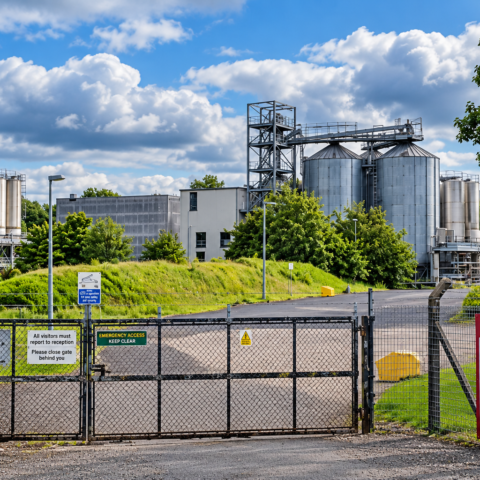
Set against that, electricity and gas supply exerted the largest downward pressure, reducing headline growth by 0.2 percentage points over the same period. The energy sector therefore stands apart, not as a source of support, but as a constraint on overall output.
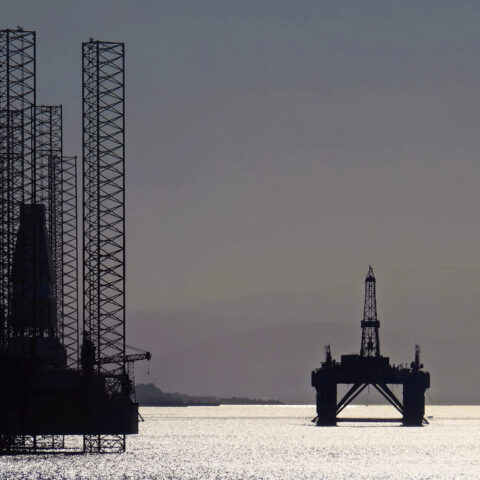
The figures relate only to Scotland’s onshore economy. Offshore oil and gas production is excluded from these estimates, a distinction that matters in a country where energy extraction has long influenced wider economic performance. The picture presented here is therefore one of domestic activity, measured across services, production and construction, and adjusted to remove the effects of inflation.
These estimates are described as official statistics in development. They are published to allow early use, but remain provisional and subject to revision. That status introduces a degree of uncertainty into the figures, particularly at the monthly level, where volatility is more pronounced. It does not, however, alter the underlying pattern.
What emerges is a position that is neither contracting nor expanding with conviction. Growth is present, but narrow. It depends on a limited number of sectors and is offset, at least in part, by weakness elsewhere. The trajectory is steady, though subdued.
There is no indication here of a sudden shift. Instead, the figures suggest continuity: an economy continuing to move forward, but doing so with restraint, and without the breadth of activity that would signal stronger momentum.