
There is a small change in the figures, but it arrives after a long period without movement.
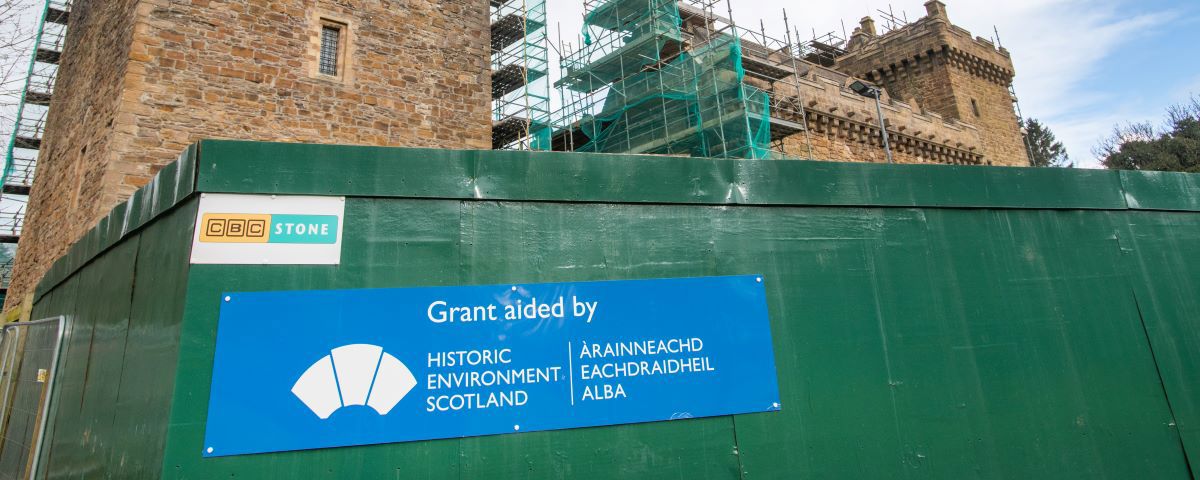
Historic Environment Scotland has confirmed that the maximum grant available to individual heritage projects will increase from £500,000 to £750,000. The new ceiling applies to applications from 1 April 2026 and marks the first adjustment to the upper limit since it was introduced in 1990.
The decision reflects a shift in the conditions under which conservation work is now carried out. Construction costs have risen sharply in recent years, influenced by broader cost of living pressures and disruption to global supply chains following the pandemic. At the same time, projects are increasingly required to meet higher standards of resilience, as climate conditions place additional strain on historic buildings and materials.
Historic Environment Scotland operates as one of the principal public funders of heritage in the country. In the financial year 2024 to 2025 it distributed around £12.4 million in grant funding on behalf of the Scottish Government. The organisation reports that each pound invested generated an additional £5.24 in matched or associated funding, indicating the extent to which its grants are used to unlock wider project finance.
The structure of the sector has also shifted over time. Larger projects, particularly those involving significant repair or adaptation of historic structures, now require greater upfront capital. Without adjustment to funding limits, the scale of work that can be undertaken within the existing framework becomes constrained. The increase in the grant ceiling is intended to maintain the viability of such projects within current cost conditions.
Historic Environment Scotland’s role extends beyond financial support. As the lead public body for the historic environment, it provides technical oversight and guidance as part of the funding process. This includes assessing risk in capital projects and advising on conservation standards, a function that has become more prominent as projects grow in complexity.
The organisation manages more than 300 properties of national importance and leads the delivery of Scotland’s current heritage strategy. Its grant programmes form part of a wider system that combines conservation, research, and public access, linking individual projects to broader national objectives.
The increase in funding does not, in itself, expand the total number of projects supported. It alters the scale at which support can be given. The effect will be seen in the type of work that proceeds, rather than the volume. Larger and more technically demanding projects may now move forward where previously they could not.
Applications under the revised limit are now open. The adjustment is modest in administrative terms, but it signals a recognition that the economics of conservation have changed, and that the structures supporting it must change with them.