

Celtic Renewables has joined a UK consortium backed by more than £7 million to develop bio based solvents for pharmaceutical manufacturing. The announcement is technical, but its importance is clear: Scotland’s industrial transition will depend not only on replacing old jobs, but on proving that new low carbon manufacturing can be built at serious scale.
Grangemouth has heard many promises about the future. Some have been large, some have been hopeful, and some have arrived with the familiar confidence of industrial policy before the hard part begins. The hard part is delivery: jobs, plants, skills, contracts, supply chains and customers that remain once the announcement has faded. That is why the latest development involving Celtic Renewables deserves attention, but not applause without examination.
The Grangemouth based green chemicals producer has been awarded a share of more than £7 million through a UK consortium working on low carbon medicine manufacturing. The project is part of Innovate UK’s Sustainable Medicines Manufacturing Innovation Programme, supported in partnership with the Department of Health and Social Care. The consortium, led by Exactmer with strategic support from GSK, will run for 36 months and aims to advance high purity bio based solvents for use in pharmaceutical production. That may sound remote from everyday Scottish life. It is not.
Medicines are not made from active ingredients alone. Pharmaceutical manufacturing depends on solvents, which are used to dissolve, mix, react, purify and clean materials during production. Many of those solvents are currently derived from fossil based feedstocks. The new consortium’s purpose is to help create bio based alternatives that can meet the purity requirements of medicine manufacturing while reducing lifecycle greenhouse gas emissions. In plain terms, the project is asking whether part of the hidden chemistry behind modern medicine can be made with less dependence on fossil fuels.
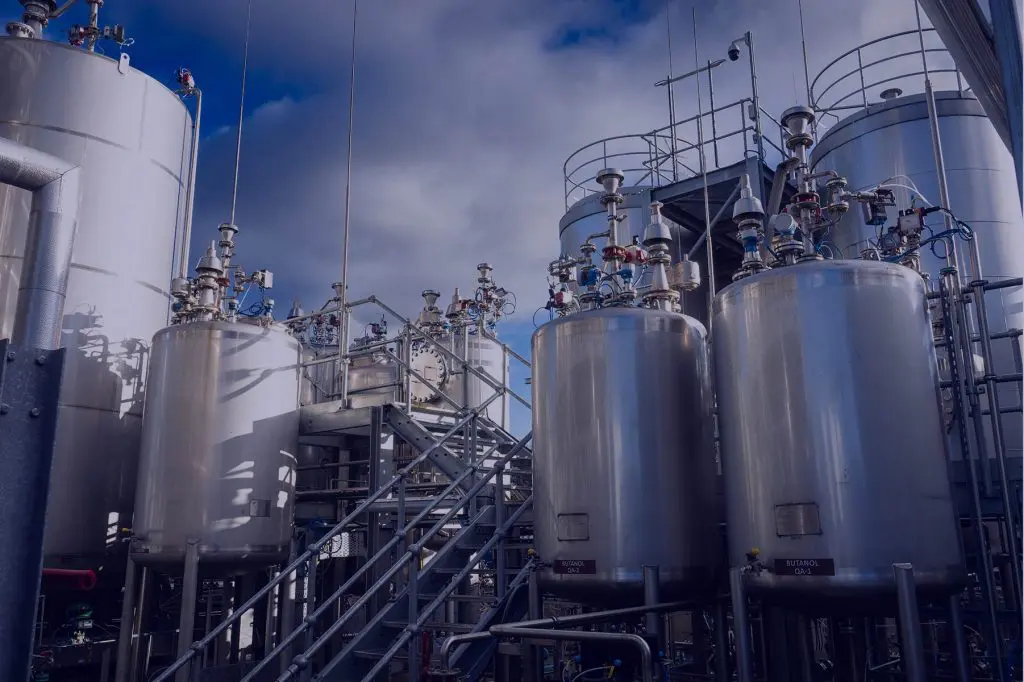
For Scotland, the significant part is Celtic Renewables’ place in that chain. The company operates what it describes as Scotland’s first biorefinery in Grangemouth, converting by products and waste into bio acetone and bio butanol through its patented technology. Celtic Renewables says its Grangemouth facility is a demonstrator plant intended to prove and de risk a first of its kind process before larger biorefineries are built. That makes the announcement more than a grant item. It places a Scottish firm inside a pharmaceutical supply chain question with national and international relevance. If the project succeeds, Celtic Renewables could be part of a wider shift away from fossil derived industrial chemicals towards lower carbon alternatives made from waste and biological residues.
The timing matters because Grangemouth is no ordinary location. It has long been one of Scotland’s most important industrial sites, associated with petrochemicals, refining, manufacturing, energy and skilled technical work. The closure of the Petroineos refinery in 2025 made the area an early and difficult test of whether a “just transition” can be more than a phrase. The Guardian reported that the refinery closure involved the loss of around 400 jobs at the site, with wider concerns about the supply chain and the future of the town’s industrial base.
New low carbon industries therefore carry a particular weight in Grangemouth. They are not decorative green projects. They are being asked to do something harder: help replace real industrial capacity in a place where people already know what industrial loss feels like. Celtic Renewables has been part of that emerging story for some time. In December 2025, the Scottish Government announced £8.5 million in funding expected to support up to 460 new jobs at the Grangemouth industrial cluster and surrounding area. That package included support for Celtic Renewables and MiAlgae as part of efforts to develop future industries around green biotechnology and low carbon manufacturing. Celtic Renewables separately said Scottish Government funding would support planning and construction of a proposed £120 million industrial scale biorefinery at Grangemouth, expected to create 149 jobs by 2030.
Those figures should be reported carefully. They are not jobs already secured in full. They are projected jobs attached to planned investment. But they do show the direction of travel: Grangemouth is being positioned as a place where Scotland can try to convert industrial inheritance into new forms of production.
The medicine manufacturing consortium adds a more specialised layer. It brings together technology providers, manufacturers and pharmaceutical firms, including AstraZeneca, GSK, Exactmer, CPI, Croda, Cytiva, Queen Mary University of London, the University of Leeds, Ayming, ERM and Celtic Renewables. The project’s stated aim is to overcome barriers to bio based solvent adoption, including production cost, purification and the strict quality requirements of pharmaceutical use. That last point is important. A solvent used in medicine manufacturing cannot simply be “green” in a broad marketing sense. It has to be consistent, pure, reliable, regulated and acceptable inside manufacturing systems where quality failure is not a trivial matter. A recent press release says the consortium will use advanced membrane purification technologies to industrialise bio based solvents without requiring changes to existing manufacturing processes or infrastructure. That is the real commercial test. If a cleaner input demands too much disruption, it will struggle to be adopted.
This is also where the NHS enters the story. NHS England has set a Net Zero Supplier Roadmap requiring suppliers to align with net zero ambitions. Its roadmap says future requirements will include carbon reduction plans covering global Scope 1, 2 and 3 emissions, and the development of product level carbon footprinting for supplied products. Scope 3 emissions are often the difficult part. They sit in a company’s wider value chain rather than only in its own direct operations or purchased electricity. For pharmaceutical firms, solvents can be part of that wider emissions challenge. If suppliers to health systems are increasingly expected to measure and reduce supply chain emissions, lower carbon materials become not only environmental choices, but commercial necessities.
This is why the Celtic Renewables announcement fits Economy rather than only Environment. The environmental claim is the doorway. The economic issue is whether Scotland can build valuable industrial capability from it.
There is a temptation in stories like this to leap straight to triumph. Scotland has a green chemicals company. It has whisky and agricultural residues. It has Grangemouth. It has global pharmaceutical demand. It has public funding. All the pieces appear to line up rather neatly. A more useful reading is cautious optimism.
Celtic Renewables has technology with a clear Scottish story behind it. Its process is linked to acetone butanol ethanol fermentation, a method with a long industrial history now being revived for lower carbon production. The company says it can use by products and waste to produce bio based acetone and butanol, chemicals that are otherwise commonly fossil derived. That gives the company a compelling circular economy narrative, especially in Scotland, where whisky production and agricultural by products already form part of the national industrial landscape.
But scaling is the question. A demonstrator plant is not the same as a mature industry. A funded consortium is not the same as a commercial market. A lower carbon solvent must still compete on cost, purity, volume, reliability and regulatory confidence. The article should therefore avoid saying that Celtic Renewables has solved pharmaceutical decarbonisation. It has not. It has joined a serious attempt to solve one part of it. That distinction is not pessimism. It is accuracy.
For Grangemouth, the opportunity is still significant. If the area is to move beyond dependence on fossil based industrial activity, it will need more than service jobs or temporary construction work. It will need productive industries capable of manufacturing things the wider economy actually needs. Low carbon chemicals could be one such industry, especially if connected to pharmaceuticals, materials, fuels, cosmetics, packaging or other high value supply chains.
This is where public support can be justified, but only if the public return is clear. Funding through Innovate UK and DHSC is intended to reduce technical barriers and accelerate innovation. The public interest lies in whether that support leads to industrial knowledge, cleaner manufacturing, skilled jobs, stronger supply chains and economic activity that remains anchored in places such as Grangemouth.
There are also questions Scotland should ask early. How much of the eventual manufacturing would happen in Scotland? Will Grangemouth become a production centre, or mainly a demonstration and development site? How many jobs would be created locally, and what skills would they require? Can workers from existing industrial sectors move into these roles? Will Scottish suppliers benefit, or will the value concentrate elsewhere in the consortium? How will lifecycle emissions be measured and independently verified?
The consortium also shows that the future of medicines may depend on industries the public rarely sees. Most people think of pharmaceuticals as laboratories, hospitals, prescriptions and patient care. Fewer think about the industrial chemistry behind them. But medicine manufacturing depends on vast chains of materials, energy, logistics, cleaning, packaging and regulation. If health systems are serious about reducing emissions, the work must reach into those hidden layers.
That is why a Grangemouth chemicals company appearing in a medicine manufacturing consortium matters. It connects Scotland’s old industrial geography to one of the world’s most tightly regulated and essential manufacturing sectors. It is also a reminder that the energy transition is not only about turbines and electric vehicles. It is about solvents, feedstocks, purification systems, heat, waste streams, industrial gases, carbon accounting, procurement rules and the unglamorous materials from which modern life is made. Scotland’s future economy will not be built only by producing clean power. It will be built by using that wider transition to make things.
For Celtic Renewables, the next three years will matter. The consortium’s task is not to prove that bio based solvents sound attractive. That part is already easy. The task is to prove that they can meet pharmaceutical standards, reduce lifecycle emissions, be produced at viable cost, and enter existing manufacturing systems without making the process harder than the fossil based version it seeks to replace. If that can be done, the implications are larger than one company. Scotland could strengthen its case as a place where former petrochemical and refining expertise can evolve into green chemistry and sustainable manufacturing. Grangemouth could begin to show that industrial transition is not simply about managing decline, but about building new capability from existing skills, infrastructure and scientific knowledge.
If it cannot be done, the lesson will still be useful. Not every green industrial promise will mature. Public funding must be patient enough to support innovation, but honest enough to distinguish between demonstrator success and industrial scale delivery. For now, the announcement is best understood as an important signal rather than a settled outcome. Grangemouth’s future will not be secured by one consortium. But if Scotland is looking for signs of what a new industrial base might look like, this is one of the places to watch.