
The UK Government’s advice to keep three days of food and water at home, together with an emergency bag ready for evacuation, raises an important question for Scottish households: what circumstances would actually require people to leave their homes, and which communities face the greatest exposure?
The answer depends on geography and the nature of the emergency. A household in a flood-prone street in Brechin faces different circumstances from someone living near the industrial complex at Grangemouth. An island resident whose ferry service has stopped may need supplies for several days without any reason to evacuate. Someone living near a nuclear installation may be instructed to remain indoors rather than attempt to leave.
War adds another dimension. Scotland contains nationally significant military establishments, energy infrastructure, ports, transport networks and communications facilities. Those assets have strategic importance, although their presence does not establish that surrounding communities would be attacked or evacuated during a conflict.
The UK Government’s National Risk Register identifies hazards ranging from flooding and infrastructure failure to hostile activity and armed conflict. Scotland also has regional Community Risk Registers compiled by emergency services and other resilience organisations.
The distinction is between two types of preparation: supplies for remaining safely at home and a smaller collection of essentials for leaving at short notice.
Flooding: Scotland’s Most Clearly Identifiable Evacuation Areas
Flooding is among the emergencies for which Scottish households can identify an established geographical risk before an incident occurs.
The Scottish Environment Protection Agency maintains flood-risk assessments covering river, surface-water and coastal flooding. These identify communities where properties, roads and infrastructure are exposed, although risk can vary considerably within the same town.
Among the communities identified in Scotland’s flood-risk planning are Brechin, Montrose and Broughty Ferry in Angus and Dundee; Perth and communities along the Tay; Hawick, Peebles and Galashiels in the Scottish Borders; Dumfries and settlements along the River Nith; and Elgin, Forres and Nairn in the north-east.
Glasgow, Edinburgh, Inverness, Aberdeen, Falkirk and numerous smaller settlements also contain designated flood-risk areas. The relevant risk frequently applies to specific river corridors, coastal strips or low-lying neighbourhoods rather than an entire urban area.
Flooding can require residents to leave with limited warning, especially where water is rising rapidly or an evacuation route may become impassable. In other situations, households may be able to remain safely indoors while roads, electricity or water supplies are disrupted.
For people living in mapped flood-risk areas, a portable emergency bag is particularly relevant. It should contain medication, identification, essential documents, warm clothing and other personal necessities. Three days of food and drinking water are more practically stored at home.
Coastal Storms and Rising Seas: Scotland’s Exposed Communities
Scotland’s extensive coastline creates another category of geographically identifiable risk.
Low-lying communities around the Moray Firth, Solway Firth, Firth of Forth, Tay estuary and Clyde coast may be exposed to combinations of storm surge, high tides and coastal flooding.
The Western Isles, Orkney and Shetland are particularly exposed to severe maritime weather and disruption to essential transport connections. However, exposure does not translate into a uniform evacuation risk.
The Outer Hebrides, including low-lying parts of South Uist, Benbecula and North Uist, deserve particular attention because of their coastal geography and reliance on transport links. Similar considerations apply to individual coastal settlements in Orkney and Shetland.
A storm may make remaining at home preferable to attempting a journey. Residents whose properties face immediate flooding danger may instead need to evacuate before roads become unsafe.
For island communities, the three-day supply provides a limited buffer when ferries are cancelled, deliveries delayed or access to shops interrupted. Three days is a minimum preparedness period, not a guarantee that an island disruption will end within that time.
Severe Snow, Ice and Power Failures: The Highlands and Rural Scotland
For large parts of northern and rural Scotland, remaining safely at home during a prolonged interruption may be more likely than evacuation.
The Highlands, Cairngorms, Moray, Aberdeenshire, Perthshire and Scottish Borders contain communities where snow, ice, fallen trees and severe winds can obstruct transport routes or damage electricity networks.
Remote settlements in Wester Ross, Sutherland, Caithness, Lochaber and parts of Argyll can depend on roads with limited alternatives. When a principal route becomes impassable, access to medical appointments, fuel, food deliveries and emergency services may become more difficult.
A household with an electric heating system may face a second problem when severe weather causes a power failure. Refrigeration, lighting, communications and cooking facilities can also be lost.
In such circumstances, three days of ready-to-eat food, drinking water, battery-powered lighting and access to reliable information may be more important than an evacuation bag.
Evacuation becomes relevant where a building is unsafe, heating cannot be restored and vulnerable occupants cannot remain protected, or emergency services determine that temporary accommodation is necessary.
Wildfire: A Growing Risk Across Highland, Moorland and Forest Communities
Wildfire is no longer a marginal consideration in Scotland’s emergency planning.
The Scottish Government’s Wildfires Strategic Action Plan, published in March 2026, describes the severity of Scotland’s 2025 wildfire season.
Major incidents have affected Arran, Galloway Forest Park and the Carrbridge and Dava Moor area. These demonstrate the exposure of communities near forests, extensive moorland and areas of dry vegetation.
The Highlands, Moray, Aberdeenshire, Dumfries and Galloway, Argyll and wooded parts of Perthshire are important regions for wildfire preparedness.
Nevertheless, vegetation conditions, wind, dryness and proximity to combustible land determine the immediate danger. No fixed list of towns can reliably predict where the next evacuation will occur.
Residents living beside forests, moorland or extensive vegetation may have relatively little time to leave if a fire approaches their property or blocks a road.
A go bag is therefore relevant to households in potentially exposed locations. Their preparation should also include awareness of alternative routes and official fire warnings. Where smoke rather than approaching flames is the main hazard, emergency authorities may recommend remaining indoors.
Industrial Accidents: Grangemouth, Mossmorran and Other Facilities
Scotland’s industrial geography creates emergency-planning responsibilities distinct from those associated with extreme weather.
The Grangemouth industrial complex in Falkirk contains major chemical, petrochemical and associated infrastructure. The Mossmorran complex in Fife is another established area of industrial hazard planning.
Other facilities handling hazardous substances, fuels or large quantities of industrial materials may be subject to specific emergency arrangements under the Control of Major Accident Hazards regulations.
Potential incidents include fires, explosions and releases of dangerous substances. The consequences for surrounding communities depend on the material involved, the scale of the release and prevailing weather conditions.
An industrial emergency does not automatically require evacuation.
For some releases of toxic gas or smoke, remaining indoors with windows and ventilation closed may provide better protection than attempting to leave through the affected area.
Emergency arrangements for the INEOS Dalmeny site near Edinburgh, for example, have advised residents hearing warning sirens to go indoors, remain there and follow official information.
An evacuation may subsequently be ordered if remaining in the affected area becomes unsafe.
This makes both kinds of preparation relevant near industrial installations. Households may need supplies to remain indoors temporarily while also being prepared to leave if emergency responders instruct them to do so.
Nuclear Facilities: Where Shelter May Be Safer Than Evacuation
Scotland contains civil and defence nuclear installations for which specialist emergency arrangements exist.
They include Torness in East Lothian, Hunterston in North Ayrshire, Dounreay in Caithness and defence nuclear facilities associated with HM Naval Base Clyde.
These sites have different functions and operational circumstances. Their emergency arrangements cannot be treated as interchangeable.
Dounreay, for example, has a site-specific emergency plan and detailed emergency planning arrangements under the Radiation (Emergency Preparedness and Public Information) Regulations 2019.
In a radiation emergency, UK Health Security Agency guidance generally begins with three instructions: go indoors, stay indoors and follow official information.
Doors and windows should be closed and, where appropriate, systems drawing outside air into the building should be switched off.
Evacuation is not necessarily the safest immediate action. Leaving a protected building during a radioactive release could increase exposure, particularly if the route passes through a contaminated area.
The Government advises people not to evacuate during a radiation emergency unless instructed by the authorities.
The locations relevant to nuclear emergency planning are identifiable, but that does not establish an elevated probability of an accident.
War: How Scotland’s Emergency Geography Would Change
Armed conflict introduces risks that differ substantially from natural disasters and industrial accidents.
Scotland has a significant role in the United Kingdom’s military and defence infrastructure. HM Naval Base Clyde, encompassing Faslane and Coulport, supports the country’s submarine service and nuclear deterrent. RAF Lossiemouth in Moray is a major operational air base. Rosyth in Fife is an important naval shipbuilding and support location.
Other defence establishments and supporting industries are distributed across Scotland.
Published defence material confirms the strategic importance of these facilities. It does not, however, provide a credible public ranking of Scottish towns according to their probability of attack during war.
Such a ranking would require assumptions about an adversary’s intentions, weapons, capabilities and the circumstances of a conflict.
The existence of an important military facility is not sufficient evidence to predict an attack on the surrounding civilian population.
Conventional Military Attacks
The UK’s National Risk Register assesses hostile attacks and military conflict as potential sources of serious disruption.
In Scotland, contingency planning would necessarily consider the protection and continuity of nationally important military establishments, transport systems, energy infrastructure and communications.
The areas associated with HM Naval Base Clyde, RAF Lossiemouth, Rosyth and other major defence establishments are geographically relevant to such planning because of their established functions.
They should not be described as confirmed targets or as locations where evacuation is expected.
During an actual conflict, authorities could require residents to shelter, move away from a specific danger or temporarily relocate. The correct action would depend on the threat and instructions issued at that time.
A go bag would assist with a directed evacuation. Food, water and communications equipment stored at home would be useful where people were instructed to remain sheltered.
Cyber Warfare and Attacks on Essential Services
War might disrupt Scottish households without any military attack occurring in their immediate area.
Cyber operations against electricity distribution, communications, financial services, transport or water infrastructure could affect numerous communities simultaneously.
Scotland’s major urban areas, including Glasgow, Edinburgh, Aberdeen and Dundee, contain substantial populations and complex infrastructure networks. A widespread outage could therefore affect large numbers of households and businesses.
Remote Highland and island communities face a different vulnerability: limited alternative connections and the possibility that access to outside assistance could be delayed.
In this scenario, the relevant risk would not necessarily be evacuation. It could be the loss of electronic payments, mobile communications, electricity, fuel availability or routine food distribution.
A three-day household supply would allow some essential needs to be met during the initial disruption. It would not provide a comprehensive solution to a prolonged national crisis.
Nuclear Warfare
Nuclear warfare represents a separate and substantially more severe scenario.
Its consequences would depend on the location and scale of any detonation, weather conditions, radioactive fallout and the ability of buildings and emergency systems to provide protection.
The British Government does not publish a comprehensive civilian evacuation map showing where Scots should relocate in the event of nuclear war.
Existing radiation emergency guidance establishes an important principle: entering a substantial building and remaining protected indoors can be safer than travelling outside during radioactive fallout.
A car, tent or ordinary sleeping bag does not provide protection equivalent to a substantial building. Attempting to leave without reliable information could increase danger.
Existing government radiation guidance is primarily directed at radiation incidents rather than serving as a complete nuclear-war survival plan. It should not be represented as proof that three days of supplies would be sufficient following a nuclear attack.
For Scotland, the principal distinction remains between immediate sheltering, directed evacuation and the longer-term consequences of an event. None can be predetermined for individual communities without a specific scenario.
Disease Outbreaks and Public Health Emergencies
A serious infectious disease outbreak presents another situation in which household supplies may be useful without requiring evacuation.
The risk is not confined to any particular Scottish region. Densely populated urban areas may experience substantial demand on health services, while remote communities can face difficulties obtaining deliveries, treatment or replacement staff.
Public health restrictions, illness within a household or disruptions to supply chains could make a reserve of food, medication and essential necessities useful.
Evacuation would not ordinarily be the principal public health response. Depending on the disease, people might instead be advised to remain at home, limit contact or follow specific medical guidance.
Transport Isolation: The Particular Problem of Scotland’s Islands
Scotland’s islands and remote peninsulas deserve separate consideration because a relatively modest disruption can produce serious logistical consequences.
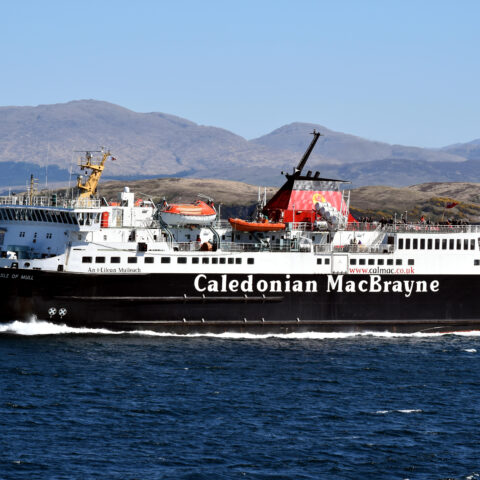
The Outer Hebrides, Orkney, Shetland, Mull, Islay, Arran and other island communities depend to varying degrees on ferries, aircraft and limited transport networks.
Storms can suspend ferry services. Mechanical problems can remove vessels from service. Road closures can interrupt journeys to ports, while electricity and communications failures can complicate the coordination of deliveries.
These problems rarely require an entire community to evacuate. More often, residents need to remain where they are until services resume.
The significance of a three-day food supply is therefore different in Stornoway, Kirkwall or an isolated Highland settlement from its significance in central Glasgow. It may provide essential continuity when transport is unavailable, but households with particular dependencies may need more extensive contingency arrangements.
Which Parts of Scotland Face Which Emergencies?
The principal geographical patterns can be compared without claiming that every resident of a listed community faces equal exposure.
| Emergency | Scottish areas particularly relevant to planning | Protective response |
|---|---|---|
| River flooding | Brechin, Perth, Hawick, Dumfries, Elgin, Forres and mapped urban flood zones | Evacuate affected properties when instructed |
| Coastal flooding and storm surge | Moray Firth, Solway coast, low-lying Clyde and Forth communities, Western Isles and Northern Isles | Evacuate exposed locations or shelter, depending on warnings |
| Severe snow and prolonged power loss | Highlands, Cairngorms, rural Aberdeenshire, Perthshire, Borders and islands | Generally remain at home if safe |
| Wildfire | Highland and Moray moorlands, forest communities, Arran, Galloway and other susceptible landscapes | Evacuate where fire threatens homes or access routes |
| Chemical or industrial accident | Communities around Grangemouth, Mossmorran and other regulated hazardous installations | Often shelter initially; evacuate if directed |
| Civil nuclear incident | Site-specific planning areas around Torness, Hunterston and Dounreay | Shelter initially unless directed otherwise |
| Defence nuclear incident | Communities covered by relevant Clyde defence nuclear emergency arrangements | Follow site-specific official instructions |
| Conventional war | No defensible published civilian evacuation ranking; major defence and infrastructure locations require contingency planning | Shelter or evacuate according to the actual threat |
| Cyberattack or infrastructure disruption | Potentially all Scotland, with particular logistical challenges in remote areas | Generally remain at home with supplies |
| Nuclear warfare | No reliable public Scottish evacuation ranking | Immediate appropriate shelter may be essential |
| Pandemic | Nationwide | Usually remain at home when directed |
| Ferry, road or supply-chain disruption | Islands, remote Highland communities and isolated peninsulas | Usually remain at home with sufficient supplies |
This comparison identifies relevant geographical exposures and reasonable emergency responses. It is not a forecast of which Scottish community will experience the next emergency.
What Actually Belongs in a Go Bag?
The practical difficulty with some emergency-preparedness messages is that three days of supplies and a portable evacuation bag can appear to be a single requirement.
They are not.
UK Government guidance recommends keeping essential food, water, lighting and communications equipment available at home. The British Red Cross similarly distinguishes between emergency supplies kept at home and items carried for travelling or evacuation.
The Government’s household advice explains that around 2.5 to 3 litres of drinking water per person per day is a minimum survival allowance. Substantially more may be needed for cooking, hygiene, infants, medical equipment and animals.
At three litres per day, one adult’s drinking water alone weighs approximately nine kilograms for three days. Adding food, clothing, bedding and medication would make a single portable bag impractical for many people.
A household emergency stockpile is therefore best understood as supplies for remaining at home during a disruption.
A go bag has a narrower purpose: allowing someone to leave promptly with indispensable personal items.
Medication, identification, contact details, a phone charger, some food, a modest amount of water and appropriate clothing are more realistic contents than a complete three-day household stockpile.
Sleeping bags and additional bedding may be useful where heating has failed or someone must spend time in temporary accommodation. They are not evidence that authorities expect people to abandon their homes.
Three Days Is a Starting Point, Not a Universal Guarantee
The underlying weakness in any single nationwide preparedness message is that Scotland’s emergency geography is exceptionally varied.
A three-day supply may be adequate for a short disruption to household services. It may prove inadequate where a remote community is cut off for longer, where medical equipment depends on electricity or where an incident damages major infrastructure.
Equally, an extensive household stockpile may be of little immediate use to someone who must leave a flood-damaged property within minutes.
Scotland’s regional Community Risk Registers recognise these differences. Resilience partnerships assess the risks of their respective areas, drawing on historical incidents, scientific information and the professional judgement of emergency organisations.
For Scottish households, the starting point is therefore not a national list of supposed danger zones but the documented hazards affecting their own location.
A resident beside a river should understand flood warnings and evacuation routes. A household near a hazardous industrial installation should know the applicable sheltering instructions. A remote island household should consider the consequences of interrupted transport and deliveries. Anyone dependent on electrically powered medical equipment requires arrangements extending beyond a standard food cupboard.
For war and major national security emergencies, the public information is necessarily less geographically specific. Published defence information confirms the importance of Scotland’s military facilities, but it does not establish which residential areas would be evacuated, or when.
The choice between remaining at home and leaving is determined by the particular emergency. Treating every emergency as a reason to evacuate would be misleading.
Sources
- National Risk Register 2026 — UK Cabinet Office, 2026.
- Community Risk Register — Scottish Fire and Rescue Service.
- National List of Communities — Scottish Environment Protection Agency.
- Scottish Flood Forecast — Scottish Environment Protection Agency.
- Wildfires: Strategic Action Plan — Scottish Government, March 2026.
- Get Prepared for Emergencies — UK Cabinet Office.
- Prepare an Emergency Kit — British Red Cross.
- What to Do in a Radiation Emergency — UK Health Security Agency, September 2024.
- Emergency and Security Arrangements at Dounreay — UK Government.
- Release of Gas, Toxic Chemical or Radiation — City of Edinburgh Council.
- Defence Nuclear Enterprise 2026 Annual Update to Parliament — Ministry of Defence, 2026.
- Check the Risks Where You Are — UK Cabinet Office.