
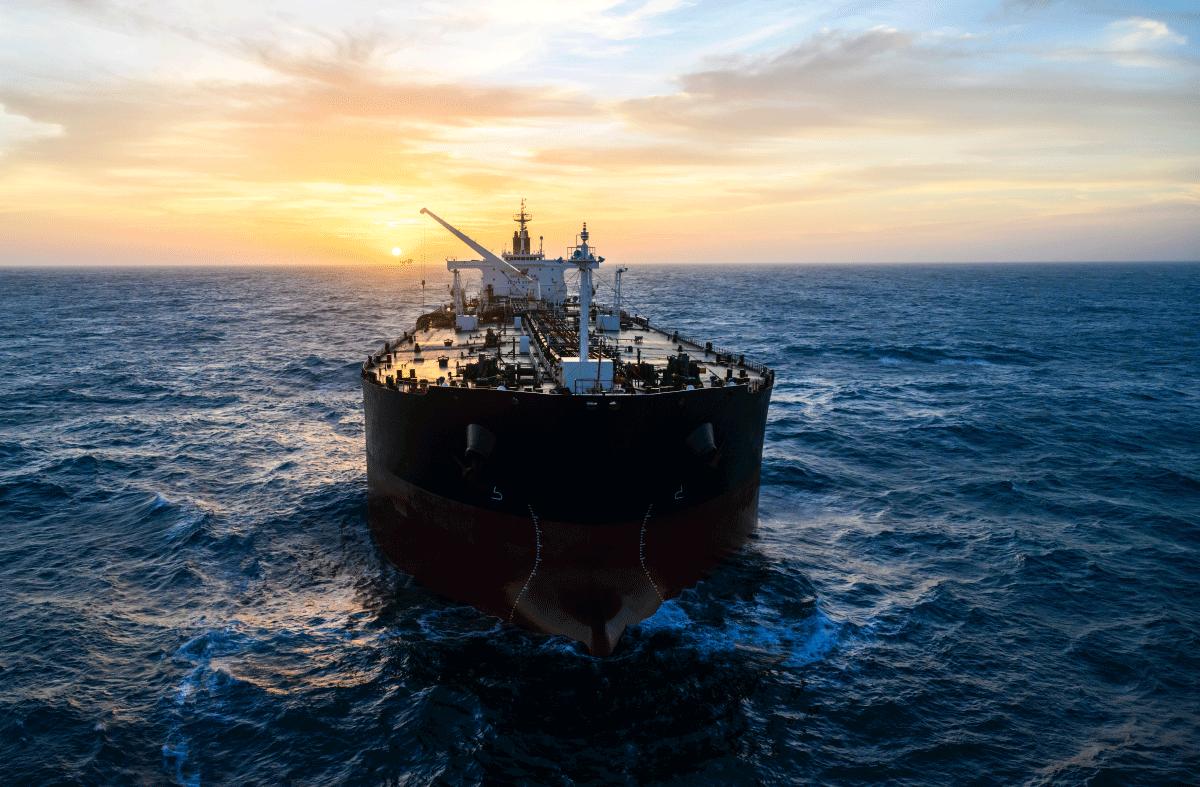
A tanker subject to British, American and European Union sanctions sent a reported maritime distress alert in the North Atlantic west of Scotland on Saturday, 24 October 2026, as Storm Boelo brought severe winds and dangerous sea conditions across the region.
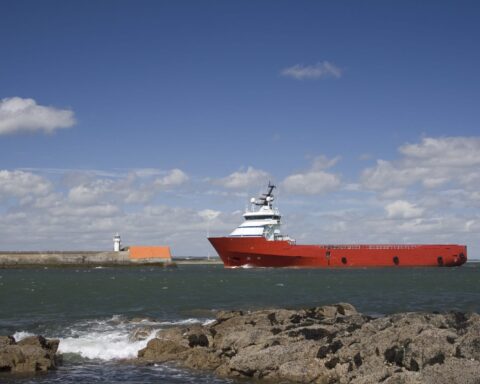
The 228-metre oil products tanker MYRA, identified by International Maritime Organization number 9336490, was reported to have transmitted an Inmarsat-C distress alert at 12:38 UTC from a position approximately 350 nautical miles west of Scotland. The maritime alert gave its coordinates as 56°18′N, 15°25′W, in open Atlantic waters northwest of Ireland.
The reported conditions included waves reaching 8.8 metres and sustained winds estimated at 45 to 50 knots, with substantially stronger gusts. HM Coastguard was reported to be coordinating a response, and vessels in the vicinity were requested to make contact if they could assist.
Accounts circulating after the alert suggested that the situation had been resolved without assistance and that the emergency transmission may have been activated during the vessel’s passage through heavy seas. There were also reports of an RAF P-8 Poseidon maritime patrol aircraft operating in connection with the incident. However, the precise circumstances of the alert, the aircraft’s involvement and the reported cancellation have not been independently confirmed by HM Coastguard or the Ministry of Defence.
A Tanker Already Under International Sanctions
MYRA was built in 2006 and has a deadweight capacity of 74,999 tonnes. It is classified as a chemical and oil products tanker, a type of vessel designed to transport refined petroleum products and other liquid cargoes.
The vessel’s name appears in sanctions records maintained by the United States, European Union and United Kingdom. These restrictions were imposed under different legal authorities, although the vessel has been linked to international trade in sanctioned petroleum.
On 30 July 2025, the United States Treasury listed MYRA under sanctions associated with Iran. The American designation identified the vessel as IMO 9336490 and connected it to Zulu Ships Management and Operation, an entity also named in the sanctions action.
The European Union subsequently included MYRA in Council Regulation (EU) 2025/2033, adopted on 23 October 2025, with the restrictions applying from 24 October. The EU listing identified the vessel as transporting Russian-origin or Russian-exported petroleum products while engaging in shipping practices characterised by the regulation as irregular and high-risk.
The United Kingdom designated MYRA on 24 February 2026 under its Russia sanctions regime. The Foreign, Commonwealth and Development Office stated that there were reasonable grounds to suspect the vessel was involved in carrying oil or oil products originating in Russia to third countries, thereby supporting or benefiting the Russian government.
The UK designation prohibits the vessel from being given access to British ports, subject to the applicable legal provisions and exceptions, and enables specified directions relating to its entry, detention and movement.
These restrictions do not cancel the international obligations governing assistance to people in distress at sea. A ship’s sanctions status is separate from the duty to respond to a genuine threat to human life.
Storm Boelo Brings Dangerous Conditions to Scotland and the Atlantic
The reported distress transmission came as Storm Boelo approached the United Kingdom and Ireland, bringing severe weather to exposed coastal and offshore areas.
On 23 October, the Met Office issued an amber warning for strong winds affecting much of Scotland, together with parts of Northern Ireland and northern England. Forecasters expected widespread gusts of 60 to 70mph, with speeds potentially reaching 80mph around exposed coastal locations.
Police Scotland issued travel advice ahead of the storm, warning that hazardous conditions could affect roads and transport networks across much of the country. Yellow warnings also covered additional areas, including Orkney.
The severe conditions extended beyond the Scottish mainland and into the Atlantic shipping routes used by tankers travelling between northern Europe and destinations farther south.
The wave height of 8.8 metres attributed to the MYRA alert represents substantial seas, although that measurement has not been independently verified against an official marine observation at the vessel’s location.
For a large tanker, severe winds and swells can create problems involving speed, steering, cargo movement and the ability to maintain a safe course. The particular risk depends on the vessel’s loading condition, structural condition, heading and the direction of the waves.
What Happened to the Emergency Alert?
The distress report identified Inmarsat-C as the communications system used by MYRA. Inmarsat-C is part of the Global Maritime Distress and Safety System, the international network through which ships can transmit emergency messages and positional information to maritime rescue authorities.
Such alerts allow rescue coordination centres to identify vessels in potential danger and determine whether assistance is required. In remote Atlantic waters, other merchant ships can be particularly important because helicopters may have insufficient range to reach a casualty without additional arrangements.
Accounts circulated after MYRA’s reported transmission suggested that contact had been established with those aboard and that no assistance was ultimately required. One explanation was that the signal had been activated while the tanker was leaving particularly rough seas.
The vessel was reported to have 21 crew members. That number, the account of their conversation with rescue authorities and the reason for the distress transmission have not yet been independently confirmed in an official incident statement.
Reports also linked an RAF P-8 Poseidon maritime patrol aircraft to the response. RAF Lossiemouth in Moray operates the UK’s Poseidon fleet, which is equipped for long-range maritime surveillance. However, evidence of an aircraft operating under a search-and-rescue callsign is not sufficient on its own to establish its exact mission or confirm that it contacted MYRA.
Maritime reports indicated that the tanker continued moving after the alert, with a speed of approximately nine knots recorded in circulated tracking information. Continued movement would be consistent with a vessel remaining under way, although it does not establish whether the ship experienced a temporary emergency or whether the original alert was accidental.
The Route from Russia and the Question of Its Cargo
MYRA was reported to have departed the Russian Baltic port of Ust-Luga before entering Atlantic waters to the west of the British Isles. Tracking accounts suggested that its declared destination was Port Said, Egypt, near the northern entrance to the Suez Canal.
Ust-Luga is an important Russian Baltic export terminal handling petroleum and other bulk commodities. Tankers departing from the port may follow routes through the Baltic and North seas or around the British Isles, depending on their destination and operating circumstances.
The tanker was described in some accounts as travelling empty. That claim has not been independently established through a cargo manifest, loading declaration or other authoritative record.
A ship’s deadweight capacity is also not proof of the quantity of petroleum aboard. MYRA’s 74,999-tonne capacity describes the combined weight it is designed to carry, including cargo, fuel, stores and other loads, rather than a confirmed cargo at the time of the incident.
Establishing whether MYRA was laden or in ballast is important to an assessment of the environmental risk. Even a tanker with empty cargo tanks can carry substantial quantities of fuel for its own engines and may retain petroleum residues.
Environmental Risks in Waters West of Scotland
A major tanker casualty in the North Atlantic would carry potential consequences for the surrounding marine environment. The extent of any threat would depend on the material aboard, the volume released, weather conditions, ocean currents and the distance from sensitive coastal habitats.
Scotland’s western seaboard contains extensive marine habitats, island communities and fishing grounds whose economic and environmental interests depend on the condition of surrounding waters.
The reported position of MYRA was hundreds of nautical miles offshore. That distance does not eliminate the possibility of marine pollution, but it makes the assessment of any eventual coastal exposure dependent on the nature of a spill and the prevailing oceanographic conditions.
No independently verified evidence has been identified of a release of oil from MYRA during the incident. There has also been no verified report of the vessel sinking, grounding or suffering damage that caused pollution.
The sanctions designation raises a separate issue concerning maritime oversight. Governments and international shipping organisations have expressed concern about vessels operating within networks used to transport sanctioned petroleum, particularly where ownership arrangements, insurance, flag registration and compliance with maritime standards are difficult to establish.
Such concerns do not establish that MYRA itself was mechanically defective or unseaworthy on 24 October. Its inclusion in sanctions registers is documented, but any assessment of the particular vessel’s physical condition would require inspection records or other direct evidence.
A Maritime Emergency Beyond the Scottish Coast
The incident illustrates the responsibilities faced by maritime rescue authorities when severe weather coincides with commercial shipping movements in exposed Atlantic waters.
A ship hundreds of miles offshore may be beyond the practical reach of ordinary coastal rescue resources. Coordination can therefore involve satellite communications, long-range aircraft and nearby merchant vessels, depending on the circumstances and available assets.
The fact that a vessel is internationally sanctioned does not remove its crew from the protections of maritime rescue law. Equally, a reported distress signal does not establish that a major accident occurred.
As of the latest available reporting, the evidence establishes that a maritime distress alert involving MYRA was reported during severe weather, while the precise nature of the emergency and its resolution remain subject to confirmation.
A definitive account would require HM Coastguard to establish whether the distress transmission was received, what assistance was tasked, whether contact was made with the crew and how the incident was formally closed.
Sources
- MYRA — UK Sanctions List, Foreign, Commonwealth and Development Office, 24 February 2026.
- Iran-related Designations, US Department of the Treasury, Office of Foreign Assets Control, 30 July 2025.
- Council Regulation (EU) 2025/2033, Official Journal of the European Union, 23 October 2025.
- Amber Warning Issued for Storm Boelo as Storm Austen Moves Through, Met Office, 23 October 2026.
- Warnings in Place as Storm Boelo Impacts the UK, Met Office, 24 October 2026.
- Police Travel Advice Issued After Amber Warning for Wind, Police Scotland, October 2026.
- Strategic Overview of Search and Rescue in the United Kingdom, Department for Transport, UK Government.
- Sanctioned Oil Tanker MYRA Reportedly Sends Atlantic Distress Alert, UKNIP, 24 October 2026. Contemporary maritime incident report; details remain subject to official confirmation.