
Incidents involving children and young people at Scottish railway level crossings increased by 46% during 2025/26, while the total number of recorded safety incidents remained above 200 for a third consecutive year.
Network Rail’s figures, released on 23 November, record 19 incidents involving people under 18 during 2025/26, compared with 13 the previous year.
Across all age groups, 218 incidents were recorded, following 213 in 2024/25 and 232 in 2023/24.
The figures come from the railway operator’s records of incidents that cause delays, including trespass, obstruction, vandalism and unsafe activity around level crossings. They are not a count of injuries or fatalities.
The latest figures also reveal how the pattern has developed over a longer period.
Network Rail recorded 116 incidents in Scotland during 2017/18. By 2025/26, the annual total had increased to 218, a rise of approximately 88%.
During the first seven reporting periods of the current financial year, covering 1 April to 17 October 2026, Network Rail recorded another 121 incidents, including 12 involving children and young people.
The railway operator has responded by extending its No Second Chances campaign to younger people aged between ten and fifteen.
An earlier phase concentrated on people aged between sixteen and thirty-four, addressing the risks associated with mobile phones, headphones and other distractions while crossing railway lines.
Network Rail reports that near misses at crossings targeted by that phase fell by 69% during the intervention period.
The reduction concerns locations included in the campaign rather than the Scottish railway network as a whole. The published announcement does not establish whether similar changes occurred at other crossings or how much of the reduction was directly attributable to the campaign.
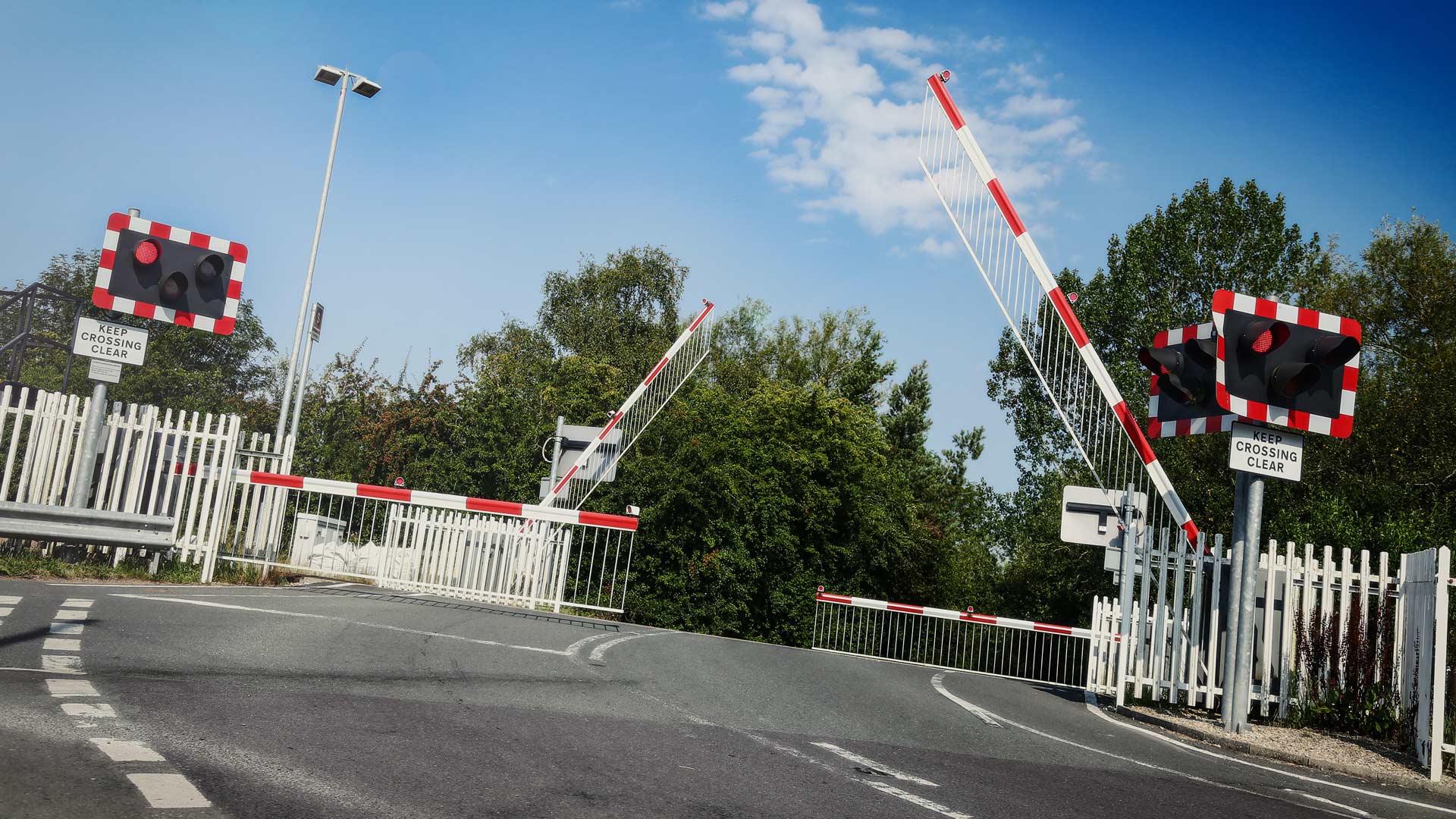
The new programme will also address deliberate misuse of crossings, including avoiding barriers, ignoring warning signs and remaining on railway property to take photographs or videos.
Railway level crossings are a longstanding feature of Britain’s transport infrastructure, particularly in rural communities where roads, farm tracks and public paths intersect operating railway lines.
Their continued use requires railway operators to manage the movement of trains alongside pedestrians, agricultural vehicles, cyclists and road traffic.
Removing a level crossing can require the construction of a bridge, alternative road access or a new pedestrian route. Those works carry costs and can affect nearby land and property.
Network Rail says it has closed more than 1,400 level crossings across Britain since 2009.
Where closure is not practical, the operator has invested in warning systems, additional signage and other safety improvements.
The organisation’s latest Scottish announcement does not identify how many of the incidents were associated with particular crossings, whether locations with repeat incidents have been prioritised for engineering improvements, or how many crossings in Scotland are scheduled for removal.
Those questions concern the relationship between public education campaigns and the physical measures available to reduce crossing risks.
The national campaign is being undertaken with the involvement of British Transport Police, which is encouraging members of the public to report unsafe behaviour near railway lines.
The latest figures establish that Scottish level crossing incidents remain substantially above their recorded level in 2017/18, despite earlier campaigns and continuing investment in crossing safety.
Sources
Young People Urged to Stay Safe at Scotland’s Level Crossings as New Campaign Launches — Network Rail, 23 November 2026.
https://www.networkrailmediacentre.co.uk/news/young-people-urged-to-stay-safe-at-scotlands-level-crossings-as-new-campaign-launches
Rail Safety Statistics — Office of Rail and Road.
https://dataportal.orr.gov.uk/statistics/health-and-safety/rail-safety/
Level Crossing Safety — Network Rail.
https://www.networkrail.co.uk/communities/safety-in-the-community/level-crossing-safety/