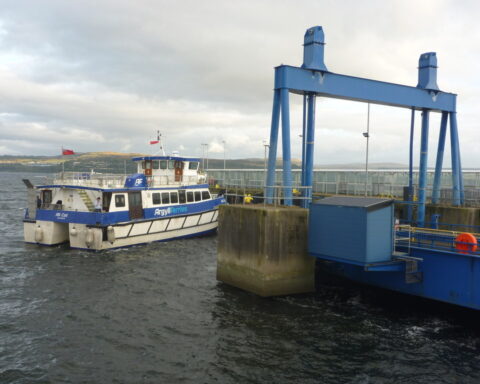

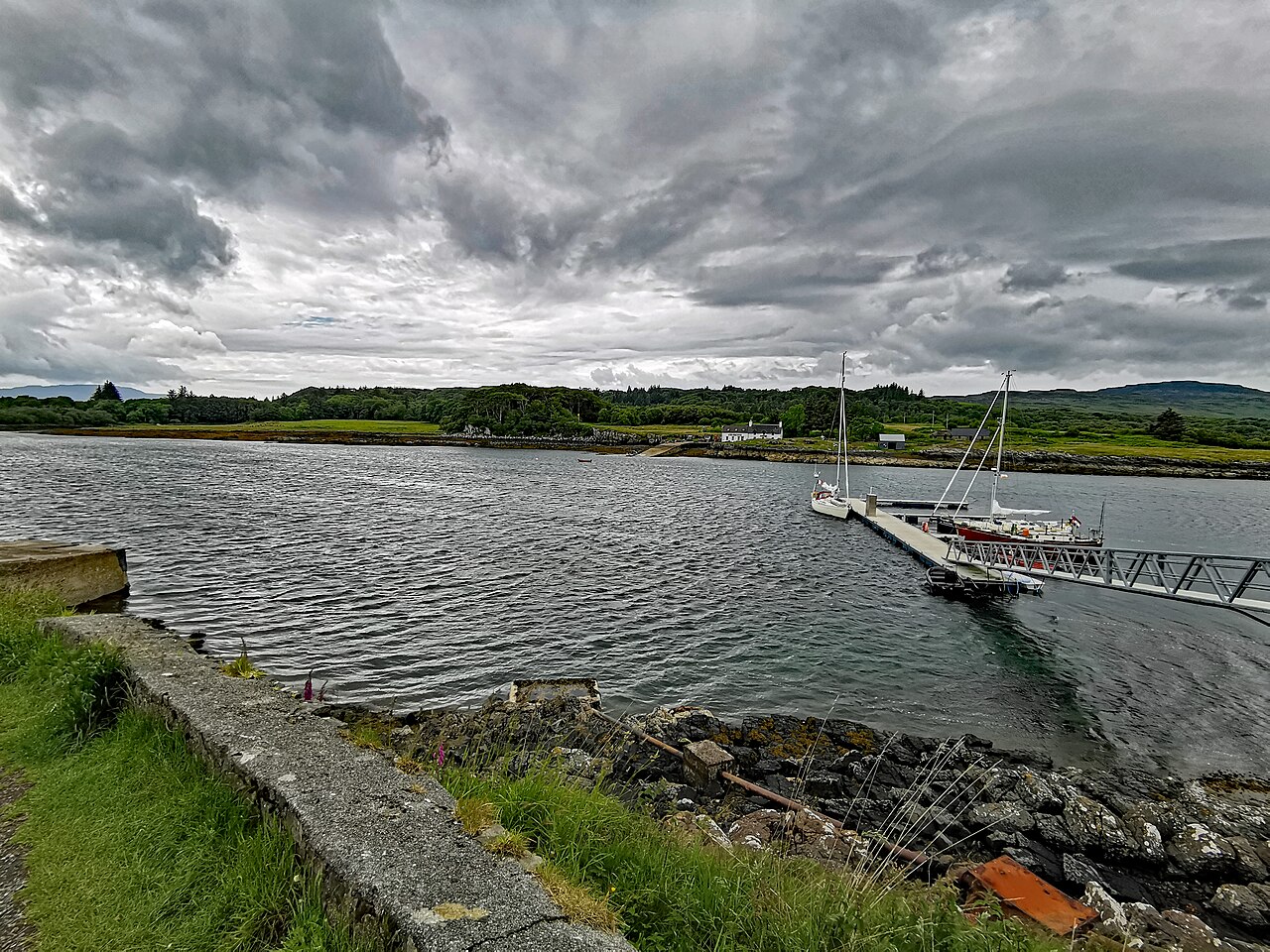
For children living on Ulva, the journey into Scotland’s education system begins with a boat. A new five-year council contract will keep that crossing operating as part of a transport network in which ferries, school buses and island timetables have to meet.
Argyll and Bute Council has awarded a £133,621 contract to continue carrying schoolchildren by vessel between Ulva and Mull, securing a small transport service that changes character when the visitor season ends and becomes part of the school network through the winter.
The contract was awarded to The Ulva Ferry, the existing local operator, following an open procurement exercise. Only one tender was submitted. The contract began on 17 August 2026, with price accounting for 75 per cent of the assessment and quality for 25 per cent. The stated value is £133,621 excluding VAT.
The money is not for the purchase of a ferry, nor does it represent the cost of running the whole Ulva passenger service. It is a contract for the provision of safe and secure school transport by vessel between the two islands.
Behind the procurement notice is a school journey determined by a narrow stretch of water.
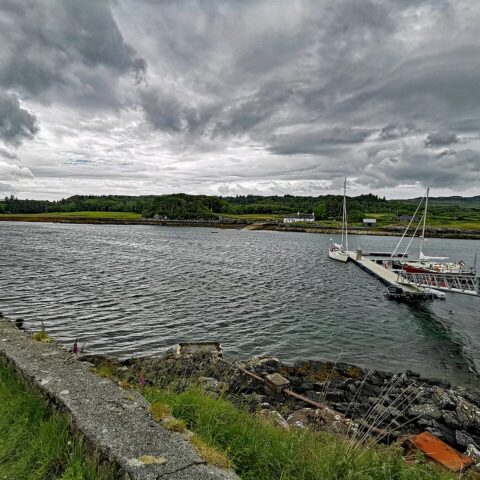
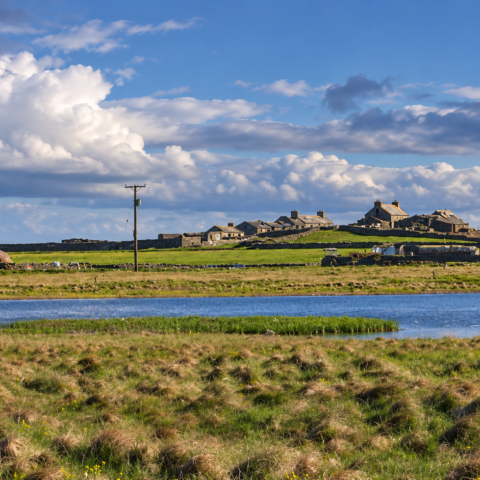
The Ulva ferry is a small foot and bicycle passenger service operating between the Isle of Ulva and the settlement of Ulva Ferry on the west coast of Mull. During the main season it operates on demand. Argyll and Bute Council’s study of transport associated with the proposed Mull education campus records a different pattern once winter arrives: during term time there is a school run for pupils living on Ulva twice each day.
For some children, stepping ashore on Mull is only one stage of the journey.
The council’s transport study records a closed-door school bus operated from Torloisk to Tobermory, travelling through Ulva Ferry and Gruline. The service is deliberately timed to meet an Ulva ferry crossing, where what the report describes as “a small number of pupils” are collected.
The journey can therefore run from a home on Ulva, across the water by ferry, into a waiting school transport service on Mull and onwards towards Tobermory.
It is an unusually compact example of the interdependence built into transport across Scotland’s island communities. A bus timetable cannot simply be designed around road mileage when some of its passengers first have to cross the sea.
The council study describes the wider school transport system on Mull, Iona and Ulva as a combination of public buses, closed-door school services, taxis and ferries. Some routes are timed around more than one connecting service. The report found that, among 193 secondary-school-age pupils across Mull, Iona and Ulva in the 2024-25 academic year, about 4 per cent lived around Ulva and Ulva Ferry.
At the Ulva crossing, the scale is smaller still.
The current passenger ferry is run by local ferryman Rhuri Munro. Its published 2026 visitor timetable operates on demand between 9am and 5.30pm from Monday to Friday between the beginning of April and the end of October. Passengers do not need to make a conventional booking; they arrive at the crossing and use the service as required. The ferry takes people and bicycles rather than cars.
Sailings remain subject to weather and safe operating conditions, with the ferryman making the final decision on whether the crossing can proceed.
The winter school service sits outside that ordinary seasonal pattern. When much of the visitor traffic has gone, the transport requirement remains because children living on Ulva still have to reach school.
There is another geographical complication contained in the name of the local primary school.
Ulva Primary School is not on Ulva.
It stands on Mull, close to Ulva Ferry, immediately across the water from the island whose name it carries. Argyll and Bute Council describes the school as being situated close to the ferry, where there is a boat link to Ulva. The school’s own current information gives a roll of eight pupils across P1 to P7 and says it shares a headteacher with Lochdonhead Primary School.
A child can therefore live on Ulva, cross from Ulva by boat and attend Ulva Primary without the school itself being on Ulva.
For older pupils travelling towards Tobermory, the journey extends farther into Mull’s school transport system. The council study records the Torloisk service meeting the ferry before continuing to Tobermory 2-18 School, illustrating how a very small maritime link can become part of a much larger transport arrangement.
The existence of that arrangement reflects more than geography. The number of children living around Ulva and Ulva Ferry has long been connected with another practical question facing small communities: whether families can find somewhere to live.
Ulva Primary School came close to closure during a period of falling population. Mull and Iona Community Trust has recorded how a shortage of affordable housing was affecting the ability of young families to remain in the area. Housing development at Ulva Ferry subsequently became closely tied to attempts to support the school.
A second phase of the trust’s housing programme brought four additional long-term rental homes into use in 2021, following two earlier affordable homes completed in 2017. The £1.3 million second phase was intended partly to meet housing need and partly to support the primary school roll.
At the time the new homes were completed, the trust said there would be 15 primary-age children at Ulva Ferry from August 2021, 11 of them living in trust-owned housing. Its subsequent annual accounts recorded the school roll reaching 16, the highest level in decades, with a second class teacher appointed.
Those numbers belong to that period rather than the present. The school now reports a roll of eight. Taken over time, however, the figures show how quickly the position of a very small rural school can change as families arrive, children grow older and housing availability changes.
Across the water, Ulva has been undergoing its own attempt to rebuild a permanent population.
The island was brought into community ownership by the North West Mull Community Woodland Company in June 2018. Only five people were living there at the time of purchase. The community owner set out plans to increase the resident population, restore housing and develop a more broadly based year-round economy.
That work is continuing. In July this year the community company announced the completion of the first sale of a house plot on Ulva under community ownership, near Bracadale. The purchasers intend eventually to become full-time residents.
Permanent settlement on a small island depends on a collection of services that can appear minor when considered separately: housing, employment, access, transport and education. The school ferry is one of them.
The new council contract does not create that system. It pays to keep an existing part of it operating.
The procurement record does not state how many pupils are currently expected to use the service, their ages, which schools each attends or the precise morning and afternoon sailing times. The council transport study goes no further than recording a small number of pupils connecting from the ferry into onward transport.
Nor does the public contract establish a particular arrangement for days when weather prevents the crossing. The wider Mull transport study acknowledges the practical dependence of school journeys on connecting ferry and bus services, including occasions when disruption can prevent pupils reaching school.
The five-year award nevertheless puts a formal public contract around a journey that is easily missed in larger transport statistics.
On Ulva, the school run begins at the shore.
Sources
Public Contracts Scotland, Provision of School Transport Services, Ulva & Mull (1148L) — contract award notice, published 27 August 2026; contract value, procurement procedure, tender numbers, supplier and evaluation criteria.
https://www.publiccontractsscotland.gov.uk/search/show/search_view.aspx?ID=AUG563271
Public Contracts Scotland, Provision of School Transport Services, Ulva & Mull (1148L) — original contract notice, published 22 June 2026; contract period and procurement terms.
https://www.publiccontractsscotland.gov.uk/Search/show/Search_View.aspx?ID=JUN558424
Argyll and Bute Council/SYSTRA, Mull Education Campus: Transport Considerations, 29 January 2025 — Ulva winter school ferry, connection with the Torloisk–Tobermory school service, pupil distribution and wider school transport arrangements.
Argyll and Bute Council, Ulva Primary School — school location and relationship with the Ulva ferry crossing.
https://www.argyll-bute.gov.uk/education-and-learning/schools/directory-schools/ulva-primary-school
Ulva Primary School, About — current published school roll, stages and shared headteacher arrangements.
https://www.ulva.argyll-bute.sch.uk/about/
Isle of Ulva, Getting Here — The Ulva Ferry — 2026 passenger ferry operation, timetable, ferryman and weather arrangements.
https://www.ulva.scot/travel-to-ulva
Mull and Iona Community Trust, Ulva Ferry Housing, Phase 2 — 2021 affordable housing programme and contemporary school-age population figures.
https://www.mict.co.uk/projects-services/ulva-ferry-housing-project-2/
Mull and Iona Community Trust, Report of the Trustees for the year ended 31 March 2022 — subsequent Ulva Primary roll and housing figures.
https://www.mict.co.uk/wp-content/uploads/2022/12/2022-MICT-signed-accounts.pdf
North West Mull Community Woodland Company, Ulva — community purchase, population at acquisition and long-term population plans.
https://nwmullwoodland.co.uk/ulva/
North West Mull Community Woodland Company, First house plot sale completed on Ulva, 13 July 2026.
https://nwmullwoodland.co.uk/2026/07/13/first-house-plot-sale-completed-on-ulva/