
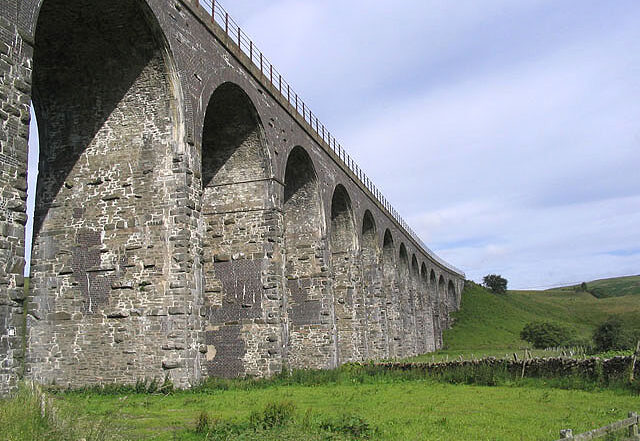
A new public survey opened in September as Scottish Borders Council and WSP began developing the case for extending the Borders Railway through Hawick to Carlisle. Up to £10 million has been committed to the business-case and feasibility process. The work begins with a route that once existed in full: the Waverley line from Edinburgh to Carlisle. Since its closure in 1969, bridges have been demolished, railway land has been reused and roads and development have occupied parts of the old formation. The current study must determine whether a twenty-first-century railway can still be assembled through that landscape.
For the first time in years, the proposal to return trains to Hawick and reconnect the Scottish Borders with Carlisle is moving through a funded formal business-case process rather than remaining primarily a campaign or political commitment.
Scottish Borders Council has appointed WSP to carry out the transport appraisal and prepare a growth prospectus for the Tweedbank–Hawick–Carlisle corridor. The work forms the first stage of the Strategic Outline Business Case. In September, the council opened a new survey seeking views from residents, businesses and organisations across the Borderlands on the transport and economic opportunities that improved connections might create.
The UK and Scottish governments have committed up to £10 million to the business-case and feasibility programme through the Borderlands Inclusive Growth Deal, with £5 million allocated by each government. Turner & Townsend was appointed as project manager in 2025, and WSP won the principal appraisal and economic work packages in summer 2026.
The process does not begin from the assumption that a railway must be built. The Strategic Outline Business Case is required to examine the transport problems of the corridor and compare potential solutions before a preferred option can move to more detailed feasibility work. A railway extension to Hawick and Carlisle is therefore being tested against other possible transport interventions.
Yet the railway option has one unusual feature: much of its route already exists in historical memory, engineering records and fragments on the ground.
The railway reached Hawick before it reached Carlisle
The old Waverley Route was built in stages. Railways reached Hawick from Edinburgh in 1849. The more difficult southern extension towards Carlisle followed after the North British Railway secured powers for the Border Union Railway in 1859.
The engineers faced a formidable landscape. South of Hawick the railway climbed through the Southern Uplands towards Whitrope Summit before descending through Liddesdale towards the English border and Carlisle. The route required steep gradients, continuous curvature, tunnels, embankments and substantial viaducts.
The line eventually formed a complete railway between Edinburgh and Carlisle and served settlements including Galashiels, Melrose, St Boswells, Hawick and Newcastleton. It also connected the textile towns of the Borders with markets and transport networks to both the north and south.
Its difficult geography later became part of the argument against it. The route was longer and more demanding than competing north–south railway corridors and carried relatively limited traffic across the most sparsely populated southern sections.
The Waverley Route closed to passengers in January 1969 following the railway rationalisation of the 1960s. The closure severed direct rail access to much of the Borders and left Hawick, one of the largest towns in Scotland without a railway station, dependent principally on road transport.
The railway was not preserved for an easy return
Closure did not leave a complete empty railway waiting to have rails put back on it. Track was lifted and railway property was disposed of. Structures were removed or allowed to deteriorate. Roads were altered. Former railway land was absorbed into new uses.
At Hawick, the old railway station and part of the infrastructure around the River Teviot disappeared into later redevelopment. The station had stood on a curved alignment associated with the crossing of the river. The old railway embankment south of the town was subsequently removed, while later road and commercial development occupied parts of the former railway corridor.
The original route south of Hawick also lost structures. Historic Environment Scotland records Stobs Viaduct, around four miles south of Hawick, as a surviving listed structure from the Border Union Railway, but other viaducts between Stobs and Hawick no longer survive. The former railway landscape is therefore uneven: substantial Victorian engineering remains in some locations while gaps have opened elsewhere.
Farther along the route, Whitrope Tunnel survives, as do other bridges and earthworks. At other points roads, private uses and later development have altered the original formation. The condition of surviving structures would have to be assessed against modern railway requirements rather than judged simply by whether the masonry remains standing.
The proposal therefore involves something different from reopening a recently mothballed railway. More than half a century has passed since the through route closed.
The first Borders Railway showed how much can change after closure
Scotland has already confronted this problem on the northern part of the Waverley Route. The railway between Edinburgh and Tweedbank reopened in September 2015 after being closed for nearly half a century.
Much of the rebuilt Borders Railway followed the historical alignment, but not all of it could. Parts of the old track bed had disappeared beneath later roads and development. At Falahill, for example, the A7 had been straightened across the former railway formation, requiring a new alignment when the railway returned.
The new line also had to satisfy modern standards that its nineteenth-century predecessor had never been designed to meet. Stations required contemporary accessibility arrangements. Road crossings had to be reconsidered. Signalling, telecommunications, drainage, structures and safety systems were rebuilt for a modern railway.
The result was not a restoration in the heritage-railway sense. It was a new railway constructed partly along the geography of an old one.
The southern extension would face the same problem over a much greater distance and in more difficult country.
Hawick is the first major engineering and economic test
From Tweedbank, an extension would first have to reach Hawick. That section would reconnect one of the principal towns left without rail service after the 1969 closure.
The old Waverley alignment passed through Melrose and St Boswells before following the Teviot valley towards Hawick. Parts of that corridor have changed substantially since railway closure. The Melrose bypass, for example, occupies part of the former railway route through the town.
A modern alignment therefore cannot be assumed simply by tracing the nineteenth-century railway on an old map. The business-case process must establish which parts of the original corridor remain usable, where deviations may be necessary and what land would have to be acquired.
Hawick itself presents another constraint. The town grew around a narrow river valley, and the old railway crossed and recrossed difficult ground through substantial engineering. Later redevelopment has removed some of the structures that once carried the route through the town.
The engineering choice is consequently linked to the service choice. A railway terminating at Hawick could require a different station and alignment from one designed from the outset to continue south towards Newcastleton and Carlisle.
South of Hawick, the railway enters the most difficult country
The historical route from Hawick towards Carlisle was one of the more demanding main-line railways built in Britain. It climbed from Hawick towards Whitrope through gradients approaching 1 in 70 and then descended through the hills towards Riccarton Junction and Newcastleton.
The route depended upon the shape of the river valleys because nineteenth-century railway engineers had to find a practical path through the Southern Uplands without the tunnelling and earthmoving techniques available to modern infrastructure projects. The resulting railway was curved and steep, characteristics that affected operating costs and train performance throughout its life.
A modern railway could reuse much of that geography while still having to decide whether nineteenth-century alignment standards remain suitable. Higher speeds, modern freight requirements, accessibility, electrification, drainage and resilience can all alter what appears technically preferable.
The old line also crossed numerous local roads. Many historical level crossings would be unlikely simply to return in their original form. Bridges, road diversions or other solutions may be required where modern road and rail safety standards conflict with the former arrangement.
The railway is being studied as an economic corridor, not only a transport line
WSP has been commissioned to produce two connected pieces of work. The first is the transport appraisal, which will identify the transport problems and develop a shortlist of potential interventions. The second is a growth prospectus examining the economic opportunities that improved transport could support across the Borderlands.
That structure reflects the economic case the railway will ultimately have to make. A long rural railway cannot be justified solely by the number of people currently travelling between individual towns. Its business case may depend on whether better transport changes employment access, investment, housing, tourism, education and the geography of the wider regional economy.
The September survey is intended partly to collect that evidence from residents, businesses and organisations along the corridor.
The present Borders Railway provides a working comparison. Since opening between Edinburgh and Tweedbank in 2015, it has carried more than 13 million passenger journeys. The reopening restored rail access to communities in Midlothian and the central Borders and created new stations at places including Galashiels and Tweedbank.
The southern extension would serve a different geography. Population becomes thinner beyond Hawick, particularly through the country towards Newcastleton and the border. The case for continuing all the way to Carlisle must therefore demonstrate benefits beyond simply extending an existing commuter railway.
Carlisle would change what the railway is for
A line terminating at Hawick would principally connect the town northwards towards Galashiels and Edinburgh. A line continuing to Carlisle would become a through railway between two national networks.
Carlisle sits on the West Coast Main Line and provides onward connections towards Glasgow, Manchester, Birmingham and London, as well as railways into Cumbria and northern England. Reconnecting the Borders to Carlisle would therefore create a southern gateway that the existing railway to Tweedbank does not provide.
That possibility also changes the operational question. A through route could potentially carry services and traffic whose origin and destination lie beyond the Borders themselves. It could have diversionary or network-resilience value during disruption on other north–south routes, although any such role would depend upon line capacity, journey times and the technical standard ultimately chosen.
The original Waverley Route competed with other Anglo-Scottish railways. A restored route would enter a railway system in which the West Coast and East Coast main lines already perform the principal long-distance functions between Scotland and England.
The business case will therefore have to define what a third corridor through the Borders would contribute that those routes do not.
The project is being studied while the existing line changes technology
The northern Borders Railway is itself undergoing another transition. Scotland is developing electrification infrastructure intended to support new battery-electric rolling stock on the route. A new feeder station at Tweedbank forms part of that programme.
That creates a technical question for any extension. A railway designed now would not necessarily reproduce the diesel operation with which the Borders Railway opened in 2015. Power supply, partial electrification and battery operation could influence the design of the next section from the beginning.
The railway therefore sits at the intersection of two different periods of infrastructure. Its geography comes from a Victorian route built through the Southern Uplands in the nineteenth century. Its future traction system may rely upon twenty-first-century battery and electric trains.
£10 million is buying a decision, not a railway
The Borderlands funding commitment has sometimes been discussed as though government has already funded the extension. It has not. The £10 million is available for the business-case and feasibility process needed to determine whether a project should proceed and, if so, what form it should take.
The work is expected to proceed through three stages. The Strategic Outline Business Case examines the transport problem and possible solutions. An Outline Business Case would then develop a preferred option in greater detail, including cost, design, risk and value for money. A Full Business Case would be required before construction contracts and final funding arrangements could be approved.
The current project remains at the first of those stages.
Even the route is therefore not yet fixed. Campaigners have long proposed following much of the original Waverley alignment, and surviving railway land makes that an obvious starting point. The formal appraisal must still examine alternatives and establish whether the railway itself performs better than other transport options.
The landscape now contains the consequences of the 1969 closure
The present study involves not simply whether Scotland should build a railway, but whether it can reconstruct a transport corridor that the country dismantled more than half a century ago.
When the Waverley Route closed, safeguarding a complete future railway corridor was not the governing assumption. Track was removed, structures disappeared and land was reused. The decisions belonged to a period in which railway contraction was expected to be permanent and road transport was expanding.
The consequences have accumulated for 57 years. A road built across a track bed, a demolished bridge, a commercial development or a changed river crossing may each appear small in isolation. When a railway is reconsidered, every alteration becomes part of the engineering cost of returning it.
The September 2026 survey therefore begins at a point considerably earlier than construction. WSP is helping Scottish Borders Council determine what transport problem the corridor now has, what intervention could address it, and what economic change that intervention might support.
If rail emerges as the preferred answer, the project will not amount to simply reopening the old Waverley Route. Too much has happened to the corridor since January 1969.
Its surviving viaducts, tunnels, cuttings and embankments provide the skeleton of an earlier railway. Between them are the accumulated physical decisions of the following 57 years. The business-case process now has to establish how much of that Victorian railway can become part of a modern one, where a new route would have to depart from it, and what rebuilding a railway from Tweedbank through Hawick to Carlisle would actually require.
Sources
Borders Railway — Tweedbank to Hawick and Carlisle
Scottish Borders Council — accessed 10 September 2026
https://www.scotborders.gov.uk/public-community-transport/borders-railway
Borders Railway — Resources and Documentation
Scottish Borders Council — updated September 2026
https://www.scotborders.gov.uk/public-community-transport/borders-railway/3
Borders Railway — Project Overview
Scottish Borders Council — accessed September 2026
https://www.scotborders.gov.uk/public-community-transport/borders-railway/2
Borders Railway — Frequently Asked Questions
Scottish Borders Council — accessed September 2026
https://www.scotborders.gov.uk/public-community-transport/borders-railway/5
Consultants Appointed for Next Step in Borders Railway Work
Scottish Borders Council — 3 July 2026
https://www.scotborders.gov.uk/news/article/4983/consultants-appointed-for-next-step-in-borders-railway-work
Business Case for Potential Extension of the Borders Railway to Be Produced Following Key Appointment
Scottish Borders Council — 11 April 2025
https://www.scotborders.gov.uk/news/article/4755/business-case-for-potential-extension-of-the-borders-railway-to-be-produced-following-key-appointment
Award of Borders Transport Corridor: Tweedbank to Hawick and Carlisle — SOBC Work Package 1
Public Contracts Scotland / Scottish Borders Council — 7 July 2026
https://www.publiccontractsscotland.gov.uk/search/show/search_view.aspx?ID=JUL559562
Award of Borders Transport Corridor: Tweedbank to Hawick and Carlisle — Growth Prospectus
Public Contracts Scotland / Scottish Borders Council — 16 June 2026
https://www.publiccontractsscotland.gov.uk/search/show/search_view.aspx?ID=JUN558053
Borders Railway Baseline Study — Final Report
Transport Scotland — 2017
https://www.transport.gov.scot/publication/borders-railway-baseline-study-final-report/j418557-03/
Borders Transport Corridors Pre-Appraisal Report
Transport Scotland — 2018
https://www.transport.gov.scot/media/44271/borders-transport-corridors-pre-appraisal-report.pdf
Barns Viaduct (Stobs Viaduct)
Historic Environment Scotland — designation record accessed September 2026
https://portal.historicenvironment.scot/apex/f?p=1505:300:::::VIEWTYPE,VIEWREF:designation,LB2063
Waverley Route Travelogue
Waverley Route Heritage Association — accessed September 2026
https://wrha.org.uk/the-waverley-route/travelogue/
Borders Railway
Transport Scotland — accessed September 2026
https://www.transport.gov.scot/public-transport/rail/borders-railway/
Borderlands Inclusive Growth Deal
UK Government / Scottish Government / Borderlands Partnership — accessed September 2026
https://www.borderlandsgrowth.com/
Borders Railway: One Year On
Transport Scotland — September 2016
https://www.transport.gov.scot/publication/borders-railway-one-year-on/
The Waverley Route: Edinburgh to Carlisle
Historic Environment Scotland / Canmore — accessed September 2026
https://canmore.org.uk/