
Flights across Scotland, Northern Ireland and northern England were delayed or cancelled after a technical failure at the Prestwick air traffic control centre, less than two weeks after a separate NATS system failure disrupted thousands of flights across the UK.
A technical failure at the air traffic control centre in Prestwick disrupted flights across Scotland on Monday morning, reducing the number of aircraft that could safely pass through controlled airspace and leaving delays and cancellations across airports from the Highlands and Islands to Glasgow and Edinburgh.
National Air Traffic Services said engineers had been called to investigate a technical problem at its Prestwick centre early on 21 September. Traffic restrictions were imposed while the fault was examined, reducing the number of aircraft controllers were required to handle until normal systems could be restored. The problem was fixed by around 10.30am, but the effects continued after the technical failure itself had ended as airlines and airports worked through aircraft, crews and passengers displaced by the restrictions.
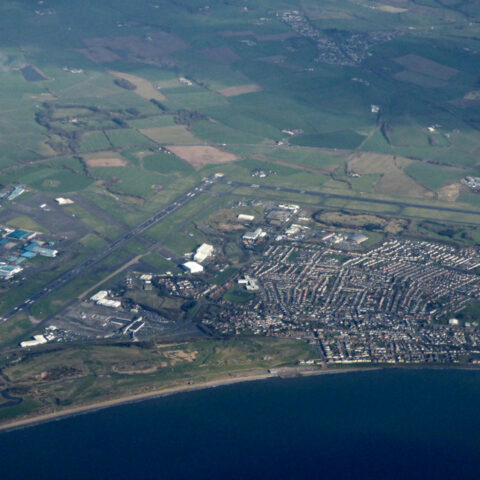
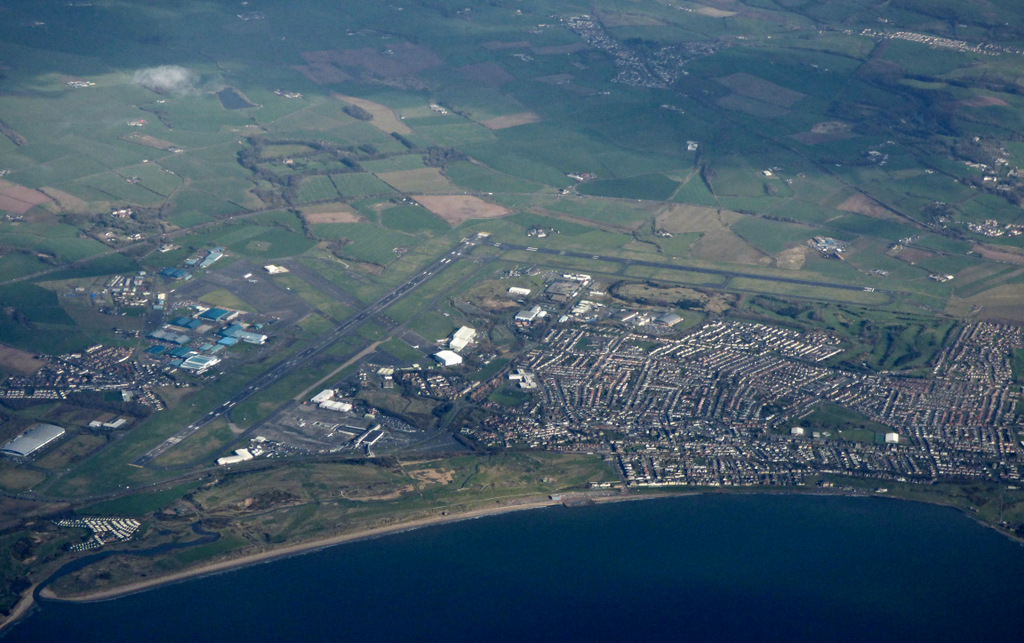
The incident affected far more than Prestwick Airport. The NATS centre at Prestwick is one of the two principal control centres through which the UK’s controlled airspace is managed, alongside Swanwick in Hampshire. It handles air traffic across Scotland, northern parts of the UK and important sections of the North Atlantic system, meaning a technical problem inside the Ayrshire facility can quickly extend into airport schedules hundreds of miles away.
Edinburgh and Glasgow both recorded significant delays during the morning. The Highlands and Islands Airports network reported disruption across its airports, while services involving Dundee, Inverness, Islay, Kirkwall and other regional airports were affected. Loganair cancelled a number of services, including some island connections. Flights in Northern Ireland and northern England were also delayed, with Manchester and Belfast among the airports affected.
NATS applied air traffic regulations while engineers investigated the failure. Such restrictions reduce traffic demand so that controllers continue operating within the capacity available to them while a technical system is degraded. They are a safety measure rather than an indication that aircraft already in the air were placed in danger.
Airlines nevertheless faced immediate operational consequences. By later in the morning dozens of flights had been cancelled and many more delayed. Ryanair said tens of thousands of its passengers had been affected, while easyJet, Jet2 and British Airways were among the operators reporting disruption or criticising the reliability of the air traffic control system.
The interruption occurred at a particularly sensitive time for NATS. Only three days earlier, the organisation published its preliminary report into a separate technical failure on 8 September which caused widespread disruption across the UK and led to around 2,000 flight cancellations.
NATS has said clearly that the Prestwick incident was unrelated to that earlier failure.
The 8 September event originated in a software defect affecting part of the National Airspace System used to process flight information. According to the preliminary investigation, a manual request for an aircraft identification code was interrupted by a higher-priority system activity. When the original request resumed, a defect in a small section of software caused it to restart incorrectly, corrupting information used by the wider system.
The sequence occurred within a millisecond.
Because controllers temporarily had less flight information available, restrictions were introduced across the UK while the system was restarted and data reloaded. The restrictions remained in place for around six hours and the resulting disruption continued for more than two days.
That failure principally affected the London Area Control operation rather than Prestwick. NATS said it had identified the defective code and introduced mitigation while a permanent repair underwent safety testing. Chief executive Martin Rolfe also said the incident was unrelated to the major NATS failure of August 2023 and rejected speculation that military activity had been responsible.
Monday’s Prestwick fault therefore represents a separate technical event rather than a recurrence of the defect identified earlier this month. Its proximity to the previous failure has nevertheless renewed scrutiny of the resilience of the systems on which UK aviation depends.
EasyJet said the latest incident raised questions about the resilience of NATS systems and called for measures to prevent repeated failures. Jet2 chief executive Steve Heapy said passengers and airlines required greater accountability and resilience, while Ryanair again called for the departure of NATS chief executive Martin Rolfe. British Airways also expressed frustration at another technical fault.
Those are airline positions rather than findings about the cause of Monday’s failure. NATS had not, by Monday afternoon, published a detailed technical explanation equivalent to the report produced for the 8 September incident. The company said the Prestwick problem had been fixed and that it was working with airports and airlines to lift traffic restrictions safely and limit further disruption.
Transport Secretary Heidi Alexander said engineers had restored the affected systems but warned that delays could continue while operations returned to normal.
The Prestwick centre forms part of infrastructure which is largely invisible to passengers until it ceases to operate normally. NATS manages around 2.5 million flights each year and controls aircraft through an interconnected system of radar, flight-data processing, communications networks and controller workstations. Its en-route operations are regulated by the Civil Aviation Authority, and NATS has been carrying out a long-term programme to replace ageing systems and move air traffic management onto newer technical infrastructure.
Prestwick itself has been part of that programme. NATS documents have previously described the introduction of new controller tools and workstations at the Ayrshire centre as part of a broader transformation of the systems supporting UK airspace. The company has said it has invested more than £1 billion in technology during the past decade and expects further major investment through the early 2030s.
The resilience of those systems has already been subjected to independent examination. The August 2023 air traffic control failure disrupted more than 700,000 passengers and was estimated to have cost passengers and the aviation industry between £75 million and £100 million. An independent review subsequently produced 34 recommendations covering NATS, the Civil Aviation Authority, airlines, airports and government, including improvements to contingency planning, communications and consumer protection.
The most recent failures are technically different. The August 2023 event, the software defect of 8 September 2026 and Monday’s Prestwick problem should not be treated as a single recurring fault without evidence connecting them. Each has involved different circumstances and NATS has specifically separated Monday’s incident from the failure earlier this month.
For Scotland, however, the Prestwick disruption demonstrates the reach of a single point within the country’s transport infrastructure. A technical problem inside an air traffic control centre in Ayrshire was sufficient to restrict departures from Scottish airports, interrupt island services and affect flights moving through northern British and North Atlantic airspace.
By late Monday morning the technical problem itself had been repaired. The outstanding question is what failed inside Prestwick, why the failure required traffic capacity to be reduced, what redundancy was available while engineers dealt with it, and whether the incident reveals anything that requires changes beyond the repair already completed.
NATS has yet to publish that technical account.
Sources
NATS — Preliminary report on the technical incident of 8 September 2026
https://www.nats.aero/news/nats-publishes-preliminary-report-on-technical-incident-of-8-september/
NATS — UK airspace and air traffic management operations
https://www.nats.aero/airspace/
NATS — Prestwick Centre and its role in managing northern UK and North Atlantic airspace
https://www.nats.aero/news/elevate/march-23/joining-the-space-race/
Civil Aviation Authority — Independent review of the NATS flight planning system failure of 28 August 2023
https://www.caa.co.uk/commercial-industry/airspace/air-traffic-management-and-air-navigational-services/air-navigation-services/nats-august-2023-failure-review/
Civil Aviation Authority — Final report of the independent review into the August 2023 NATS failure
https://www.caa.co.uk/data-and-publications/publications/documents/content/cap2993/
Civil Aviation Authority — NATS Major Incident Investigation Final Report
https://www.caa.co.uk/data-and-publications/publications/documents/content/cap2993c/
Civil Aviation Authority — Publication of the independent review and its 34 recommendations
https://www.caa.co.uk/newsroom/news/aviation-regulator-publishes-independent-review-into-august-2023-nats-flight-planning-system-failure/
NATS En Route — Annual report covering investment in new infrastructure and controller systems at Prestwick
https://www.nats.aero/wp-content/uploads/2024/06/NATS-En-Route-Plc-2024.pdf