
An emergency-response exercise at Dounreay will close part of the A9 and stop passenger access at Georgemas Junction on 23 September, while military ranges across the northern Highlands have extensive live-fire windows during the same period. The events are separate, but together they expose a security landscape that is usually visible to the public only through road closures, railway notices and firing-range warnings.
A six-hour emergency exercise at Dounreay will close a substantial section of the A9 in Caithness on Wednesday, 23 September, while trains will cease stopping at Georgemas Junction for the duration of the operation.
Nuclear Restoration Services Dounreay has said it will conduct a multi-agency emergency-response exercise with Nuclear Transport Solutions, emergency services and other responding organisations between 9am and 3pm. The exercise is planned and is intended to test emergency arrangements rather than respond to a real incident.
The disruption around it is substantial. Traffic Scotland lists the A9 from Latheron towards Georgemas for closure between 9am and 3pm, together with closures affecting the Banniskirk-to-Georgemas section. Diversions will send some northbound and southbound traffic through the A99 and Wick, while other vehicles can be redirected through the Halkirk area.
At the same time, Georgemas Junction railway station will close to passengers. National Rail says three ScotRail services will pass without stopping: the 7am Inverness to Wick, the 10.41am Inverness to Wick and the 12.34pm Wick to Inverness. No rail-replacement service is planned.
The choice of Georgemas is significant because it is part of the nuclear infrastructure serving Dounreay. Nuclear Transport Solutions’ rail division operates the specialist railhead at Georgemas Junction that was constructed to support the movement of material associated with Dounreay’s decommissioning programme. Nuclear Transport Solutions is part of the Nuclear Decommissioning Authority group and its Direct Rail Services operation is the UK rail operator licensed to carry nuclear material.
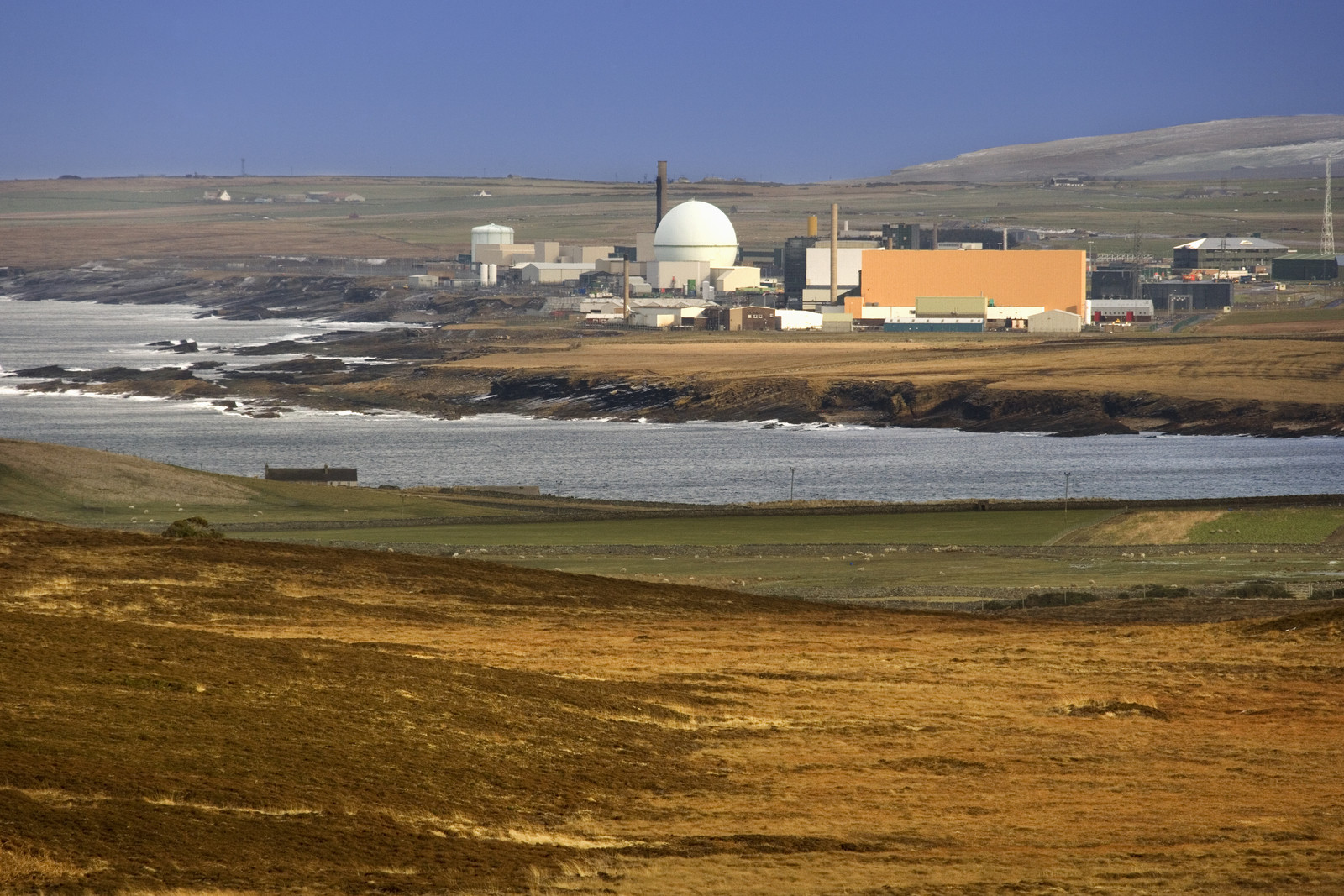
Dounreay itself is no longer an operating power station. The former experimental nuclear complex on the Caithness coast was Britain’s principal centre for fast-reactor research between 1955 and 1994 and is now Scotland’s largest nuclear decommissioning and clean-up project.
That history has left a site requiring security arrangements considerably beyond those of an ordinary industrial plant.
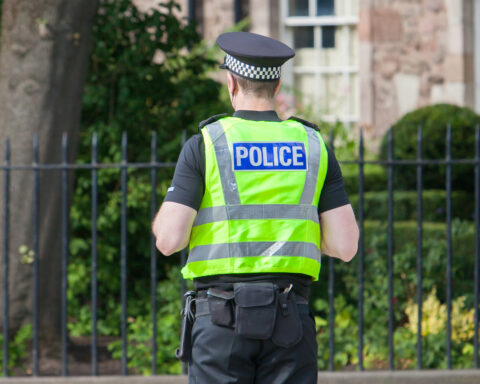
Dounreay describes its security system as multi-layered and intelligence-led. Its approved security plans are intended to address threats including sabotage, terrorism, espionage and insider risk. The site has secure perimeters, monitored access, detection equipment and round-the-clock protection by armed officers from the Civil Nuclear Constabulary.
Those officers are not members of the Armed Forces.
The Civil Nuclear Constabulary is a specialist civilian police force whose principal role is the armed protection of civil nuclear sites and nuclear material in transit. Counter-terrorism forms a central part of its work. Dounreay says CNC officers are permanently deployed at the site and can form part of its emergency response.
That distinction matters this week because genuine military live-fire activity is also taking place across northern Scotland, independently of the Dounreay exercise.
Cape Wrath: Almost Twenty-Four Hours a Day
The Ministry of Defence has authorised a particularly extensive firing window at Cape Wrath in Sutherland.
From 21 September until 30 September, the published firing period runs from 12.01am until 11.59pm each day.
That does not mean weapons will be fired continuously for almost 24 hours every day. Since 2026, the MOD’s published range notices increasingly show the periods during which live firing may take place rather than only confirmed training bookings. Actual activity is indicated locally by the range warning system.
The size of the available window is nevertheless notable.
Cape Wrath is one of the most unusual military training areas in Europe. Covering about 25,000 acres near Durness, it allows land, sea and air training to take place in the same area. MOD guidance states that it is the only European range where those three forms of training can be conducted simultaneously and where the Royal Air Force can train using live 1,000lb bombs.
The range has historically been used for naval bombardment, air weapons training and major combined exercises. The surrounding sea can form part of the danger area when the range is active.
Red flags by day and red lights at night indicate that firing is taking place and that the public must not enter the danger area.
The September schedule gives Cape Wrath firing windows from 21 through 30 September without a break.
Tain: Live Fire Until 10pm
Farther south, the Tain Air Weapons Range in Ross-shire also has extensive firing hours throughout September.
The published timetable allows live firing from 9am until 10pm from Monday to Thursday and from 9am until 2pm on Fridays. The range is closed at weekends under the standard timetable, although operating requirements can result in changes.
Tain is one of five air-weapons ranges used by the MOD for operational training in the UK and one of two in Scotland, the other being Cape Wrath. Such ranges are used for military low flying and air-to-ground weapons training.
The MOD warns that the September timings are operating windows rather than a guarantee that firing will occur throughout those hours. Red flags and lights remain the definitive warning that the range or its sea danger area is active.
Fort George Is Also Available for Live Fire
The military training picture extends farther south again to Fort George, near Inverness.
Its September timetable permits live firing on Mondays, Wednesdays, Fridays and Saturdays from 9am until 4pm. Tuesdays and Thursdays can extend from 9am until 11.59pm, while Sunday firing is permitted between 9am and 12.30pm.
Fieldcraft training can also occur without live ammunition. In those circumstances the public may encounter military training even where the usual live-fire flags are not displayed, with local signs used instead.
Cape Wrath, Tain and Fort George are therefore all operating within published military-training windows during the period in which the Dounreay emergency exercise will take place.
There is no published evidence that those range activities form part of the Dounreay exercise.
They should be treated as separate events.
The MOD Has Changed What Its Firing Notices Mean
The wider development behind the range schedules is more significant than any single day of firing.
The Ministry of Defence now states on its Scottish firing notices that the Army is at “heightened readiness” because of what it describes as a new era of threat. It says this has increased demands on the Defence Training Estate, with training taking place more regularly and at shorter notice.
As a consequence, the MOD has changed the way its public firing notices work.
Previously, published notices primarily reflected training bookings already made in advance. The new approach publishes the standard periods during which live firing can be permitted. That gives the Armed Forces greater flexibility to schedule activity at shorter notice, while leaving members of the public to rely more heavily on range flags, lights and local warnings to determine whether firing is actually taking place.
The change is important when interpreting the long firing periods shown for September.
A published 9am-to-10pm window at Tain does not mean 13 continuous hours of live fire. Cape Wrath’s near-24-hour window does not establish that bombing or gunfire will continue through the night.
It establishes the period during which the MOD may operate the range.
Dounreay Is Already Under Increased Safety Scrutiny
There is another important part of the Dounreay picture that should not be confused with either the 23 September exercise or the military activity.
The Office for Nuclear Regulation currently places Dounreay at an Enhanced regulatory-attention level for nuclear safety.
Its security attention level remains Routine.
Those two classifications matter because they show that the increased regulatory attention concerns safety rather than an identified deterioration in the site’s security arrangements.
Dounreay was moved into enhanced safety attention during 2024 after ONR identified concerns involving the condition of site assets, management of conventional high-hazard work, extensive organisational change and the storage of alkali metals including sodium.
Some of the most serious findings involved buildings holding bulk sodium associated with the Prototype Fast Reactor. Inspectors found water entering facilities where sodium containers were stored, corrosion affecting containers and shortcomings in the site’s arrangements for identifying and managing degradation.
Sodium reacts strongly with water.
ONR served an improvement notice requiring Nuclear Restoration Services to improve the arrangements.
The immediate storage arrangements have subsequently improved. ONR closed the improvement notice after concluding that the required work had been completed, and later inspections received green ratings.
The regulator has nevertheless said concerns remain about longer-term sodium storage and disposal, the condition of some buildings and systems, conventional health-and-safety management and the effect of organisational change. Dounreay consequently remains at Enhanced rather than Routine safety attention.
None of that establishes any connection with the emergency-response exercise on 23 September.
Indeed, ONR continues to classify the site’s civil nuclear security performance separately at Routine.
Fire Protection Is Also Being Improved
Dounreay was also included in a European-wide examination of nuclear fire protection published this month.
The Office for Nuclear Regulation concluded that UK nuclear installations met the required overall fire-safety standards and identified no fundamental sector-wide failure. It nevertheless identified areas where arrangements should be strengthened at Dounreay, Sellafield and Springfields.
At Dounreay, the work includes better formalisation and integration of fire-safety arrangements and greater attention to combined or consequential hazards involving fire.
Improvements are already under way.
Again, the regulatory work is separate from the 23 September exercise.
Why Nuclear Transport Solutions Is Involved
The presence of Nuclear Transport Solutions in the Dounreay exercise is particularly relevant because nuclear transport has become an essential part of the site’s decommissioning.
The Nuclear Decommissioning Authority’s current strategy confirms that spent nuclear fuel from Dounreay is transported by rail for management at Sellafield. Other nuclear and radioactive materials are also transported between sites as the old nuclear estate is dismantled and consolidated.
Georgemas Junction was developed specifically to make those movements possible.
The specialist railhead includes infrastructure designed for the movement of heavy nuclear transport loads from Caithness to the national rail system. Nuclear Transport Solutions says the facility continues to support material movements associated with Dounreay.
Nuclear transport therefore connects the remote Caithness site with infrastructure extending far beyond the perimeter fence.
An emergency involving transport would likewise require organisations outside Dounreay itself to respond.
That provides important context for a six-hour exercise involving the nuclear site, its transport organisation, emergency services and other agencies and extensive enough to disrupt both the A9 and the Far North Line.
What Is Not Yet Public
The basic structure of Wednesday’s exercise is known. Its detailed scenario is not.
The public information presently available identifies a multi-agency emergency-response exercise involving Nuclear Restoration Services Dounreay, Nuclear Transport Solutions, emergency services and other responding agencies.
It does not provide a full participant list.
It does not establish that serving military personnel will take part.
It does not identify the precise simulated incident.
It does not state publicly whether the scenario begins on the Dounreay site, on the transport network or across both.
Nor does the information presently available explain precisely why such a long section of the A9 must be closed or why passenger access to Georgemas Junction must cease completely during the exercise.
Those are reasonable questions for Dounreay, Nuclear Transport Solutions and the responding authorities once the exercise is complete.
The exercise should also produce a record of what worked, what failed and what changes follow. Emergency exercises at nuclear sites exist to test arrangements rather than merely demonstrate them.
Whether those lessons will be made public is another question.
A Northern Security Landscape
The events of this week should not be combined into a single security operation where no evidence supports doing so.
The Dounreay exercise is a civil nuclear emergency-response exercise.
The Civil Nuclear Constabulary officers protecting Dounreay are armed police, not soldiers.
Cape Wrath, Tain and Fort George are Ministry of Defence training ranges.
Their live-fire schedules are military activity.
What connects them publicly is geography and timing rather than any established operational link.
On 23 September, part of Caithness’s principal road will close and trains will pass through Georgemas without taking passengers while organisations responsible for one of Britain’s most sensitive former nuclear complexes rehearse an emergency.
At the same time, military training areas across the northern mainland are available for live firing under a system the Ministry of Defence says has changed because the Armed Forces require greater training flexibility during a period of heightened readiness.
At Cape Wrath, that firing window extends for almost the entire day, every day, from 21 to 30 September.
For people living in the north, these are not abstract national-security arrangements. They occupy roads, railway stations, airspace, moorland, coastal waters and places where communities live alongside some of Britain’s most specialised nuclear and defence infrastructure.
The distinction between those activities matters.
So does knowing that they are happening.
Sources
Nuclear Restoration Services, Emergency and Security Arrangements at Dounreay.
Office for Nuclear Regulation, Dounreay — regulatory status.
Office for Nuclear Regulation, Improvements required for storing materials at Dounreay nuclear site, 1 March 2024.
Office for Nuclear Regulation, Regulator confirms UK nuclear fire safety standards are robust following European-wide review, 4 September 2026.
Civil Nuclear Constabulary, About us.
Traffic Scotland, A9 Latheron to Georgemas and Banniskirk to Georgemas — Event Road Closures, 23 September 2026.
National Rail, No trains at Georgemas Junction between 09:00 and 15:00 on Wednesday 23 September.
Nuclear Transport Solutions, Georgemas Junction.
Nuclear Decommissioning Authority, The NDA Group Strategy 2026.
Ministry of Defence and Defence Infrastructure Organisation, Cape Wrath Training Centre firing times — September 2026.
Ministry of Defence and Defence Infrastructure Organisation, Tain Air Weapons Range firing times — September 2026.
Ministry of Defence and Defence Infrastructure Organisation, Fort George Range Control firing times — September 2026.
Ministry of Defence, Scotland — public access to military areas.
Ministry of Defence, Military low flying: air weapons ranges activity.