
Scotland’s environmental regulator is preparing new guidance for large hydropower and pumped-storage schemes at the point when some of the largest proposed changes to the Highland landscape are moving closer to financial support.
The Scottish Environment Protection Agency opened a consultation on 24 June 2026 covering new or modified hydropower schemes involving more than 24 hours of water storage. It includes pumped-storage developments, in which electricity is used to move water to an upper reservoir before it is released through turbines when power is required. The consultation closes on 16 September.
The guidance is presented as a consolidation of existing regulations, policies and technical requirements rather than a change in the law. Its effect may nevertheless be considerable. It will tell developers what evidence they must provide, which environmental effects SEPA will examine and how Scotland’s water regulator intends to approach schemes capable of raising lochs, flooding land and repeatedly moving tens of millions of cubic metres of water through Highland glens.
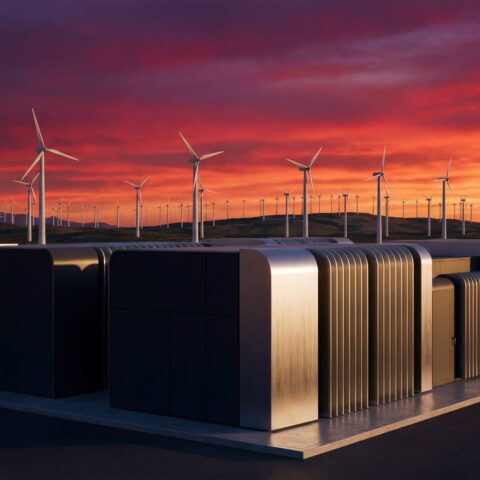
Pumped storage is being promoted as part of the answer to an electricity system increasingly dependent upon wind. When generation is abundant and demand is low, electricity can pump water uphill. When demand rises or renewable output falls, the water can be released to generate power.
The process does not create electricity. It loses some energy during pumping and generation. Its value lies in storing power for later use and responding rapidly when the wider electricity network requires support.
That creates a classic political tension. The system benefits are spread across Great Britain, while the most immediate physical costs are concentrated in a small number of Highland communities.
For energy planners, the glens offer height, water and space. For the people living in them, the same projects can mean raised lochs, new dams, tunnels, quarries, access roads, substations, spoil heaps and years of heavy construction.
The difference between the national and local perspectives is not a misunderstanding. It is the central issue raised by this new phase of energy development.
The physical scale
The Earba pumped-storage proposal on the Ardverikie Estate gives the clearest indication of the scale involved.
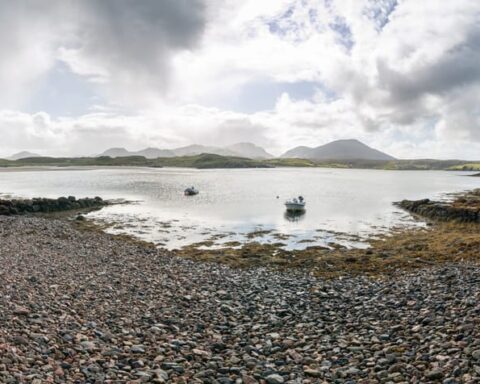
The project would use Loch Earba as its lower reservoir and Loch Leamhain as its upper reservoir. Application documents say Loch Leamhain would be raised by approximately 75 metres, from around 635 metres above ordnance datum to approximately 710 metres. Loch Earba would be raised by about 23 to 25 metres. The active volume of stored water at Loch Leamhain would be approximately 61 million cubic metres.
A rise of 75 metres is not a minor adjustment to an existing loch. It would create a substantially different water body held behind a major new dam. Land around the present shoreline would be submerged, paths and habitats would be displaced, and the appearance and use of the glen would change permanently.
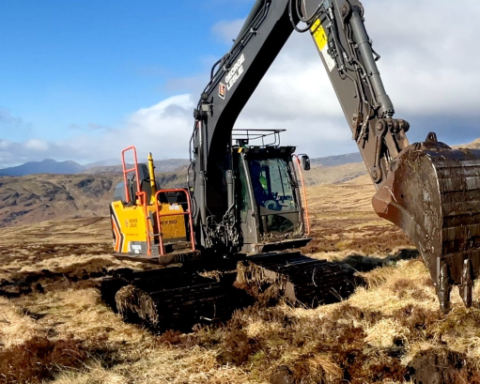
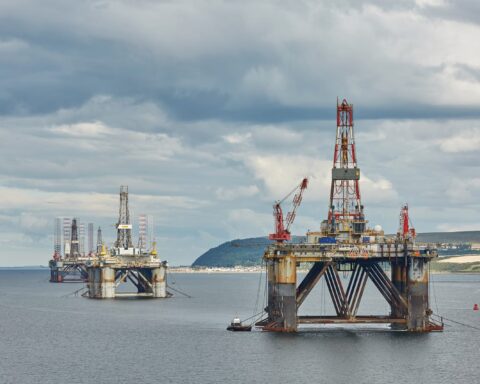
Construction would require more than the visible dams. Large pumped-storage schemes generally need tunnels through rock, underground or partially underground generating equipment, construction compounds, borrow pits or quarries, spoil-disposal areas and connections to the high-voltage network.
These are multi-billion-pound industrial projects built in places known for their relative quiet, ecological value and sparse population. Even where the final generating machinery is largely hidden, the construction period may bring years of blasting, dust, worker accommodation, road disruption and heavy goods traffic.
Those costs are immediate and local. The electricity benefits are distributed much more widely.
Water will no longer behave as it does now
Pumped storage also changes the function of a loch.
A natural or traditionally managed water body rises and falls according to rainfall, evaporation, river flow and existing abstraction. A pumped-storage reservoir is operated according to the requirements and prices of the electricity system.
Water may be moved quickly between upper and lower reservoirs as the plant charges and discharges. The frequency and scale of those movements can affect shoreline habitat, sediment, water temperature, aquatic plants and fish.
SEPA’s draft guidance recognises that storage and pumped-storage schemes can cause serious environmental harm. It requires developers to address changes to flows, water levels, physical habitat, sediment transport, fish movement and the cumulative effect of other developments. The guidance does not presume that pumped storage is harmless simply because it can support renewable generation.
The effects will differ between projects. A carefully operated reservoir may keep fluctuations within defined limits, while another development may fundamentally alter an existing loch and its surrounding catchment. The environmental case therefore has to be examined at scheme level rather than accepted from the general description of pumped storage as “green”.
Fish are a particular concern.
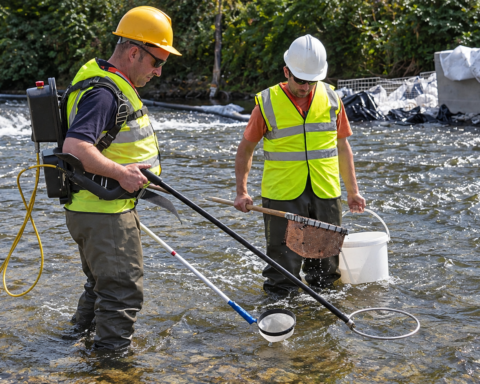
Wild salmon and other freshwater species depend upon suitable river flows, temperatures, spawning gravels and access between habitats. Altered releases, rapidly changing levels or sediment movement can affect those conditions. The Earba application includes separate work on aquatic ecology and a protection plan for Arctic charr, itself evidence that the biological consequences require specific management rather than assumption.
The risk is not confined to wildlife in the abstract. Salmon fishing, angling, wildlife tourism and the reputation of Highland rivers and lochs all have economic value. Damage to those systems would be carried locally even where the electricity supports consumers and businesses hundreds of miles away.
Loch Ness and the Great Glen
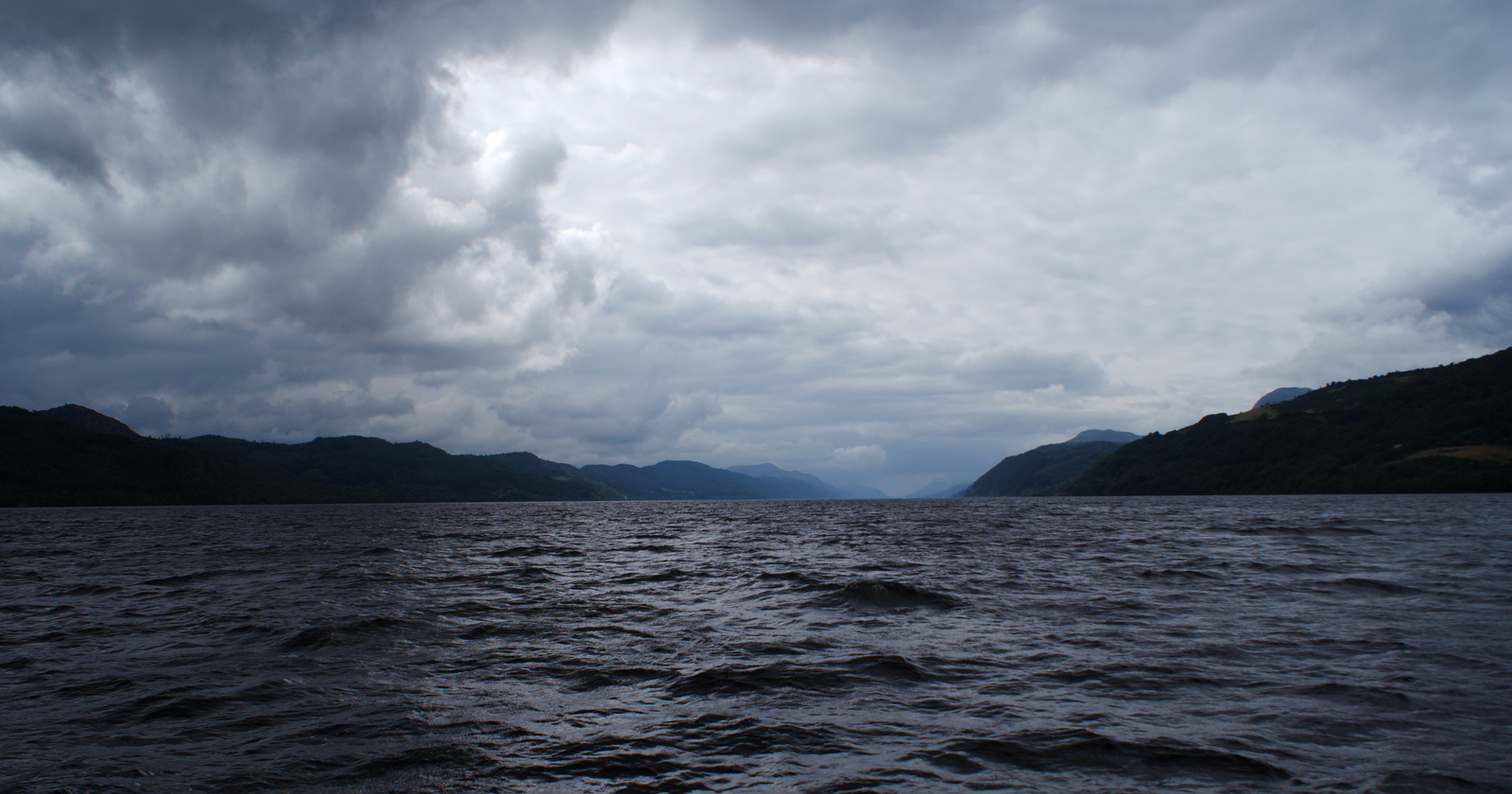
The Loch Kemp proposal would use Loch Ness as its lower reservoir and Loch Kemp as the upper storage body.
Statera Energy says the project would have generating capacity of up to 600MW and could supply power for as long as 15 hours. Water would be pumped from Loch Ness into Loch Kemp during periods of excess electricity and released back through turbines when the grid required generation.
Loch Kemp would not operate in isolation. The Great Glen already contains the Foyers pumped-storage station, while other large storage proposals are being considered in the wider Highland region.
This makes cumulative assessment essential.
A single operator may be able to demonstrate that the effect of its own abstraction, discharge or water-level change remains within a modelled limit. That does not necessarily show what happens when several schemes use connected catchments, draw upon the same labour and road networks, or require new transmission infrastructure in the same region.
The national question is not only whether each project can pass its own assessment. It is how much industrial use of the Great Glen and surrounding water system Scotland is prepared to accept in total.
SEPA’s guidance says cumulative effects must be considered. The strength of that requirement will depend upon whether applications are assessed against other projects already operating, consented, proposed or reasonably foreseeable—not merely those that have completed the same stage of the regulatory process.
Coire Glas and the scale of the new system
SSE’s Coire Glas project near Loch Lochy is proposed at 1.4GW, with at least 45GWh of storage. If built, it would be one of the largest electricity-storage facilities in Britain.
Projects of this size could make an important contribution during prolonged periods of low renewable output, help absorb electricity that might otherwise be curtailed and provide rapid support to the system.
They may also create a new concentration of strategic infrastructure in the Highlands.
Concentration is not automatically unsafe. Dams, tunnels and generating stations are subject to engineering, planning and safety requirements. It would be irresponsible to suggest that the presence of several schemes makes structural failure likely.
There is, however, a legitimate resilience question. A future electricity system that depends heavily upon a small number of very large storage assets must consider what happens when one is unavailable because of maintenance, a technical fault, low water availability or an incident affecting its connection to the grid.
The same landscape may also be carrying several forms of infrastructure at once: reservoirs, transmission lines, substations, wind farms and access roads. Project-by-project approval can obscure the cumulative transformation.
The financial bargain
The environmental consultation is taking place alongside a separate decision about financial support.
On 26 June, Ofgem provisionally selected 16 long-duration electricity-storage projects to proceed through the next stage of its first cap-and-floor support window. The system is intended to make projects with large initial costs and uncertain future revenues financeable.
The floor provides an approved minimum revenue level where a qualifying project’s market income falls below the regulated threshold. The cap limits how much revenue the operator may retain above another threshold, with part of the excess returned for the benefit of consumers.
It is too crude to describe this simply as consumers bailing out companies that fail to make a profit. The floor is a planned regulatory mechanism designed to reduce investment risk before construction begins, not an emergency rescue after commercial failure.
The public exposure is nevertheless real.
Consumers help provide revenue certainty that private developers and investors say is necessary before committing billions of pounds. In return, the cap is intended to prevent companies retaining unlimited gains if market revenues are exceptionally high.
The important public question is whether the cap, floor and project-specific terms provide fair value for the risk transferred to consumers.
A privately owned scheme may receive regulated revenue protection while using a Scottish glen, loch or estate for many decades. The operator may earn income from electricity trading and grid services, while households contribute through the wider electricity-market arrangements if revenues fall below the approved floor.
That does not prove that the bargain is unfair. It does mean the argument cannot stop at the claim that pumped storage will help renewable power.
The public is contributing more than scenery. It may also contribute financial certainty.
Who owns the value?
The major projects are being advanced by private or commercially operated developers.
Coire Glas is promoted by SSE Renewables. Loch Kemp is being developed by Statera Energy. Earba is being developed by Gilkes Energy through the relevant project company.
The land and water arrangements differ between schemes, and it would be inaccurate to state that every affected loch or estate is publicly owned. Much Highland land is privately held, while water use and environmental activity are controlled through public regulation.
The broader point remains. Scotland provides the geography that makes these developments possible: elevation, rainfall, water bodies, existing hydro experience and access to renewable generation. The resulting power is traded within the Great Britain electricity system, and the commercial return flows according to company ownership and financing structures.
Local employment may be substantial during construction. Permanent employment is likely to be much smaller once the plants are operating.
Community-benefit arrangements may provide local funds, but voluntary payments should not be confused with ownership or a permanent share of operating revenue. A community fund can support halls, paths and local projects while the long-term value of a strategic national asset continues to accrue elsewhere.
Scotland has encountered this pattern before. Land, water and energy are developed for a wider market; local places carry the physical infrastructure; and the public discussion centres upon mitigation rather than ownership.
Pumped storage risks becoming another version of the same arrangement unless the financial structure is made clear before projects are locked in.
The Highland perspective
For people living near these developments, the primary concern is not the theoretical performance of the electricity market.
It is the loss or alteration of familiar land, the effect on roads and homes during construction, the future of rivers and fish, and the possibility that tourism and local amenity will be weakened to support a system whose main benefits are experienced elsewhere.
The disruption is concentrated, physical and immediate.
The glen does not receive a fraction of a new dam. It receives the whole dam. Residents do not experience a nationally averaged amount of construction traffic. They experience the lorries passing their homes.
That imbalance can produce a distinctly extractive feeling: Highland land and water are taken into a national system, while the environmental burden remains attached to the place.
The concern does not disappear because the electricity is described as renewable. A low-carbon objective can still be pursued through a structure that distributes costs and benefits unevenly.
The wider Scottish perspective
For households elsewhere in Scotland, the landscape effects may feel remote. Their exposure is more likely to appear through electricity costs, regulated support and the reliability of the future power system.
Pumped storage may reduce other system costs by absorbing surplus wind generation, avoiding some constraint payments and supplying electricity when prices would otherwise be high. Ofgem and the National Energy System Operator are assessing projects partly on their expected system value, not simply on the amount of storage they can build.
Those benefits must be measured against the floor support, construction risk reflected in the financial framework and the possibility that projected savings do not emerge as expected.
The relevant comparison is not between paying for pumped storage and paying nothing. A wind-heavy electricity system will require flexibility from some combination of storage, interconnection, demand response and dispatchable generation.
The question is which combination provides the best value, where the costs fall and who owns the resulting assets.
Scottish consumers should therefore be able to see the expected cost of the cap-and-floor support, the forecast system savings, the permitted private return and the circumstances in which money is paid to or recovered from operators.
Without that information, “energy security” can become a broad public justification for a financial arrangement that remains difficult for the public to inspect.
The new rules arrive before the national plan
SEPA is responsible for protecting Scotland’s water environment. It is not responsible for deciding the complete future shape of Scotland’s electricity system.
Ofgem considers market support. The National Energy System Operator examines system need. Scottish ministers determine major generating-station applications. Planning authorities consider local land use. Network companies assess connections.
Each process has a purpose. Taken separately, none answers the central national question:
How many Highland glens and lochs should be converted into large-scale electricity storage, and what should Scotland receive in return?
The new SEPA guidance may improve consistency and require better information from developers. It may also make the regulatory route clearer just as private projects approach financial backing.
Clarity can protect the environment, but it can also accelerate development by showing companies how to satisfy the process.
That is why the consultation matters before the schemes become ordinary construction stories.
Scotland is not merely deciding how to regulate machinery beside a loch. It is deciding whether parts of the Highlands will become physical components of Britain’s electricity-storage system.
The national benefit may be substantial. So may the local cost.
The rules now being written must account for cumulative damage, water and wildlife, years of construction disruption, public financial exposure and the division between private ownership and public sacrifice.
Sources
https://consultation.sepa.org.uk/water-unit/consultation-on-guidance-for-developers-of-storage/
https://consultation.sepa.org.uk/consultation_finder/
https://consultation.sepa.org.uk/permits/earba-ltd-earba-pumped-storage-hydro-car-app/
https://stateraenergy.co.uk/projects/loch-kemp-storage
https://www.coireglas.com/project
https://www.ofgem.gov.uk/consultation/long-duration-electricity-storage-window-1-minded-decisions