
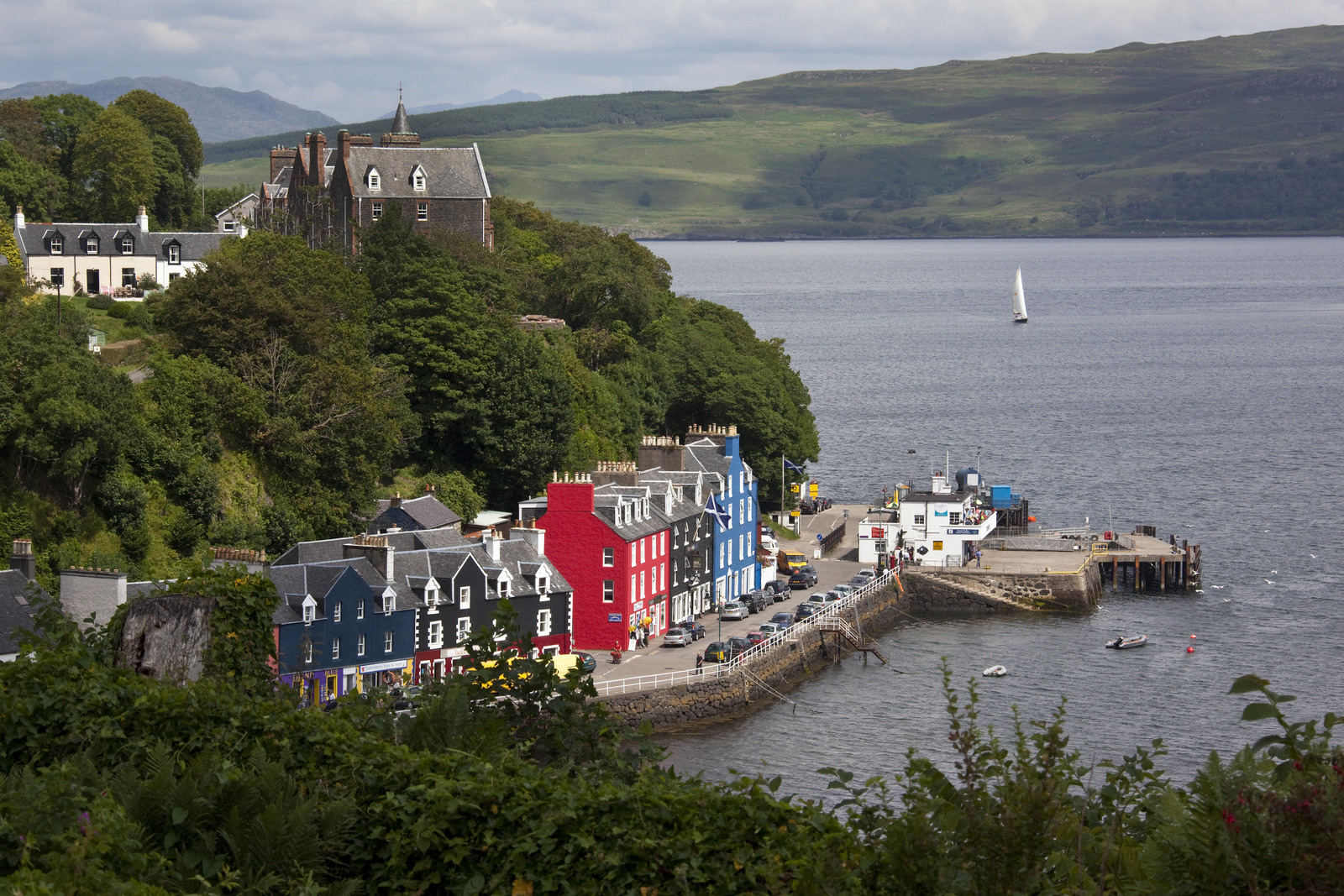
Argyll and Bute Council is preparing to consult on planning controls that could change how houses are converted into holiday accommodation across some of Scotland’s most tourism-dependent island and coastal communities.
The proposed short-term-let control area would cover four housing market areas: Mull and Iona; Coll and Tiree; Islay, Jura and Colonsay; and Lorn and the Inner Isles. Councillors approved the consultation in June, but the council must return with the results and final recommendations before any designation can proceed. Scottish ministers would also have to approve the control area.
This would not ban holiday accommodation.
It would mean that changing a dwelling house into a short-term let would automatically be treated as a material change of use requiring planning permission. The council could then refuse permission where the economic benefit of the proposed holiday let did not outweigh the loss of a home from the residential market.
The policy is intended primarily to control secondary letting: the permanent use of an entire dwelling as visitor accommodation. Home sharing and the temporary letting of someone’s main home would generally be supported under the council’s proposed policy. Purpose-built or unconventional accommodation such as pods and yurts would not be caught by the control area rules because they are not dwelling houses being removed from residential use.
The argument is about how many ordinary houses can be removed from permanent occupation before tourism begins to weaken the communities on which it depends.
The figures show a housing system under pressure
Argyll and Bute declared a housing emergency in 2023. The council says second homes, long-term empty properties and secondary short-term lets together account for around 15% of the authority’s total housing stock.
That council-wide figure conceals much sharper local pressures. In the proposed control areas, the proportion of homes not being used as a principal residence is estimated at 30% in Mull and Iona, 42% in Coll and Tiree, 30% in Islay, Jura and Colonsay, and 15% in Lorn and the Inner Isles.
By February 2026, Argyll and Bute Council had approved 3,270 short-term-let licences. About 2,900 were for secondary letting, meaning the use of a whole property that could otherwise serve as someone’s permanent home. The four proposed control areas contain 1,486 of those secondary lets. Lorn and the Inner Isles has the largest number, at 663, although the island areas carry a greater concentration relative to their much smaller housing stocks.
Earlier council data recorded 426 short-term-let licence applications in Mull and Iona, 97 in Coll and Tiree, 282 in Islay, Jura and Colonsay, and 817 in Lorn. The figures include different forms of letting and cannot be treated as a simple count of houses lost to permanent occupation, but they show the weight of visitor accommodation within the local housing system.
The pressure is not confined to holiday lets. Second homes and long-term empty properties also remove housing from everyday use. A control area can regulate future short-term letting, but it cannot by itself turn every second home, vacant property or lawful long-established holiday cottage into a permanent residence.
The four areas do not face exactly the same problem
The council has chosen housing market areas rather than individual villages or islands as the proposed geography. A housing market area is intended to represent a place within which most people make their housing choices. Argyll and Bute is unusually dispersed, and the council divides it into nine such areas.
The figures nevertheless show substantial differences within the four proposed areas.
Coll and Tiree has the most acute headline measure: 42% of its housing stock is not being used as a principal home. Its private rented sector represented only 4.6% of housing in 2025, down from 6.7% in 2022. The median house price in 2024 was £250,000, equivalent to 6.2 times the median local income. Around 67% of property sales went to purchasers from outside Argyll and Bute.
Mull and Iona has a lower but still severe 30% ineffective stock rate. There were nine applicants for every new social tenancy in 2025, the highest pressure ratio among the four proposed areas. The private rented share fell from 12.8% in 2022 to 10.4% in 2025, while 55% of house sales went to purchasers from outside the council area.
Islay, Jura and Colonsay also records 30% of housing outside principal occupation. Its median house price was six times the median local income, while the private rented share declined from 10.2% in 2022 to 9% in 2025.
Lorn and the Inner Isles is different again. Its proportion of ineffective stock is lower, at 15%, but it contains the largest absolute number of secondary short-term lets. Its private rented sector fell particularly sharply, from 13.8% of housing in 2022 to 7.9% in 2025. There were seven applicants for every new social tenancy.
The shortage is already affecting jobs and public services
The most persuasive case for intervention is not found in house-price figures alone.
Council-commissioned and community research has repeatedly found that island employers struggle to recruit and retain workers because accommodation cannot be found. Some businesses operate with vacancies or reduced capacity. Others rent homes themselves and sublet them to employees, removing further properties from the open market. Investment and expansion have reportedly been postponed because staff cannot be housed.
The same problem affects schools, health and social care, fire services and policing. The council and the Health and Social Care Partnership have already used public funds to bring properties back into use for essential workers. Community organisations on Gigha, Colonsay and Mull have had to develop housing themselves to protect jobs, population and local facilities.
Control would not rapidly release every holiday let
The council’s report is more ambitious than merely preventing new conversions. It proposes using the planning and licensing systems together to examine some existing short-term lets when their three-year licences come up for renewal.
Where an existing secondary let has operated for fewer than ten years, lacks planning permission or a certificate of lawful use, and is judged to involve a material change of use, the council could require a planning application. Permission could then be refused under National Planning Framework 4, potentially leading to the licence being revoked.
This would be decided property by property.
Many existing holiday lets will have operated for more than ten years and may already be lawful. Others have planning permission or will not be judged to have undergone a material change of use. The council acknowledges that it cannot yet say how many houses would actually return to permanent occupation.
Its illustrative figure is modest but significant: 10% of renewals within the proposed area would amount to about 140 homes. The council estimates that constructing the same number of island houses would cost approximately £42m at 2026–27 prices.
That comparison should be treated carefully. A former holiday let returning to the market does not automatically become affordable, available for long-term rent or purchased by a local resident. It could be sold as a second home, remain empty or command a price beyond local incomes.
Planning control can preserve residential use. It cannot guarantee affordability.
Tourism businesses have a legitimate concern
Self-catering accommodation is part of Argyll and Bute’s visitor economy, particularly where hotel and guest-house capacity is limited.
The council acknowledges that short-term lets generate spending in transport, food, retail, leisure and cultural activity. It cites industry-commissioned research estimating that a secondary short-term let in Argyll and Bute supports annual gross value added of £32,051 and 0.8 jobs, compared with £11,810 and 0.1 jobs for a property in residential use. The council argues that those figures do not capture the wider value of maintaining population, housing workers and sustaining year-round services.
The Association of Scotland’s Self-Caterers has challenged the council’s case, arguing that the consultation must test whether control areas elsewhere have produced measurable housing gains and must distinguish working tourism businesses from second homes and empty properties. It also warns of the cumulative effect of licensing, planning controls and other visitor-economy charges.
That criticism cannot be dismissed as simple industry resistance.
A locally owned cottage business may support a family income, cleaners, maintenance contractors and year-round spending. Removing accommodation in places with limited hotels or ferries can reduce visitor capacity rather than redistribute it. Small operators may also be less able than large tourism businesses to absorb planning fees, professional advice and uncertainty.
The council’s own paper does not provide a full place-by-place inventory of hotels, guest houses, bed-and-breakfast rooms or purpose-built visitor accommodation. Nor does it demonstrate how many visitors could be absorbed elsewhere if residential short-term lets decline.
That evidence should be produced before final boundaries are approved.
Sources:
Argyll and Bute Council, Housing Emergency: Public Consultation on Proposed Short Term Let Control Area, 24 June 2026.
Argyll and Bute Council, Local Housing Strategy Annual Update 2025.
Argyll and Bute Council, Housing Issues and Short-Term Let Control Areas, September 2023.
Scottish Government, Planning Circular 1/2023: Short-Term Lets and Planning.
Association of Scotland’s Self-Caterers, response to the Argyll and Bute proposals.