
More than 230 distinct development bids have been placed before Highland Council, including proposals for about 21,600 homes. Modern Scot’s analysis finds extensive farmland conversion, concentrated developer interests and no complete public account of the jobs, schools, health care, water and transport needed to support the growth.
Hundreds of parcels of Highland land have been put forward for housing, industry, energy infrastructure, tourism and commercial development as Highland Council begins drawing the planning map that could govern the region for the next generation.
The council has opened a public Call for Ideas, inviting residents, community organisations and businesses to say how land and buildings should be used, protected, improved or developed. The exercise closes on 18 September 2026.
This is not yet the formal consultation on the individual sites already submitted by landowners and developers.
Residents can place their own priorities into the process, but they cannot yet lodge a statutory objection to a particular development bid. Highland Council says the submitted sites will be assessed before preferred locations are selected. Those chosen for the proposed plan will then be subject to formal consultation and objection.
The public is therefore being asked to contribute before it knows which land the council will eventually favour.
That sequence follows changes to Scotland’s planning system. The Planning (Scotland) Act 2019 introduced a new process for local development plans, while National Planning Framework 4 became part of Scotland’s statutory development plan in 2023. Councils are now required to prepare new ten-year plans supported by an Evidence Report, an independent gate check, a proposed plan and formal examination.
Highland Council intends to replace four existing council-prepared plans with one Highland Local Development Plan covering almost the entire council area outside the Cairngorms National Park.
The current plans remain legally in force until the replacement is adopted, which is expected around 2029. No final development map has yet been approved.
What has already happened is the evidence-gathering and land-promotion stage.
Between January and May 2025, Highland Council invited landowners, developers, public bodies and communities to submit possible sites for housing, industry and mixed development. More than 250 submissions were received. Officers then assembled an Evidence Report, consulted public agencies and considered registered Local Place Plans.
Councillors approved the Evidence Report in June 2026 and submitted it for the statutory gate-check process.
That was not approval of the individual development sites.
It did, however, place landowners, housebuilders, estates, public bodies and planning consultants several steps ahead of most residents. They have already identified land, stated preferred uses and, in some cases, secured control through ownership or option agreements.
The public is only now being asked to place its own priorities beside them.
What Modern Scot found in the data
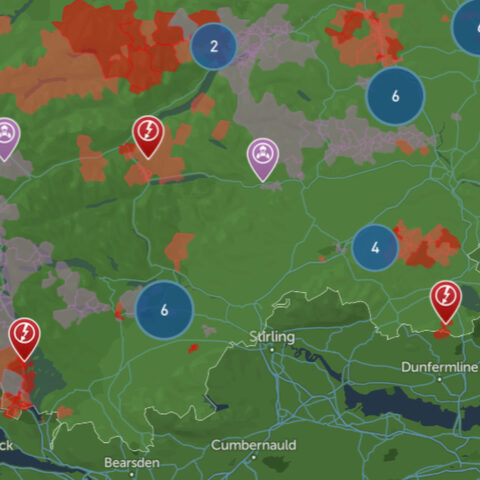
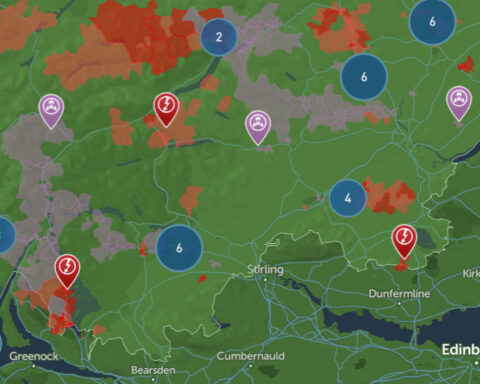
The public map contains 279 mapped features across 44 settlement groups.
Modern Scot’s analysis indicates that these represent roughly 234 distinct submissions. Some proposals contain several land parcels, while others appear more than once in the downloaded data. Together, the records contain stated capacity for around 21,600 homes.
That figure is not a forecast of what will be built.
Some sites overlap. Some compete for the same demand. Some seek to carry forward existing allocations. Some may fail because of access, flooding, environmental, water or commercial constraints. Others may be reduced substantially.
The data does show where development pressure is gathering and who is positioning land before the preferred plan is drawn.
Housing dominates the submissions. Around three quarters of the distinct proposals are explicitly for housing, while approximately 187 contain a positive housing figure.
The largest concentrations are not spread evenly across the Highlands. They gather around Inverness, the Inner Moray Firth, the A9 corridor and the Cromarty Firth industrial zone.
Modern Scot’s analysis found proposed capacity of approximately 6,000 homes in the Inverness group, around 2,000 in Nairn, 1,800 in Tain, more than 1,300 around North Kessock and more than 1,000 in Alness.
This is not a balanced regional housing pattern. It is a growth corridor.
A small number of developers are strongly positioned
A limited number of housebuilders appear repeatedly across the submissions.
Modern Scot identified Springfield Properties in bids containing nearly 4,900 stated homes and Tulloch Homes in submissions containing more than 2,200. Those totals may include competing, overlapping or ultimately unsuccessful sites, but they show how strongly a small number of companies are positioned before site selection begins.
At Bellfield Farm near North Kessock, Springfield has submitted 64.87 hectares of undeveloped or agricultural land for approximately 1,000 homes. A separate proposal north of the A9 seeks around 250 more.
At Ardersier Mains, Springfield proposes up to 600 homes, a primary school and community facilities on 35 hectares of undeveloped farmland.
At Alness East, 50.7 hectares held by Pat Munro, Highland Council and Rosskeen Farms have been submitted for around 800 homes, including a stated 25% affordable element. Nearby council-owned land at Crosshills is proposed for another 215 mixed-tenure homes.
Large housing schemes are therefore being positioned beside anticipated industrial, port and energy development.
The site map does not establish that roads, water, wastewater treatment, schools, childcare, GP services, shops or public transport can carry all of it.
Public planning decisions can create private value
Most of the submitted land already appears to be privately owned by housebuilders, farms, estates, churches, investment interests and individual landowners.
The central issue is not privatisation in the simple sense. It is the increase in value created through allocation.
Agricultural or undeveloped land may become worth substantially more once it is identified for housing or industry. A public planning decision can therefore create considerable private wealth before a road is laid or a house is built.
That does not make allocation improper. Homes, workplaces and services require land.
The public-interest question is what the Highlands receive in return.
That return might include social-rented housing, roads, schools, drainage, active travel, public transport, long-term rental supply, community facilities or a continuing public stake in the development.
The present site register does not show the full bargain.
Public land is also entering the development pipeline
Highland Council appears as owner or joint owner in a significant number of submissions.
At Abbotshill in Tain, approximately 31 hectares of council-owned farmland are proposed for around 300 homes. The ownership record states that the land is subject to an agricultural tenancy.
Council land also appears in proposals at Alness, Dingwall, Invergordon and Inverness.
These entries do not prove that the council intends to sell the land. Public sites could be developed directly, leased, transferred to a housing association, retained through partnership or disposed of to a private builder.
The structure matters.
Public land can secure affordable housing and long-term public value. It can also be sold into a model in which most of the land-value uplift passes into private development.
Highlands and Islands Enterprise also appears as owner of business and industrial land, including Alness Point Business Park. The same questions apply: what public investment prepares the site, who ultimately controls it and how much long-term value remains public?
The public needs those answers before major allocations are confirmed.
The housing totals do not show who will be able to live there
The word “affordable” appears throughout the submissions, but it does not automatically mean council or housing-association homes at social rent.
It may include discounted sale, shared equity, mid-market rent, serviced plots, developer contributions or credits delivered elsewhere.
At Muiralehouse in Avoch, Tulloch proposes around 200 homes, described as 150 private and 50 affordable. Springfield has put forward a separate proposal for around 150 homes in the same area. At Rosehaugh, Tulloch seeks 40 homes, of which two are described as affordable because affordable-housing credits had already been supplied elsewhere.
A total housing figure therefore does not show whether local workers, tenants, young families or people on council waiting lists will be able to live there.
A development can increase the housing stock while failing to solve the housing problem.
The council should publish a tenure breakdown for every major site: private sale, social rent, mid-market rent, discounted sale, care housing, worker accommodation and any other category.
Without that, the Highlands could receive thousands of houses while continuing to lose the people required to keep its communities functioning.
Building outside the plan will still be possible
A person will still be able to apply to build a home outside an allocated site.
Scotland operates a plan-led planning system, but land outside the plan is not automatically closed to development. Applications will continue to be judged against National Planning Framework 4, the local development plan then in force and other material considerations.
The difference is that allocation settles much of the principle in advance.
A major site inside the plan begins with the expectation that development may be acceptable. A house outside it, particularly in the more tightly controlled Hinterland around Inverness, Easter Ross and Fort William, may face a much harder policy test.
Small rural housing may still be permitted where it meets recognised requirements, including certain land-management needs, replacement or conversion of buildings, appropriate affordable housing or other policy exceptions.
The new plan will not make every unallocated field untouchable. It will, however, give selected land a much clearer route towards development.
Farmland is the principal source of proposed housing land
The strongest physical pattern in the data is the proposed conversion of agricultural and undeveloped ground.
Modern Scot’s analysis identified roughly 194 distinct submissions describing their current use as farmland or undeveloped land. Around 164 of those are proposed for housing.
This means the emerging housing strategy is not based mainly on reusing empty buildings, brownfield land and already urbanised sites.
A substantial part of it depends on fields, grazing land, settlement edges and farms.
Once land is covered by roads, drainage, foundations and utilities, returning it to productive agriculture becomes difficult and often unrealistic.
The consequences extend beyond lost acreage. Farms may be divided into less workable parcels. Tenancies may become less secure. Nearby land prices may rise. Drainage patterns may change. Settlements may spread into increasingly car-dependent estates.
At Ardgay, Balnagown Estate has submitted two sites for approximately 70 homes each. One is subject to a Modern Limited Duration Tenancy expiring in 2030. The record does not indicate that the tenant is being removed, but it shows development positioning taking place while agricultural occupation continues.
At Avoch, Church of Scotland glebe land leased to a local resident has been proposed for housing. Other sites are controlled through developer option agreements rather than outright ownership.
Every proposal must eventually be assessed on its own facts. Taken together, however, the submissions raise a wider land-use question.
How much productive and tenanted ground should be lost, and what public benefit must justify that loss?
For every selected site, the council should publish the agricultural quality of the land, its present use, whether it is tenanted, what farming function it performs and why brownfield or already allocated land cannot meet the same need.
Housing growth is being discussed before services are secured
The most serious weakness in the process is the gap between land allocation and the services required to make a place liveable.
A development plan can identify land for schools, shops, childcare, roads, health facilities, employment and public transport.
It cannot guarantee a staffed GP surgery, nursery places, teachers, midwives, dentists, regular buses, operating shops or sufficient water and wastewater capacity.
Those depend on separate public bodies, budgets and private operators.
Some major submissions mention primary schools, local centres and community facilities. That is not the same as a funded school, a staffed nursery, an occupied shop or a functioning health service.
This is especially important in Caithness.
Caithness General has a midwife-led community maternity unit for people assessed as suitable for low-risk local birth, but it does not provide the full consultant-led obstetric service available at Raigmore. Some women must travel considerable distances for specialist or higher-risk care.
That is the kind of practical service constraint that must be measured against proposed population growth.
No major housing allocation should be accepted merely because land is available. The council should identify the road, school, childcare, health, retail, water, sewerage and employment capacity required—and show who is committed to delivering it.
Without that, the plan risks creating housing estates rather than functioning communities.
The jobs case remains incomplete
Some housing proposals sit near expected employment growth, particularly around Inverness, Ardersier, Alness and the Cromarty Firth.
There are separate submissions for ports, offshore-wind manufacturing, industrial land, distribution, battery infrastructure and renewable-energy uses.
At Balblair Quarry near Beauly, Lovat Estates has proposed approximately 53 hectares for industrial development, storage, distribution, one or more data centres and a renewable-energy hub after quarrying ends.
That is not yet a confirmed data-centre development. It is an early land-use signal.
What is missing is a clear public account connecting proposed housing numbers to permanent employment.
Construction may create jobs for several years. Energy, port and data projects may attract substantial capital. Their permanent workforces may be much smaller than the scale of the developments suggests.
The plan should show how many permanent jobs are expected, what skills they require, whether local people will be trained for them, where workers will live and what happens when construction ends.
Housing without employment can deepen car dependency and service pressure. Employment without affordable housing can displace local workers.
Both problems are already familiar across the Highlands.
Fort George raises a public-asset question
The Ministry of Defence has submitted Fort George near Ardersier.
The 51.7-hectare site is described as an active military barracks and tourist destination. The submission records possible housing, community, business, tourism, retail and industrial uses, with an initial housing trajectory of 45 homes. It also states that the MOD has announced the site for disposal in 2033.
The important issue is the future of a major public, military and heritage estate.
The submission does not say who may acquire it, whether public access will continue, which buildings could enter private ownership or how commercial use would be reconciled with the site’s historic importance.
This is advance planning for a post-military future.
The public-interest test is whether a nationally important asset remains accessible, protected and capable of delivering lasting value after the MOD leaves.
Two different Highland housing crises
The submissions reveal two different development markets.
The eastern growth corridor is attracting large private proposals of hundreds or thousands of homes.
Fragile rural, west-coast and island communities are generally putting forward much smaller schemes—sometimes two, ten or twenty homes—to retain population, house workers or support community-led development.
At Anancaun near Kinlochewe, a community submission proposes only two or three homes, stating that the lack of housing is holding back the social and economic future of a fragile rural community.
At Broadford and elsewhere on Skye, common-grazings and community-linked land has been proposed for modest affordable development.
The private market is naturally drawn to places where large developments are easier to finance and sell.
That could leave communities with the greatest social need receiving the least commercial interest.
A plan judged mainly by total house numbers may deepen the imbalance: rapid expansion around Inverness and the Moray Firth while remote communities continue to lose population and services.
The public can still shape the record
The Call for Ideas closes on 18 September 2026.
Residents can identify land or buildings that should be developed, reused, protected or improved. They can submit evidence about roads, schools, health services, water, wastewater, flood risk, agricultural use, habitats, public transport, childcare and community facilities.
They cannot yet lodge a statutory objection to an individual submitted site.
That opportunity comes later, when Highland Council chooses which sites to include in the proposed plan.
Communities can also prepare or use Local Place Plans, allowing community-controlled organisations and community councils to set out their own spatial priorities.
The present stage is therefore not the moment to declare that any developer bid has been approved.
It is the moment to place a clear public record beside the developer submissions.
The Highlands need housing. They also need jobs, maternity care, childcare, shops, roads, buses, schools, water infrastructure and communities capable of surviving once construction crews leave.
Those needs cannot be reduced to a total number of homes on a map.
Landowners and developers have already positioned thousands of proposed homes and extensive areas of land. The public has not yet received a complete account of farmland loss, housing tenure, infrastructure capacity, permanent employment, land-value uplift or the future of public assets.
The Highlands are being positioned, parcel by parcel, for a development market whose ownership, value and benefits are more concentrated than the public presentation suggests.
The public still has an opportunity to influence the plan.
It is not yet the opportunity to object to the individual sites.
It is the opportunity to insist that land allocation follows services, employment, food security, public value and community need—not merely the ambitions of those who submitted land first.
Methodology
Modern Scot grouped the downloaded records by submission number to reduce duplication caused by multi-parcel entries, then totalled the housing figures stated by site promoters. The results remain indicative because proposals may overlap, compete with one another, repeat existing allocations or contain estimates that Highland Council has not verified.
Sources
https://www.highland.gov.uk/planning-area/highland-local-development-plan
https://engage.highland.gov.uk/en-GB/projects/call-for-ideas-survey
https://www.highland.gov.uk/downloads/file/7493/full-evidence-report-july-2026
https://www.highland.gov.uk/downloads/file/6347/development-plans-newsletter-2026
https://www.highland.gov.uk/planning-area/local-place-plans
https://www.gov.scot/policies/planning-architecture/development-plans/
https://www.highland.gov.uk/downloads/file/968/self-build-guide