
American military activity in Scotland no longer looks like the Cold War bases once found at Holy Loch, Edzell and Machrihanish. It now appears through aircraft, nuclear systems, refuelling, NATO exercises, maritime patrol, missile defence training and the use of Scottish airspace, ports, airports and waters. The public record shows a country used for North Atlantic defence, submarine surveillance, nuclear deterrence, logistics and allied training. Scotland can see much of that activity. It does not control the strategic decisions behind it.
Scotland has lived with American military power for more than sixty years.
It has arrived as submarines in the Clyde, aircraft in Moray, intelligence work in Angus, NATO exercises off the western coast, military aviation through Ayrshire and nuclear technology stored and deployed through the UK deterrent system on the Clyde.
The shape has changed. The old American bases of the Cold War have gone. Holy Loch closed in 1992. The US Navy left Machrihanish in 1995. RAF Edzell closed in 1997.
The newer footprint is harder for the public to see. It is spread across allied bases, refuelling stops, support facilities, weapons systems, training ranges, NATO exercises and shared defence arrangements. It is less visible than a large American base. It is not less significant.
The reason is geography. Scotland sits on the northern approaches to the Atlantic. From Scotland, aircraft and ships watch the North Sea, the Norwegian Sea, the Greenland-Iceland-UK gap, Arctic routes, Russian submarine movement, undersea cables and the sea lanes linking North America with Europe.
Geography makes Scotland valuable. The clearest present example is RAF Lossiemouth in Moray.
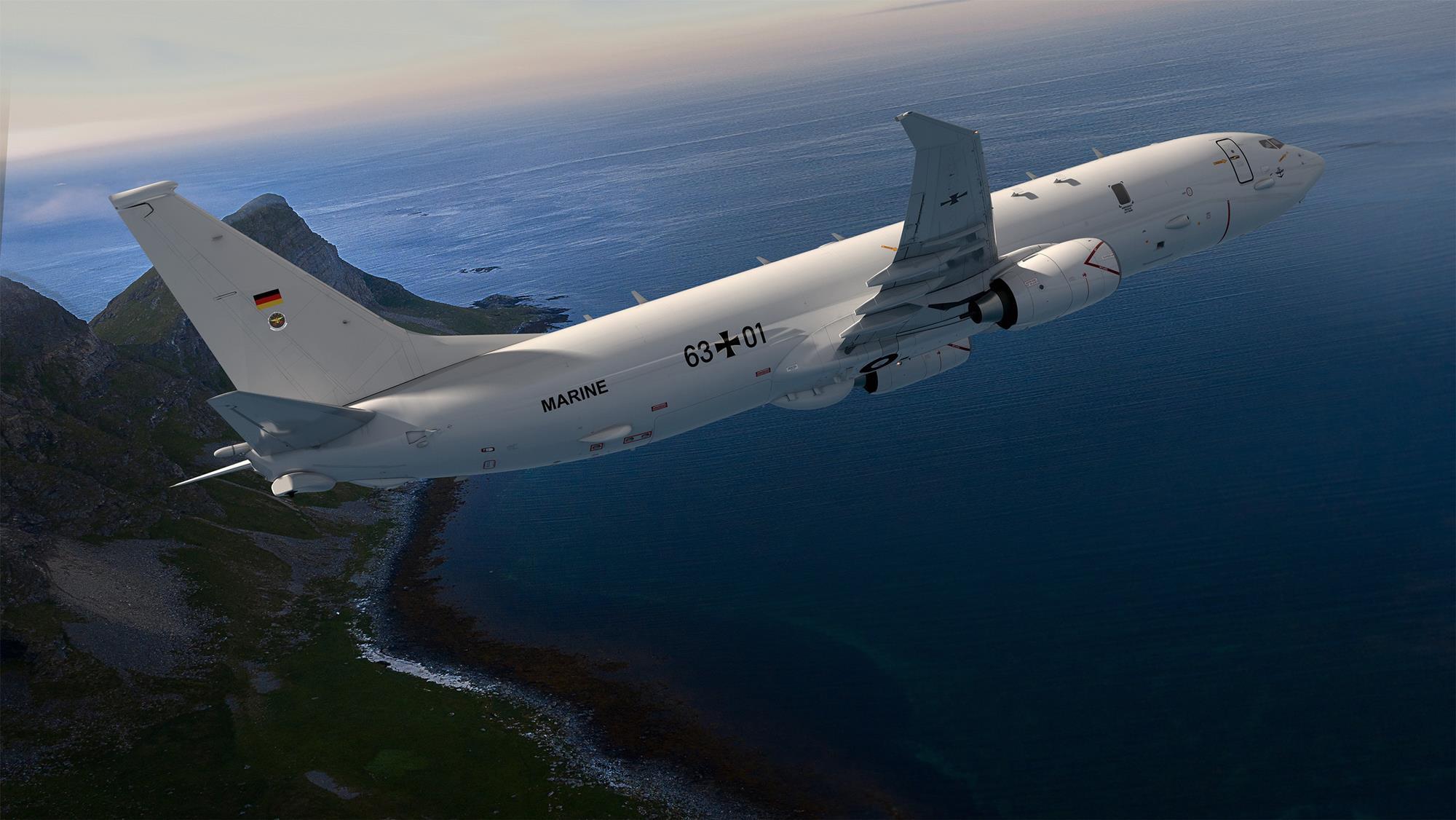
Lossiemouth is home to the RAF’s nine P-8A Poseidon maritime patrol aircraft. The aircraft are used for anti-submarine warfare, maritime surveillance and search and rescue. The P-8A is an American-designed aircraft built by Boeing and operated by the United States Navy and several allied nations.
In 2024, a US Naval Support Facility opened at Lossiemouth to support American forces returning to the station. The RAF has described the facility as a permanent hub for US forces, with Lossiemouth regularly hosting international partners for North Sea exercises and Poseidon training.
The Ministry of Defence completed a six-year, £350 million upgrade at Lossiemouth in 2024. The programme included new accommodation, drainage and electrical upgrades, and, for the US Navy, an accommodation block and large enclosed wash facility for P-8A Poseidon aircraft.
That investment places Moray inside the modern North Atlantic surveillance system. The training carried out around the P-8A concerns submarine hunting, maritime patrol, shared procedures, search and rescue, aircraft maintenance, crew cooperation and allied interoperability. US Navy P-8A aircraft have operated from Lossiemouth during NATO exercises, including Steadfast Defender.
Lossiemouth is therefore one of the main places for the United States in Scotland now. It is not Holy Loch rebuilt. It is a maritime aircraft and surveillance presence built around the North Atlantic, allied aircraft and the detection of submarines.
The second layer sits on the Clyde.
HMNB Clyde is a UK base, made up of Faslane and Coulport. Faslane hosts the UK’s nuclear-armed submarines and nuclear-powered attack submarines. Coulport stores and loads Trident II D5 missiles and handles the UK nuclear warhead.
The American connection is built into the weapons system. The UK Government says the Trident missile system is designed and manufactured in the United States. The UK buys title to missiles from a shared pool under long-standing US-UK arrangements that began with the Polaris Sales Agreement and were later amended for Trident.
The Clyde is not a current American nuclear submarine base in the Holy Loch sense. The command is British. The base is British. The missile system is American in origin, procurement and support.
Scotland is therefore the place where the UK nuclear deterrent is based, while the missile system at the centre of that deterrent is supplied through the United States.
Holy Loch shows how direct the American presence once was.
From 1961 to 1992, the US Navy operated a ballistic missile submarine refit site at Holy Loch near Dunoon. American submarine tenders, floating dock infrastructure, sailors, families and support activity became part of life in Cowal. The base supported US Polaris submarines during the Cold War.
Holy Loch was a visible American nuclear submarine support operation in a Scottish sea loch.
Edzell had a different purpose. The US Naval Security Group Activity at Edzell operated from 1960 to 1997. It carried out high-frequency direction-finding and communications support for US Navy, Department of Defense and NATO activity. At its peak, it involved hundreds of American military personnel and their families.
Machrihanish, on the Kintyre peninsula, also belonged to that older defence geography. The base had a long runway and was used during the Cold War by NATO and American forces. US Navy activity declined after the Cold War, and the United States handed control back to the Ministry of Defence in 1995.
Those sites tell the older story. The present story is more dispersed.
The most politically sensitive modern example is Prestwick.
Glasgow Prestwick Airport is not a US military base. It is a civilian airport owned through the Scottish Government. It has, however, long handled military aircraft. Prestwick Aviation Services openly advertises military facilities, including a dedicated military fixed-base operation close to the apron, 24-hour staffing, rest areas, washrooms, lounge space, briefing rooms, Wi-Fi and customs and immigration facilities.
Prestwick’s aviation selling point is clear. It sits on transatlantic routes, has long runways, quiet airspace, 24-hour operations and large parking aprons. Those same features make it useful for military aircraft moving between North America, Europe and beyond.
A Ministry of Defence response in 2019 described US use of Glasgow Prestwick Airport as “business as usual”. A Scottish Parliament debate in February 2026 referred to claims that Prestwick had been used 560 times by the US military since 1 April 2025. The airport’s use by NATO-aligned military customers, including the United States, was described in the chamber as well known.
Prestwick is also where the Iran question reaches Scotland.
The public evidence does not show Scotland being used as a launch base for strikes on Iran. The public evidence points to transit, refuelling and logistics.
Holyrood reported in March 2026 that flight logs showed US planes stopping at Prestwick in recent weeks had included aircraft involved in military action against Iran. First Minister John Swinney said he shared concern about the conflict, but could not simply block use of the airport because defence and foreign policy are reserved.
Scottish Government material released under freedom of information legislation shows the issue reached officials directly. One Scottish Government document records BBC Scotland reporting that at least three USAF KC-135 Stratotankers had passed through Prestwick on their way to Israel, where they had been flying near-daily refuelling missions linked to strikes on Iran. The same material includes discussion of whether assurances given about UK military bases also applied to civilian facilities in Scotland.
A separate Scottish Government briefing released under FOI said recent US military action in Iran had been launched directly from American facilities in the United States and that flights did not land in any other country, including Scotland. That statement places a limit on what can be said from public sources.
The Guardian reported in March 2026 that a US C-17 aircraft diverted from Glasgow Prestwick to RAF Fairford was reportedly carrying munitions and spare parts for B-1 bombers, after UK approval for US use of bases for defensive operations connected to Iran.
Taken together, the record does not make Scotland a bombing platform. It makes Scotland part of the support chain.
Aircraft that refuel, carry parts, move crews, divert because of weather or stop on transatlantic routes can still matter to a military operation. A mission may be launched elsewhere. The logistics that support it may pass through Scotland.
That is the constitutional problem for Scottish public understanding. The airport is in Scotland. The Scottish Government owns it at arm’s length. Operational decisions sit with airport management. Defence and foreign affairs sit with the UK Government. The public sees the aircraft. The full mission chain is rarely disclosed.
Prestwick is not the only place where Scotland’s geography supports allied operations.
Scotland’s north and west provide deep water, remote airspace, weapons ranges, low population density and access to the North Atlantic. Joint Warrior has used Scottish waters, airspace and ranges for years. The exercise has included ships, submarines, aircraft, drones, Royal Marines, US Marines and other allied forces. Scenarios have included submarines, drone swarms, air raids and missile attacks.
Cape Wrath gives the armed forces a rare training environment. UK Government guidance describes it as 25,000 acres of severe and isolated upland moorland, and the only range in Europe where land, sea and air training can be carried out simultaneously. It is also where the RAF can train using live 1,000lb bombs.
The Hebrides range, operated by QinetiQ for the Ministry of Defence, adds another layer. The range occupies vast controlled airspace off the north-west of Scotland and is used for complex weapons trials, air defence testing and live-fire activity.
The United States has used that environment through Formidable Shield, a major integrated air and missile defence exercise led by US Navy Sixth Fleet. In 2025, NATO described Formidable Shield as Europe’s largest live-fire naval exercise. US Navy material records guided-missile destroyers conducting live-fire events against ballistic missile targets.
That means Scottish waters and ranges are part of missile defence training, not only ordinary naval manoeuvres. US destroyers, allied ships, aircraft, sensors and command systems use the environment around Scotland to practise the detection and interception of modern threats.
The equipment visible in the public record includes P-8A Poseidon maritime patrol aircraft at Lossiemouth, KC-135 Stratotankers through Prestwick, C-17 Globemaster transport aircraft linked to UK-based movement, US Navy destroyers in missile-defence exercises, and the US-manufactured Trident II D5 missile system used by the UK nuclear deterrent from the Clyde.
Other aircraft have appeared in allied training. US fighter aircraft have deployed to Scotland and nearby UK bases for NATO activity. Their presence belongs to a larger pattern: aircraft, ships and command systems learning to operate together across the North Atlantic.
Scotland’s role is therefore not a single base or a single runway. It is a network.
There are economic benefits. Lossiemouth has received major investment and supports skilled jobs. The Clyde is one of Scotland’s largest military employment centres. Prestwick gains revenue from military aviation. Training and exercises bring activity to remote areas and sustain parts of the defence economy.
But there are also public questions.
Military activity can bring noise, secrecy, protest, environmental disturbance and political exposure. Nuclear weapons on the Clyde remain among Scotland’s most contested public issues. Prestwick’s military traffic raises questions about publicly owned infrastructure being used in conflicts where Scottish ministers have little direct authority. NATO exercises use Scottish land, air and sea space in ways that most people only notice when aircraft appear overhead or ships gather offshore.
The strategic decisions sit elsewhere. Defence, armed forces, foreign affairs and national security are reserved to Westminster. Scotland hosts the geography, infrastructure and local consequences. It does not hold the main levers.
That arrangement has become more visible because of Iran.
The missing part for the public is detail. Did Scottish-owned infrastructure support a military chain connected to a conflict abroad? Who knew? Who approved? What, if anything, can Scotland refuse?
Scotland is not outside the machinery of American power. It sits inside it at several points: air, sea, nuclear, logistical and historical.
The public record is clear enough to establish that much. It is not clear enough to tell Scots everything being done in their name, through their geography or across their publicly owned infrastructure.
That is the part still hidden in plain sight.