
A change to the British Airways timetable restored early morning departures from Inverness to London Heathrow, allowing same day return travel for the first time in more than twenty years.
The departure itself was unremarkable. The aircraft left on time from Inverness Airport, lifting into a grey Highland morning bound for London Heathrow. Yet the schedule behind it marked a quiet shift in how the region connects to the rest of the country.
For the first time in over two decades, British Airways reinstated an early morning service from Inverness, restoring a pattern of travel that had long disappeared from the route. The change meant that passengers could leave the Highlands at the start of the working day, conduct business in London, and return the same evening. It is a capability that had been absent even after the route was reintroduced in 2016.
The service formed part of a wider expansion in frequency. Capacity on the route increased significantly, with additional weekend flights and a double daily service through the working week. Plans were set in place to extend that frequency across all seven days, embedding the route as a more consistent part of the airline’s domestic network.
For the Highland economy, the implications were practical rather than symbolic. Business travel, which had often required overnight stays or indirect connections, could once again be completed within a single day. That change alters cost, flexibility and, over time, the attractiveness of the region for both inward investment and outward commercial activity.
The link to Heathrow carries a second layer of importance. It is not simply a connection to London, but to a wider global network. Access to long haul destinations becomes materially easier when the first leg of the journey aligns with international departure schedules.
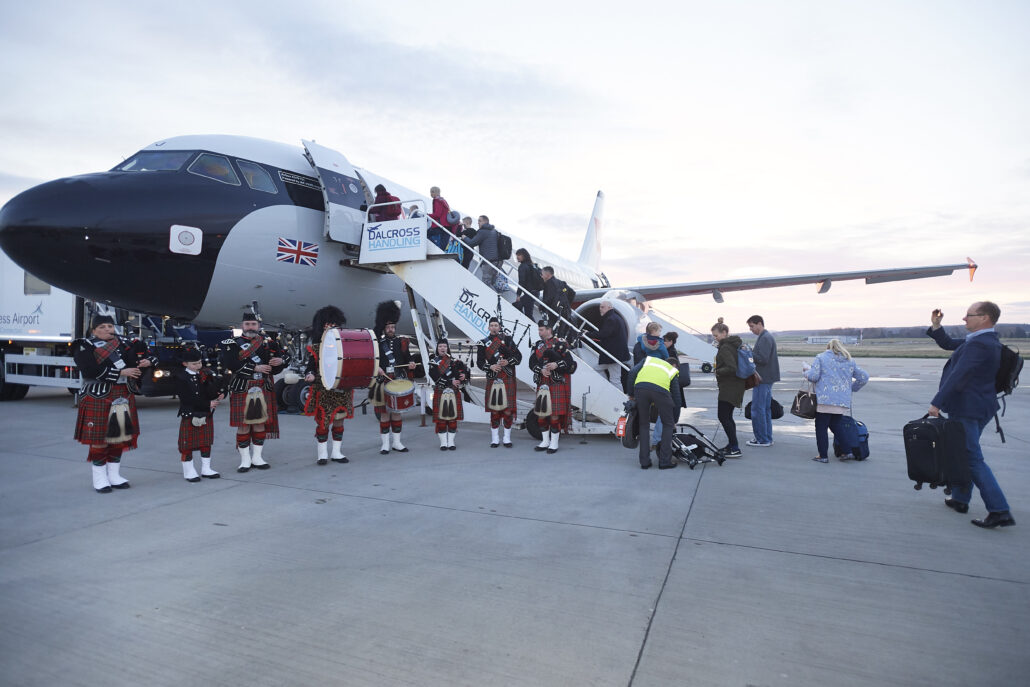
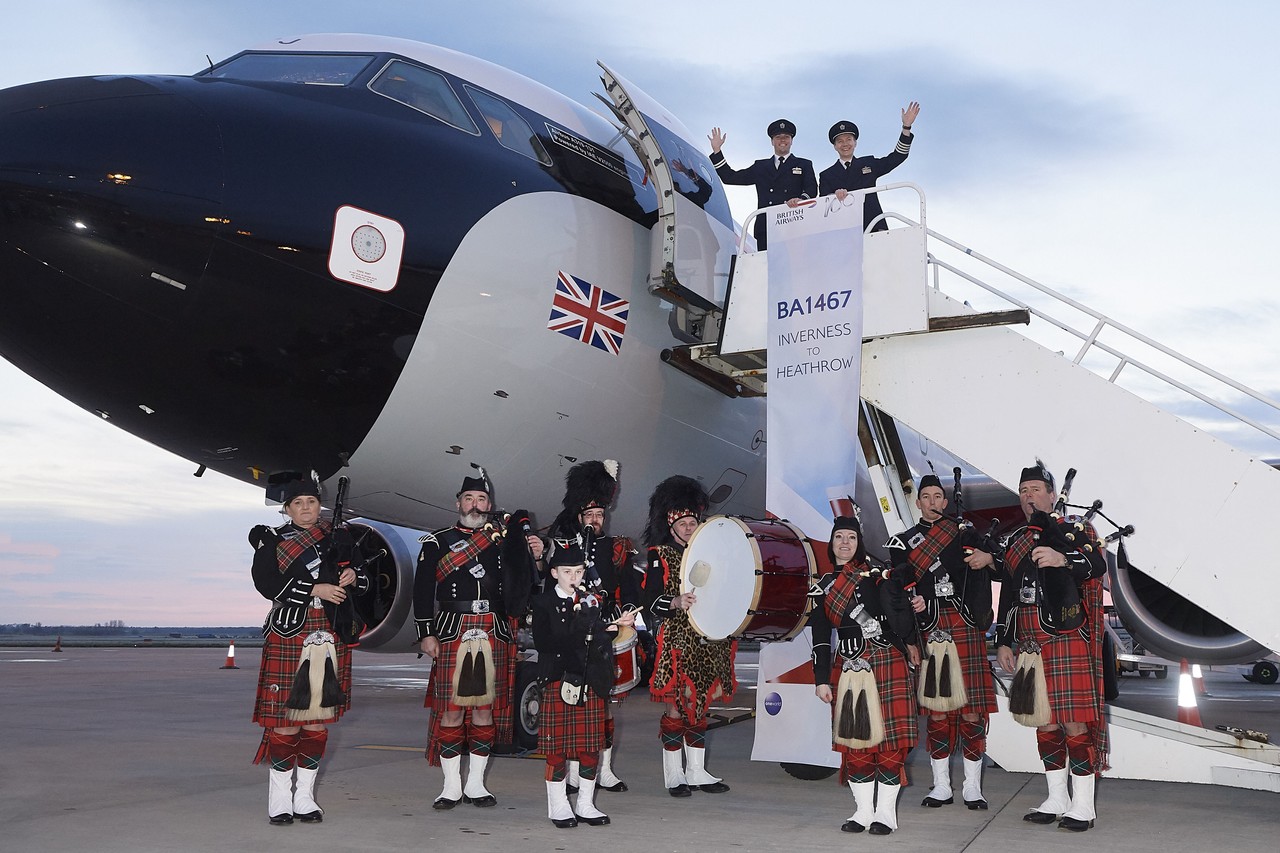
There were, on the day, signs of ceremony. Passengers boarded to the sound of pipes from the Inverness Royal British Legion Pipe Band, itself marking a centenary alongside the airline. Such moments tend to accompany the introduction of new services, though their significance is fleeting compared to the timetable that follows.
Airport management and airline representatives described the change as an expansion of connectivity, pointing to improved flexibility for travellers and stronger links between the Highlands and international markets. Those claims are familiar in aviation announcements. What matters is whether the service holds, and whether demand sustains it beyond the initial period.
The restoration of an early departure does not transform a region overnight. But it does remove a constraint that had quietly shaped how business was conducted. In that sense, the significance lies less in the flight itself than in what it makes possible.