
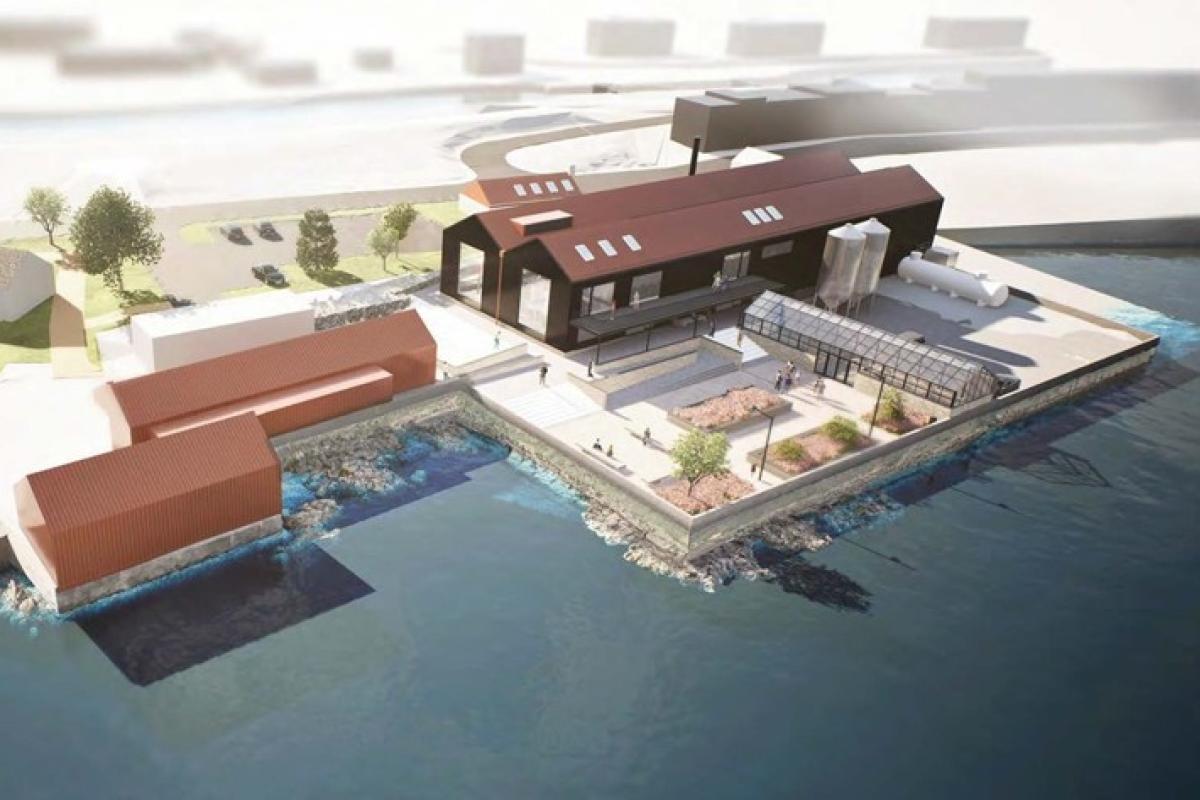
Argyll and Bute Council has approved £250,000 for the next phase of regeneration at the former Gleaner oil depot in Ardrishaig, supporting plans for a craft whisky distillery and visitor facilities beside the Crinan Canal. The award goes to Scottish Canals, the landowner, and will support redevelopment and remediation work on a waterfront site that has long formed part of Mid Argyll’s canal and industrial landscape.
Argyll and Bute Council has approved £250,000 from the Tarbert and Lochgilphead Regeneration Fund for the second phase of the Gleaner project in Ardrishaig.
The funding will go to Scottish Canals, which owns the former oil depot site, and will support work on the northern section of the land. The plan is to develop the area into a craft whisky distillery with office accommodation, servicing facilities, a courtyard, viewing terrace, tasting spaces and visitor accommodation.
The private partner is Spectrum Spirits Limited. The council says the project is expected to support around 15 full-time equivalent jobs and attract up to 15,000 visitors a year. The funding also covers work linked to Pier Square, placing the scheme within a wider effort to improve the canal-side setting at the eastern end of the Crinan Canal.
The site sits in a prominent position in Ardrishaig, close to the Egg Shed and the canal terminus at Loch Gilp. The Egg Shed was delivered in the first phase of the Gleaner project and opened in 2019 as a heritage and community hub. Scottish Canals describes it as a place where visitors can learn the stories of the Crinan Canal, with artefacts from Scottish Canals displayed alongside items supplied by the local community.
The wider regeneration fund dates back to 2016, when £3 million was allocated to support projects in Lochgilphead, Ardrishaig and Tarbert. Completed projects include the Egg Shed, public realm works in Ardrishaig, Lochgilphead Front Green, harbour facilities at Tarbert, Argyll Street in Lochgilphead and junction improvements at Barmore Road and Garvel Road in Tarbert.
The distillery proposal is the latest attempt to return a difficult waterfront site to productive use. The former Gleaner depot has been part of the industrial edge of the canal, and earlier local reporting described the land as a derelict oil site where community representatives had welcomed the prospect of new ventures around the pier area.
Plans for a distillery moved into the public realm earlier this year. Reports in January and February 2026 described proposals for a whisky distillery and visitor destination on the former oil depot site, with a courtyard, tasting rooms, viewing terrace and greenhouse building facing Loch Gilp. One industry report said the plans would bring whisky-making back to the village for the first time since Glenfyne Distillery closed in 1937.
The grant approved by councillors is aimed at the less glamorous part of regeneration: preparing, remediating and servicing land that cannot simply be dressed up and reopened. Old waterfront industrial sites often carry the cost of their previous use. Before they can become visitor destinations, they need ownership clarity, environmental work, access, utilities, planning consent and a commercial case strong enough to survive beyond the artist’s impression.
Ardrishaig’s position gives the project some logic. The village sits at the eastern entrance to the Crinan Canal, close to Lochgilphead and on routes used by visitors moving through Mid Argyll toward Knapdale, Kilmartin, the islands and the wider west coast. The canal, harbour setting, Egg Shed and proposed Pier Square improvements create the possibility of a cluster rather than a single attraction.
The choice of a distillery also fits a familiar Scottish pattern. Whisky visitor centres can bring footfall, spending and profile to smaller communities, particularly where they connect with food, accommodation, heritage and existing travel routes. They also bring questions about seasonality, local employment, housing pressure, traffic, visitor capacity and how much value remains in the place hosting the attraction.
For Ardrishaig, the public benefit will be judged by ordinary measures. Fifteen full-time equivalent jobs would be meaningful in a village setting. Cleaning up a visible waterfront site would improve the approach to the canal. More visitors could help nearby businesses if the spending spreads beyond the distillery gate.
The visitor estimate of up to 15,000 people a year should be watched after opening, along with job numbers, local contracts, public access around Pier Square, delivery costs and the final shape of the planning approval. Regeneration promises tend to be at their most confident before construction and trading begin. The useful record comes later.
The council’s award also closes a chapter in the Tarbert and Lochgilphead Regeneration Fund. The fund has already supported a series of visible works across Mid Argyll. The Gleaner Phase 2 project now carries the remaining question of whether the Ardrishaig waterfront can move from remediation and heritage interpretation into a more active commercial use.
There is a deeper continuity in the site’s shift from oil depot to whisky project. Ardrishaig grew around movement, water, trade and the canal. The Crinan Canal itself was built to save vessels the long and exposed passage around the Mull of Kintyre, giving the village a practical role in west coast travel and commerce. The modern question is how a small place uses that inherited geography without being reduced to scenery.
A former oil depot becoming a distillery and visitor stop is a striking change, but the measure of the project will be local rather than romantic. It will rest on whether the site is cleaned up, whether the jobs appear, whether visitors stop in Ardrishaig rather than simply pass through, and whether Pier Square becomes a better-used part of village life.
Public money has now been committed. Scottish Canals owns the site. Spectrum Spirits is named as the private partner. The village will have reason to watch closely as the next stage moves from funding approval to delivery on the ground.