
A Freedom of Information release on John Swinney’s international affairs speech does not prove hidden wrongdoing. What it does show is something more useful: how Scotland’s place in an unstable world is being drawn into the constitutional argument, and why both supporters and opponents of independence would want to understand how that message was prepared.
The first thing to say is the most important.
An FOI request is not evidence of a scandal. It is evidence that someone wanted to see the paperwork.
That distinction matters. Scotland does not need every document release turned into a bonfire, nor should government business be treated as suspicious simply because officials arranged a speech, discussed a venue, refined an invitation and prepared for questions. Governments do those things. If they did not, the alternative would be public events conducted with the calm professionalism of a school raffle in a power cut.
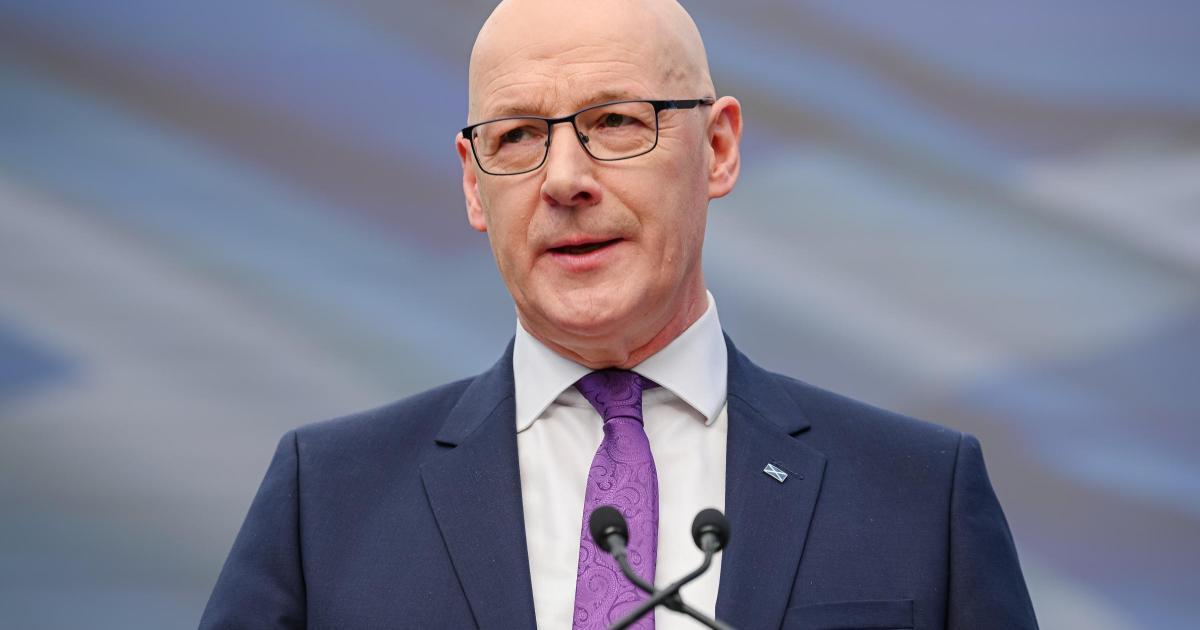
The Freedom of Information release published by the Scottish Government on 5 May 2026 concerns correspondence and analysis around First Minister John Swinney’s speech on international affairs, delivered at McEwan Hall in Edinburgh on 28 January 2026. The request asked for documentation including briefings, correspondence and analysis between 10 January and 10 February 2026. The Scottish Government released most of the material, while withholding some under exemptions covering policy formulation, free and frank advice, and personal data.
The question is why anyone would ask for such material.
The answer is that the speech was not a routine diary item. It sat at the meeting point of several sensitive subjects: Scotland’s constitutional future, international instability, European relations, defence, maritime security, Gaza, Greenland, Russia, the United States, and the ability of a devolved government to speak about matters that often sit beyond its formal powers.
The public title of the speech was A Moment of Challenge. The Scottish Government published it under topics including Brexit, constitution and democracy, equality and rights, and international affairs. It was not merely a ceremonial address. It was an attempt to explain how Scotland should think about itself in a changed global order.
That is why the FOI is important. It helps readers see the difference between the speech as heard in public and the speech as prepared inside government.
The released papers show officials were asked to prepare a proposal for the First Minister to deliver a speech on the “developing international situation”, with a suggested audience of 50 to 70 people including academics, students and other key stakeholders. Officials rapidly contacted Edinburgh institutions including the University of Edinburgh and the Royal Society of Edinburgh while trying to secure a suitable venue. The internal context note referred to Greenland, Denmark, Davos, President Trump, comments by Mark Carney on medium powers and the international rules based order, and developments around President Trump’s “Board of Peace”.
That is not a trivial background. It shows that the speech was being shaped in response to a world that officials and ministers saw as moving quickly.
The papers also show that the event was not simply a lectern and a speech. The operational note for McEwan Hall set out a carefully managed format: arrival, autocue check, opening remarks, a 20 minute speech, stakeholder questions, broadcast media questions, a media briefing, an off camera press huddle and networking. The event was scheduled from 13:00 to 15:40.
Again, that is not suspicious in itself. It is how government communications work. But it does show why the request has public value. The release lets citizens see how an important speech is staged, who the intended audiences were, and how political, policy and media handling come together.
The central phrase in the released material is “values based realism”. A suggested invitation text said the First Minister would outline how Scotland’s values continue to guide it amid increasing polarisation and instability, while acknowledging the complexities of the international situation and working with like minded partners “with the world as it is, not just as we wish it to be.”
That phrase is worth attention because it signals a change in tone. It is not simply the older language of Scotland as outward looking, European and internationalist. It adds a harder note: instability, realism, security, alliances and practical exposure to world events.
For supporters of independence, that matters because it speaks to a long standing weakness in the public argument. Many voters may support the idea of Scotland making its own decisions but still worry about defence, borders, treaties, intelligence sharing, EU accession, NATO, maritime security and the transition from devolved government to statehood. A speech that places Scotland inside a discussion about small and medium sized countries, shared security and international cooperation may be an attempt to answer those concerns in a more serious register.
For opponents of independence, the same speech matters for the opposite reason. If independence is being reframed through security and international realism, then opponents will want to test whether the argument is credible. They will ask whether a devolved government is using public resources to develop constitutional messaging. They will ask whether the policy detail matches the rhetoric. They will ask what happens in any transition period before EU accession or NATO arrangements are settled. They will ask whether Scotland’s geographic position in the North Atlantic is an argument for statehood or an argument for remaining within the existing UK defence structure.
Those are not fringe questions. They are exactly the questions that appeared in the press huddle after the speech.
The released transcript shows journalists asking the First Minister about whether an independent Scotland might be vulnerable before EU accession, whether Scotland would be outside NATO for a period, whether the UK should base more patrol vessels, frigates or destroyers in Scotland, whether unilateral nuclear disarmament still made sense, and whether hostile foreign actors had an interest in Scottish independence.
That is where the danger of reframing independence becomes clear.
The danger is not that government should never speak about international affairs. Scotland has external interests, universities, exports, diaspora links, cultural diplomacy, climate commitments, ports, energy assets and North Atlantic geography. It would be absurd to suggest that Scotland must discuss potholes while the world burns politely in the background.
The danger is that a constitutional argument can become too heavily loaded with security language before the public has been given plain answers to practical questions.
Security language raises the stakes. It can make supporters feel that independence is not only desirable but necessary. It can make opponents feel that independence is not only undesirable but dangerous. It can compress complex questions into emotional ones: safety, threat, vulnerability, sovereignty, exposure, alliance, betrayal. That is powerful language. It needs careful handling.
There is another danger. Reframing independence through international instability may invite arguments that are harder for ordinary voters to verify. Most people can judge whether a ferry is late, a school is open, a hospital wait is too long or a road has failed. It is much harder for the public to assess claims about the North Atlantic, maritime surveillance, defence posture, accession pathways, sanctions enforcement or the international rules based order. When politics moves into those areas, clarity becomes a public duty, not a courtesy.
This is where the FOI release becomes useful for both sides, and for people who are simply trying to understand what is happening.
It shows that the speech was prepared at speed. It shows that venue, audience and message were being refined in compressed time. It shows that special advisers and speechwriters were involved in the speech text, with officials fact checking and contributing wording. It also shows that Stephen Gethins provided input and that amendments from Mr Robertson were included before the speech was sent on.
That does not prove improper conduct. Political speeches by First Ministers often involve ministers, advisers, officials and speechwriters. But it does help explain why the requester may have wanted the internal record. If the public speech was part of a larger effort to adjust Scotland’s constitutional language, then the preparation process becomes relevant.
It also shows that the speech landed in a politically charged environment. Public reaction online and in media was not neutral. The SNP promoted the speech on X as an address on how Scotland would navigate increasing polarisation and instability. Pro independence commentators discussed the speech as a significant intervention, while hostile coverage focused on defence, nuclear weapons, the North Atlantic and accusations that Swinney’s argument could weaken the UK position.
That range of reaction is itself part of the story. Supporters saw seriousness. Critics saw risk. The public saw another difficult Scottish argument moved into a more complicated room.
There was also a wider political backdrop. In January, Reuters reported that Swinney said an SNP majority in the May Scottish Parliament election would spark a renewed push for independence, while noting the UK Supreme Court position that the Scottish Government cannot legally hold an independence vote without UK parliamentary approval. Later reporting also described the First Minister preparing to seek parliamentary approval for independence powers after the election, depending on the balance at Holyrood.
That context matters because it explains why a speech on international affairs would attract FOI interest. The speech was not floating above politics. It was delivered in an election year, in a period when the First Minister was linking independence to Scotland’s future direction, and when international instability was becoming part of the constitutional vocabulary.
For supporters of independence, the FOI may help show whether the Scottish Government is developing a more mature account of statehood, one that includes defence, alliances and practical realism rather than relying only on identity, Brexit or democratic mandate.
For opponents, the same FOI may help test whether the argument is being made with sufficient evidence, whether public resources are being used appropriately, and whether difficult questions about transition, defence and international recognition are being answered or avoided.
For voters who do not want to be pulled into party trenches, the FOI is useful in a simpler way. It shows how a government message is built.
That is the public service here. Not outrage. Not suspicion. Not conspiracy. Just the ability to see the machinery.
The released material does not show a hidden plot. It shows a government preparing a major speech under time pressure, shaping a message about Scotland’s place in a volatile world, managing an event with academics, students, media and stakeholders, and then facing questions that quickly moved from international affairs into independence, defence and domestic accountability.
That is enough to be important.
The key question is not whether the FOI proves something improper. It does not. The key question is what it reveals about the next phase of Scotland’s constitutional debate.
Independence has often been argued through economics, democratic mandate, Brexit, public services, identity and Scotland’s relationship with Westminster. This speech suggests another layer is being added: security, alliances, geography and the international order.
That may be unavoidable. The world has changed. Russia’s war in Ukraine, conflict in the Middle East, instability in global institutions, tensions around the Arctic and North Atlantic, and shifts in American politics all make foreign affairs harder to separate from domestic choices. A country’s constitutional status is not merely a matter of flags and parliaments. It also affects treaties, defence, borders, intelligence, energy, trade and crisis response.
But the more serious the argument becomes, the more carefully it must be explained.
If independence is presented as a way to make Scotland safer, the public deserves detail on how. If remaining in the UK is presented as the safer course, the public deserves detail on that too. If Scotland’s geography is strategically important, people should be told what that means in practical terms. If maritime defence is inadequate, citizens should understand who is responsible and what options exist. If EU accession is part of the argument, voters should understand what happens before, during and after that process. If NATO is relevant, it should not be smuggled into the debate as a mood.
There is no civic benefit in making voters choose between slogans wearing different rosettes.
Modern Scot’s role is not to take a side. It is to insist that the public is not treated like a theatre audience watching the set change in the dark.
The FOI release matters because it shows that Scotland’s international position is now being used as part of a larger national argument. That argument is legitimate. It is also dangerous if handled carelessly, because security and constitutional change are not small matters. They require evidence, candour and plain language.
The public does not need to be told what to think.
It needs to be shown what is being argued, who is shaping the argument, what evidence is being used, what has been withheld, what questions remain unanswered, and why those questions matter.
That is what this FOI begins to provide. It is not the whole story. It is a glimpse through the machinery. But in public life, glimpses matter. They show where attention should go next.