Scottish politicians have argued over whether ministers should cap prices on essential supermarket goods, but the available evidence points to a more complicated position than either side’s slogan allows.
A proposal to cap the price of essential supermarket items has become one of the sharpest cost of living arguments in Scottish politics, after SNP and Green politicians defended intervention while retailers and critics warned that price controls could distort food supply, squeeze margins or simply move costs elsewhere.
The claim now circulating from BBC Question Time and related social media clips is that Stephen Flynn and Ross Greer supported action to freeze or cap prices on a defined basket of essential goods, while opponents argued that supermarket margins are too narrow for such intervention and that historic price controls have often failed. Modern Scot has reviewed the available public record, party material, official statistics, retailer financial statements, food poverty data and recent UK Government reporting.
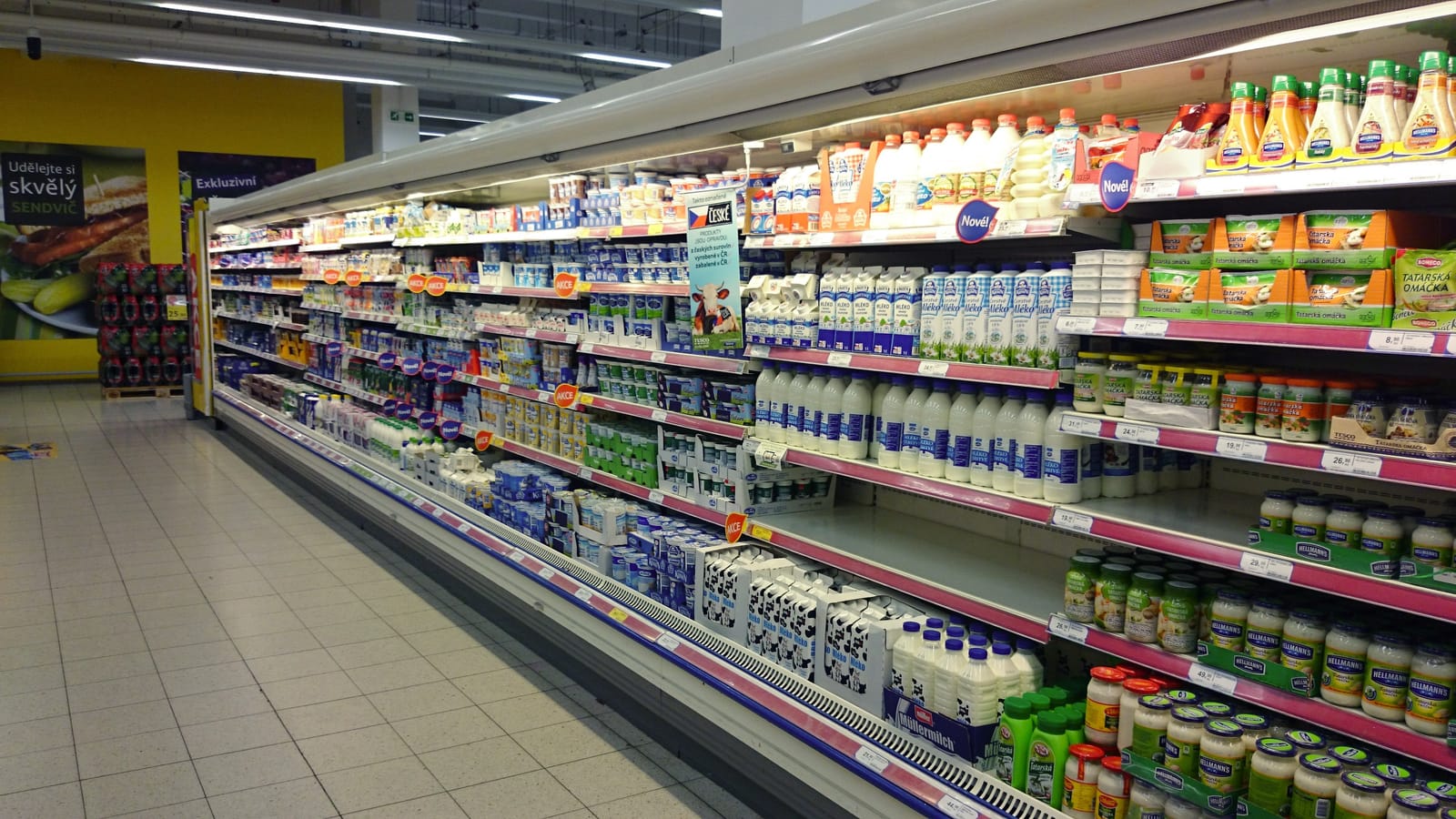
The first point is that the policy itself is real. The SNP’s 2026 manifesto said the party would establish “statutory price ceilings on a basket of 20 to 50 essential food” items as a public health intervention. The manifesto framing was that the rising cost of food was affecting people’s ability to afford a balanced diet. Reuters also reported at the manifesto launch that the SNP proposed caps on between 20 and 50 products, including bread, milk, cheese, eggs, rice and chicken.
The second point is that the food hardship cited by supporters is not invented. The Scottish Government’s poverty statistics for 2021 to 2024 found that 23 per cent of children in Scotland were living in relative poverty after housing costs, and that 22 per cent of children lived in households with marginal, low or very low food security. Trussell’s Hunger in Scotland report estimated that in 2024, one million people in Scotland, including 210,000 children, lived in food insecure households.
The third point is that Tesco’s profit figure has a basis, but needs precision. Tesco’s 2025 annual report states that group adjusted operating profit rose to £3.1 billion, with group sales of £63.6 billion excluding VAT and fuel. The same report gives group adjusted operating margin at 4.5 per cent, and UK and Republic of Ireland adjusted operating margin at 4.6 per cent. That supports both parts of the argument: Tesco is a highly profitable company in cash terms, but its margin on sales is not large.
The fourth point is that critics are correct that the retail industry has warned strongly against statutory caps. The Scottish Retail Consortium said elevated food prices reflected supply chain, commodity and statutory cost pressures, and argued that supermarkets operate on “very slim margins”. It described the SNP proposal as “1970s-style price controls” and a “potty gimmick”, calling instead for government to cut retailers’ costs.
The fifth point is that the UK Government has also explored similar ground. Reuters reported that the UK Treasury had pressed major supermarkets to consider voluntary price caps on products such as eggs, bread and milk in exchange for regulatory easing, but that the UK Government had ruled out mandatory caps after retailer opposition. The Guardian similarly reported that supermarkets had been asked to consider a voluntary freeze on key items, and that retailers opposed the idea.
The sixth point is that food inflation has eased but prices remain politically sensitive. The Office for National Statistics said food and non alcoholic beverage prices rose by 3.0 per cent in the 12 months to April 2026, down from 3.7 per cent in March. That means prices were still rising, though more slowly than before.
The seventh point is that the legality and practical operation of a Scottish statutory cap are not straightforward. Professor Nicola McEwen of the University of Glasgow’s Centre for Public Policy wrote that the SNP proposal would face roadblocks, particularly around the UK Internal Market Act, and noted that no detail had yet been provided on the product list, nutritional standards or whether the cap would cut prices or merely prevent further increases.
On the evidence, supporters of intervention are right about the scale of hardship. Food insecurity is real, child poverty remains serious, and official and charity data support the claim that many Scottish households cannot reliably afford food. They are also right that major supermarkets can record very large absolute profits.
Critics are right that supermarket food retail works on relatively thin margins, and that a price ceiling imposed at the till does not by itself reduce energy, transport, labour, rent, supplier, packaging or farming costs. The evidence also supports the criticism that the SNP proposal has not yet been accompanied by enough operational detail to judge how it would avoid costs being shifted to other products, suppliers or producers.
The fairest conclusion is that the policy responds to a real problem but remains unproven as a mechanism. It is factual to say Scotland has a food affordability problem. It is factual to say supermarket groups can be profitable while operating on narrow margins. It is factual to say the SNP has proposed statutory price ceilings on essential goods. It is also factual to say that the detail, legality and economic effects of such a cap remain unresolved. The argument is therefore not between compassion and economics. It is between a real social pressure and an intervention whose design has not yet been shown to solve it.
Sources
BBC Question Time social media clips and posts relating to discussion of food price caps by Stephen Flynn and Ross Greer.
SNP Manifesto 2026, section on food pricing, proposing statutory price ceilings on a basket of 20 to 50 essential food items.
Reuters report on SNP pledge to cap basic food prices if re elected.
Scottish Government, Poverty and Income Inequality in Scotland 2021 to 2024.
Trussell, Hunger in Scotland, October 2025.
Tesco PLC, Annual Report and Financial Statements 2025.
Scottish Retail Consortium response to SNP food price cap proposal.
Reuters report on UK Government discussions with supermarkets and rejection of mandatory price caps.
The Guardian report on UK supermarkets being asked to consider voluntary price caps.
Office for National Statistics, Consumer price inflation, April 2026.
University of Glasgow Centre for Public Policy, Professor Nicola McEwen, “Price caps and the UK Internal Market Act.”