
Long before autonomous vehicles and domestic robots became familiar ideas, a machine moved through a room, stopped at obstacles, reconsidered its path, and continued without waiting for a person to tell it what to do.
It was called Shakey.
Developed at the Stanford Research Institute in 1969, Shakey is widely regarded as the first autonomous robot able not only to move, but to reason about what it was doing. That distinction matters. Earlier machines could be controlled, directed, or programmed to follow fixed patterns. Shakey did something more ambitious. It perceived its surroundings, formed a representation of the space in which it was operating, and selected actions in response.
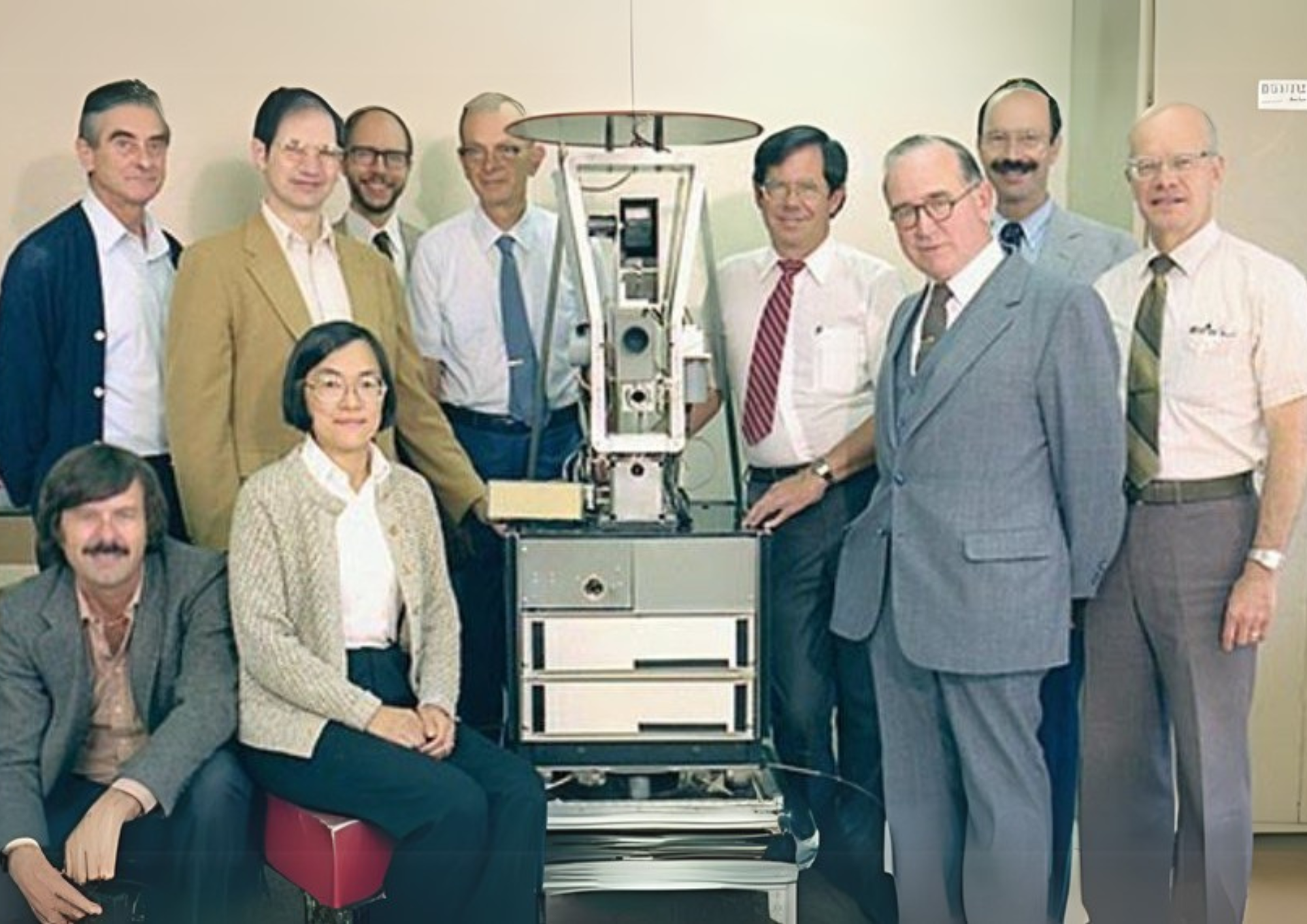
Physically, it was not impressive in the modern sense. It stood about 1.5 metres tall, with a box like body mounted on wheels. It carried a television camera, range finders, and bump sensors. It looked less like a vision of the future than a provisional experiment assembled from practical parts. Yet the importance of the machine lay not in its appearance, but in the combination of perception, planning, movement, and decision making that it brought together.
Shakey could identify objects, walls, and obstacles using its camera and sensors. It could interpret enough of this information to determine where it was in a room and what stood in its way. More significantly, it could plan. Its control system used a program called STRIPS, short for Stanford Research Institute Problem Solver. STRIPS allowed the robot to break a task into smaller steps, choose a sequence of actions, and revise that sequence if conditions changed.
If Shakey was asked to move a block from one place to another, it did not simply execute a stored routine. It first identified the block through its camera, then planned a path towards it, avoiding obstacles as necessary. It determined how to move or push the block, then carried out the sequence step by step, altering the plan if the environment forced it to do so. In that sense, it was one of the first machines to think ahead rather than merely react.
Its movement was controlled through two motorised wheels, though much of the computation was handled by a remote computer. If Shakey encountered an obstacle, it could change direction, calculate a new route, and continue towards its goal. This capacity for replanning is now taken for granted in discussions of robotics, but at the time it marked a substantial advance. It suggested that machines might eventually operate in less controlled settings than the laboratory.
Several things made Shakey important. It was the first robot to move autonomously rather than follow a strictly fixed path. It was the first to combine that movement with reasoning and problem solving in a recognisable way. It was also among the first robots to use computer vision as part of its decision making. That visual component would become central to later work in autonomous vehicles, industrial robotics, and facial and object recognition systems.
The STRIPS planning method developed for Shakey also proved influential well beyond the machine itself. Variants of the same basic idea remained important in artificial intelligence planning systems for decades. The logic of decomposing a goal into manageable steps and revising the plan as circumstances change can still be found in automated decision systems, video game behaviour, and some forms of digital assistance.
Shakey had obvious limitations. Processing was slow, and decisions that would now be made in fractions of a second could take minutes. Its mobility was limited, and it performed poorly outside carefully arranged indoor settings. It was expensive, cumbersome, and impractical as a commercial machine. No one was about to buy one for domestic use. In that sense, it was not a product but an argument.
The argument was that a machine could perceive part of the world, reason about it, and act within it with a degree of independence. That claim, once made in working form, altered the direction of research.
Although Shakey was retired in 1972, the ideas it introduced did not disappear. Autonomous robots, self driving systems, and warehouse machines all rely in some form on the combination of sensing, planning, obstacle avoidance, and adaptive movement that Shakey helped establish. The influence can also be traced through later work in computer vision and automated planning, fields that grew into major areas of artificial intelligence in their own right.
Shakey was not elegant, swift, or commercially useful. It did not need to be. What it demonstrated was enough. A machine could look, decide, and move with a purpose that was not being dictated moment by moment from outside. That idea, once shown, was difficult to contain.