

A new Glenmorangie created with Harrison Ford has brought international attention to one of Scotland’s most graceful Highland whiskies. Yet the lasting interest lies not in celebrity, but in the older Scottish story behind it: place, craft, patience and the careful making of a name that was respected long before the cameras arrived.
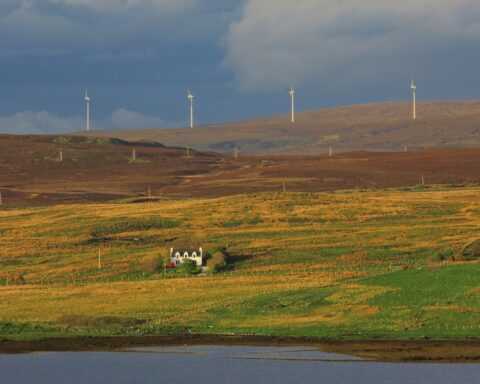
Glenmorangie comes from Tain, on the Dornoch Firth, a place where the north of Scotland is not an idea for export but a working landscape of weather, water, agriculture, old routes and quiet industry.
The distillery was founded in 1843 and has made whisky there for more than 180 years. Its history belongs to the wider Highland inheritance of barley, springs, casks, stills, judgement and time. None of that is hurried. None of it improves by being shouted about. Scotland has never lacked noise around its whisky, but the better brands tend to evolve at their own pace.
On 4 May 2026, Glenmorangie released a limited edition whisky created with Harrison Ford, the American actor whose career has become part of a legend of modern cinema. The Glenmorangie Harrison Ford Limited Edition was developed with Dr Bill Lumsden MBE, the distillery’s Director of Whisky Creation, after Ford appeared in the brand’s film series, Once Upon a Time in Scotland.
A famous name on a bottle can be a dangerous business. It can make a serious whisky look less like a work of craft than something arranged for a glass cabinet in an airport lounge. Whisky does not need celebrity to be serious. Glenmorangie certainly does not. The distillery had already earned its place in the world before Ford stepped into the story.
That is why the better reading of this release is not as a celebrity product, but as a meeting between two recognisable forms of restraint. Ford is one of cinema’s great masters of restraint, an actor whose authority has often rested on glances, pauses and the charged silence between lines. Glenmorangie has a similar confidence in understatement. It is not a whisky built on dramatic aggression. Its reputation rests on elegance, fruit, lightness and finish.
The collaboration began while Ford was filming at Glenmorangie. Dr Lumsden introduced him to different casks and used those tastings to understand what he liked in the glass. Samples were later sent across the Atlantic, and the final whisky was refined through further discussion. The recipe combines classic bourbon cask aged Glenmorangie with a parcel of rare whisky finished in toasted Portuguese red wine casks.
That cask choice is the useful detail. Glenmorangie’s house character is often described through citrus, softness, perfume and lift. The red wine cask element is intended to bring more bite and structure, adding a firmer edge without burying the distillery’s own voice. The official tasting notes describe orange marmalade, honeysuckle, jasmine, beeswax, peach blossom and vanilla on the aroma, followed by Seville orange, lemon, grapefruit, baked bread, apricot, muscovado sugar and butter candy on the palate. The finish brings orange oil, leather and oak tannin.
The release gives the bottling strength as 46 percent ABV. In the United States, the release gives a recommended price of $99.99. In the United Kingdom, Glenmorangie lists the bottle at £75. Those details will matter to collectors, but they are not what gives the release its weight. The weight comes from the fact that the whisky remains recognisably Glenmorangie.
Ford’s verdict, after tasting it, is brief: “It’s nice. It’s very nice.”
There is a certain mercy in that. Whisky language can become absurd very quickly. A drink may begin with orange and oak and, after three paragraphs, find itself compared to a cathedral, a cavalry charge and someone’s childhood curtains. Ford’s judgement has the plainness of a man unwilling to decorate a sentence. In this context, that plainness works.
The new film chapter was made in Wyoming, Ford’s home state, rather than in Scotland. He reflects on his visit to the Highlands, puts on a kilt, mispronounces Glenmorangie again, and is corrected from off camera by a familiar Scottish voice from the distillery. It is a small joke, and a useful one. The campaign does not need to pretend that Scotland is fragile. Scotland can survive an American wrestling with a whisky name. It has survived considerably worse from people born much closer to home.
The kilt is there, inevitably. So is the scenery in memory. So is the humour. Yet the campaign appears at its best when it allows the distillery workers and the craft to remain visible. That matters. Scottish heritage becomes weak when it is reduced to costume. It becomes stronger when the costume is allowed to sit beside real skill, real work and real place.
Tain gives the story its deeper setting. The town is one of Scotland’s oldest royal burghs and has long associations with pilgrimage, trade and the shrine of Saint Duthac. It sits in Easter Ross, looking towards the Dornoch Firth, in a region shaped by coast, fields, church history, transport routes, old settlement and modern industry. Glenmorangie does not float above that landscape as an imported luxury concept. It belongs to it.
That is the point worth preserving. This release is not important because Scotland has been noticed by Hollywood. Scotland does not require approval from abroad before it may admire its own work. It is important because a Highland distillery founded in the nineteenth century can still speak confidently in the twenty first, without pretending to be something else.
Dr Lumsden’s role is central to that balance. Glenmorangie’s modern reputation has been shaped by careful experiment, particularly in cask selection and flavour creation. The distillery often presents its creative work through the question “What if?” That may sound light, but in whisky it is a serious question. Scotch is an old craft, but it has never been still. Its history is full of adaptation, regulation, taxation, trade, technical change and commercial judgement.
The difficulty is knowing how far to go. Innovation in whisky is not automatically good. A cask finish can deepen a spirit or smother it. A collaboration can bring new attention or leave the whisky looking like a souvenir. The best campaigns invite the world into Scotland.
Here, the campaign appears to have judged the balance well. Ford is present, but he does not overwhelm the story. The bottle carries his name, but the whisky remains Glenmorangie. The humour is affectionate rather than frantic. The final judgement is almost comically modest. In a more fevered campaign, that might have been a weakness. Here, it gives the whole exercise a steadier footing.
For Scottish readers, there is a larger reason to care. Whisky remains one of the country’s great cultural exports because it is never only a drink. It is agricultural, industrial, sensory and imaginative. It belongs to farmers, maltsters, coopers, stillmen, blenders, warehouse workers, scientists, bottlers, merchants, collectors and drinkers. It is made under law, shaped by climate and judged by memory.
That is why the best Scottish whisky brands carry more than flavour. They carry evidence of a place. They show that a local craft can travel the world without becoming rootless. Glenmorangie is sold far beyond the Highlands, but its authority still begins in Tain. The name, the water, the stills, the warehouses, the people and the surrounding landscape all matter.
The Harrison Ford limited edition will have its moment. Some will buy it because of Ford. Some will buy it because of Glenmorangie. Some will buy it because limited bottles have a way of making sensible people behave as though a quiet hand has just gone up at Sotheby’s. That is all part of the trade.
But when the campaign has passed, the more durable story will remain in the north. Tain will still be there. The Dornoch Firth will still take the roughest weather. The distillery will still stand in its own history. The tall stills will still do their work. Glenmorangie will still be judged, as all whisky eventually is, not by the fame around it but by what is in the glass.
A Highland distillery has made something carefully, with a famous collaborator but without surrendering the authority of its own name.
That is the part worth keeping in the record.